
The Scholastic Aptitude Test, more commonly known as the SAT, is a standardized examination widely used for college admissions in the United States. For decades, it has been a pivotal metric for evaluating a student’s readiness for higher education, providing a common benchmark for admissions committees. However, the question “what are the SATs out of?” extends beyond a simple numerical maximum. It delves into the very essence of what the test measures, how it is scored, and what those scores truly represent in the broader context of academic achievement and future potential. This article will explore the components of the SAT, the scoring methodology, and the implications of these scores for students navigating the complex landscape of college applications.

Deconstructing the SAT: Sections and Their Underlying Skills
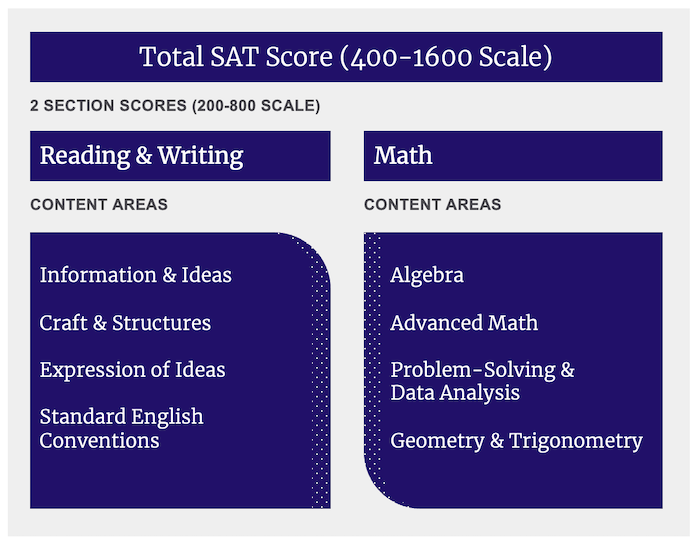
The SAT is designed to assess a student’s proficiency in core academic areas that are deemed essential for success in college-level coursework. Historically, the test has evolved, but its current iteration, particularly with the transition to a digital format, focuses on two primary content areas: Evidence-Based Reading and Writing, and Math. Understanding the specific skills tested within each section is crucial for grasping what the SAT is “out of.”
Evidence-Based Reading and Writing (EBRW)
This section aims to evaluate a student’s ability to comprehend complex texts, analyze arguments, understand vocabulary in context, and express ideas clearly and effectively in writing. It is further divided into two modules, each contributing to the overall score in this domain.
Reading Module
The Reading module presents students with a variety of passages drawn from different disciplines, including literature, history, social studies, and science. Students are tasked with answering questions that test their ability to:
- Comprehend and Interpret Text: This involves understanding the main idea, identifying supporting details, inferring meaning, and analyzing the author’s purpose and perspective. Questions may require students to summarize passages, identify the central claim, or understand the relationship between different parts of the text.
- Analyze Arguments and Rhetoric: Students are expected to recognize rhetorical devices, evaluate the strength of evidence presented, and understand how an author constructs an argument. This includes identifying logical fallacies, understanding persuasive techniques, and discerning the tone and style of the writing.
- Understand Vocabulary in Context: Rather than testing rote memorization of definitions, this component assesses a student’s ability to deduce the meaning of unfamiliar words based on their usage within a sentence or passage. This reflects the real-world skill of encountering and understanding new vocabulary in academic and professional settings.
- Analyze Information in Informational Graphics: Some passages are accompanied by charts, graphs, or tables. Students must be able to interpret this data and integrate it with the textual information to answer questions. This emphasizes the importance of interdisciplinary understanding and the ability to synthesize information from multiple sources.
Writing and Language Module
The Writing and Language module focuses on a student’s command of standard English conventions and their ability to revise and edit passages for clarity, coherence, and conciseness. Students are presented with passages containing deliberate errors in grammar, punctuation, sentence structure, and style. They must then choose the best way to revise or edit the text. Skills tested include:
- Standard English Conventions: This encompasses a deep understanding of grammar rules, including subject-verb agreement, pronoun usage, verb tense, and sentence structure. It also includes the correct application of punctuation, such as commas, semicolons, colons, and apostrophes.
- Expression of Ideas: Beyond just correcting errors, this module assesses a student’s ability to improve the overall quality of writing. This involves making sentences more concise, improving word choice, ensuring logical flow between ideas, and enhancing the clarity and effectiveness of the communication.
- Organization and Development: Students may be asked to add, delete, or rearrange sentences or paragraphs to improve the overall structure and coherence of a passage. This tests their understanding of how to build a compelling argument or narrative.
Math
The Math section of the SAT assesses a student’s mathematical reasoning and problem-solving skills. It covers a range of topics, from basic algebra to geometry and data analysis. The digital SAT features two modules for math as well, allowing for adaptive testing. Key areas include:
- Algebra: This is a significant component, covering linear equations and inequalities, systems of equations, and functions. Students are expected to manipulate algebraic expressions, solve equations, and interpret the meaning of algebraic relationships.
- Advanced Math: This area delves into more complex algebraic concepts, including quadratic equations, exponential functions, and polynomial expressions. It tests a student’s ability to work with abstract mathematical ideas and apply them to solve problems.
- Problem-Solving and Data Analysis: This section emphasizes the application of mathematical concepts to real-world scenarios. Students will encounter problems involving ratios, proportions, percentages, probability, and statistics. Interpreting data presented in tables, graphs, and charts is also a key skill.
- Geometry and Trigonometry: While a smaller portion than algebra, this area still assesses fundamental geometric principles, including area, volume, angles, and properties of shapes. Basic trigonometry concepts, such as sine, cosine, and tangent, may also be included.
The Scoring Mechanism: From Raw Scores to Scaled Scores
Understanding “what the SATs are out of” also necessitates an understanding of how the scores are generated. The SAT employs a sophisticated scoring system that translates raw performance into a standardized score that can be compared across different test administrations and student cohorts.
Raw Scores to Scaled Scores: The Conversion Process
Each question on the SAT is assigned a certain number of points. Correct answers earn points, while incorrect answers typically do not deduct points (this has been a historical change, and current digital SAT policies should be confirmed, but generally, there’s no penalty for guessing). The sum of points earned across all questions in a section constitutes the raw score.

However, raw scores are not directly reported to colleges. Instead, they are converted into scaled scores. This conversion process is designed to account for variations in test difficulty across different administrations. A scaled score of 200-800 is awarded for each of the two main sections: Evidence-Based Reading and Writing, and Math. The total SAT score, therefore, ranges from 400 to 1600.
The scaling process ensures that a score of, for instance, 600 on one test administration is equivalent in difficulty and meaning to a 600 on another. This is achieved through statistical equating, which compares the performance of students on different versions of the test.
Section Scores and Their Meaning
The scaled scores for the Evidence-Based Reading and Writing section and the Math section provide a more granular view of a student’s strengths and weaknesses.
- Evidence-Based Reading and Writing (EBRW): This score, ranging from 200 to 800, reflects performance on both the Reading and Writing and Language modules. It offers admissions committees insight into a student’s literacy skills and their capacity for analytical reasoning and effective communication through written text.
- Math: This score, also ranging from 200 to 800, reflects performance on the Math modules. It indicates a student’s mathematical proficiency, problem-solving abilities, and understanding of foundational mathematical concepts.
Percentiles and Benchmarks
Beyond the scaled scores, the SAT also provides percentile ranks. A percentile rank indicates the percentage of students who scored at or below a particular score. For example, a student scoring in the 75th percentile has scored higher than 75% of test-takers. Percentiles are crucial because they offer context to a raw score, allowing colleges to understand how a student performs relative to their peers.
Beyond the Numbers: What the SAT “Out Of” Truly Signifies
The question of “what are the SATs out of” also prompts reflection on what the test is not out of. It’s vital to understand the limitations and the broader implications of SAT scores.
Predictive Validity and College Readiness
The SAT is intended to be a predictor of a student’s success in college. Research by the College Board, the organization that administers the SAT, suggests a correlation between SAT scores and first-year college GPA. However, this correlation is not perfect. Many factors contribute to academic success in college beyond standardized test scores, including study habits, motivation, resilience, and engagement with campus resources.
Colleges use SAT scores as one piece of a comprehensive admissions puzzle. They consider GPA, course rigor, letters of recommendation, extracurricular activities, essays, and interviews. A high SAT score can certainly bolster an application, but it is rarely the sole determinant of admission. Conversely, a lower score does not automatically preclude a student from a successful college career, especially if other aspects of their application demonstrate strong potential.
The Evolving Landscape of Standardized Testing
The SAT has undergone significant changes, most notably the transition to a digital and adaptive format. This evolution reflects a desire to improve the testing experience, reduce test anxiety, and enhance the diagnostic value of the exam. The adaptive nature means that the difficulty of questions presented to a student adjusts based on their performance on previous questions, leading to a more personalized and efficient assessment.
Furthermore, the landscape of college admissions is continually shifting, with a growing number of institutions adopting test-optional or test-blind policies. This trend acknowledges the limitations of standardized tests and seeks to create a more equitable and holistic admissions process. Understanding what the SAT “is out of” also means recognizing that its role and significance may vary depending on the institution and the applicant’s individual circumstances.
Preparing for the SAT: A Strategic Approach
To understand “what the SATs are out of” in terms of opportunity, students must also consider how to prepare effectively. This involves:
- Familiarizing oneself with the test format: Understanding the structure, question types, and time constraints is paramount.
- Identifying areas of strength and weakness: Diagnostic tests can help pinpoint where to focus study efforts.
- Utilizing practice resources: Official SAT practice tests and study guides provided by the College Board are invaluable.
- Developing test-taking strategies: Learning how to manage time, approach different question types, and avoid common pitfalls can significantly improve performance.
- Focusing on foundational skills: The SAT tests skills that are built over years of academic study. Reinforcing fundamental concepts in reading comprehension, writing, and mathematics is essential.
In conclusion, the SAT is “out of” a specific set of skills measured through its Reading, Writing, and Math sections. Its scoring is meticulously designed to standardize performance across different test-takers and administrations. However, its true significance lies not just in the numerical score, but in its role as one indicator among many for college readiness and potential. As the landscape of higher education continues to evolve, a nuanced understanding of what the SAT measures, how it is scored, and its place within a holistic admissions process is crucial for students aiming for their post-secondary goals.
aViewFromTheCave is a participant in the Amazon Services LLC Associates Program, an affiliate advertising program designed to provide a means for sites to earn advertising fees by advertising and linking to Amazon.com. Amazon, the Amazon logo, AmazonSupply, and the AmazonSupply logo are trademarks of Amazon.com, Inc. or its affiliates. As an Amazon Associate we earn affiliate commissions from qualifying purchases.