
In the multi-billion-dollar ecosystem of the National Football League, every second on the clock represents a quantifiable unit of revenue. When a standard sixty-minute game expires with a tied score, the transition into overtime is not merely a competitive necessity; it is a high-stakes financial event. For the league, its broadcasting partners, and the burgeoning sports betting industry, the “rules” of overtime are the governing principles of a temporary micro-economy. To understand the rules of NFL overtime is to understand the logistics of maximizing asset value under pressure.
From the specific mechanics of the coin toss to the divergence between regular-season and postseason protocols, the structure of overtime is designed to balance player safety with the commercial demand for a definitive outcome. This article examines the fiscal implications of these regulations, exploring how the rules of the game dictate the flow of capital in the world’s most profitable sports league.
The Billion-Dollar Coin Toss: Why Overtime Rules Dictate Broadcasting Revenue
The most immediate financial impact of an NFL game entering overtime is felt by the broadcasting networks—NBC, CBS, FOX, ESPN, and Amazon. When a game exceeds its scheduled window, it enters a period of “bonus” airtime that carries a complex set of financial variables. The overtime rules, specifically the duration and the format of play, determine the profitability of this window.
Ad Inventory and the “Bonus” Window
Under the current NFL overtime rules for the regular season, the period is capped at ten minutes. This duration is a strategic compromise between providing a conclusion and maintaining the television schedule. For broadcasters, overtime provides additional ad inventory that was not technically sold in the upfront markets. These “bonus” spots can be used to satisfy “make-goods” (ads owed to sponsors if previous ratings fell short) or sold at a premium to advertisers looking to capture a massive, captive audience. Because overtime represents the peak of viewership—often referred to as the “climax of the narrative”—the CPM (cost per thousand impressions) for these segments is among the highest in the industry.
Contractual Obligations to Network Partners
The rules governing how long an overtime period can last are also a matter of logistical finance. A regular-season game that ends in a tie after ten minutes allows the network to transition to the next scheduled program or game window. In the NFL’s media rights deals—valued at over $110 billion over eleven years—maintaining the integrity of the “doubleheader” or the “primetime slot” is essential. If overtime rules allowed for indefinite play in the regular season, the resulting “cascade effect” would delay subsequent broadcasts, leading to lost revenue for local affiliates and national sponsors.
The High-Stakes Gamble: How Overtime Regulations Impact the Sports Betting Economy
In the modern era, the “rules” of the NFL are synonymous with the “rules” of the sportsbook. With the legalization of sports betting across a majority of U.S. states, the specific mechanics of overtime—who gets the ball, whether a touchdown ends the game, and the length of the period—have a direct correlation with the movement of billions of dollars in “the handle” (the total amount of money wagered).
Point Spreads and the “Sudden Death” Financial Ripple
The current regular-season overtime rules state that if the team that receives the opening kickoff scores a touchdown on their first possession, the game ends immediately. This “sudden death” touchdown rule is a critical pivot point for point spreads. For example, if a favorite is leading by 3 points in a game with a 3.5-point spread, a sudden-death touchdown in overtime results in a 6-point win, “covering” the spread. Conversely, the rules regarding field goals—where the opponent is granted a chance to possess the ball—create a volatility that live-betting algorithms must account for in real-time. The financial software powering these sportsbooks must adjust odds in milliseconds based on the probability of a “possession answer” dictated by the NFL rulebook.
Proposition Bets and Live Betting Volatility
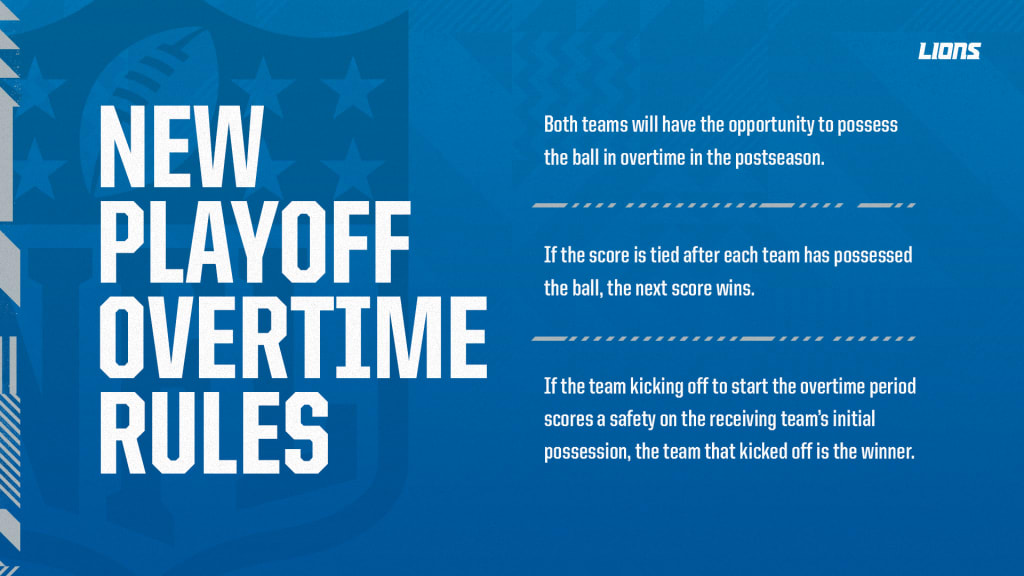
Postseason overtime rules, which were updated in 2022 to ensure that both teams have the opportunity to possess the ball regardless of whether a touchdown is scored on the opening drive, have fundamentally changed the “prop bet” market. In the playoffs, the guarantee of a second possession increases the statistical likelihood of individual player milestones (passing yards, receptions, etc.). For the sports betting industry, this rule change expanded the “live betting” window, allowing for more micro-transactions as fans bet on the outcome of the second or even third possession. This increased “time-on-device” for gambling apps translates directly into higher margins for operators like FanDuel and DraftKings.
Player Compensation and Risk Management in Extended Play
Beyond the fans and the bettors, the rules of overtime are a matter of labor economics. For the athletes on the field, overtime represents “unpaid” additional labor in the context of a fixed-salary contract, while simultaneously increasing the actuarial risk of injury.
Performance Bonuses and Incentive-Laden Contracts
Many NFL player contracts include “escalators” or performance-based incentives tied to cumulative statistics such as sacks, touchdowns, or total yards. The rules of overtime provide a literal “extra margin” for players to hit these financial benchmarks. A ten-minute overtime period in the regular season can be the difference between a quarterback hitting a 4,000-yard season bonus or falling short. From a business management perspective, agents and team cap managers must view overtime as a variable that can impact the following year’s salary cap through “likely to be earned” (LTBE) and “not likely to be earned” (NLTBE) incentives.
The Cost of Injury: Actuarial Perspectives on Overtime Durations
The NFL’s decision to shorten the regular-season overtime from fifteen minutes to ten minutes in 2017 was a calculated risk-management move. From a financial perspective, players are the league’s most valuable depreciating assets. The probability of injury increases significantly during the “fatigue window” of overtime. An injury to a star player like Patrick Mahomes or Joe Burrow doesn’t just hurt the team’s win-loss record; it impacts the franchise valuation, ticket sales, and jersey revenue. By limiting the rules of engagement in overtime, the league is effectively protecting its capital investment by reducing the “wear and tear” on its most profitable human assets.
Institutional Brand Equity and the Revenue of Fairness
Finally, the rules of overtime are an exercise in brand management and corporate identity. The NFL is a product, and the “fairness” of its rules dictates its market sentiment.
Market Sentiment and the Change in Postseason Rules
The 2022 shift to guaranteed possessions in the postseason was a direct response to consumer dissatisfaction. When the Buffalo Bills lost to the Kansas City Chiefs in the 2021 playoffs without Josh Allen touching the ball in overtime, the “product” was perceived as flawed. In corporate terms, this was a “service failure.” By changing the rules to ensure both teams possess the ball, the NFL performed a strategic pivot to protect its brand equity. A “fairer” product leads to higher fan engagement, which in turn drives up the valuation of the thirty-two franchises.
Enhancing the Product Value for Global Investors
As the NFL looks toward international expansion and potential sovereign wealth fund investment, the clarity and excitement of its overtime rules are essential for global “exportability.” The rules are designed to ensure a “climax” that is digestible for a global audience. Whether it is the tactical decision to go for a two-point conversion (which would end the game under certain postseason conditions) or the management of the clock, these rules create the “drama” that makes the NFL the most profitable sports league in the world.
In conclusion, the rules of NFL overtime are far more than a set of instructions for referees. They are the structural beams of a massive financial skyscraper. From the way they generate ad revenue to the way they influence the global gambling market and protect player assets, these rules are a masterclass in how a professional sports organization manages time, risk, and capital. For the savvy observer, a tied game at the end of the fourth quarter isn’t just a signal for more football—it’s the start of a billion-dollar fifteen-minute sprint.
aViewFromTheCave is a participant in the Amazon Services LLC Associates Program, an affiliate advertising program designed to provide a means for sites to earn advertising fees by advertising and linking to Amazon.com. Amazon, the Amazon logo, AmazonSupply, and the AmazonSupply logo are trademarks of Amazon.com, Inc. or its affiliates. As an Amazon Associate we earn affiliate commissions from qualifying purchases.