
Our ability to perceive the world in all its vibrant detail is nothing short of remarkable. From the subtle hues of a sunset to the sharp lines of a digital interface, our vision is a complex symphony of light and perception. At the heart of this symphony lie specialized cells within our eyes known as rods and cones. These photoreceptor cells are the unsung heroes of our visual system, diligently converting light into electrical signals that our brain then interprets as images. While the original question, “What are rods and cones?”, might seem straightforward, a deeper understanding reveals a fascinating interplay of biology, perception, and even how we interact with the increasingly digital world.
The Science Behind Sight: Photoreceptors and Their Roles
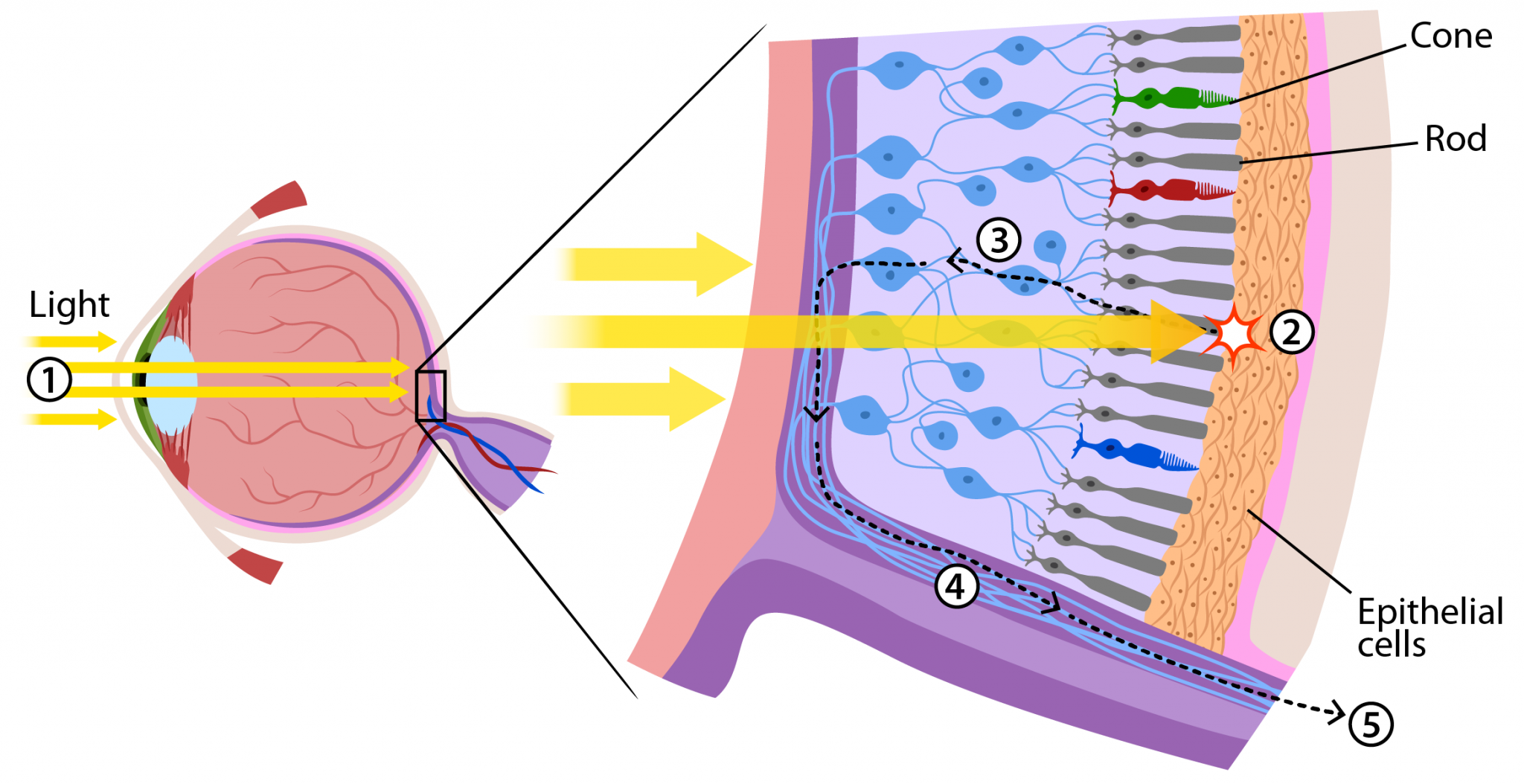
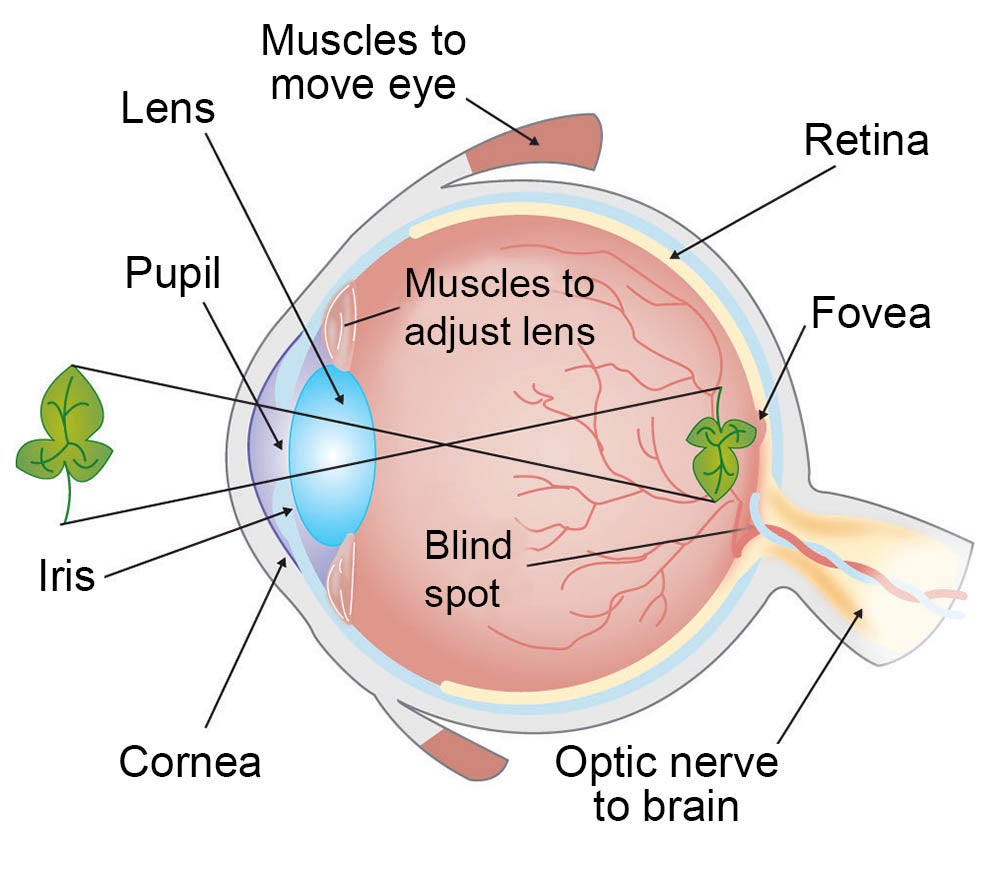
Before delving into the specifics of rods and cones, it’s crucial to grasp their fundamental purpose. Located in the retina, the light-sensitive tissue at the back of the eye, photoreceptor cells are the initial point of contact for light entering our visual system. When light strikes these cells, it triggers a series of chemical reactions that ultimately generate electrical impulses. These impulses are then transmitted through a network of neurons to the optic nerve, which carries them to the brain for processing into the images we see.
The retina is densely packed with millions of these photoreceptor cells, but they are not uniform in their distribution or function. This is where rods and cones come into play, each with distinct responsibilities that contribute to our comprehensive visual experience. Think of them as two specialized teams within your eye, each with a unique skill set tailored to specific visual tasks.
Rods: The Masters of Low Light Vision
Rods are the more numerous of the two photoreceptor types, accounting for approximately 120 million cells in each human eye. Their primary specialization lies in their exceptional sensitivity to light, making them the workhorses of our vision in dim or low-light conditions. This is why, when you step from a brightly lit room into darkness, it takes a few moments for your vision to adjust – your rods are slowly becoming more sensitive to the faint available light.
Key Characteristics of Rods:
- Sensitivity: Rods are incredibly sensitive to light, capable of detecting single photons. This allows us to see even in near-complete darkness.
- Function in Low Light: They are responsible for our scotopic vision, the type of vision we experience in dim light. This vision is monochromatic, meaning we see in shades of gray.
- Shape: As their name suggests, rods are elongated and cylindrical in shape.
- Distribution: Rods are predominantly found in the periphery of the retina, meaning they are more concentrated in the outer regions of our visual field. This is why objects at the edge of your vision might appear clearer in dim light, even if you don’t consciously focus on them.
- No Color Perception: Rods do not contribute to color vision. Their role is solely about detecting the presence or absence of light and its intensity.
- High Convergence: Rods have a high convergence ratio with other retinal neurons. This means many rods connect to a single ganglion cell, which sends signals to the brain. This pooling of signals enhances sensitivity to faint light but reduces spatial resolution, meaning we don’t perceive fine details as clearly with rods.
The evolutionary advantage of rods is clear: they enable our ancestors to navigate, forage, and avoid predators during the twilight hours or under a moonlit sky. Even in our modern, illuminated world, rods remain vital for tasks like recognizing shapes in poorly lit environments or appreciating the subtle nuances of a starlit night.
Cones: The Architects of Color and Detail
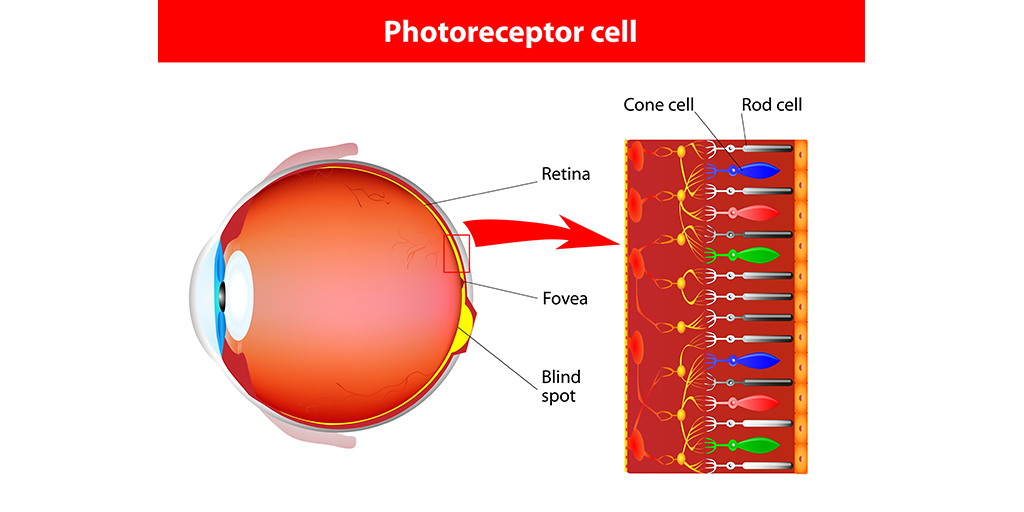
In contrast to the broad sensitivity of rods, cones are responsible for our vision in brighter light conditions and, crucially, for our ability to perceive color. While less numerous than rods, with around 6 to 7 million in each eye, cones are concentrated in the fovea, a small depression in the center of the retina, which is the area of our sharpest vision. This strategic placement allows us to focus on fine details and distinguish between different colors when there’s ample light.
Key Characteristics of Cones:
- Sensitivity: Cones are less sensitive to light than rods. They require brighter light levels to function effectively.
- Function in Bright Light: They are responsible for our photopic vision, the type of vision we experience in daylight. This vision is rich in detail and color.
- Color Vision: Cones are the basis of our color perception. There are three types of cones, each sensitive to different wavelengths of light:
- Short-wavelength cones (S-cones): Most sensitive to blue light.
- Medium-wavelength cones (M-cones): Most sensitive to green light.
- Long-wavelength cones (L-cones): Most sensitive to red light.
The brain interprets the combined signals from these three types of cones to create the perception of millions of different colors.
- Shape: Cones are shorter and more conical in shape compared to rods.
- Distribution: Cones are highly concentrated in the fovea, the central part of the retina responsible for sharp, detailed vision. This is why when you look directly at an object, you see it in its full color and with maximum clarity.
- High Spatial Resolution: Cones have a low convergence ratio, meaning each cone connects to its own ganglion cell. This allows for the transmission of detailed visual information, enabling us to distinguish fine lines, textures, and small objects.
The ability to see in color is a significant evolutionary advantage, aiding in tasks like identifying ripe fruits, distinguishing between friend and foe based on visual cues, and appreciating the aesthetic beauty of our surroundings. Without cones, the world would be a monochrome landscape, lacking the richness and depth we take for granted.
The Interplay: How Rods and Cones Work Together
It’s important to understand that rods and cones don’t operate in isolation. They work in concert, with their respective strengths complementing each other to provide a seamless and comprehensive visual experience across a wide range of lighting conditions.
- Transitioning from Light to Dark (and Vice Versa): When you move from bright sunlight into a dim room, your cones, which were highly active, begin to “desensitize.” Simultaneously, your rods, which were less active, start to “dark adapt” and become increasingly sensitive to the available light. This process takes time, which is why your vision is initially poor in the dark. The reverse happens when you move from darkness into bright light – your highly sensitive rods are quickly overwhelmed, and your cones take over, allowing you to see details and colors again.
- Peripheral vs. Central Vision: Your peripheral vision, handled primarily by rods, is excellent for detecting motion and general shapes in low light. However, for precise identification and color perception, you need to bring the object into your foveal vision, where the cones are most concentrated. This is why you might notice something moving in your peripheral vision in the dark, but to clearly identify what it is, you’ll instinctively turn your head to look directly at it.
- The Concept of “Visual Acuity”: The sharpest vision, or visual acuity, is achieved in the fovea due to the high density of cones and their direct connections to the brain. This allows us to read text, recognize faces, and appreciate intricate details. Rods, being more numerous and having higher convergence, contribute to a broader but less detailed awareness of our surroundings in dim light.
This collaborative effort ensures that we can navigate our environment effectively, whether we’re reading a digital screen in a well-lit office, spotting a subtle advertisement on a billboard, or recognizing a familiar face in a dimly lit restaurant.
Beyond Biology: Rods, Cones, and the Digital Age
While rods and cones are biological marvels, their fundamental principles of light detection and signal processing have profound implications in our increasingly digital world. Understanding these visual mechanisms can inform how we design and interact with technology.
- User Interface (UI) and User Experience (UX) Design: The principles of contrast, color saturation, and brightness are directly influenced by how our eyes, specifically our cones, perceive visual information. Designers meticulously consider these factors to create interfaces that are not only aesthetically pleasing but also easily readable and accessible. For instance, ensuring sufficient contrast between text and background leverages our cones’ ability to distinguish fine details. The selection of color palettes in apps and websites often considers color blindness, a condition that arises from deficiencies in one or more types of cones. This ties directly into Brand strategy, where visual identity is paramount and needs to be perceived correctly by a diverse audience.
- Technology for Vision Enhancement: The development of technologies that assist those with visual impairments is deeply rooted in understanding the limitations of rods and cones. From specialized screen readers that convert visual information into audio for those with limited or no light perception to advanced optical aids that magnify text, these innovations aim to bridge the gaps left by compromised photoreceptor function. This intersects with Tech trends in assistive technologies and accessibility.
- The Evolution of Display Technology: From the early pixelated displays to the high-resolution, high-dynamic-range (HDR) screens of today, the evolution of display technology is, in part, a quest to replicate the richness and detail that our cone-based vision experiences in the natural world. The ability of modern screens to display a vast spectrum of colors and subtle gradations of brightness directly appeals to the capabilities of our cones, enhancing immersion and realism in gaming, media, and virtual environments. This directly relates to advancements in Tech, particularly in display hardware and rendering algorithms.
- The Impact of Light on Perception and Productivity: The intensity and color temperature of artificial light can affect our mood, alertness, and the efficiency with which we process visual information. Understanding how our rods and cones respond to different lighting conditions can inform workplace design and personal productivity strategies. For example, using cooler, bluer light during the day might enhance alertness, while warmer, redder light might be more conducive to relaxation. This touches upon Productivity within the Tech category.
- Digital Security and Visual Cues: Our reliance on visual cues for security, such as recognizing passwords, identifying trusted online vendors, or spotting phishing attempts, is fundamentally a function of our cone-based vision. The ability to discern subtle differences in logos, website layouts, or even the color of a padlock icon is crucial for online safety. This highlights the connection between our visual biology and the need for robust Digital Security measures.
- Financial Literacy and Visual Representation: Even in the realm of Money, visual representations play a significant role. Charts, graphs, and financial dashboards all rely on our ability to interpret visual data. The clarity and accuracy of these visual aids, designed to appeal to our cones’ ability to process detail and patterns, are essential for informed decision-making in personal finance and investing.
In conclusion, the seemingly simple question, “What are rods and cones?”, opens a gateway to understanding the intricate biological machinery that underpins our visual experience. These specialized cells are not just passive observers; they are active interpreters of light, shaping our perception of the world. As we navigate an increasingly digital landscape, a deeper appreciation for the biological foundations of vision can empower us to create more effective, accessible, and engaging technologies, ultimately enhancing how we interact with information, brands, and the very fabric of our modern lives.
aViewFromTheCave is a participant in the Amazon Services LLC Associates Program, an affiliate advertising program designed to provide a means for sites to earn advertising fees by advertising and linking to Amazon.com. Amazon, the Amazon logo, AmazonSupply, and the AmazonSupply logo are trademarks of Amazon.com, Inc. or its affiliates. As an Amazon Associate we earn affiliate commissions from qualifying purchases.