
In the realm of mathematics and computer science, prime numbers are often described as the “atoms” of the numerical world. These integers, greater than 1, have no positive divisors other than 1 and themselves. While the question “what are the prime numbers from 1 to 100” might appear to be a basic arithmetic exercise, for software engineers, cryptographers, and data scientists, these numbers represent the fundamental building blocks of digital security, algorithmic efficiency, and system architecture.
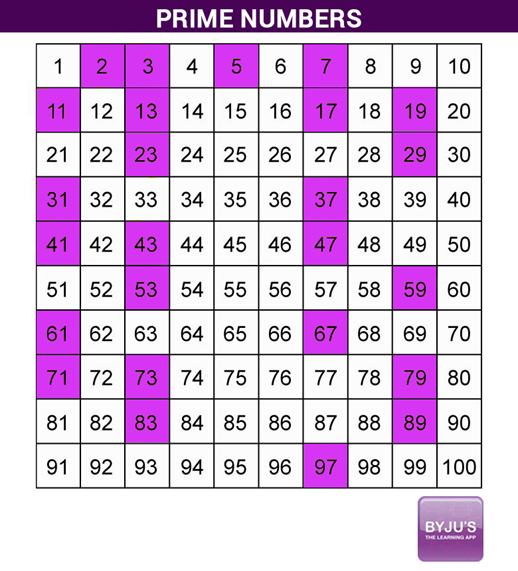
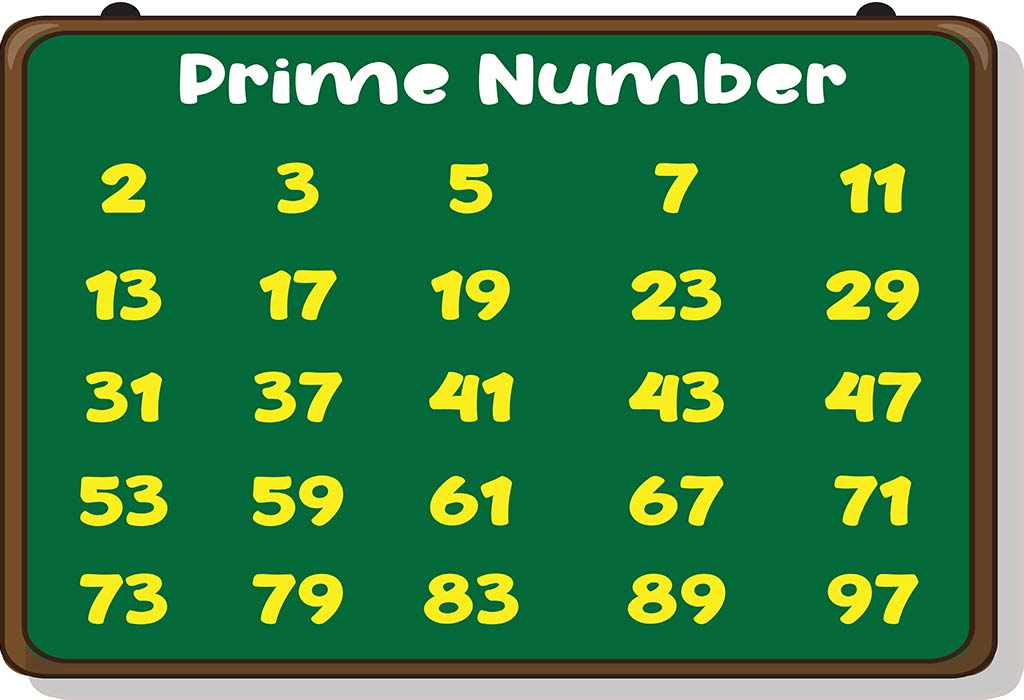
Within the range of 1 to 100, there are exactly 25 prime numbers. They are:
2, 3, 5, 7, 11, 13, 17, 19, 23, 29, 31, 37, 41, 43, 47, 53, 59, 61, 67, 71, 73, 79, 83, 89, and 97.
Understanding these numbers is not merely about memorization; it is about recognizing the patterns and properties that enable modern technology to function. From the SSL certificates that secure our web browsing to the hash tables that optimize our databases, the logic of the prime number is ubiquitous in the tech stack.
The Algorithmic Pursuit: Identifying Primes in Software Development
Identifying prime numbers within a specific range is a classic computational problem that introduces developers to the concepts of time complexity and algorithmic optimization. While a human can manually identify the 25 primes between 1 and 100 through simple trial division, a machine requires a structured approach to handle larger ranges efficiently.
Trial Division and Brute Force
The most intuitive method for identifying primes is trial division. To determine if a number n is prime, a script checks if it is divisible by any integer between 2 and the square root of n. For the range of 1 to 100, this is computationally trivial. However, as the range increases toward the billions—as is necessary in high-level cryptography—brute force becomes unsustainable. This leads developers to explore more sophisticated methodologies.
The Sieve of Eratosthenes
For generating the list of primes from 1 to 100, the most efficient classical algorithm is the Sieve of Eratosthenes. The process involves creating a list of consecutive integers and iteratively marking the multiples of each prime starting with 2.
- Create a list from 2 to 100.
- Start with the first prime (2) and strike out all its multiples (4, 6, 8…).
- Move to the next remaining number (3) and strike out its multiples.
- Continue this process until you reach the square root of 100 (which is 10).
The remaining numbers are the 25 primes. In modern software engineering, the Sieve of Eratosthenes is a benchmark for teaching $O(n log log n)$ time complexity, providing a clear example of how mathematical logic can reduce the workload of a processor.
Primalty Testing in Modern Languages
Modern programming languages like Python, C++, and Rust often utilize advanced primality tests like the Miller-Rabin test for larger numbers. While overkill for the 1–100 range, these probabilistic algorithms are essential for the AI and data security tools we use today. They rely on the unique properties of primes—properties that begin with the simple list of 25 numbers we find in the first century of integers.
Primes as the Bedrock of Cryptography and Digital Security
The most significant technological application of prime numbers lies in the field of cryptography. Our entire digital economy, from blockchain transactions to secure messaging apps like Signal and WhatsApp, relies on the mathematical difficulty of factoring large numbers into their prime components.
The RSA Algorithm and the Power of Product
The RSA (Rivest-Shamir-Adleman) encryption algorithm is the most prominent example of prime numbers in tech. RSA security is built on a simple yet profound asymmetrical truth: it is computationally easy to multiply two large prime numbers together to get a product, but it is extremely difficult for even the world’s most powerful supercomputers to reverse that process (integer factorization) if the primes are sufficiently large.
When we look at the primes from 1 to 100, we see the “small” versions of these security keys. For example, multiplying 13 and 97 gives us 1,261. Identifying the factors of 1,261 is relatively easy. However, in modern security, we use “giant” primes—numbers with hundreds of digits. The principles remain the same as those found in the 1–100 range, but the scale ensures that a brute-force attack would take longer than the current age of the universe to crack.
Public and Private Keys
In a cryptographic system, the product of two primes serves as the basis for the public key, which anyone can use to encrypt a message. The two original primes serve as the private key, which is the only “tool” capable of decrypting the information. This foundational concept of “one-way functions” is what allows for secure data transmission over insecure networks. Without the unique properties of prime numbers, digital privacy as we know it would cease to exist.
Data Structures and System Architecture Optimization
Beyond security, prime numbers play a vital role in the internal mechanics of software systems, specifically in how data is stored, retrieved, and distributed across servers.
Hash Tables and Collision Avoidance
A hash table is a data structure used to implement associative arrays, allowing for rapid data retrieval. To function correctly, a hash table uses a “hash function” to map data to specific indices. A common challenge in this process is “clustering” or “collisions,” where multiple pieces of data are mapped to the same index, slowing down the system.
Engineers frequently use prime numbers to determine the size of these hash tables. Using a prime number (like 31, 67, or 97 from our 1–100 list) as the divisor in a modulo operation helps distribute data more uniformly across the table. Because prime numbers do not have common factors with other numbers, they minimize patterns that lead to collisions, ensuring that software applications remain fast and responsive.
Load Balancing in Distributed Systems
In the world of cloud computing and microservices, load balancers distribute incoming network traffic across a fleet of servers. Some load-balancing algorithms utilize prime numbers to ensure an even distribution of requests. By utilizing prime-based intervals for health checks or traffic routing, developers can avoid “resonance” issues where multiple automated processes sync up and overwhelm a single server simultaneously.
Pseudo-Random Number Generation (PRNG)
Randomness is essential in everything from video game mechanics to simulations and AI training. Computers, being deterministic, cannot generate “true” randomness. Instead, they use algorithms to create pseudo-random sequences. Many of these algorithms, such as the Linear Congruential Generator, rely on large prime numbers to ensure the sequence of numbers does not repeat too quickly and maintains a high degree of statistical randomness.
The Future: Quantum Computing and Post-Quantum Cryptography
As we look toward the future of technology, the role of the prime number is undergoing a significant shift. The advent of quantum computing poses a theoretical threat to the prime-based encryption we use today.
Shor’s Algorithm
In 1994, mathematician Peter Shor developed a quantum algorithm that could, in theory, factorize large integers exponentially faster than any classical computer. If a high-functioning quantum computer is ever built, the RSA encryption that protects our global financial systems could be rendered obsolete in minutes.
The Shift to Post-Quantum Standards
Tech giants and cybersecurity agencies are currently in a race to develop “post-quantum cryptography.” While this new frontier explores different mathematical structures, such as lattice-based cryptography, the logic of the prime number remains a central point of reference. Engineers are looking for ways to create even more complex “hard problems” that even quantum “qubits” cannot easily solve.
Even in a post-quantum world, the primes from 1 to 100 will remain the fundamental teaching tools. They are the entry point for every developer learning about number theory, the necessity of algorithmic efficiency, and the critical importance of secure architecture.
Conclusion
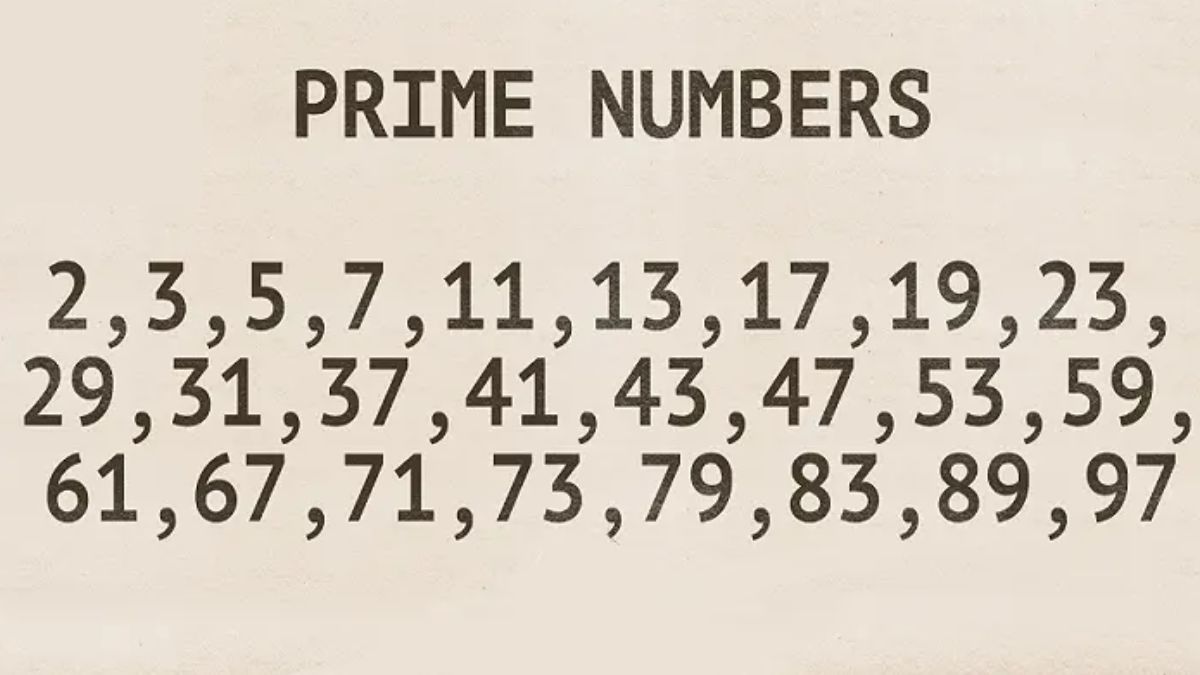
The list of prime numbers from 1 to 100—2, 3, 5, 7, 11, 13, 17, 19, 23, 29, 31, 37, 41, 43, 47, 53, 59, 61, 67, 71, 73, 79, 83, 89, 97—is far more than a mathematical curiosity. For the tech industry, these numbers represent the intersection of pure logic and practical application. They are the guardians of our data, the optimizers of our databases, and the core of the algorithms that drive the modern digital experience. Understanding their properties is not just an academic exercise; it is an essential requirement for anyone looking to build, secure, or understand the complex technological landscape of the 21st century.
aViewFromTheCave is a participant in the Amazon Services LLC Associates Program, an affiliate advertising program designed to provide a means for sites to earn advertising fees by advertising and linking to Amazon.com. Amazon, the Amazon logo, AmazonSupply, and the AmazonSupply logo are trademarks of Amazon.com, Inc. or its affiliates. As an Amazon Associate we earn affiliate commissions from qualifying purchases.