
The names of Santa’s reindeer—Dasher, Dancer, Prancer, Vixen, Comet, Cupid, Donner, Blitzen, and the later addition, Rudolph—represent much more than a list of festive figures. From a brand strategy perspective, this ensemble constitutes one of the most successful examples of character branding and intellectual property development in history. What began as a localized poem has evolved into a multi-billion-dollar global franchise, demonstrating how naming conventions, narrative consistency, and strategic brand extension can sustain a legacy for over two centuries.
To understand why these names resonate so deeply within the consumer consciousness, one must analyze the “Santa’s Reindeer” brand not as a mere collection of mythical animals, but as a masterfully executed branding ecosystem.

The Origin of the Ensemble: Establishing a Core Brand Identity
The foundational names of the reindeer fleet were introduced to the public in the 1823 poem “A Visit from St. Nicholas” (commonly known as “The Night Before Christmas”). From a marketing standpoint, this publication served as the “Brand Bible” for the Christmas mythos. Prior to this, the figure of St. Nicholas was often portrayed as a solitary traveler. The introduction of the reindeer provided Santa with a “support team,” effectively scaling the brand and adding layers of complexity to the narrative.
From “A Visit from St. Nicholas” to Global Recognition
The 1823 poem established eight original names: Dasher, Dancer, Prancer, Vixen, Comet, Cupid, Dunder, and Blixem. For any modern brand, consistency is the bedrock of recognition. Over time, “Dunder and Blixem” (Dutch for “thunder and lightning”) evolved into “Donner and Blitzen” to better suit the phonetic preferences of a growing English-speaking market—a classic example of brand localization.
By defining a set number of characters with specific names, the author created a “closed loop” of brand identity. Consumers no longer had to imagine how Santa traveled; they were given a specific, repeatable list of assets to memorize. This repeatability is what allowed the names to transition from a written poem into oral tradition, and eventually, into the global lexicon.
The Power of Distinctive Naming Conventions
The names chosen for the reindeer were not arbitrary. Each name suggests a specific brand attribute or “personality” that contributes to the collective mission. “Dasher” and “Prancer” evoke speed and agility; “Vixen” suggests a certain sharpness or cleverness; “Donner” and “Blitzen” provide a sense of power and atmospheric scale.
In modern branding, this is known as “attribute-based naming.” By assigning specific traits to each member of the team, the Santa brand created multiple entry points for consumer connection. Children and adults alike can choose a “favorite” reindeer, a psychological phenomenon that increases brand loyalty and engagement.
Rudolph the Red-Nosed Reindeer: The Masterclass in Brand Extension
If the original eight reindeer established the brand’s core identity, the introduction of Rudolph in 1939 represents the most successful brand extension in the history of holiday marketing. Rudolph was not a product of ancient folklore, but rather a deliberate marketing creation for the retail giant Montgomery Ward.
Identifying a Unique Selling Proposition (USP)
Robert L. May, a copywriter for Montgomery Ward, was tasked with creating a character for a promotional coloring book. The result was Rudolph, a reindeer defined by a “defect”—a glowing red nose. In branding terms, this was the ultimate Unique Selling Proposition (USP). While the other eight reindeer functioned as a cohesive unit, Rudolph stood out as the “hero” character who solved a specific problem (navigating through fog).
The story of Rudolph illustrates the power of a “Hero’s Journey” narrative in brand building. By overcoming adversity to save the “corporate mission” (delivering gifts), Rudolph became more than just a name; he became a symbol of resilience. This emotional resonance is what allowed Rudolph to eventually overshadow the original eight in terms of individual brand equity.
Leveraging Narrative to Pivot Brand Perception
The addition of Rudolph also served to revitalize the existing reindeer brand. By introducing a ninth member, the narrative shifted from a static group to a dynamic team. This “rebranding” allowed the franchise to enter new media markets, including hit songs (Gene Autry’s 1949 recording) and television specials (the 1964 Rankin/Bass production).
For businesses, the Rudolph case study proves that a well-executed brand extension can breathe new life into an aging intellectual property. It demonstrates that consumers are willing to accept new additions to a “legacy” brand if the new character aligns with the core values while offering something distinctively new.
Visual Identity and Anthropomorphic Marketing
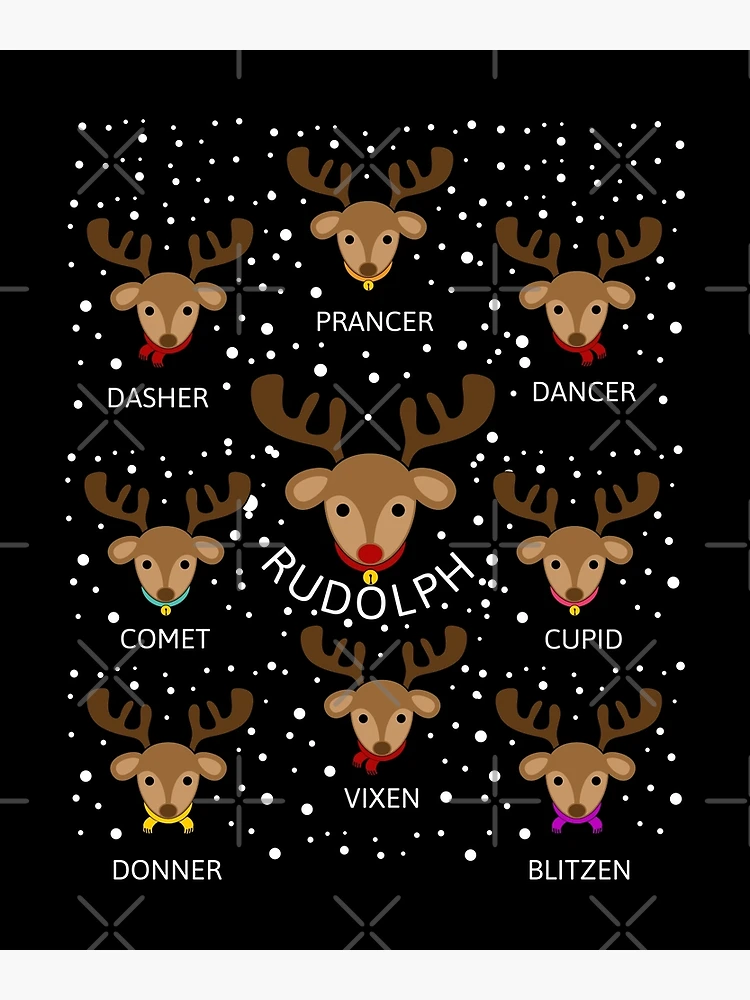
The names of the reindeer are bolstered by a visual identity that has remained remarkably consistent across various mediums. Whether in a 19th-century woodblock print or a 21st-century CGI animation, the reindeer are almost always depicted in a specific formation, wearing a specific style of harness, and led by the same iconic figures.
Consistency Across Media Channels
In the world of corporate identity, this is referred to as “brand guidelines.” The reindeer names are synonymous with a specific aesthetic: the bells, the reins, and the mid-air gallop. Because the visual identity was standardized early on through literature and illustration, the “Santa’s Reindeer” brand has been able to maintain a unified presence across thousands of different manufacturers, filmmakers, and publishers.
This consistency allows for “brand shortcuts.” A consumer only needs to see a silhouette of eight or nine reindeer to immediately associate it with Christmas. This level of market saturation is rare and is only achieved through decades of unwavering adherence to a core visual and nomenclature-based strategy.
The Psychological Impact of Character Archetypes
The reindeer fleet utilizes archetypal marketing to ensure broad appeal. Within the list of names, we find the “Leader” (Rudolph), the “Strongman” (Donner), and the “Speedster” (Dasher). By populating the brand with these archetypes, the creators ensured that the characters felt familiar to audiences even before their individual stories were told.
When a brand uses names that imply specific roles, it reduces the “cognitive load” for the consumer. They don’t have to learn who the characters are; the names tell the story. This is a strategy used by modern brands like the Avengers or the Justice League, yet it was perfected by the reindeer ensemble long before the advent of the modern comic book.
Intellectual Property and the Commercialization of Folklore
The names of Santa’s reindeer have effectively transitioned from “public domain” folklore into a highly commercialized set of trademarks and copyrighted materials. While the names themselves often reside in the public domain, the specific iterations and character designs associated with them (such as the Rankin/Bass versions) are strictly protected assets.
Licensing and Merchandising the Reindeer “Squad”
The “squad” dynamic of the reindeer names is a goldmine for merchandising. By having a group of nine characters, marketers can sell “sets” of ornaments, plush toys, and apparel. This encourages “collection-based” consumer behavior. A child doesn’t just want a Rudolph toy; they want the whole team.
This strategy is identical to how modern luxury brands or tech ecosystems operate. By creating a suite of interconnected products (or characters), the brand increases its “per-user value.” The names function as individual SKUs (Stock Keeping Units) within a larger festive catalog.
Protecting the Brand Heritage in a Digital Age
In the digital era, the names of the reindeer are protected by their sheer ubiquity. They have become “genericized” in some ways, yet they maintain a high degree of “search intent” and “brand authority.” Every year, millions of people search for “What are the names of Santa’s reindeer?” This recurring interest ensures that the brand remains relevant without the need for a massive, centralized advertising budget.
The brand’s heritage is protected not by legal teams alone, but by “cultural consensus.” Because the names are taught to children at a young age, the brand is “pre-installed” in the minds of future consumers. This is the ultimate goal of any brand strategy: to become an inextricable part of the cultural fabric.
Lessons for Modern Marketers: Scalability and Storytelling
The enduring legacy of the reindeer names offers several critical insights for modern brand managers and entrepreneurs. It highlights the importance of narrative-driven marketing and the ability of a brand to scale through the addition of new, complementary elements.
Building an Ecosystem Around a Primary Figure
Santa Claus is the “Parent Brand,” but the reindeer are the “Sub-Brands” that make the parent brand’s promise (delivering gifts globally in one night) believable. For modern companies, this illustrates the “Feature-Benefit” relationship. Santa is the benefit (presents), but the reindeer are the features (logistics, speed, reliability).
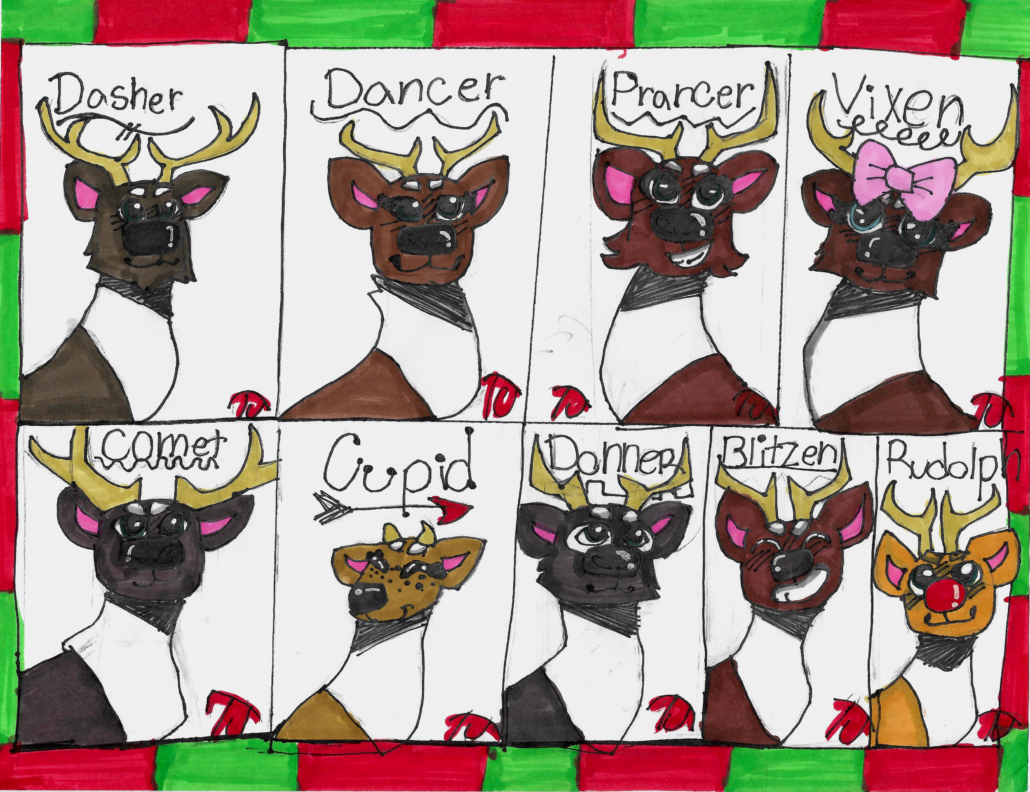
A brand that relies solely on a single personality is vulnerable. By building an ecosystem of supporting characters or sub-brands, a company can create a more resilient and versatile market presence. Each reindeer name serves as a “touchpoint” that reinforces the overall brand promise.
Longevity Through Emotional Connection
Ultimately, the names of Santa’s reindeer have survived because they are attached to a powerful emotional experience. Branding is not just about logos and names; it is about how a consumer feels when they encounter the brand. The reindeer names evoke nostalgia, warmth, and a sense of wonder.
For a brand to last 200 years, it must transcend its functional utility and become a vessel for consumer emotion. Whether you are naming a software startup or a new line of consumer goods, the goal is the same: to create a name that, over time, becomes synonymous with a specific, positive, and repeatable experience. The reindeer names are a testament to the fact that when storytelling and brand strategy align, the results can be truly timeless.
aViewFromTheCave is a participant in the Amazon Services LLC Associates Program, an affiliate advertising program designed to provide a means for sites to earn advertising fees by advertising and linking to Amazon.com. Amazon, the Amazon logo, AmazonSupply, and the AmazonSupply logo are trademarks of Amazon.com, Inc. or its affiliates. As an Amazon Associate we earn affiliate commissions from qualifying purchases.