
The American financial landscape is anchored by a select group of institutions that command trillions of dollars in assets, influence global markets, and provide the essential infrastructure for the nation’s economy. Understanding who these major players are is critical for anyone navigating personal finance, business investment, or corporate strategy. These institutions, often referred to as “too big to fail,” are classified by the Federal Reserve and international regulators as Systemically Important Financial Institutions (SIFIs).
In the United States, the banking sector is dominated by a “Big Four” that towers over the competition in terms of domestic deposits and total assets. However, the ecosystem also includes powerful regional banks and investment-heavy giants that have increasingly moved into the retail space.

The Big Four: Pillars of the U.S. Banking System
The “Big Four” represents the pinnacle of American banking. These institutions—JPMorgan Chase, Bank of America, Citigroup, and Wells Fargo—collectively hold nearly half of all customer deposits in the United States. Their reach extends from small-town branches to the highest levels of international investment banking.
JPMorgan Chase & Co.
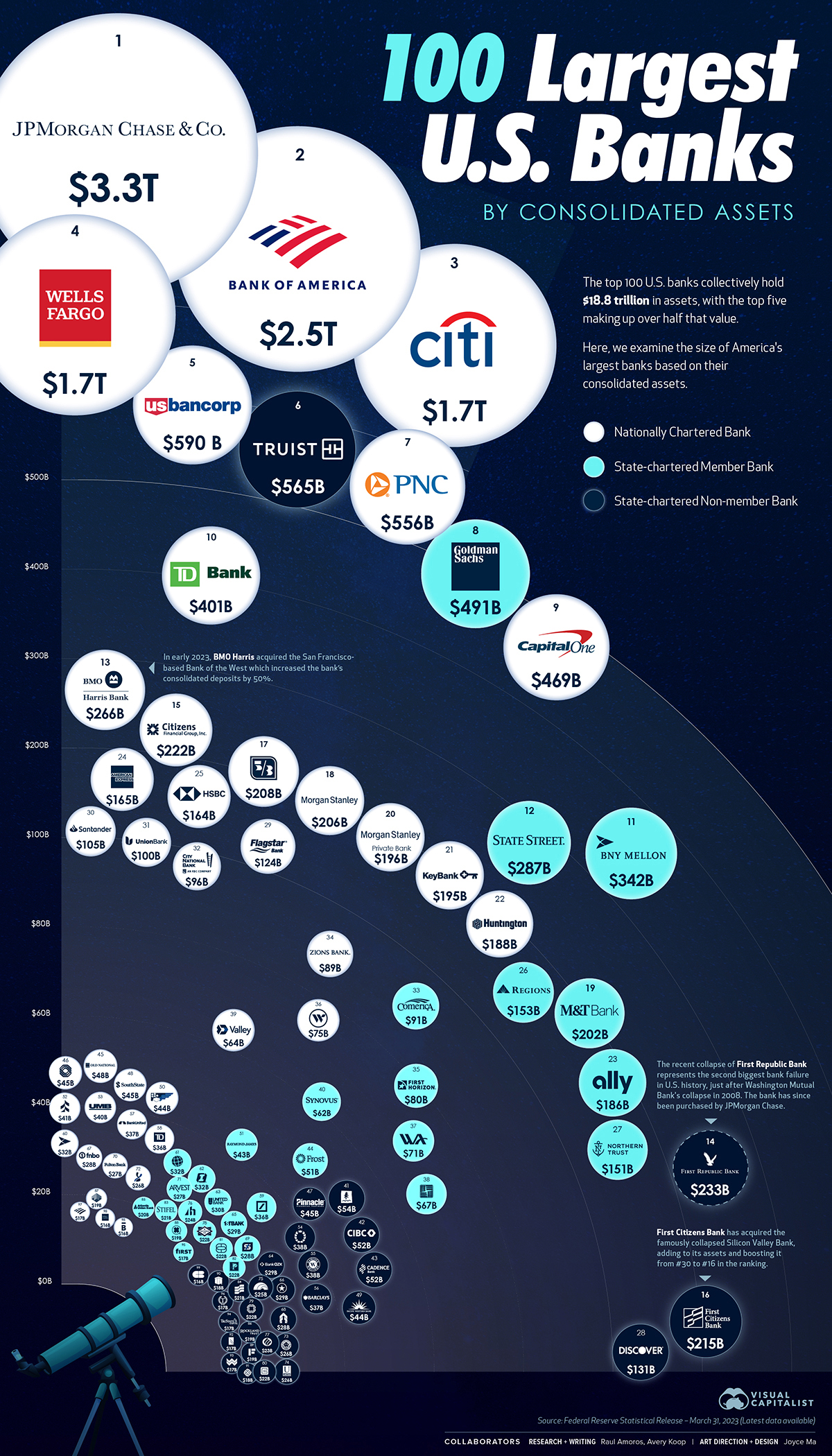
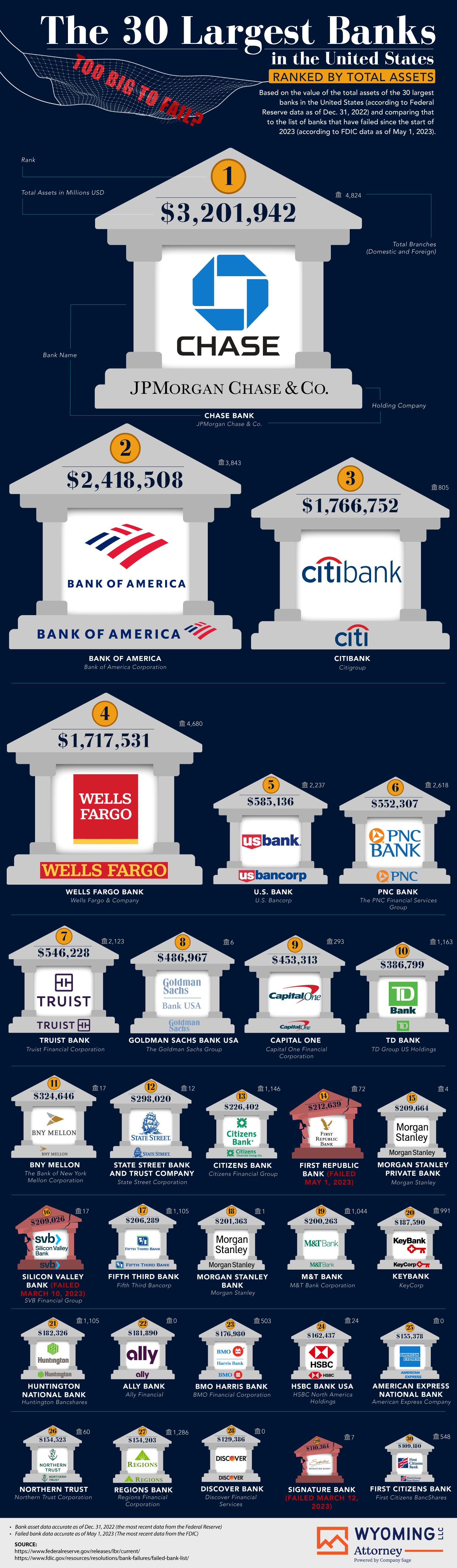
As the largest bank in the United States and one of the largest in the world, JPMorgan Chase is the undisputed leader of the American financial sector. With total assets exceeding $3.4 trillion, the firm operates through two primary segments: its consumer and community banking brand, Chase, and its corporate and investment banking arm, JPMorgan.
Chase is known for its aggressive expansion and technological innovation. It maintains one of the largest branch networks in the country, ensuring physical accessibility for millions of Americans. From a personal finance perspective, Chase is often cited for its premium credit card offerings, such as the Sapphire line, and its integrated mobile banking app, which sets the industry standard for user experience. Financially, the bank is lauded for its “fortress balance sheet,” a term coined by CEO Jamie Dimon to describe the institution’s ability to remain profitable and stable even during severe economic downturns.
Bank of America (BofA)
Bank of America holds the second-largest spot in the U.S. hierarchy, with assets hovering around $2.5 trillion. Headquartered in Charlotte, North Carolina, BofA has successfully positioned itself as a leader in digital transformation. Its “Erica” AI-driven virtual assistant and its award-winning mobile platform have made it a favorite for tech-savvy consumers.
One of BofA’s greatest strengths is its integration with Merrill (formerly Merrill Lynch), providing a seamless bridge between traditional retail banking and high-level wealth management and investing. This synergy allows customers to manage their checking accounts and retirement portfolios under a single digital umbrella, a strategy that has bolstered customer retention in an increasingly competitive market.
Citigroup (Citi)
Citigroup is unique among the Big Four due to its immense global footprint. While its domestic retail presence is smaller than that of Chase or Bank of America—concentrated primarily in major metropolitan areas like New York, Chicago, and Los Angeles—its international operations are unrivaled.
Citi serves as a critical partner for multinational corporations, providing sophisticated cash management, trade finance, and investment banking services across more than 160 countries. For the individual consumer, Citigroup is perhaps best known for its massive credit card business, being one of the world’s largest issuers of credit cards through partnerships with major retailers like Costco and American Airlines.
Wells Fargo & Company
Despite facing significant regulatory scrutiny and internal restructuring over the past decade, Wells Fargo remains a cornerstone of American finance. With assets totaling approximately $1.7 trillion, it has historically focused on the core of retail banking: mortgages, small business loans, and personal savings.
Wells Fargo has a deeper physical presence in many parts of the U.S. West and Midwest than its competitors. In recent years, the bank has undergone a massive transformation to modernize its operations and regain consumer trust. It remains a dominant force in the residential mortgage market, originating a significant portion of home loans across the United States.
Leading Regional Powerhouses and Specialized Giants
Beyond the Big Four, several other institutions hold “major” status based on their regional dominance, specialized services, or significant asset bases. These banks often provide a middle ground for consumers who want the security of a large institution but prefer the service model of a regional player.
U.S. Bancorp (U.S. Bank)
Based in Minneapolis, U.S. Bancorp is the parent company of U.S. Bank, the fifth-largest commercial bank in the country. It is widely regarded as one of the most efficiently run banks in the nation. While it does not have the global investment banking scale of a JPMorgan, it dominates the Midwest and West Coast retail markets. U.S. Bank is frequently recognized for its ethical business practices and strong customer service ratings, making it a top choice for conservative investors and regional businesses.
PNC Financial Services
PNC has grown significantly through strategic acquisitions, most notably its purchase of BBVA USA. This move expanded its reach from its traditional stronghold in the Northeast and Mid-Atlantic into the Sunbelt states like Texas and Arizona. PNC is often a leader in “branch of the future” concepts, utilizing smaller, tech-heavy physical locations and high-yield digital savings products to compete with both traditional giants and newer neobanks.
Truist Financial Corporation
Truist is the result of the 2019 “merger of equals” between BB&T and SunTrust. This merger created a powerhouse in the Southeastern United States. Truist focuses heavily on a “purpose-driven” banking model, aiming to balance digital convenience with high-touch personal service. It is a major player in commercial middle-market lending, providing the capital necessary for mid-sized businesses to scale.
Goldman Sachs and Morgan Stanley
While traditionally viewed strictly as investment banks, both Goldman Sachs and Morgan Stanley have pivoted toward retail and wealth management in recent years. Goldman Sachs’ “Marcus” platform offers high-yield savings and personal loans, bringing institutional-grade financial logic to the everyday consumer. Morgan Stanley’s acquisition of E*TRADE signaled its intent to dominate the self-directed investing market, merging traditional brokerage services with advanced digital tools.
The Evolution of “Major”: The Digital and Fintech Impact
In the modern financial era, the definition of a “major bank” is no longer limited to those with the most physical branches. Digital-first institutions and specialized financial tools are challenging the status quo, forcing traditional banks to evolve or risk losing market share in the personal finance and small business sectors.
Capital One Financial
Capital One started as a credit card company but has evolved into a full-scale major bank with a significant branch presence, including its innovative “Capital One Cafés.” By combining a tech-heavy approach with high-interest savings accounts and no-fee checking, Capital One has successfully attracted a younger demographic that prioritizes digital ease and transparent fee structures. It currently sits among the top ten largest banks in the country by assets.
The Rise of Neobanks
While not “banks” in the traditional sense (many partner with FDIC-insured institutions to hold deposits), companies like SoFi and Ally Bank have reached a scale where they must be considered major players in the money management space. Ally, a spin-off from GMAC, is a leader in the online-only banking world, offering competitive APYs (Annual Percentage Yields) that traditional brick-and-mortar banks often struggle to match due to their higher overhead costs.
Evaluating Bank Strength: What Consumers and Businesses Should Know
When identifying the major banks in America, it is not enough to look at asset size alone. One must also consider the regulatory and safety frameworks that govern these institutions. The “majors” are subject to rigorous annual stress tests by the Federal Reserve to ensure they can withstand economic shocks like a housing market collapse or a sharp rise in unemployment.
The Role of FDIC Insurance
All major banks listed above are members of the Federal Deposit Insurance Corporation (FDIC). This means that in the unlikely event of a bank failure, deposits are insured up to $250,000 per depositor, per account ownership category. This insurance is the bedrock of consumer confidence in the American banking system.
Choosing Between National and Regional Majors
For the individual, the choice often comes down to a trade-off between convenience and cost. National majors (the Big Four) offer the most ATMs and the most robust international capabilities, but they may also have higher monthly maintenance fees or lower interest rates on savings. Regional majors (like PNC or Truist) often provide more competitive rates and a more localized understanding of the economic landscape, which can be invaluable for small business owners seeking lines of credit.
The Future of American Banking
The landscape of major banks in America is not static. We are currently witnessing a period of consolidation where mid-sized banks are merging to achieve the “scale” necessary to compete with JPMorgan and Bank of America’s multi-billion dollar annual technology budgets. As artificial intelligence and blockchain technology continue to integrate into the financial sector, the major banks of tomorrow will likely be those that can most effectively blend massive capital reserves with agile, tech-forward customer solutions.
In conclusion, the major banks in America—led by JPMorgan Chase, Bank of America, Citigroup, and Wells Fargo—form the backbone of the global financial system. They provide the liquidity, stability, and technological tools that drive personal wealth and corporate growth. Whether through a traditional branch or a high-speed mobile app, these institutions remain the primary gatekeepers of the American dream, managing the flow of capital that powers every sector of the economy.
aViewFromTheCave is a participant in the Amazon Services LLC Associates Program, an affiliate advertising program designed to provide a means for sites to earn advertising fees by advertising and linking to Amazon.com. Amazon, the Amazon logo, AmazonSupply, and the AmazonSupply logo are trademarks of Amazon.com, Inc. or its affiliates. As an Amazon Associate we earn affiliate commissions from qualifying purchases.