
In the complex landscape of business finance, the term “loss leader” often sounds counterintuitive to the uninitiated. Why would a company intentionally sell a product at a price lower than its cost of production or acquisition? On the surface, it appears to be a financial blunder. However, when viewed through the lens of strategic business finance and long-term customer acquisition, the loss leader strategy is one of the most powerful tools in a retailer’s or service provider’s arsenal.
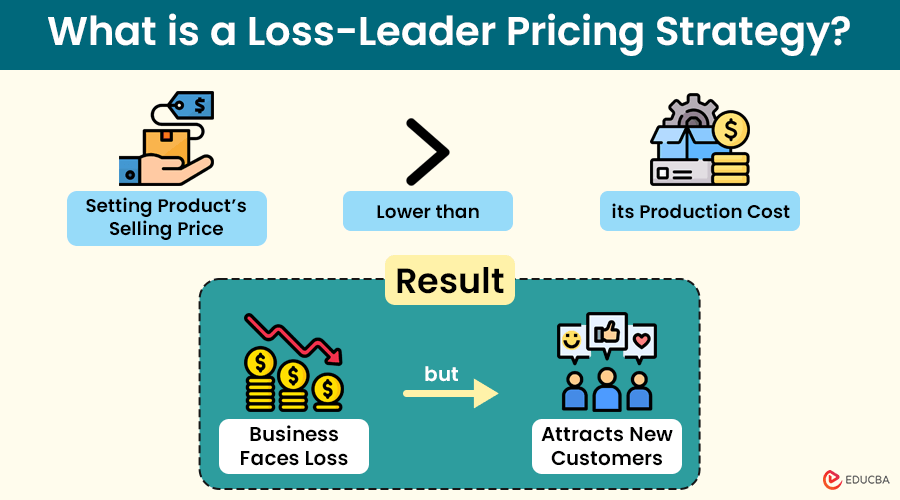
A loss leader is a pricing strategy where a product is sold at a price that is not profitable, but it is sold to attract new customers or to sell additional, more profitable products to those customers. It is a calculated gamble—a deliberate sacrifice of short-term margins for the sake of long-term revenue growth and market share expansion. To understand the financial mechanics of loss leaders is to understand the psychology of the consumer and the delicate balance of a company’s overall profit-and-loss statement.
The Financial Mechanics of Loss Leader Pricing
At its core, the loss leader strategy is a component of a broader financial framework known as “leader-follower” pricing. While the “leader” item generates a net loss on each unit sold, the “follower” items (the complementary goods or subsequent purchases) are priced to recover that loss and generate a healthy surplus.
The Concept of Marginal Loss vs. Total Revenue
In traditional accounting, every SKU (Stock Keeping Unit) is often expected to carry its own weight. However, sophisticated financial management looks at the “basket” rather than the individual item. A marginal loss on a gallon of milk, for example, is acceptable if it facilitates a total basket value of $50, where the other items carry a 30% margin. The financial objective is to maximize the Total Contribution Margin of the customer’s visit, rather than the margin of a single product.
Customer Acquisition Cost (CAC) and Lifetime Value (LTV)
From a business finance perspective, the loss incurred on a loss leader is essentially a marketing expense. Instead of spending thousands on a digital ad campaign that may or may not convert, a business “spends” that money by discounting a high-demand product. If the cost of the discount required to bring a customer through the door is $5, and that customer spends $100 over the next year with a 20% profit margin, the “investment” in the loss leader has a massive return on investment (ROI). This relationship between Customer Acquisition Cost (CAC) and Lifetime Value (LTV) is the heartbeat of the loss leader model.
Unit Economics and Volume Velocity
Loss leaders are often high-velocity goods. By pricing these items aggressively, a business can move massive amounts of inventory. In some financial models, this high volume allows the company to negotiate better terms with suppliers due to bulk purchasing, potentially lowering the cost of goods sold (COGS) across their entire inventory. This creates a virtuous cycle where the financial “loss” on the leader item actually strengthens the supply chain economics for the rest of the business.
Strategic Applications in Modern Business Finance
The loss leader strategy is not a monolith; it manifests differently across various industries, from traditional brick-and-mortar retail to high-tech digital ecosystems. Understanding these applications helps businesses decide which financial model fits their specific goals.
Retail Giants and Grocery Staples
The most classic examples of loss leaders are found in grocery stores. Milk, eggs, and rotisserie chickens are frequently sold at or below cost. Retailers know that these are “destination items.” A customer rarely enters a store just for a rotisserie chicken; they will likely pick up sides, drinks, or household supplies. The financial success of this model relies on store layout—placing the loss leader at the back of the store to force the customer to walk past hundreds of higher-margin impulse buy items.
The Razor-and-Blades Business Model
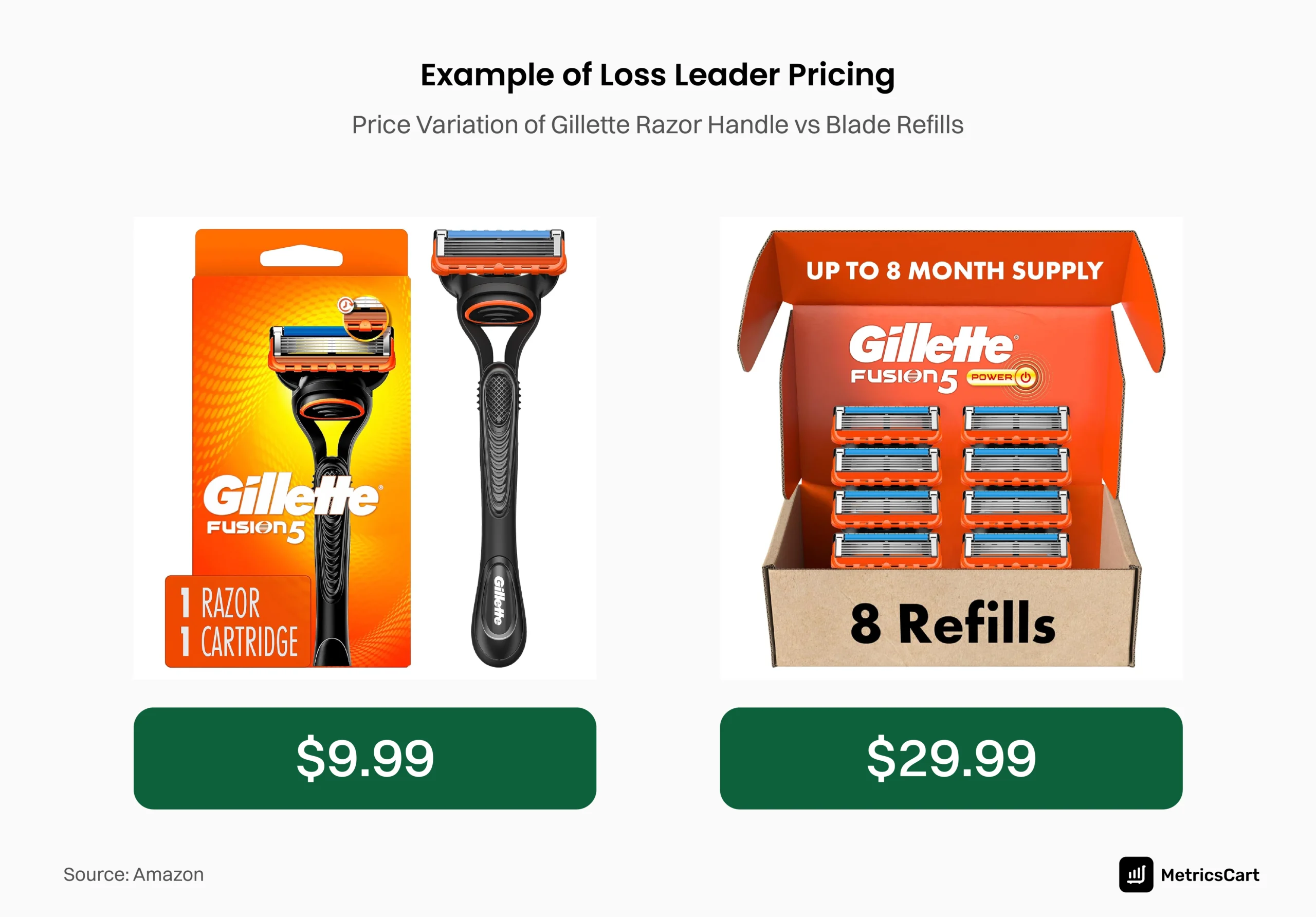
Pioneered by King C. Gillette, this model involves selling a durable good (the razor handle) at a loss or at cost to create a locked-in market for high-margin consumables (the blades). We see this today in the financial structures of printer manufacturers, who sell hardware at a loss to profit from ink cartridges, and coffee machine companies that sell brewers cheaply to capitalize on the recurring revenue of coffee pods. This shifts the financial focus from a one-time transaction to a recurring revenue stream.
Digital Ecosystems and Subscription Hooks
In the world of online income and digital business, the loss leader often takes the form of a “freemium” model or a heavily discounted introductory offer. Software-as-a-Service (SaaS) companies might offer a basic version of their tool for free. Financially, the “loss” here is the server cost and support for non-paying users. However, this serves as the ultimate lead generation tool, converting a percentage of those users into high-paying enterprise clients. Similarly, streaming services often use “first month for $1” promotions to lower the barrier to entry, banking on the high “stickiness” of the service to recoup the initial financial hit over the following 12 to 24 months.
Navigating the Financial Risks and Pitfalls
While the loss leader strategy can drive exponential growth, it is fraught with financial risks that can lead to a “death spiral” if not managed with precision. CFOs and business owners must be vigilant about the following factors.
The “Cherry Picking” Phenomenon
The greatest threat to a loss leader strategy is the “cherry picker”—a consumer who enters the store, buys only the loss leader, and leaves. If a significant percentage of the customer base behaves this way, the business is simply subsidizing the consumer’s lifestyle without any hope of recouping the loss. To mitigate this, businesses often implement “limit per customer” rules or require a minimum spend on other items to qualify for the discount.
Brand Erosion and Price Anchoring
From a brand and financial perspective, if a product is sold at a loss for too long, the “anchor price” in the consumer’s mind becomes that lower price. This makes it nearly impossible to raise prices back to profitable levels in the future without losing the customer base. Financially, this can permanently impair the margins of a specific product category.
Legal and Ethical Considerations: Predatory Pricing
There is a fine line between a strategic loss leader and “predatory pricing.” In many jurisdictions, selling products below cost with the intent to drive competitors out of business and create a monopoly is illegal under antitrust laws. Businesses must ensure that their pricing strategies are defensible as legitimate promotional activities rather than anti-competitive behavior that could lead to costly legal battles and fines.
Implementing a Sustainable Loss Leader Strategy
For a loss leader to work as a financial tool, it must be part of a calculated, data-driven plan. It is not about slashing prices haphazardly; it is about surgical precision in pricing.
Identifying the Right “Leader” Product
Not every product can be a loss leader. The ideal candidate is a product with high purchase frequency, high price awareness among consumers, and a strong correlation with other purchases. For an online business, this might be a basic “how-to” ebook that leads into a high-ticket coaching program. For a hardware store, it might be a power drill that requires the later purchase of bits, cases, and batteries.
Optimizing Store Layout and Upselling Techniques
The financial success of the loss leader is dependent on the “attach rate”—the frequency with which customers buy additional items. In a digital sense, this involves optimized “upsell” and “cross-sell” funnels. If a customer buys a discounted financial tool, the checkout process should immediately suggest complementary tools or premium upgrades. The data must show that for every dollar lost on the leader, at least three dollars are gained in margin from the followers.
Monitoring Key Performance Indicators (KPIs)
A business employing loss leaders must track specific financial metrics with religious fervor:
- Attach Rate: What percentage of people buying the loss leader also buy a full-price item?
- Average Order Value (AOV): Is the total basket size increasing despite the discount?
- Break-even Time: How many months of a subscription are needed to recoup the initial acquisition loss?
- Churn Rate: Are customers staying long enough to make the initial loss profitable?
Conclusion: The Long-Term Value of the Strategic Loss
In the world of finance and business management, the loss leader is a testament to the idea that you sometimes have to take a step back to take two steps forward. By understanding the deep psychological triggers of the consumer and the cold, hard mathematics of unit economics, a business can use loss leaders to build a loyal customer base and a robust bottom line.
However, the strategy requires constant calibration. Markets shift, competitor pricing changes, and consumer habits evolve. A successful financial leader knows that a loss leader is not a permanent fixture but a dynamic tool—a “hook” that must be monitored to ensure it is bringing in the right kind of “catch.” When executed with discipline, the loss leader strategy transforms from a simple discount into a sophisticated engine for sustainable business growth and long-term financial health.
aViewFromTheCave is a participant in the Amazon Services LLC Associates Program, an affiliate advertising program designed to provide a means for sites to earn advertising fees by advertising and linking to Amazon.com. Amazon, the Amazon logo, AmazonSupply, and the AmazonSupply logo are trademarks of Amazon.com, Inc. or its affiliates. As an Amazon Associate we earn affiliate commissions from qualifying purchases.