
Electrical injuries, while often associated with severe trauma, can manifest in a surprising variety of ways. Understanding these different types is crucial, not only for those working in high-risk electrical environments but also for anyone who might encounter electrical hazards in their daily lives. From the immediate physical devastation to subtle long-term neurological effects, the impact of electricity on the human body is complex and multifaceted. This article delves into the four primary categories of electrical injuries, providing insights into their mechanisms, common causes, and the potential consequences.
1. Electrical Burns: The Most Visible Consequence
Electrical burns are arguably the most visually striking and commonly understood type of electrical injury. They occur when electrical current passes through the body, generating heat that damages tissues. Unlike thermal burns caused by contact with hot objects, electrical burns have distinct characteristics that make them particularly insidious.
1.1. Entrance and Exit Wounds
The most definitive sign of an electrical burn is the presence of an entrance wound and, often, an exit wound. The entrance wound is where the current first makes contact with the skin. This area typically appears dry, leathery, and may be depressed. The exit wound is where the current leaves the body, and it is often larger and more irregular than the entrance wound. This is because the current spreads out as it exits, causing more extensive damage. In cases where the current flows through a limb and exits the other, both hands and feet can show signs of injury. It’s important to note that the severity of the burn at the entrance and exit points doesn’t always correlate with the internal damage.
1.2. Internal Tissue Damage
A critical, yet often unseen, aspect of electrical burns is the damage that occurs beneath the skin. As the electrical current flows through the body, it encounters varying levels of resistance from different tissues. Muscles, nerves, and blood vessels, which are good conductors, offer less resistance than bone and fat. This means the current will preferentially flow through these conductive pathways, causing significant internal heating and damage. This internal heating can lead to muscle necrosis (tissue death), nerve damage, and vascular disruption, which can be far more serious than the superficial burns might suggest. This is a key reason why a seemingly minor electrical burn to the skin can be associated with life-threatening internal injuries.
1.3. Types of Electrical Burns
Electrical burns can be further classified based on the nature of the electrical contact:
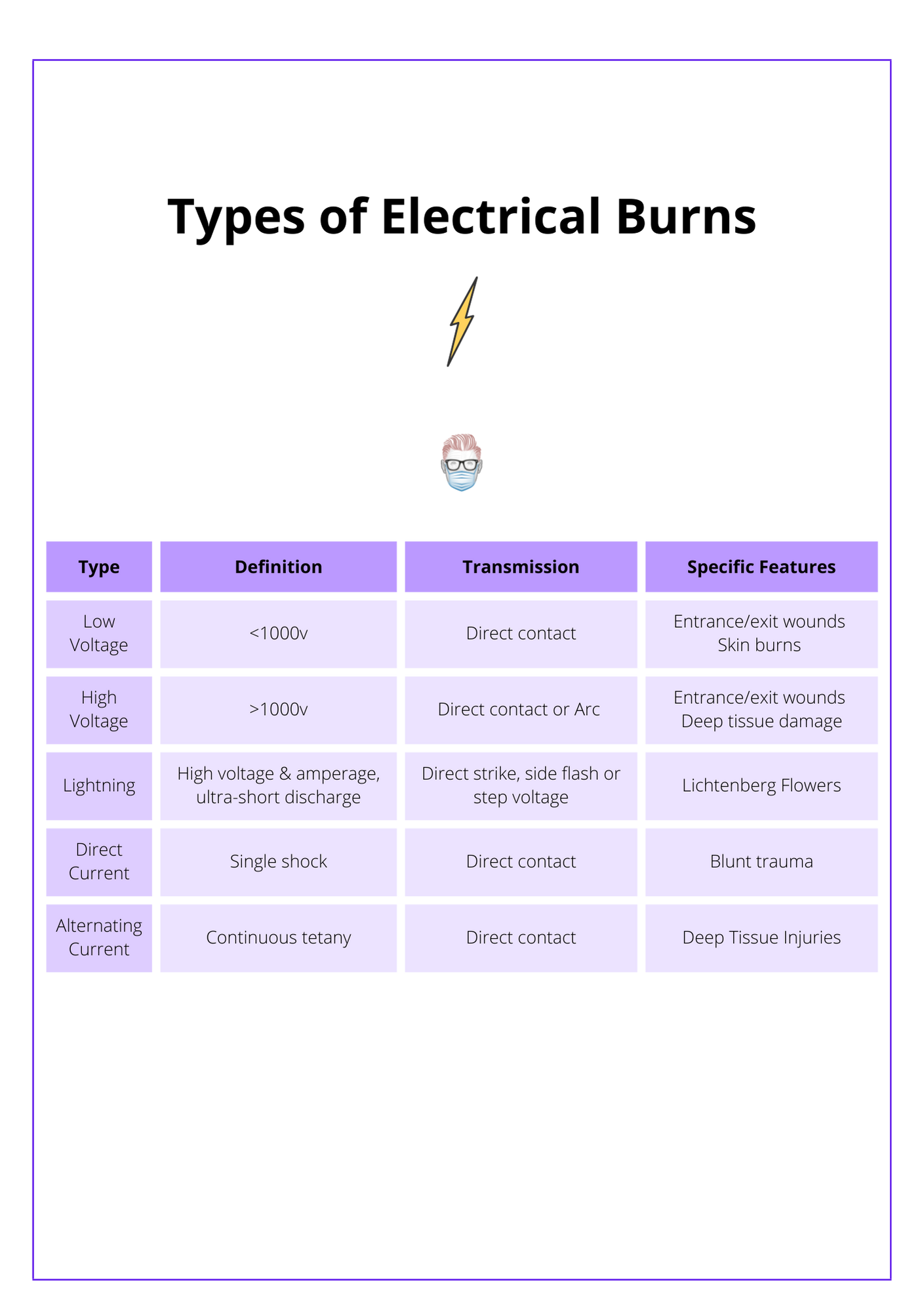
- Arc Burns: These occur when an electric arc flashes between an electrical source and a person, or between two conductors. The extremely high temperatures of an arc can cause extensive superficial burns that resemble flame burns. However, the associated shockwave can also cause blunt force trauma.
- Flash Burns: These are superficial burns caused by the heat radiation from an electrical flash or explosion. They typically affect the skin and hair and are less severe than direct contact burns.
- Contact Burns: This is the most common type, occurring when a person directly touches an energized conductor. The severity depends on the voltage, current, duration of contact, and the path the current takes through the body.
2. Electrocution: The Lethal Flow of Current
Electrocution is the most severe and often fatal outcome of an electrical injury. It occurs when the electrical current passes through the body and causes death. The term itself implies a lethal electrical shock. The mechanism of death in electrocution is primarily due to the disruption of vital bodily functions.
2.1. Cardiac Arrest and Arrhythmias
The human heart relies on precisely timed electrical impulses to beat effectively. When an electrical current passes through the chest, it can interfere with this delicate electrical system. This interference can lead to:
- Ventricular Fibrillation (VF): This is a chaotic and ineffective quivering of the heart’s ventricles, preventing the heart from pumping blood. It is a common cause of sudden cardiac death.
- Asystole: This is a flatline, where the heart stops beating altogether.
- Arrhythmias: The current can disrupt the heart’s normal rhythm, leading to irregular and potentially dangerous heartbeats.
The duration of contact with the electricity is a critical factor. Even a brief exposure to a moderate voltage can be fatal if it traverses the heart.
2.2. Respiratory Arrest
The electrical current can also affect the respiratory system. It can paralyze the muscles responsible for breathing, leading to respiratory arrest. In some cases, the initial shock might not be immediately fatal, but the inability to breathe can quickly lead to oxygen deprivation and death. The phrenic nerve, which controls the diaphragm, is particularly vulnerable.
2.3. Neurological Damage

The central nervous system is highly sensitive to electrical currents. Electrocution can cause significant damage to the brain and spinal cord, leading to immediate unconsciousness, seizures, and coma. The high energy involved can cause direct tissue damage and swelling, further impairing neurological function.
3. Secondary Electrocution: Injuries from the Aftermath
While direct contact with electricity is the primary cause of many electrical injuries, secondary injuries are also a significant concern. These injuries occur as a consequence of the initial electrical event, often due to the victim’s reaction to the shock or the environment in which the accident occurred.
3.1. Falls and Blunt Force Trauma
When a person receives an electrical shock, their immediate reaction can be involuntary muscle contractions. This can cause them to fall from a height, such as a ladder or scaffolding, or to strike nearby objects. These falls and impacts can result in a wide range of injuries, including fractures, dislocations, head injuries, and internal bleeding. The severity of these secondary injuries can sometimes overshadow the initial electrical burn or shock.
3.2. Explosions and Fires
Electrical malfunctions, particularly short circuits or overloaded circuits, can lead to electrical fires and explosions. In these scenarios, individuals can sustain burns from the fire itself, injuries from flying debris caused by the explosion, or smoke inhalation. The rapid development of these events can leave little time for escape, increasing the risk of severe injury.
4. Neurological and Psychological Effects: The Unseen Scars
Beyond the immediate physical trauma of burns and cardiac arrest, electrical injuries can have profound and lasting neurological and psychological consequences. These effects can be subtle and may not become apparent until much later, making them insidious and often overlooked.
4.1. Peripheral Nerve Damage
The electrical current can damage the peripheral nerves, which are responsible for transmitting signals between the central nervous system and the rest of the body. This damage can lead to a variety of symptoms, including:
- Numbness and Tingling: A persistent sensation of pins and needles in the affected areas.
- Weakness and Paralysis: Loss of motor control, making it difficult to move limbs or perform fine motor tasks.
- Chronic Pain: Persistent burning or aching pain, often described as neuropathic pain.
- Loss of Sensation: Reduced ability to feel touch, temperature, or pain.
These symptoms can significantly impact a person’s quality of life, affecting their ability to work, engage in hobbies, and perform daily activities.
4.2. Central Nervous System Damage
Damage to the central nervous system, including the brain and spinal cord, can result in a more complex array of issues:
- Cognitive Impairment: Difficulties with memory, concentration, problem-solving, and decision-making. This can manifest as confusion, disorientation, and a general slowing of thought processes.
- Motor Skill Deficits: Problems with coordination, balance, and fine motor skills.
- Seizures: Electrical stimulation can trigger abnormal electrical activity in the brain, leading to seizures.
- Personality Changes: In some cases, damage to specific brain regions can lead to alterations in personality, mood swings, or increased irritability.
4.3. Psychological Trauma
The experience of an electrical injury can be deeply traumatic, leading to significant psychological distress. This can include:
- Post-Traumatic Stress Disorder (PTSD): Characterized by flashbacks, nightmares, avoidance behaviors, and hypervigilance related to the event.
- Anxiety and Depression: Persistent feelings of worry, fear, sadness, and hopelessness.
- Fear of Electricity: A phobia or aversion to anything related to electricity.
These psychological scars, while not visible, can be as debilitating as physical injuries and require professional support for recovery.
In conclusion, electrical injuries are far more complex than a simple “shock.” Understanding the four main types—electrical burns, electrocution, secondary injuries, and neurological/psychological effects—is vital for prevention, effective treatment, and long-term recovery. Awareness of these hazards and adherence to safety protocols are paramount in mitigating the devastating potential of electricity.
aViewFromTheCave is a participant in the Amazon Services LLC Associates Program, an affiliate advertising program designed to provide a means for sites to earn advertising fees by advertising and linking to Amazon.com. Amazon, the Amazon logo, AmazonSupply, and the AmazonSupply logo are trademarks of Amazon.com, Inc. or its affiliates. As an Amazon Associate we earn affiliate commissions from qualifying purchases.