
Federal interest rates are the bedrock of the global financial system, acting as a crucial lever through which central banks, most notably the U.S. Federal Reserve, influence economic activity. Far from being an abstract concept confined to economic textbooks, these rates have a profound and tangible impact on nearly every aspect of our financial lives, from the cost of borrowing for a home or a car to the returns we see on our savings and investments, and even the broader health of the economy, including inflation and employment levels. Understanding what these rates are, how they are set, and their widespread implications is not merely an academic exercise; it is essential for making informed personal financial decisions, strategizing for businesses, and comprehending the forces that shape our economic landscape.

At its core, a federal interest rate is the interest rate at which commercial banks borrow and lend their excess reserves to each other overnight. While this might sound like an intricate detail of interbank operations, the rate set by the Federal Reserve for these transactions—known as the federal funds rate—serves as a benchmark that cascades throughout the entire financial system. It influences everything from prime rates offered by banks to consumers and businesses, to the yield on government bonds, and ultimately, the cost of capital across all sectors. This article will delve into the intricacies of federal interest rates, demystifying their mechanisms, exploring their broad economic impact, and providing insights into how individuals and businesses can navigate a financial world constantly influenced by these critical figures.
Understanding the Federal Funds Rate: The Cornerstone of Monetary Policy
The federal funds rate is arguably the most significant federal interest rate, acting as the primary tool of U.S. monetary policy. It is not an interest rate that individuals directly pay or receive, but rather a target rate set by the Federal Reserve for overnight lending between depository institutions. When banks have excess reserves beyond what they are required to hold, they can lend these reserves to other banks that might be short on their reserve requirements. The interest rate on these overnight loans is the federal funds rate.
The Federal Reserve’s Role and the FOMC
The Federal Reserve, often called “the Fed,” is the central banking system of the United States. Established in 1913, its primary responsibilities include conducting the nation’s monetary policy, supervising and regulating banking institutions, maintaining the stability of the financial system, and providing financial services to depository institutions, the U.S. government, and foreign official institutions.
The decision-making body responsible for setting monetary policy, including the target for the federal funds rate, is the Federal Open Market Committee (FOMC). The FOMC consists of twelve members: the seven members of the Board of Governors of the Federal Reserve System, the president of the Federal Reserve Bank of New York (FRBNY), and presidents of four other Federal Reserve Banks on a rotating basis. The FOMC meets eight times a year, approximately every six weeks, to assess economic conditions and determine the appropriate stance of monetary policy. During these meetings, they analyze a vast array of economic data, including inflation figures, employment statistics, GDP growth, and global economic developments, to decide whether to raise, lower, or maintain the federal funds rate target. This target is expressed as a range, for example, 5.25% to 5.50%.
How the Federal Funds Rate Works
The Federal Reserve does not directly set the federal funds rate; rather, it influences it through open market operations. Primarily, this involves buying and selling government securities in the open market.
When the Fed wants to lower the federal funds rate, it buys government securities from banks. This injects money into the banking system, increasing the supply of reserves available for overnight lending. With more supply, the price (interest rate) for borrowing those reserves naturally falls.
Conversely, when the Fed wants to raise the federal funds rate, it sells government securities to banks. This removes money from the banking system, reducing the supply of reserves. With less supply, banks charge more to lend their reserves, and the interest rate rises.
In recent years, the Fed has also heavily relied on other tools to manage the federal funds rate within its target range, primarily by setting the Interest on Reserve Balances (IORB) and conducting overnight reverse repurchase agreements (ON RRPs). The IORB rate acts as a floor, as banks won’t lend reserves to other banks at a rate lower than what they can earn by keeping them at the Fed. The ON RRP rate helps establish a firmer floor for short-term interest rates in financial markets. These tools provide the Fed with precise control over the federal funds rate, ensuring it stays within the target range established by the FOMC.
Beyond the Federal Funds Rate: Other Key Rates
While the federal funds rate receives the most attention, it’s not the only federal interest rate. The Federal Reserve also manages other critical rates that play distinct, yet interconnected, roles in the financial system and the economy. These rates help to reinforce the Fed’s monetary policy stance and ensure financial stability.
The Discount Rate and Its Significance
The discount rate is the interest rate at which commercial banks can borrow money directly from the Federal Reserve through its “discount window.” This facility serves as a backup source of liquidity for banks, especially during times of financial stress, ensuring that banks have access to funds if they face unforeseen shortfalls. The discount rate is typically set above the federal funds rate target, making it a more expensive option for banks and discouraging routine borrowing. This premium signals that the discount window is intended for emergency liquidity, not as a primary funding source.
There are three types of discount window programs: primary credit, secondary credit, and seasonal credit. Primary credit is available to generally sound depository institutions on a very short-term basis, typically overnight, at the primary discount rate. Secondary credit is available to depository institutions that are not eligible for primary credit and are generally facing financial difficulties; it is offered at a higher rate. Seasonal credit is available to small banks that have recurring seasonal fluctuations in funding needs, such as those in agricultural or tourism-dependent areas. While direct borrowing from the discount window is usually modest, its existence provides a critical safety net, reassuring markets that banks will always have access to liquidity, thus preventing bank runs and systemic financial crises.
Interest on Reserve Balances (IORB)
Introduced as a significant monetary policy tool after the 2008 financial crisis, the Interest on Reserve Balances (IORB) rate is the interest rate the Federal Reserve pays on balances that depository institutions hold at the Fed. This includes both required reserves (the amount banks must hold) and excess reserves (any amount above the requirement). The IORB rate has become a crucial instrument in the Fed’s “floor system” for implementing monetary policy.
By adjusting the IORB rate, the Fed can influence the federal funds rate effectively. If the Fed raises the IORB rate, banks are incentivized to hold more reserves at the Fed because they earn a higher return. This reduces the supply of reserves available for interbank lending, pushing the federal funds rate upwards. Conversely, lowering the IORB rate encourages banks to lend more of their reserves, putting downward pressure on the federal funds rate. The IORB rate acts as a strong incentive for banks not to lend reserves at a rate below what they can earn risk-free from the Fed, thus setting an effective floor for the federal funds rate. This tool has become especially prominent in an environment where banks often hold substantial excess reserves, making it a powerful way for the Fed to steer short-term interest rates.
The Effective Federal Funds Rate (EFFR)
While the FOMC sets a target range for the federal funds rate, the actual rate at which banks lend to each other overnight can fluctuate within that range. The Effective Federal Funds Rate (EFFR) is the volume-weighted median of overnight federal funds transactions. It’s essentially the average rate that banks are actually transacting at in the federal funds market.
The EFFR is a crucial indicator because it reflects how effectively the Fed’s monetary policy operations are steering the market rate toward its target. The Fed closely monitors the EFFR to ensure its actions are having the desired effect on short-term interest rates. If the EFFR consistently drifts outside the target range, it might signal that the Fed needs to adjust its open market operations or other tools, like the IORB, to bring it back in line. This real-time market rate provides transparency and accountability for the Fed’s monetary policy implementation.
The Ripple Effect: How Federal Rates Impact You and the Economy
The adjustments to federal interest rates, particularly the federal funds rate, don’t stay confined to the interbank market. They create a powerful ripple effect that permeates through the entire financial system, influencing borrowing costs, savings returns, investment decisions, and broader economic indicators like inflation and employment. Understanding these widespread impacts is key to grasping the real-world significance of the Fed’s policy decisions.
Impact on Borrowing Costs (Mortgages, Loans, Credit Cards)
Perhaps the most direct and noticeable impact for individuals and businesses comes through borrowing costs. When the Federal Reserve raises the federal funds rate, commercial banks typically respond by increasing their prime rate—the benchmark interest rate that banks use for short-term corporate loans and variable-rate consumer loans. This increase in the prime rate then translates into higher interest rates for a wide array of financial products:
- Mortgages: Adjustable-rate mortgages (ARMs) are particularly sensitive to federal rate changes, as their interest rates are reset periodically based on an index tied to the prime rate or other short-term rates. Even fixed-rate mortgages, while not directly tied, are indirectly affected as long-term bond yields (which influence fixed mortgage rates) tend to move in the same direction as the federal funds rate expectations. A higher federal funds rate often leads to higher mortgage rates, making homeownership more expensive and potentially cooling the housing market.
- Auto Loans: Interest rates on new and used car loans also tend to rise in response to Fed rate hikes. This increases the monthly payments for consumers, potentially reducing demand for vehicles.
- Credit Cards: Most credit cards have variable annual percentage rates (APRs) that are directly tied to the prime rate. When the Fed raises rates, credit card APRs increase, making it more expensive to carry a balance and potentially leading to higher monthly interest charges for consumers.
- Business Loans: Companies seeking loans for expansion, inventory, or operations will face higher borrowing costs. This can dampen investment and hiring plans, potentially slowing economic growth.
Effects on Savings and Investments
While higher rates make borrowing more expensive, they can be a boon for savers and certain investors:
- Savings Accounts and CDs: Banks typically offer higher interest rates on savings accounts, money market accounts, and Certificates of Deposit (CDs) when the federal funds rate increases. This incentivizes individuals to save more, as their money earns a better return.
- Bonds: The value of existing bonds with lower fixed interest rates generally falls when new bonds are issued at higher rates, but new bonds offer more attractive yields for investors. Shorter-term bonds and money market funds are particularly sensitive to federal funds rate changes.
- Stocks: The relationship between federal rates and the stock market is more complex. Initially, higher rates can make stocks less attractive compared to safer, higher-yielding bonds. They also increase borrowing costs for companies, which can reduce corporate profits. However, if the Fed is raising rates to combat inflation in a strong economy, the impact might be mitigated. Conversely, lower rates tend to boost stock prices by making borrowing cheaper for companies and making bonds less attractive.
Inflation, Economic Growth, and the Labor Market
The ultimate goals of the Federal Reserve’s monetary policy are to achieve maximum employment and price stability (i.e., control inflation). Federal interest rates are the primary tool to achieve these “dual mandate” objectives:
- Combating Inflation: When inflation is too high, the Fed typically raises the federal funds rate. The idea is to slow down economic activity by making borrowing more expensive, thereby reducing demand for goods and services. Lower demand helps to cool prices and bring inflation back to the Fed’s target (typically 2%).
- Stimulating Economic Growth: When the economy is sluggish or facing a recession, the Fed might lower the federal funds rate. This makes borrowing cheaper, encouraging consumers to spend and businesses to invest and hire. The increased demand can stimulate economic growth and reduce unemployment.
- Labor Market: A strong economy, often fueled by lower interest rates, typically leads to a tighter labor market with more job opportunities and potentially higher wages. Conversely, restrictive monetary policy (higher rates) designed to cool inflation can sometimes lead to an increase in unemployment if economic activity slows too much.
The Fed constantly walks a tightrope, aiming to find the “neutral rate” that supports full employment without igniting inflationary pressures, and adjusting the federal funds rate based on evolving economic conditions.
Navigating the Economic Landscape: Historical Context and Future Outlook
Understanding federal interest rates isn’t just about knowing their current level; it also involves appreciating their historical movements and anticipating future trajectories. These shifts are often cyclical and reflect the broader health and challenges of the domestic and global economy.
A Look Back: Major Rate Cycles
The history of federal interest rates is marked by distinct cycles of tightening (raising rates) and easing (lowering rates), each driven by the economic circumstances of its time.
- 1970s and Early 1980s: This era saw some of the highest federal funds rates in U.S. history, famously reaching above 20% under Fed Chair Paul Volcker. This aggressive tightening was necessary to combat runaway inflation, which had been plaguing the economy for years. While effective in curbing inflation, it also led to a severe recession.
- Late 1980s and 1990s: Following the Volcker shock, rates gradually declined, stabilizing at more moderate levels. This period saw sustained economic growth, often referred to as the “Great Moderation,” characterized by lower inflation and stable output. The Fed typically made targeted adjustments to manage growth without overheating.
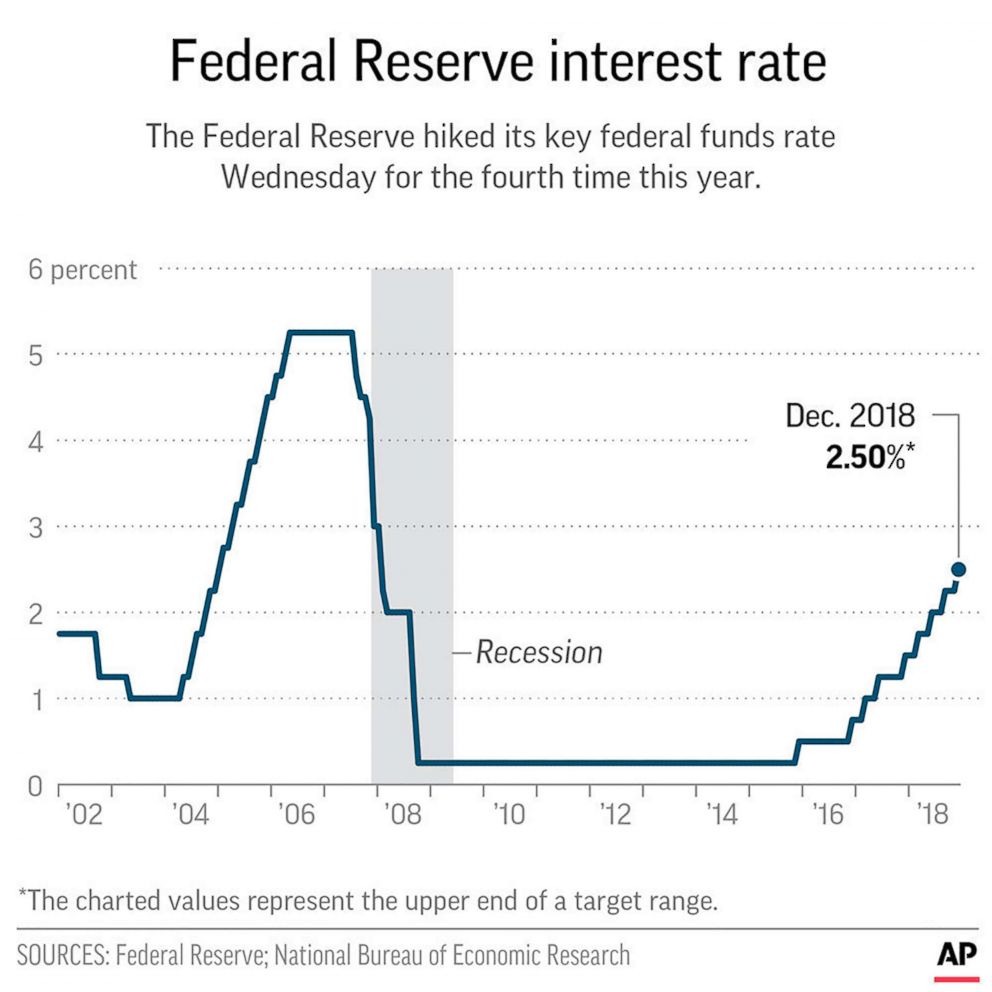
- 2000s and the Great Recession: The early 2000s saw the Fed cut rates following the dot-com bubble burst. Then, rates were hiked leading up to the 2008 financial crisis, only to be slashed to near-zero percent in response to the crisis itself. This period introduced unconventional monetary policies like quantitative easing (QE) as the federal funds rate hit its “zero lower bound.”
- Post-Crisis Recovery and Recent Cycles: Rates remained near zero for many years to support the sluggish recovery after the 2008 crisis. The Fed began a gradual hiking cycle in 2015, only to reverse course with cuts in 2019-2020 due to global growth concerns and then the COVID-19 pandemic. The most recent cycle, beginning in early 2022, has seen aggressive rate hikes to combat the highest inflation levels in decades, pushing the federal funds rate to its highest point in over two decades.
These cycles demonstrate the Fed’s reactive nature to economic data and its commitment to its dual mandate, often balancing the risks of inflation against the risks of recession.
Forecasting Future Rate Movements
Predicting future federal interest rate movements is a complex task, even for seasoned economists and market participants. While no one has a crystal ball, several factors and tools help in forming reasonable expectations:
- Economic Data: The Fed’s decisions are data-dependent. Key economic indicators to watch include:
- Inflation: Consumer Price Index (CPI), Personal Consumption Expenditures (PCE) index (the Fed’s preferred measure).
- Employment: Nonfarm payrolls, unemployment rate, wage growth.
- Economic Growth: Gross Domestic Product (GDP), industrial production, retail sales.
- Consumer Confidence and Business Sentiment: Surveys and reports indicating economic outlook.
- FOMC Communications: Statements released after FOMC meetings, press conferences by the Fed Chair, and the “dot plot” (individual FOMC members’ projections for future rates) provide invaluable insights into the Fed’s thinking and future policy path.
- Market Expectations: The “Fed Funds Futures” market allows investors to bet on the probability of future rate changes. This provides a real-time, market-driven forecast of where traders believe rates are headed. Bond yields, especially short-term Treasury yields, also reflect market expectations for future rates.
- Global Economic Conditions: International events, global growth, and inflation trends can also influence the Fed’s decisions, as the U.S. economy does not operate in a vacuum.
Investors, businesses, and individuals should closely monitor these indicators and official communications to better anticipate potential rate shifts and adjust their financial strategies accordingly.

Strategies for Individuals and Businesses
Understanding federal interest rates is not just for economists; it’s a practical necessity for everyone. Here are some strategies:
- For Borrowers:
- Assess Fixed vs. Variable Rates: In a rising rate environment, consider locking in fixed rates for mortgages and other long-term loans. In a falling rate environment, variable rates might offer initial savings.
- Refinancing: Keep an eye on rates for potential refinancing opportunities if rates drop significantly.
- Debt Management: Prioritize paying down high-interest, variable-rate debt like credit cards when rates are rising.
- For Savers and Investors:
- Optimize Savings: Take advantage of higher rates by moving cash into high-yield savings accounts, money market funds, or CDs.
- Bond Investments: Consider short-term bonds or bond funds in a rising rate environment to mitigate interest rate risk.
- Equity Allocation: Understand that higher rates can sometimes create headwinds for certain equity sectors (e.g., highly leveraged companies or growth stocks reliant on future earnings discounted at higher rates). Diversify portfolios and consult with financial advisors.
- For Businesses:
- Capital Planning: Factor in potential changes in borrowing costs when planning investments, expansions, or operational financing.
- Hedging: Large businesses might use interest rate derivatives to hedge against adverse rate movements.
- Cash Management: Optimize cash reserves to earn higher yields or minimize interest expenses on credit lines.
In conclusion, federal interest rates are a dynamic and influential force in the financial world. They are the heartbeat of monetary policy, designed to stabilize the economy by managing inflation and fostering employment. By staying informed about their movements and implications, individuals and businesses can make more strategic financial decisions, navigate economic cycles more effectively, and ultimately build more resilient financial futures.
aViewFromTheCave is a participant in the Amazon Services LLC Associates Program, an affiliate advertising program designed to provide a means for sites to earn advertising fees by advertising and linking to Amazon.com. Amazon, the Amazon logo, AmazonSupply, and the AmazonSupply logo are trademarks of Amazon.com, Inc. or its affiliates. As an Amazon Associate we earn affiliate commissions from qualifying purchases.