
The rapid proliferation of Artificial Intelligence (AI) has ushered in a new era of technological capability, transforming everything from predictive healthcare to autonomous transportation. However, as the world marvels at the generative powers of Large Language Models (LLMs) and the efficiency of machine learning algorithms, a significant concern has emerged within the technology sector: the environmental cost of this digital revolution. While AI is often perceived as “incorporeal”—existing purely in the cloud—it relies on a massive, energy-intensive physical infrastructure. Understanding the environmental impacts of AI requires a deep dive into the hardware, energy consumption, and resource management strategies that power the modern tech landscape.
The Energy Intensive Nature of Model Training and Inference
At the heart of AI’s environmental impact lies its voracious appetite for electricity. This consumption is generally categorized into two phases: the training phase, where a model “learns” from massive datasets, and the inference phase, where the model responds to user queries or performs tasks.
The Carbon Intensity of Training Large-Scale Models
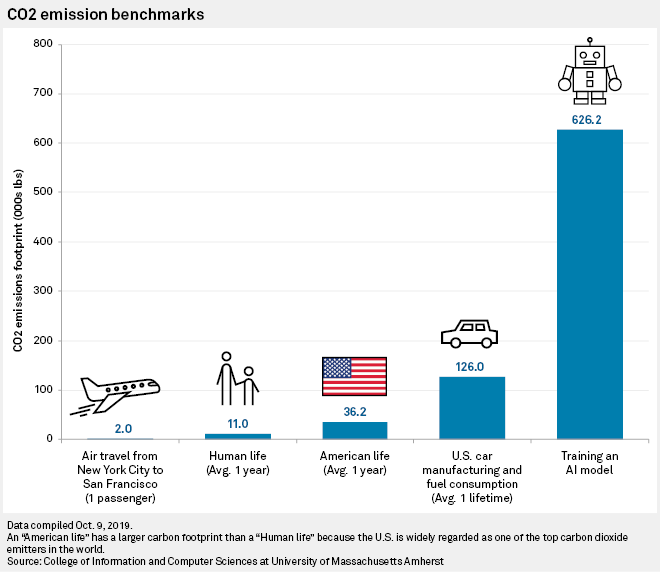
Training a state-of-the-art AI model is a monumental computational feat. It requires thousands of Specialized Graphics Processing Units (GPUs) running around the clock for weeks or even months. For example, training a model the size of GPT-3 is estimated to have consumed approximately 1,287 megawatt-hours (MWh) of electricity, which is roughly equivalent to the annual energy consumption of 120 average American households.
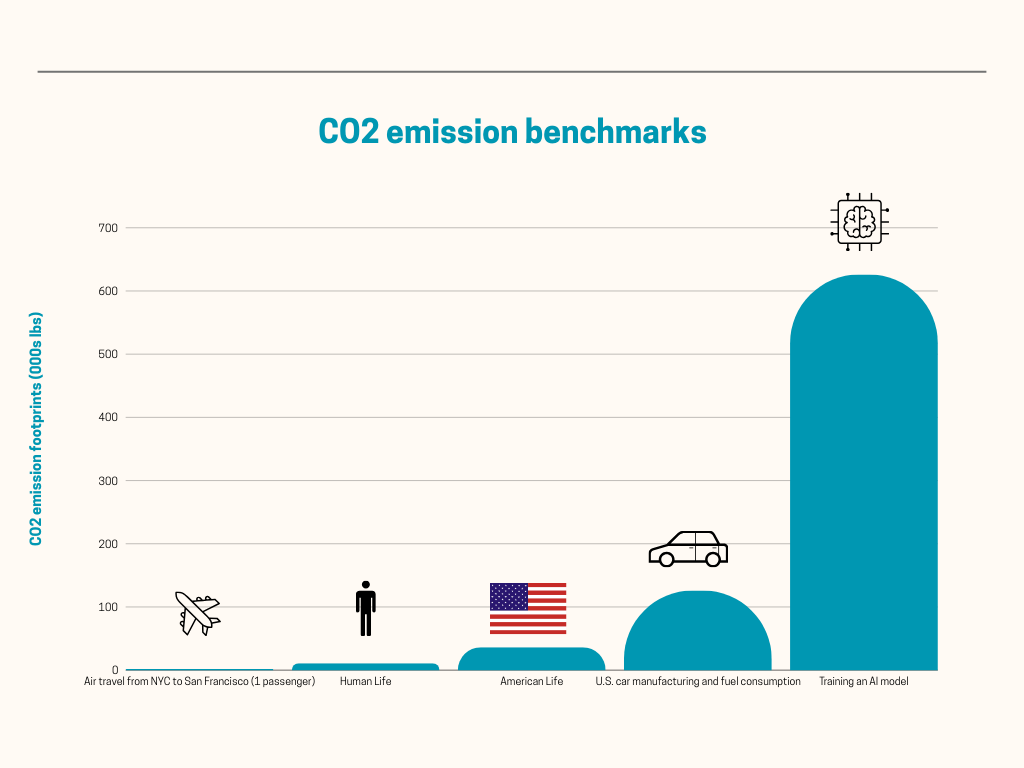
The carbon footprint of this process depends heavily on the energy grid of the location where the data center is situated. If a model is trained in a region reliant on coal-fired power plants, the carbon dioxide equivalent (CO2e) emissions are staggering. Tech companies are increasingly under pressure to report these “embodied” emissions, leading to a push for training models in regions with high concentrations of renewable energy, such as the Nordic countries or areas with abundant solar and wind power.
The Cumulative Cost of Inference
While the training phase is a massive one-time energy spike, the “inference” phase—the day-to-day use of the AI—represents a long-term environmental challenge. Every time a user asks an AI to write an email, generate an image, or debug code, a series of servers must activate. Given that millions of users interact with these tools simultaneously, the aggregate energy demand is immense. Research suggests that generating a single image using a high-fidelity diffusion model can consume as much energy as fully charging a smartphone. As AI becomes integrated into every search engine and productivity suite, the sheer volume of these micro-transactions poses a systemic risk to global energy conservation efforts.
Water Consumption and Thermal Management in Data Centers
Beyond electricity, the physical cooling of the hardware that runs AI models represents a significant draw on local natural resources, specifically water. Data centers generate an incredible amount of heat, and maintaining the delicate hardware within them requires sophisticated thermal management systems.
Evaporative Cooling and Local Water Stress
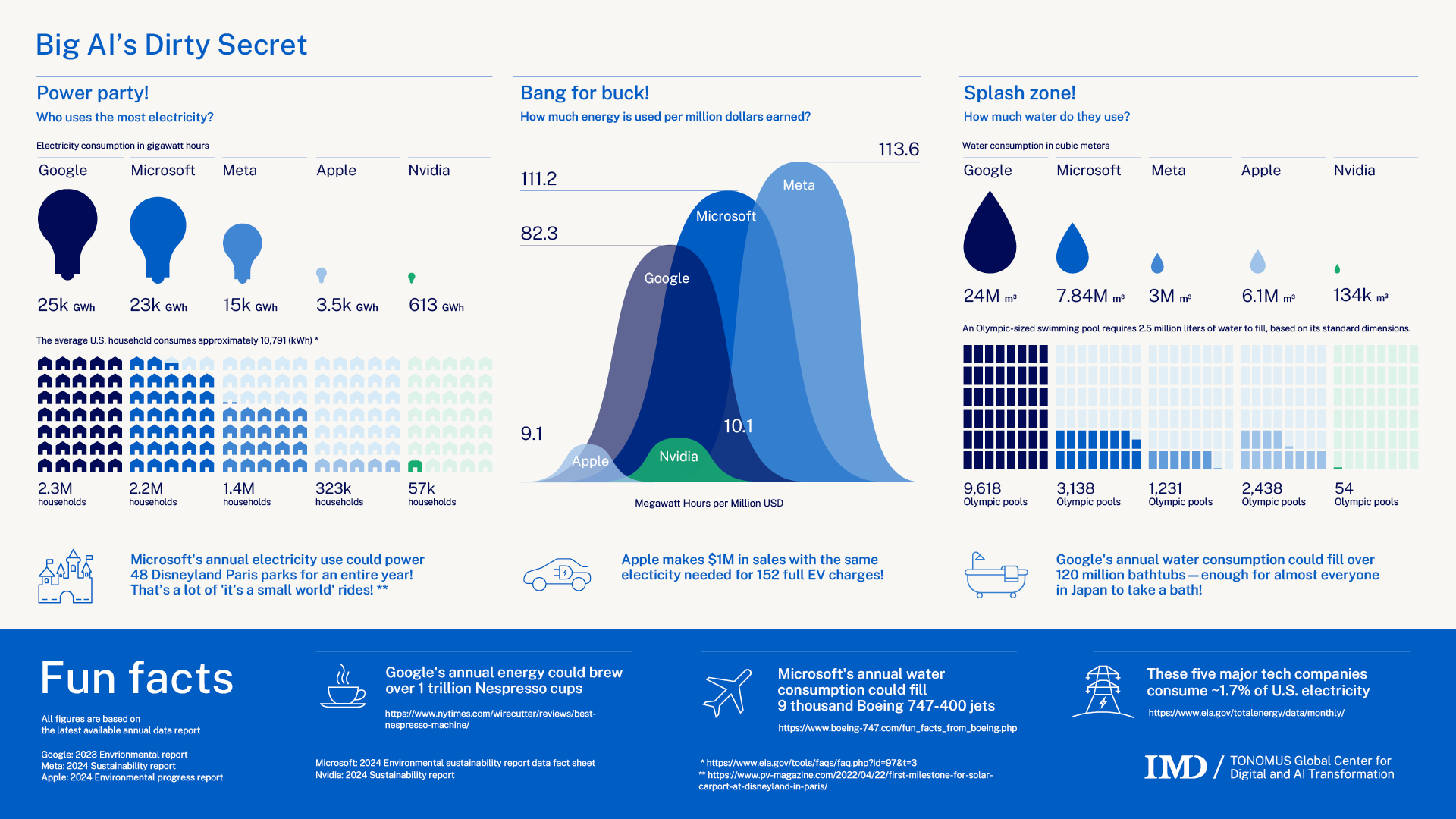
Most hyper-scale data centers utilize evaporative cooling systems to dissipate heat. In these systems, water is evaporated to cool the air circulated around server racks. This process is highly effective but incredibly water-intensive. Large data centers can consume hundreds of thousands of gallons of water per day.
This becomes a critical environmental issue when data centers are located in arid regions or areas experiencing water scarcity. The “water footprint” of AI is a burgeoning field of study, with researchers estimating that a standard conversation (roughly 20 to 50 questions) with a generative AI model can “drink” a 500ml bottle of water through the cooling requirements of the backend servers.
Indirect Water Usage in Power Generation
The water impact of AI is not limited to the cooling systems on-site. There is also “indirect” water usage associated with the production of the electricity that powers the servers. Thermoelectric power plants (coal, gas, and nuclear) require vast amounts of water for cooling during the electricity generation process. Therefore, even if a data center uses a “dry” cooling method (which relies on fans and ambient air), its environmental impact still flows back to the water-intensive nature of the national power grid. This interconnectedness highlights why the tech industry must look at the entire supply chain when calculating ecological footprints.
The Lifecycle of AI Hardware and the E-Waste Challenge
The environmental impact of AI is not solely an operational concern; it is also a manufacturing and disposal issue. The hardware required to run AI is specialized and has a relatively short lifecycle due to the rapid pace of technological innovation.
Rare Earth Minerals and High-Impact Manufacturing
The GPUs and Tensor Processing Units (TPUs) that drive AI are composed of rare earth elements and precious metals, including lithium, cobalt, and gold. The extraction of these materials is an environmentally taxing process, often involving open-pit mining that leads to soil erosion, deforestation, and water contamination.
Furthermore, the manufacturing of semiconductor chips is one of the most resource-intensive industrial processes in the world. It requires ultra-pure water, hazardous chemicals, and extreme amounts of energy. As the demand for AI-specific silicon grows, the environmental “debt” incurred before a single line of code is ever run continues to rise.
The Accelerating Cycle of Electronic Waste (E-waste)
In the tech world, hardware becomes obsolete at an alarming rate. To stay competitive, data center operators must upgrade their hardware every three to five years to accommodate more complex models and faster processing requirements. This creates a massive stream of electronic waste.
E-waste is notoriously difficult to recycle because it contains a complex mix of plastics, metals, and toxic chemicals. If not handled correctly, discarded AI hardware can leak heavy metals like lead and mercury into the environment. The tech industry is currently grappling with how to implement a “circular economy” for AI hardware, focusing on modular designs that allow for components to be upgraded rather than replaced entirely.
Sustainable AI: Technological Innovations and Mitigation Strategies
While the environmental challenges are significant, the tech industry is also the source of the solutions. “Green AI” is an emerging movement focused on making the entire lifecycle of artificial intelligence more sustainable through architectural and operational improvements.
Algorithmic Efficiency and Model Compression
One of the most effective ways to reduce AI’s environmental impact is to make the models themselves more efficient. This involves “parameter pruning,” “quantization,” and “knowledge distillation”—techniques that allow a model to maintain its performance while requiring significantly less computational power.
Instead of building larger and larger models, researchers are now focusing on “Small Language Models” (SLMs) that are optimized for specific tasks. These models can run on local devices (edge computing) rather than in massive data centers, drastically reducing the energy required for data transmission and centralized processing. By prioritizing algorithmic efficiency, the tech industry can decouple AI performance from exponential energy growth.
Transitioning to Carbon-Aware Computing
Leading technology firms are pioneering “carbon-aware” computing. This involves scheduling non-urgent computational tasks—like the initial training of a model—for times when the local power grid has a high surplus of renewable energy (e.g., when the sun is shining or the wind is blowing).
Furthermore, many tech giants have committed to “Net Zero” or even “Carbon Negative” goals. This includes investing in direct air capture technology, carbon sequestration, and the construction of proprietary solar and wind farms to power their operations. The shift toward liquid cooling systems that use closed-loop cycles (recycling the same water) is also helping to mitigate the impact on local water supplies.
Balancing Innovation with Ecological Responsibility
As AI continues to integrate into the fabric of modern life, its environmental impact will remain a critical point of discussion within the technology sector. The challenge for developers, hardware manufacturers, and policymakers is to ensure that the benefits of AI—such as its ability to optimize energy grids or discover new carbon-capture materials—are not outweighed by the resources required to run the systems themselves.
The path forward involves transparency in reporting, a commitment to hardware longevity, and a relentless pursuit of computational efficiency. By treating environmental sustainability as a core performance metric alongside speed and accuracy, the tech industry can ensure that the rise of artificial intelligence does not come at the expense of the planet. The evolution of AI must be as sustainable as it is intelligent, transforming the digital frontier into a green landscape for future generations.
aViewFromTheCave is a participant in the Amazon Services LLC Associates Program, an affiliate advertising program designed to provide a means for sites to earn advertising fees by advertising and linking to Amazon.com. Amazon, the Amazon logo, AmazonSupply, and the AmazonSupply logo are trademarks of Amazon.com, Inc. or its affiliates. As an Amazon Associate we earn affiliate commissions from qualifying purchases.