
Navigating the landscape of used car financing can often feel like deciphering a complex financial puzzle. For many consumers, a used car represents a significant purchase, balancing affordability with utility. A critical component of this decision, and indeed the overall cost of ownership, is the interest rate applied to your auto loan. Understanding what drives these rates, what to expect in the current market, and how to secure the most favorable terms is paramount to making a financially sound choice.
In today’s dynamic economic environment, interest rates for used car loans are influenced by a confluence of factors, ranging from global economic policies to an individual’s personal creditworthiness. Unlike a flat fee, these rates fluctuate, reflecting market conditions, lender risk assessment, and the specifics of the vehicle being purchased. This article aims to demystify current used car interest rates, providing a comprehensive guide for prospective buyers to approach their next vehicle purchase with confidence and clarity.
Understanding Used Car Interest Rates in Today’s Market
The interest rate on a used car loan is not a static figure; it’s a living metric that breathes with the economy and exhales the risk assessment of lenders. To grasp what constitutes a “current” rate, one must first appreciate the broader economic forces at play.
Overview of Current Market Conditions
The general economic climate heavily dictates lending rates across the board, and used car loans are no exception. Factors such as inflation, the Federal Reserve’s monetary policy (specifically the federal funds rate), and overall consumer demand significantly influence how much lenders charge for borrowing money. When the Fed raises its benchmark rate, the cost of borrowing for banks increases, which in turn typically leads to higher interest rates for consumers on loans like mortgages and auto loans. Conversely, a stable or declining federal funds rate can create a more favorable lending environment.
Inflation also plays a crucial role. Lenders must account for the erosion of money’s purchasing power over time. If inflation is high, the real value of future loan repayments decreases, compelling lenders to charge higher interest rates to compensate for this loss. Moreover, supply and demand dynamics in the used car market can indirectly affect rates. High demand coupled with limited supply might lead to higher vehicle prices, necessitating larger loans and potentially influencing rates.
Average Rates: What to Expect
While it’s challenging to provide a precise, universal “current average” interest rate for used cars without real-time, personalized data, we can discuss general ranges and what influences them. Typically, used car interest rates tend to be slightly higher than those for new cars. This is due to several reasons, including the perceived higher risk associated with older vehicles (e.g., potential for mechanical issues, depreciation) and the fact that new car loans sometimes benefit from manufacturer-subsidized rates.
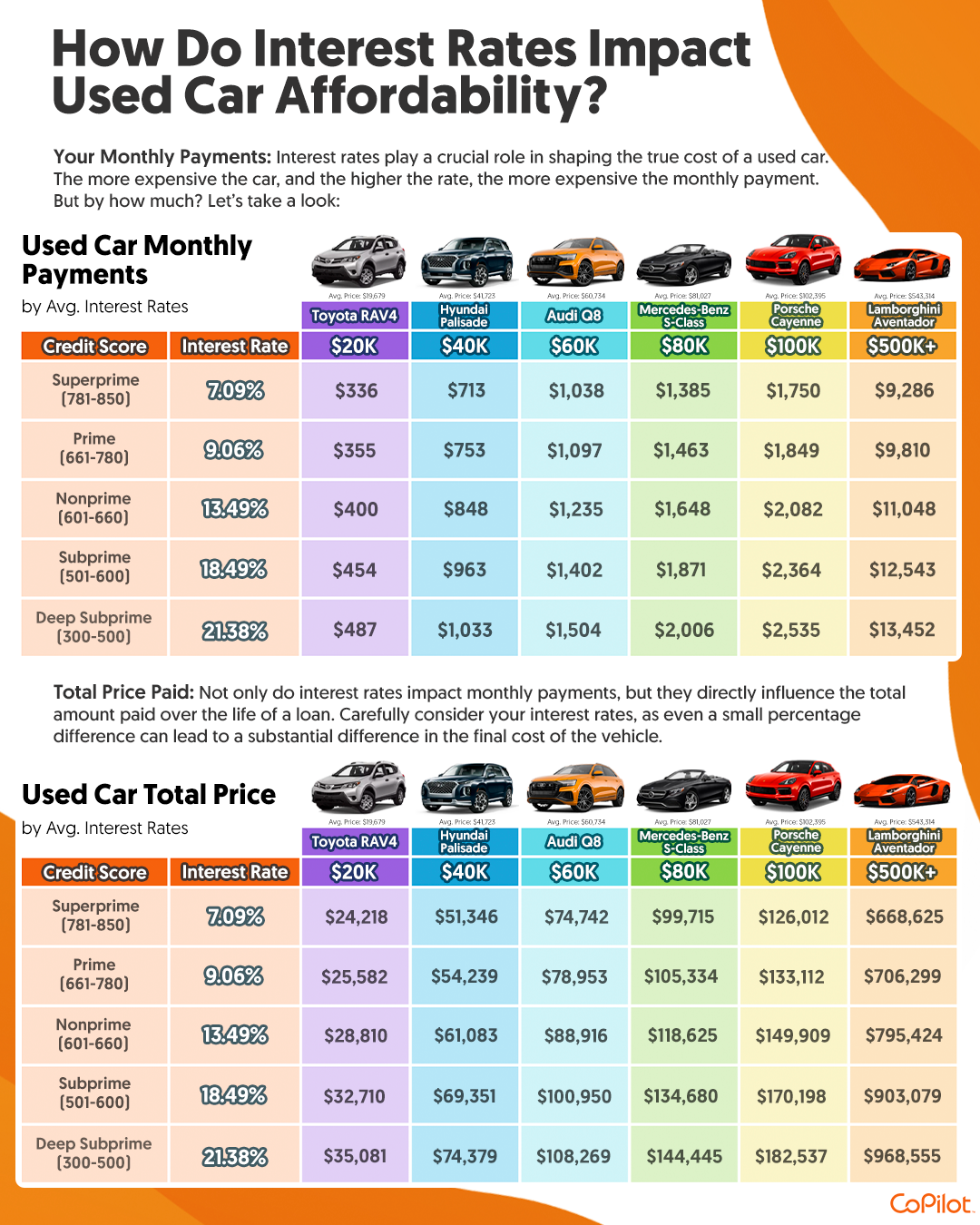
For a borrower with excellent credit (e.g., 750+ FICO score), current rates might range anywhere from 5% to 8% APR, depending on the loan term and economic conditions. For those with good credit (e.g., 670-749), rates could fall into the 7% to 12% APR range. Borrowers with fair or average credit (e.g., 600-669) might see rates between 10% to 18% APR, while those with poor credit (below 600) could face rates of 15% APR or even higher. These are illustrative ranges and can vary widely based on the specific lender, vehicle, loan term, and prevailing market rates at any given time. It’s important to remember that rates can change frequently, so checking with multiple lenders is always advisable.
New vs. Used Car Rate Differences
As mentioned, used car interest rates are generally higher than new car rates. This differential stems from a few key factors:
- Risk Profile: Lenders often view used cars as a higher risk. They may have unknown maintenance histories, are more prone to mechanical issues, and their value can depreciate more rapidly or unpredictably compared to a new car.
- Manufacturer Incentives: New car loans often come with attractive promotional rates or rebates directly from the manufacturer, designed to boost sales of specific models. These subsidies are rarely available for used cars.
- Loan Term: Used car loans may sometimes have shorter maximum terms than new car loans, though this isn’t always the case. The age of the vehicle can play a role in the maximum allowable loan term.
Understanding these distinctions is vital for setting realistic expectations when shopping for a used car loan.
Key Factors Influencing Your Used Car Loan Rate
While the broader economic climate sets the stage, several personal and vehicle-specific factors significantly determine the exact interest rate you’ll be offered. Awareness of these elements empowers you to take steps towards securing a more favorable rate.
Your Credit Score: The Ultimate Determinant
Your credit score is arguably the most influential factor in determining your interest rate. Lenders use this three-digit number to assess your creditworthiness and the likelihood of you repaying the loan. A higher credit score indicates a lower risk to the lender, typically resulting in lower interest rates.
- Excellent Credit (750+): These borrowers receive the most competitive rates, as they represent the lowest risk.
- Good Credit (670-749): Still considered low-risk, these borrowers can expect favorable rates, though perhaps not the absolute lowest.
- Fair/Average Credit (600-669): Lenders view these borrowers with moderate risk, leading to higher interest rates to compensate.
- Poor Credit (Below 600): These borrowers pose a high risk to lenders, resulting in significantly higher interest rates, and sometimes requiring a co-signer or larger down payment.
Lenders also consider your credit history, including payment consistency, debt-to-income ratio, and the length of your credit history.
Loan Term and Down Payment
The loan term, or the duration over which you agree to repay the loan, directly impacts your interest rate. Generally, shorter loan terms (e.g., 36 or 48 months) often come with lower interest rates because the lender’s risk exposure is reduced. Conversely, longer terms (e.g., 60 or 72 months) typically have higher rates, as the lender assumes more risk over an extended period. While longer terms result in lower monthly payments, they often mean paying significantly more in total interest over the life of the loan.
A down payment also plays a critical role. A larger down payment reduces the amount of money you need to borrow, thereby decreasing the lender’s risk. This can translate into a lower interest rate. Moreover, a substantial down payment helps you avoid being “upside down” on your loan, where you owe more than the car is worth, especially given the rapid depreciation of used cars.
Vehicle Age and Mileage
The characteristics of the used car itself also influence the interest rate. Older vehicles, especially those with high mileage, are generally considered higher risk by lenders. They are more prone to mechanical failures, which could impact the borrower’s ability to make payments if unexpected repairs arise. Additionally, an older vehicle’s resale value might be less stable, making it a less secure form of collateral for the loan. Some lenders may even have restrictions on financing vehicles beyond a certain age or mileage threshold.

Lender Type
Different types of lenders offer varying rates.
- Banks: Traditional banks are a common source for auto loans, offering competitive rates for qualified borrowers.
- Credit Unions: Often non-profit organizations, credit unions are known for offering some of the most competitive interest rates to their members, along with personalized service.
- Dealership Financing: While convenient, dealership financing (often working with a network of lenders) may not always offer the best rates upfront. However, they sometimes have special promotions or relationships that can be beneficial.
- Online Lenders: A growing segment, online lenders offer speed and convenience, often with competitive rates, especially for those with strong credit.
Shopping around with multiple lender types is crucial to compare offers.
Strategies to Secure the Best Used Car Interest Rate
Armed with an understanding of how rates are determined, you can employ several strategies to improve your chances of securing the most favorable interest rate possible on your used car loan.
Improve Your Credit Score
This is perhaps the most impactful step you can take. Before applying for a loan, check your credit report for inaccuracies and dispute any errors. Pay down existing debts, especially high-interest credit card balances, to lower your credit utilization ratio. Make all payments on time and avoid opening new credit accounts just before applying for a car loan. Even a few points increase in your FICO score can translate into significant savings over the life of the loan.
Shop Around for Lenders
Never accept the first offer. Obtain pre-approvals from at least 3-5 different lenders – including banks, credit unions, and online lenders – within a short timeframe (usually 14-45 days, depending on the credit scoring model). This allows you to compare actual offers without multiple hard inquiries negatively impacting your credit score significantly, as they are often treated as a single inquiry for rate shopping purposes. Having a pre-approval in hand also gives you strong negotiating power at the dealership.
Consider a Shorter Loan Term
While a longer loan term means lower monthly payments, it almost always means a higher overall cost due to increased interest. If your budget allows, opt for the shortest loan term you can comfortably afford. This not only reduces the total interest paid but also builds equity in your vehicle faster.
Make a Larger Down Payment
As discussed, a larger down payment reduces the principal loan amount and signals lower risk to lenders, potentially resulting in a lower interest rate. Aim for at least 10-20% of the vehicle’s purchase price as a down payment if possible. This also helps mitigate the effects of depreciation, reducing the chance of being “underwater” on your loan.
Negotiate the Price of the Car Separately
When at the dealership, try to negotiate the car’s purchase price independently of the financing. Once you’ve agreed on a price, then discuss the financing options. Dealers might try to bundle both, but separating them allows you to focus on getting the best deal on each component. Use your pre-approved loan offer as leverage during this negotiation.
The Long-Term Impact of Interest Rates on Your Wallet
While the monthly payment is often the primary focus, understanding the long-term impact of your interest rate is crucial for your overall financial health. A seemingly small difference in APR can translate into thousands of dollars over the life of a loan.
Total Cost of Ownership
Consider two scenarios for a $20,000 used car loan over 60 months (5 years):
- Scenario A (Good Credit): 7% APR
- Monthly Payment: Approximately $396
- Total Interest Paid: Approximately $3,760
- Scenario B (Fair Credit): 12% APR
- Monthly Payment: Approximately $445
- Total Interest Paid: Approximately $6,670
In this hypothetical example, choosing Scenario A over Scenario B would save you nearly $3,000 in interest alone. This difference doesn’t even account for the initial vehicle price, maintenance, fuel, or insurance. A lower interest rate directly reduces the total cost of ownership, freeing up funds for other financial goals or necessities.
Budgeting for Your Car Payment
It’s essential to integrate your potential car payment, including interest, into your overall budget before committing to a loan. Use online calculators to estimate payments at various interest rates and terms. Ensure that the monthly payment is sustainable and doesn’t strain your finances, leaving room for emergencies or other investments. Remember, a lower interest rate means more of your monthly payment goes towards reducing the principal, helping you pay off the car faster and save money.

Conclusion
Understanding “what are the current used car interest rates” is more than just knowing a number; it’s about comprehending the intricate web of economic forces, personal financial health, and lending practices that determine that number. While current rates are influenced by broader market conditions, your credit score remains the most potent weapon in securing a favorable deal.
By diligently improving your credit, strategically shopping around for lenders, and understanding the impact of loan terms and down payments, you can significantly reduce the overall cost of your used car. Approaching your next vehicle purchase with knowledge and a proactive mindset will not only save you money but also provide peace of mind, ensuring your used car serves as a valuable asset rather than a financial burden. Make informed decisions, and drive away confidently with a loan that truly works for your wallet.
aViewFromTheCave is a participant in the Amazon Services LLC Associates Program, an affiliate advertising program designed to provide a means for sites to earn advertising fees by advertising and linking to Amazon.com. Amazon, the Amazon logo, AmazonSupply, and the AmazonSupply logo are trademarks of Amazon.com, Inc. or its affiliates. As an Amazon Associate we earn affiliate commissions from qualifying purchases.