
Car insurance is one of those unavoidable line items in a personal budget that can feel like a secondary tax on mobility. However, from a personal finance perspective, car insurance is not merely a legal requirement; it is a critical component of risk management. For the savvy consumer, the goal is to find the “sweet spot”—the intersection where the lowest possible premium meets reliable coverage and fiscal stability. As inflation continues to impact repair costs and medical expenses, identifying the cheapest car insurance companies requires a nuanced understanding of how the industry prices risk and where the best value currently resides.
Understanding the Landscape of Affordable Car Insurance
The price you pay for car insurance is rarely a static figure. It is a complex calculation derived from actuarial data designed to predict the likelihood of you filing a claim. To find the cheapest providers, one must first understand the variables that influence these rates, as different companies weigh these factors differently.
The Impact of Demographics and Driving History on Premiums
Insurance companies categorize drivers into risk pools. Age, gender, marital status, and location are foundational metrics. For instance, a driver in a densely populated urban area will almost always pay more than a driver in a rural setting due to the statistically higher probability of collisions and theft. However, the most significant lever you control is your driving record. A single at-fault accident or a speeding ticket can cause premiums to spike by 20% to 50%. The “cheapest” company for a driver with a clean record might be the most expensive for someone with a recent infraction, as some insurers specialize in “high-risk” drivers while others aggressively court “preferred” low-risk clients.
How Credit Scores Influence Your Financial Liability
In most states, insurance companies use a “credit-based insurance score” to help determine premiums. From a financial tools perspective, this is a crucial connection between your general financial health and your insurance costs. Actuarial studies have shown a correlation between credit management and insurance risk. Consequently, those with “Excellent” credit often pay hundreds of dollars less per year than those with “Poor” credit for the exact same coverage. When searching for the cheapest rates, improving your credit score is often as effective as switching providers.
Regional Variations and State Mandates
The insurance market is highly fragmented because it is regulated at the state level. A company that is the price leader in Ohio might be uncompetitive in Florida. Each state has different minimum liability requirements and different legal frameworks, such as “no-fault” versus “tort” systems. Therefore, any search for the cheapest company must be localized. National averages serve as a guide, but your specific zip code is the ultimate arbiter of your final quote.
Top Contenders for Budget-Friendly Coverage
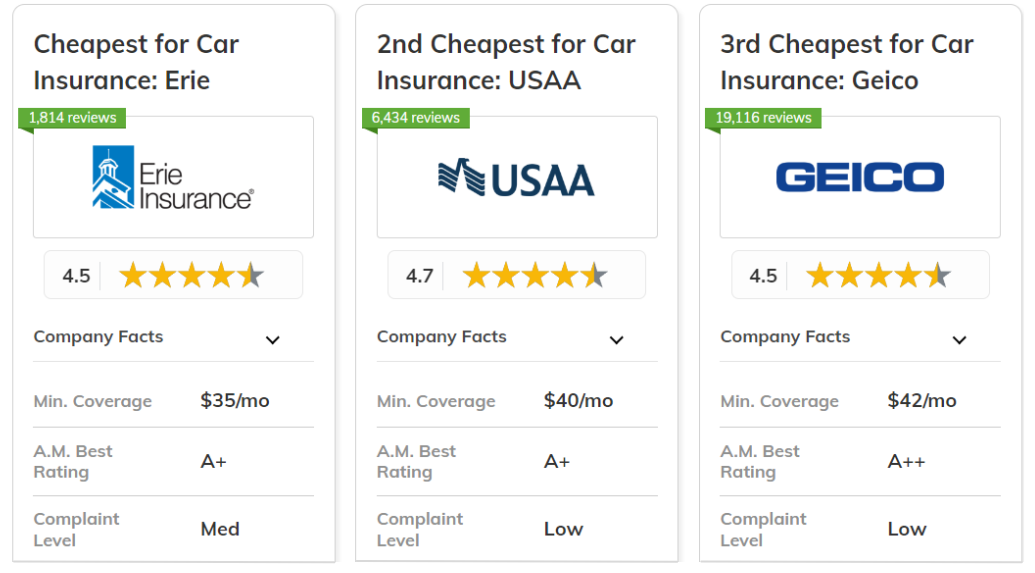
While prices fluctuate, certain companies consistently rank as the most cost-effective options in the national marketplace. These organizations have optimized their business models to offer competitive pricing through various strategies, from direct-to-consumer sales to specialized niche underwriting.
Geico: The Industry Standard for Low-Cost Premiums
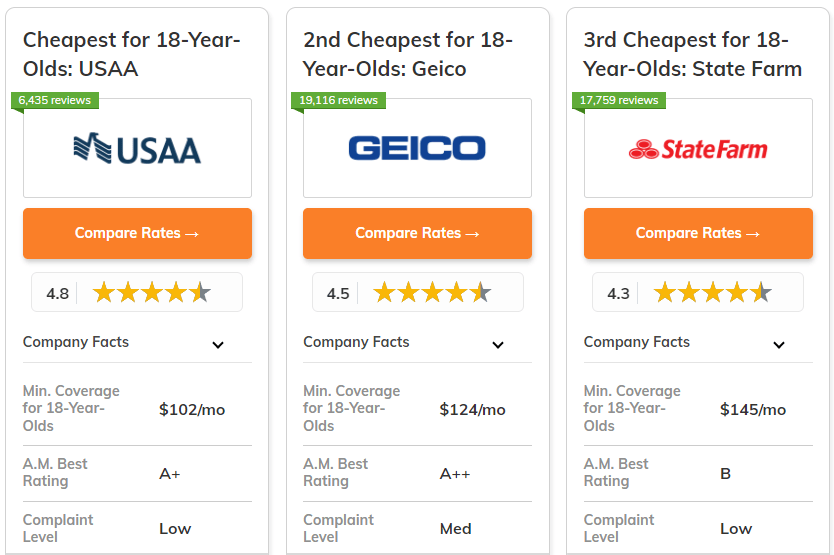
Geico has built its brand on the promise of “15 minutes could save you 15% or more,” and for many drivers, this marketing holds true. As a direct-to-consumer insurer, Geico avoids the overhead costs associated with a massive network of local brick-and-mortar agencies. This efficiency is passed on to the consumer. Geico is particularly competitive for drivers who prefer managing their policies via mobile apps and those who qualify for their wide array of discounts, such as federal employee or military affiliations.
State Farm: Competitive Rates with Personalized Service
Despite being the largest auto insurer in the United States and maintaining a vast network of agents, State Farm remains remarkably competitive on price. Their financial strength allows them to absorb market fluctuations better than smaller carriers. State Farm is often the cheapest option for families looking to bundle multiple types of insurance—such as home and auto—which can lead to significant cumulative savings that outpace the “stand-alone” low rates of other carriers.
USAA: Unbeatable Value for the Military Community
If you are an active-duty service member, a veteran, or an eligible family member, USAA is almost transitively the cheapest car insurance provider. In nearly every state and demographic category, USAA’s premiums are significantly lower than the industry average. Beyond the raw numbers, USAA consistently ranks at the top of customer satisfaction and claims processing metrics, providing a level of “value-per-dollar” that is difficult for commercial insurers to match.
Progressive and the Power of Comparison
Progressive revolutionized the “Money” side of insurance by introducing transparency tools like their “Name Your Price” tool. While they may not always be the absolute lowest bidder for every driver, they excel at providing affordable rates for drivers with a “not-perfect” record. They are also leaders in the telematics space with their “Snapshot” program, which allows safe drivers to earn discounts based on their actual driving habits rather than just their demographic profile.
Strategic Ways to Lower Your Monthly Premiums
Finding the cheapest company is only half the battle; the other half is optimizing your policy to ensure you aren’t paying for unnecessary “bloat.” Within the realm of personal finance, insurance should be viewed as a flexible expense that can be trimmed through strategic decision-making.
Maximizing Multi-Policy and Multi-Car Discounts
“Bundling” is one of the most effective financial strategies for reducing insurance costs. By placing your homeowners, renters, or life insurance with the same provider as your auto insurance, you can often unlock discounts ranging from 5% to 25%. Additionally, insuring multiple vehicles on a single policy is almost always cheaper than having separate policies for each car.
The Math of Opting for Higher Deductibles
The deductible is the amount you pay out of pocket before your insurance kicks in. From a wealth-building perspective, if you have an adequate emergency fund, it is often wise to opt for a higher deductible, such as $1,000 instead of $500. This shift significantly reduces your monthly premium. Over the course of a few years, the savings on the premium often exceed the cost of the higher deductible, assuming you are not involved in frequent accidents.
Telematics and Usage-Based Insurance
The rise of “Insurtech” has introduced telematics—devices or apps that track how you drive. For low-mileage drivers or those who avoid aggressive braking and late-night driving, usage-based insurance (UBI) can offer the deepest discounts available in the modern market. If you work from home and your car sits in the garage most of the week, switching to a “pay-per-mile” provider like Metromile or a UBI program can slash your costs by 30% or more.
Avoiding the Pitfalls of “Cheap” Insurance
In the world of finance, the cheapest option is not always the best value. A low premium can become an enormous liability if the company lacks the financial stability to pay out a major claim or if the coverage limits are too low to protect your assets.
Evaluating Claims Satisfaction and Financial Strength
Before signing with the lowest bidder, it is essential to check their AM Best or S&P Global rating. These ratings indicate the financial strength of the company. A company with a “C” rating may offer a low premium today but could struggle to settle claims in the event of a regional disaster. Furthermore, check the J.D. Power claims satisfaction scores. Saving $20 a month is not worth the headache of a three-month delay in getting your car repaired after an accident.
The Hidden Costs of Minimum Liability Coverage
Every state has “minimum limits,” which are often the cheapest way to get insured. However, from a personal finance standpoint, carrying only the minimum is a massive risk. If you are at fault in an accident and the damages exceed your $25,000 limit, the other party can come after your personal savings, your home, and your future wages. Increasing your liability limits to $100,000 or $300,000 is often surprisingly inexpensive—sometimes costing only a few dollars more per month—and provides a necessary firewall for your personal net worth.
Gap Insurance and Asset Protection
If you have a loan or a lease on a new car, the “cheapest” insurance might leave you in a financial hole if the car is totaled. Because cars depreciate the moment they leave the lot, you might owe $30,000 on a car that is only worth $25,000. Gap insurance covers that $5,000 difference. While it adds a small cost to your premium, it prevents a catastrophic financial loss, illustrating that the goal of insurance is “total cost of ownership” protection, not just the lowest monthly bill.

Final Thoughts on Financial Efficiency
Identifying the cheapest car insurance companies is an exercise in diligence. The market is constantly shifting, with companies updating their algorithms and risk appetites annually. To maintain the most efficient personal finance profile, a consumer should shop their rate at least once every two years or whenever a major life event occurs—such as moving, buying a home, or a significant improvement in credit score. By combining the low base rates of companies like Geico or State Farm with strategic discounts and appropriate coverage limits, you can ensure that your car insurance remains a tool for financial security rather than a drain on your resources.
aViewFromTheCave is a participant in the Amazon Services LLC Associates Program, an affiliate advertising program designed to provide a means for sites to earn advertising fees by advertising and linking to Amazon.com. Amazon, the Amazon logo, AmazonSupply, and the AmazonSupply logo are trademarks of Amazon.com, Inc. or its affiliates. As an Amazon Associate we earn affiliate commissions from qualifying purchases.