
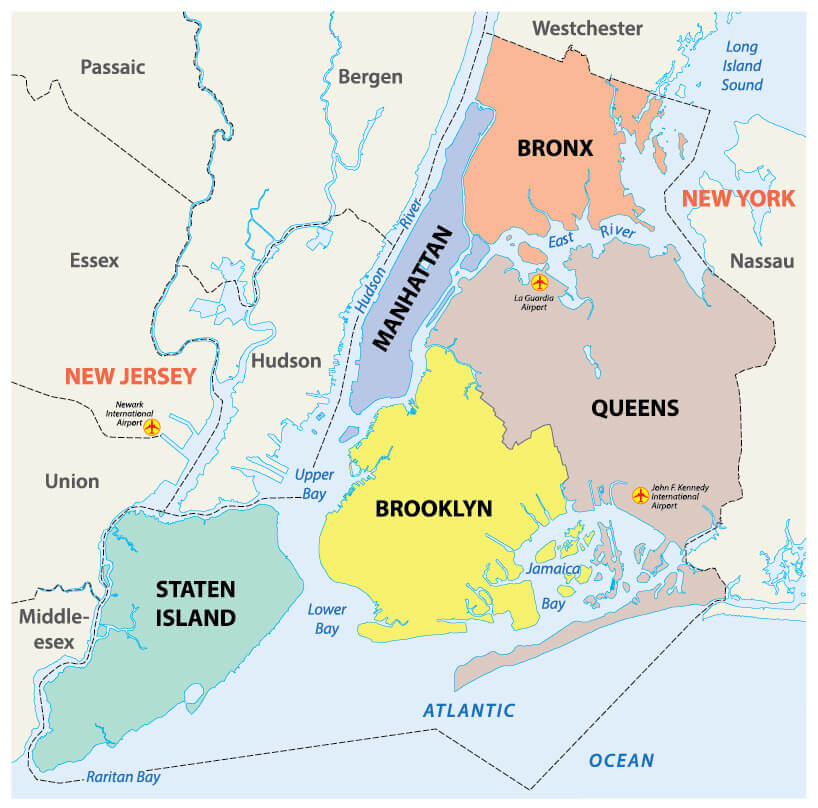
New York City, a global epicenter of commerce, culture, and innovation, is not a monolithic entity. Instead, it is a vibrant tapestry woven from five distinct administrative districts known as boroughs. Each borough possesses its own unique character, history, economic drivers, and demographic makeup. Understanding these five boroughs – Manhattan, Brooklyn, Queens, The Bronx, and Staten Island – is fundamental to grasping the multifaceted nature of this iconic metropolis. This exploration delves into the individual identities of each borough, examining their historical development, key economic sectors, and the defining characteristics that make them integral to the New York City experience.

Manhattan: The Heartbeat of Commerce and Culture
Manhattan, often perceived as the quintessential New York City, is the island borough that serves as the city’s commercial, financial, and cultural nucleus. Its dense urban landscape is characterized by towering skyscrapers, world-renowned cultural institutions, and a relentless pace of activity.
The Financial District and Midtown: Pillars of Global Finance
The southern tip of Manhattan is dominated by the Financial District, home to Wall Street, the New York Stock Exchange, and countless financial institutions. This area is the engine of global finance, attracting talent and capital from around the world. A short distance north, Midtown Manhattan is an equally vital economic hub, featuring iconic landmarks like Times Square, Rockefeller Center, and the Empire State Building. This district hosts a significant concentration of corporate headquarters, media companies, and a bustling retail landscape. The constant hum of business and the constant influx of professionals define the economic energy of these zones.
Cultural Landmarks and Residential Pockets
Beyond its economic might, Manhattan is a global mecca for arts and culture. Broadway theaters, the Metropolitan Museum of Art, the Museum of Modern Art (MoMA), Lincoln Center, and Central Park are just a few of the world-class attractions that draw millions of visitors annually. These institutions not only enrich the lives of residents but also contribute significantly to the city’s tourism economy. Despite its commercial dominance, Manhattan also features diverse residential neighborhoods, from the affluent Upper East and West Sides to the bohemian enclaves of Greenwich Village and the trendy streets of SoHo. These areas showcase a range of architectural styles and a varied socio-economic composition, reflecting the borough’s complex urban fabric.
Brooklyn: A Renaissance of Creativity and Community
Once primarily a residential borough for those commuting to Manhattan, Brooklyn has undergone a remarkable transformation in recent decades, evolving into a dynamic center for arts, culture, and innovation. Its distinct neighborhoods, rich history, and burgeoning entrepreneurial spirit have made it a highly desirable place to live and work.
Historic Neighborhoods and Architectural Diversity
Brooklyn boasts a rich tapestry of historical neighborhoods, each with its own unique architectural heritage and community feel. Areas like Park Slope, Brooklyn Heights, and Carroll Gardens are renowned for their picturesque brownstones, tree-lined streets, and strong sense of community. Further east and south, neighborhoods like Williamsburg and Bushwick have become synonymous with vibrant street art, independent boutiques, and a thriving music scene. This architectural diversity, ranging from grand Victorian homes to converted industrial lofts, contributes to Brooklyn’s unique aesthetic appeal.
The Rise of Creative Industries and Entrepreneurship
Brooklyn has emerged as a hub for creative industries, attracting artists, designers, musicians, and entrepreneurs. The borough’s relatively affordable commercial spaces (compared to Manhattan) and its growing population of innovative thinkers have fostered a fertile ground for startups and small businesses. From tech incubators in DUMBO to artisanal food producers in Red Hook, Brooklyn’s economy is increasingly driven by its creative and entrepreneurial energy. This shift has not only revitalized previously overlooked areas but also contributed to a significant increase in local employment and economic diversification.
Queens: A Global Mosaic of Diversity and Opportunity
Queens, the largest and most ethnically diverse borough in New York City, is a microcosm of the world. Its sprawling landscape is a testament to its rich immigrant history and its ongoing role as a welcoming gateway to America for people from every corner of the globe.
Gateway to the World: JFK and LaGuardia Airports
A significant aspect of Queens’ identity is its role as the primary gateway to New York City for international and domestic travelers. John F. Kennedy International Airport (JFK) and LaGuardia Airport (LGA) are major international hubs, facilitating global commerce and tourism. The economic activity generated by these airports, including airlines, logistics companies, and related service industries, is a substantial contributor to the borough’s economy. The constant flow of people and goods through these airports underscores Queens’ position as a vital node in global transportation networks.
Culinary Delights and Cultural Enclaves
Queens is celebrated for its unparalleled culinary scene, reflecting its diverse population. From authentic Flushing Chinatown dim sum and Jackson Heights’ South Asian flavors to Astoria’s Greek tavernas and the Caribbean eateries of South Ozone Park, the borough offers a gastronomic journey around the world. These vibrant ethnic enclaves are not just culinary destinations; they are also cultural centers where traditions are preserved and celebrated. Festivals, community events, and local businesses within these neighborhoods foster a strong sense of cultural identity and contribute to the borough’s rich social fabric. The economic impact of these diverse businesses, catering to both local communities and adventurous foodies, is considerable.
The Bronx: A Legacy of Resilience and Revitalization
The Bronx, the only mainland borough of New York City, holds a unique place in the city’s history and development. Once known for urban decay, it has undergone significant revitalization, demonstrating remarkable resilience and a strong sense of community pride.
Birthplace of Hip-Hop and Cultural Contributions
The Bronx holds an undeniable claim as the birthplace of hip-hop culture. In the 1970s, block parties and innovative DJs in the South Bronx laid the foundation for a global musical and cultural phenomenon. This artistic legacy continues to influence music, fashion, and art worldwide. Beyond hip-hop, the borough is home to a rich tapestry of cultural institutions, including the Bronx Museum of the Arts and the historic Edgar Allan Poe Cottage, reflecting its diverse heritage and artistic contributions. The economic impact of these cultural assets, drawing visitors and fostering local talent, is increasingly recognized.
Economic Development and Green Spaces
While facing economic challenges, The Bronx has seen considerable efforts towards economic revitalization. Industrial areas are being redeveloped, and new businesses are emerging, particularly in sectors that leverage the borough’s strategic location and workforce. The borough is also renowned for its extensive park system, including the magnificent Bronx Park, which houses the Bronx Zoo and the New York Botanical Garden. These green spaces offer crucial recreational opportunities for residents and are significant attractions, contributing to the local economy through tourism and related services. The ongoing development projects and the preservation of its natural beauty highlight The Bronx’s commitment to both economic progress and quality of life.
Staten Island: The “Borough of Homes” and Natural Beauty
Staten Island, the southernmost borough, is often characterized as the “Borough of Homes” due to its more suburban feel and lower population density compared to its urban counterparts. It offers a distinct lifestyle with a strong sense of community and significant natural attractions.
Residential Character and Transportation Links
Staten Island’s economy is largely driven by its residential population and the services that support it. Commuting to Manhattan and other boroughs is facilitated by the Staten Island Ferry, a vital and iconic public transportation link that offers breathtaking views of the Manhattan skyline and the Statue of Liberty. This ferry service, while essential for residents, also contributes to tourism. The borough’s real estate market, with its single-family homes and diverse housing options, caters to families and individuals seeking a slightly less intense urban environment while remaining connected to the greater New York City metropolitan area.

Natural Landscapes and Recreational Opportunities
Despite its suburban character, Staten Island boasts significant natural beauty and recreational opportunities. Greenbelt, a vast network of parks and natural areas, offers hiking trails, wildlife habitats, and a sanctuary from the urban hustle. Historic sites, like Fort Wadsworth, and the Staten Island Greenbelt Nature Center provide educational and leisure activities. These natural assets contribute to the borough’s appeal, attracting visitors for outdoor recreation and offering residents a high quality of life with access to nature, which indirectly supports local businesses focused on outdoor activities and leisure.
aViewFromTheCave is a participant in the Amazon Services LLC Associates Program, an affiliate advertising program designed to provide a means for sites to earn advertising fees by advertising and linking to Amazon.com. Amazon, the Amazon logo, AmazonSupply, and the AmazonSupply logo are trademarks of Amazon.com, Inc. or its affiliates. As an Amazon Associate we earn affiliate commissions from qualifying purchases.