
In the vast and intricate landscape of the American financial system, certain institutions stand head and shoulders above the rest, wielding immense influence over everything from individual savings accounts to global capital markets. These financial behemoths, often referred to as “too big to fail,” play a pivotal role in the nation’s economic health, facilitating commerce, providing capital, and safeguarding the wealth of millions. Understanding who these giants are, how they are defined, and their impact is crucial for anyone engaging with the financial world, be it as a personal saver, an investor, or a business owner. This article delves into the identity and significance of America’s largest banks, exploring the metrics that define their scale and the profound implications of their dominance.

Defining “Biggest”: Key Metrics for Financial Giants
When we talk about the “biggest” banks, it’s not a simple matter of counting branches or customers. The scale of a financial institution is measured through a combination of crucial financial metrics that reflect its total resources, market valuation, and operational reach. These indicators provide a comprehensive picture of a bank’s financial strength, stability, and systemic importance.
Asset Size: The Primary Measure of Scale
Perhaps the most universally accepted metric for ranking banks by size is their total assets. This figure represents everything the bank owns or is owed, including loans, investments, cash, and physical property. A higher asset base signifies greater lending capacity, a larger investment portfolio, and generally, a more robust financial position. Banks with trillions in assets possess an unparalleled ability to influence markets and support large-scale economic activities, making this the foundational criterion for identifying financial giants. It reflects the sheer volume of financial resources under their management and their capacity to absorb potential losses.
Market Capitalization: Investor Confidence and Valuation
While asset size speaks to what a bank owns, market capitalization reflects what the market believes a bank is worth. Calculated by multiplying the number of outstanding shares by the current share price, market cap provides a real-time valuation of the bank as a publicly traded company. A high market capitalization indicates strong investor confidence in the bank’s future earnings potential, management, and overall business strategy. It’s a testament to the bank’s perceived value by the investment community, often correlating with strong profitability and growth prospects. Banks with high market caps are not only large in assets but also highly valued by the global financial markets.
Deposit Base: A Foundation of Trust and Funding
The volume of customer deposits is another critical indicator of a bank’s size and public trust. The deposit base — encompassing checking, savings, money market, and certificate of deposit accounts — represents a bank’s primary source of stable, low-cost funding for its lending and investment activities. A large and diversified deposit base provides a strong liquidity buffer, reducing reliance on more volatile wholesale funding markets. It also reflects the bank’s ability to attract and retain a vast customer base, signifying widespread public confidence in its security and services. A substantial deposit base underpins a bank’s capacity to serve both individual consumers and large corporations effectively.
Branch Network and Global Reach: Presence and Influence
Beyond financial figures, the physical and operational footprint of a bank also contributes to its “bigness.” An extensive branch network across various states or even globally signifies a vast customer reach and operational capacity. While digital banking has reduced the necessity of physical branches, a wide network still represents a tangible presence and accessibility for many customers. Furthermore, a bank’s global reach — operating across multiple continents and serving multinational corporations — underscores its significance in international finance, cross-border transactions, and global trade facilitation. This global presence often involves navigating complex regulatory environments and offering specialized international financial services, cementing their status as global financial powerhouses.
The Titans of U.S. Banking: A Look at the Top Contenders
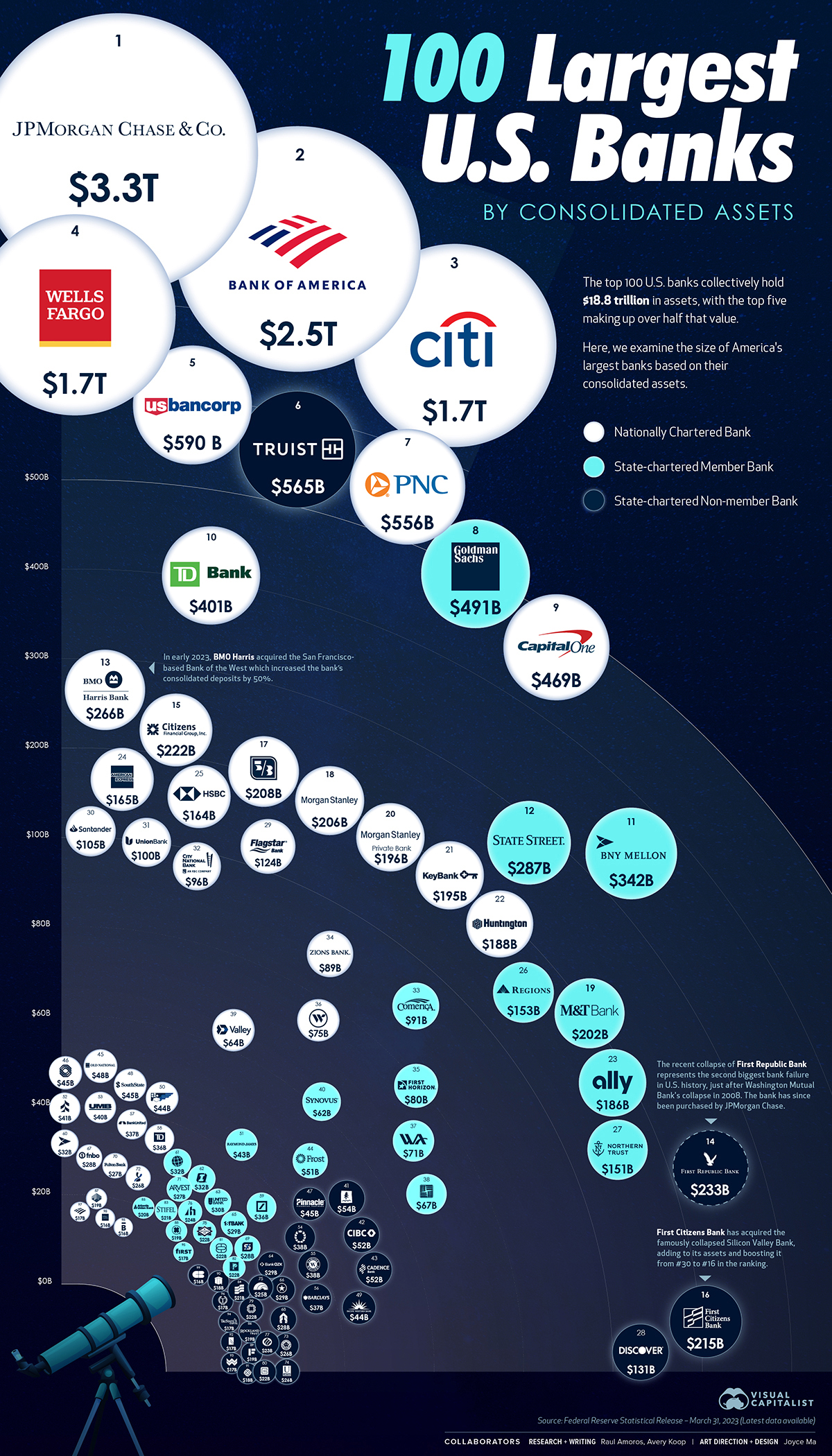
When these metrics are applied, a clear hierarchy emerges among U.S. financial institutions. While rankings can fluctuate based on market dynamics and specific reporting periods, a consistent group of banks routinely dominates the top spots, primarily due to their colossal asset bases and extensive operations.
JPMorgan Chase & Co.: A Dominant Force
JPMorgan Chase & Co. consistently ranks as the largest bank in the United States by asset size. With operations spanning nearly every facet of finance, it is a truly universal bank. Its commercial and consumer banking arm, Chase, serves millions of households and small businesses across the nation with a vast branch and ATM network, alongside robust digital platforms. Simultaneously, its formidable investment banking division advises on mergers and acquisitions, underwrites securities, and provides sophisticated trading services to corporations and governments worldwide. JPMorgan Chase’s vast scale allows it to offer unparalleled financial solutions, making it a critical player in both Main Street and Wall Street activities, profoundly impacting the global financial ecosystem.
Bank of America: Pervasive Presence
Bank of America (BofA) stands as another colossus in the American banking sector, renowned for its pervasive presence and extensive retail banking footprint. As one of the largest banks globally by assets, BofA serves a diverse clientele that includes individuals, small and middle-market businesses, large corporations, and institutional investors. Its consumer banking division is a powerhouse, offering a wide array of products from checking and savings accounts to mortgages and credit cards through thousands of financial centers and a strong digital presence. Beyond retail, Bank of America boasts significant wealth management capabilities through Merrill and strong global banking and markets divisions, catering to the complex financial needs of large enterprises and institutional clients.
Wells Fargo & Company: Retail Banking Powerhouse
Wells Fargo & Company traditionally holds a prominent position among the largest U.S. banks, particularly recognized for its strong roots in retail and commercial banking. While it has navigated significant operational challenges and reputational issues in recent years, its core strength lies in its extensive network of branches and ATMs, serving a massive customer base across the United States. Wells Fargo is a leading provider of mortgages, small business loans, and consumer lending products. Despite past controversies that led to substantial regulatory fines and a temporary asset cap, its fundamental business model—focusing heavily on community banking, wealth management, and wholesale banking—continues to position it as a major financial institution integral to the American economy. Its ongoing efforts to rebuild trust and strengthen its risk management frameworks are key to its sustained influence.
Citigroup Inc.: Global Reach and Institutional Prowess
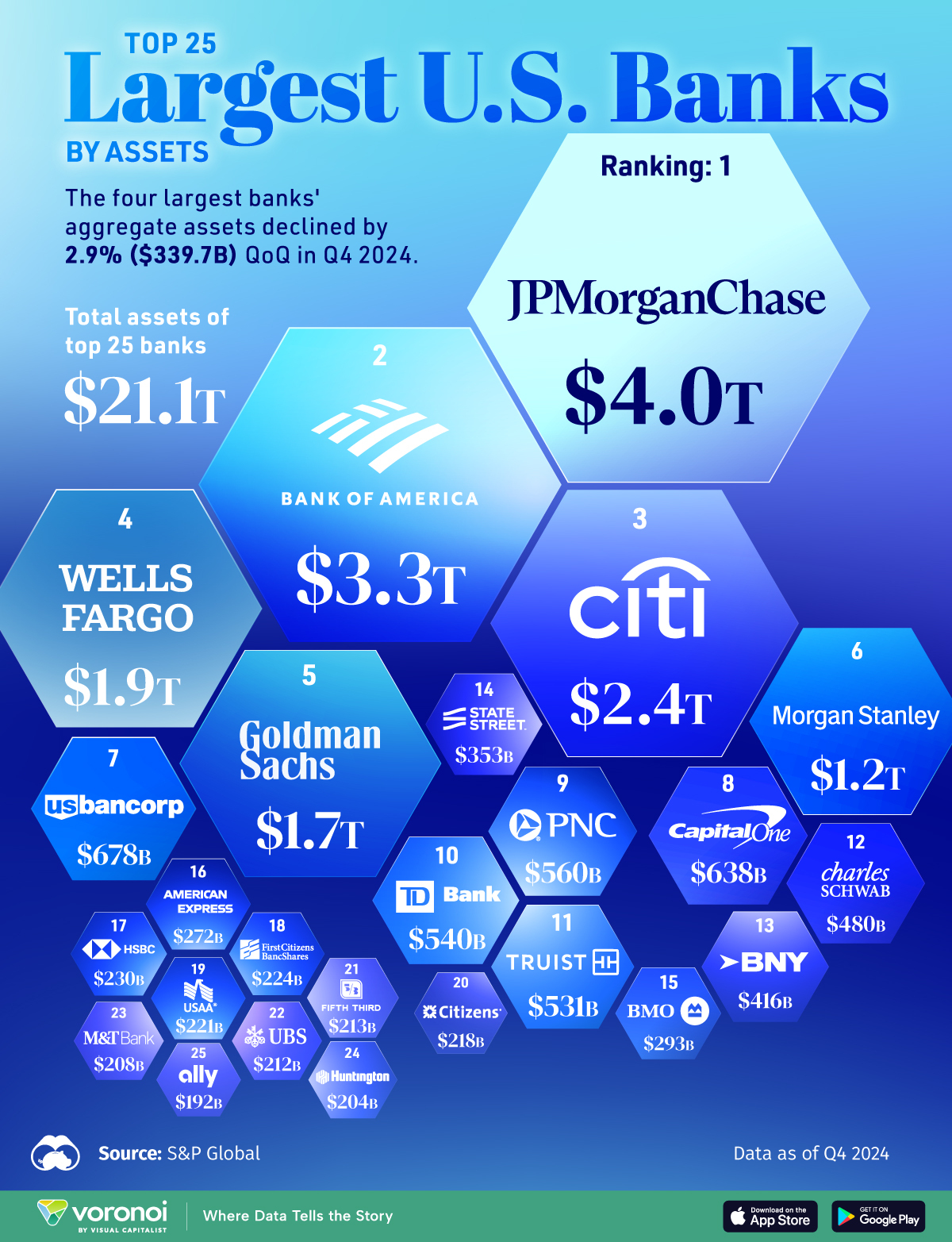
Citigroup Inc. differentiates itself with a particularly strong international focus, operating in over 160 countries and jurisdictions. While it also serves U.S. consumers, Citigroup’s strength lies in its institutional clients group, providing banking, lending, and advisory services to corporations, financial institutions, and governments globally. Citi’s extensive international network makes it a crucial facilitator of global trade and cross-border financial transactions. It is a leading provider of treasury and trade solutions, securities services, and private banking for high-net-worth individuals, embodying the definition of a truly global bank headquartered in America. Its capacity to navigate complex international financial landscapes makes it indispensable for multinational entities.
The Economic Impact of America’s Largest Banks
The sheer size and operational scope of these financial giants mean their influence extends far beyond mere financial transactions. They are integral to the functioning of the economy, shaping market dynamics, fostering growth, and requiring unique regulatory oversight.
Pillars of the Financial System
These mega-banks are often described as the pillars of the financial system due to their critical role in maintaining stability and liquidity. They act as primary dealers in government securities, facilitate vast interbank lending, and serve as custodians for trillions in assets. Their health is intertwined with the stability of the broader financial markets. A disruption to one of these institutions could trigger cascading effects throughout the global economy, a phenomenon highlighted during the 2008 financial crisis, which led to the “too big to fail” designation and subsequent enhanced regulatory scrutiny. They are essential conduits through which capital flows, ensuring the smooth operation of financial markets.
Driving Economic Growth
America’s largest banks are powerful engines for driving economic growth. They are the primary source of credit for businesses of all sizes, from small startups to multinational corporations, enabling investment in new ventures, expansion, and job creation. They also provide mortgages and consumer loans, empowering individuals to purchase homes, finance education, and make significant personal investments, thus stimulating consumer spending. By efficiently allocating capital across various sectors of the economy, these banks play a vital role in fueling innovation, productivity, and overall economic prosperity. Their lending activities are fundamental to the expansion of the productive capacity of the nation.
Innovation and Financial Services Evolution
With immense resources, the biggest banks are at the forefront of innovation and the evolution of financial services. They invest heavily in cutting-edge technologies like artificial intelligence, blockchain, and cloud computing to enhance their digital banking platforms, improve security, and develop new financial products. This focus on technological advancement benefits consumers and businesses alike, offering more convenient, secure, and personalized banking experiences. From advanced mobile apps to real-time payment systems and sophisticated data analytics, these institutions are continuously redefining the future of banking, pushing the boundaries of what financial services can offer.
Regulatory Scrutiny and Systemic Risk
Given their systemic importance, these banks face intense regulatory scrutiny. Following the 2008 crisis, the Dodd-Frank Act significantly increased oversight, capital requirements, and stress testing for “Systemically Important Financial Institutions” (SIFIs). Regulators meticulously monitor their financial health and risk management practices to mitigate the “too big to fail” problem, aiming to prevent future crises and protect taxpayers from potential bailouts. This heightened regulation is a constant balancing act between ensuring financial stability and avoiding overly burdensome rules that could stifle economic activity or competitiveness. Their size demands a level of oversight that smaller institutions do not typically encounter, reflecting their potential impact on the entire financial system.
Navigating Your Finances: What Big Banks Offer Consumers and Businesses
For individuals and corporations alike, engaging with these large banks comes with a distinct set of advantages and considerations. Their scale allows for a broad array of services and unparalleled convenience, yet also presents certain trade-offs.
Comprehensive Service Offerings
One of the most compelling reasons to bank with a financial giant is their comprehensive service offerings. Consumers can access a full spectrum of financial products under one roof, including checking and savings accounts, credit cards, mortgages, auto loans, personal loans, investment services, and wealth management. For businesses, the offerings are even more expansive, including commercial loans, treasury management, international banking, foreign exchange, capital markets access, and employee benefits solutions. This ‘one-stop shop’ approach simplifies financial management for many, providing integrated solutions for diverse needs across different life stages or business cycles.
Convenience and Accessibility
The extensive convenience and accessibility provided by large banks are unmatched. Their vast branch networks, coupled with thousands of ATMs, ensure physical access across broad geographic areas. More importantly, these banks have invested heavily in state-of-the-art digital banking platforms, offering robust mobile apps, online banking portals, and 24/7 customer service. This digital infrastructure allows customers to manage accounts, pay bills, transfer funds, and apply for loans from anywhere at any time, providing a seamless and highly convenient banking experience that smaller institutions might struggle to replicate.
Potential Downsides for Consumers
Despite the advantages, there can be potential downsides for consumers. While large banks offer broad services, they sometimes lack the personalized customer service found at smaller, community-focused banks. Account fees can also be higher or more complex, requiring careful attention to avoid charges. The sheer size can also lead to more bureaucratic processes, making it harder to resolve unique issues or get individualized advice. Consumers seeking highly tailored relationships or lower-fee basic services might find smaller banks a more suitable fit, depending on their specific financial needs and preferences.
Strategic Partners for Businesses
For businesses, particularly large corporations and those with international operations, the biggest banks serve as strategic partners. They provide the necessary scale of capital for large-scale projects, syndicated loans, and complex financing deals that smaller banks cannot handle. Their global reach facilitates international trade finance, foreign exchange management, and treasury services across multiple jurisdictions. Moreover, their expertise in investment banking and capital markets provides businesses with access to public and private equity markets, debt financing, and strategic advisory services critical for growth and expansion. They become indispensable allies in navigating complex financial landscapes.
In conclusion, the biggest banks in America – institutions like JPMorgan Chase, Bank of America, Wells Fargo, and Citigroup – are more than just places to keep money; they are foundational pillars of the U.S. and global economies. Defined by their immense asset bases, vast market capitalizations, and expansive operational footprints, these financial titans drive economic growth, foster innovation, and provide indispensable services to millions of individuals and businesses. While their size necessitates rigorous regulatory oversight and presents unique challenges, their role in maintaining financial stability and facilitating economic activity remains unparalleled, making them central to the ongoing health and evolution of the American financial landscape.
aViewFromTheCave is a participant in the Amazon Services LLC Associates Program, an affiliate advertising program designed to provide a means for sites to earn advertising fees by advertising and linking to Amazon.com. Amazon, the Amazon logo, AmazonSupply, and the AmazonSupply logo are trademarks of Amazon.com, Inc. or its affiliates. As an Amazon Associate we earn affiliate commissions from qualifying purchases.