
When Nintendo launched the Switch in 2017, the gaming industry was at a crossroads. The race for raw graphical power—measured in TFLOPS and 4K native resolutions—threatened to leave portable gaming behind. However, Nintendo’s strategic pivot to a hybrid architecture, powered by a customized NVIDIA Tegra X1 SoC (System on a Chip), redefined how software interacts with hardware. The “best” games for the Nintendo Switch are not merely those with the highest sales, but those that exemplify technical optimization, innovative software engineering, and a profound understanding of the hybrid ecosystem.
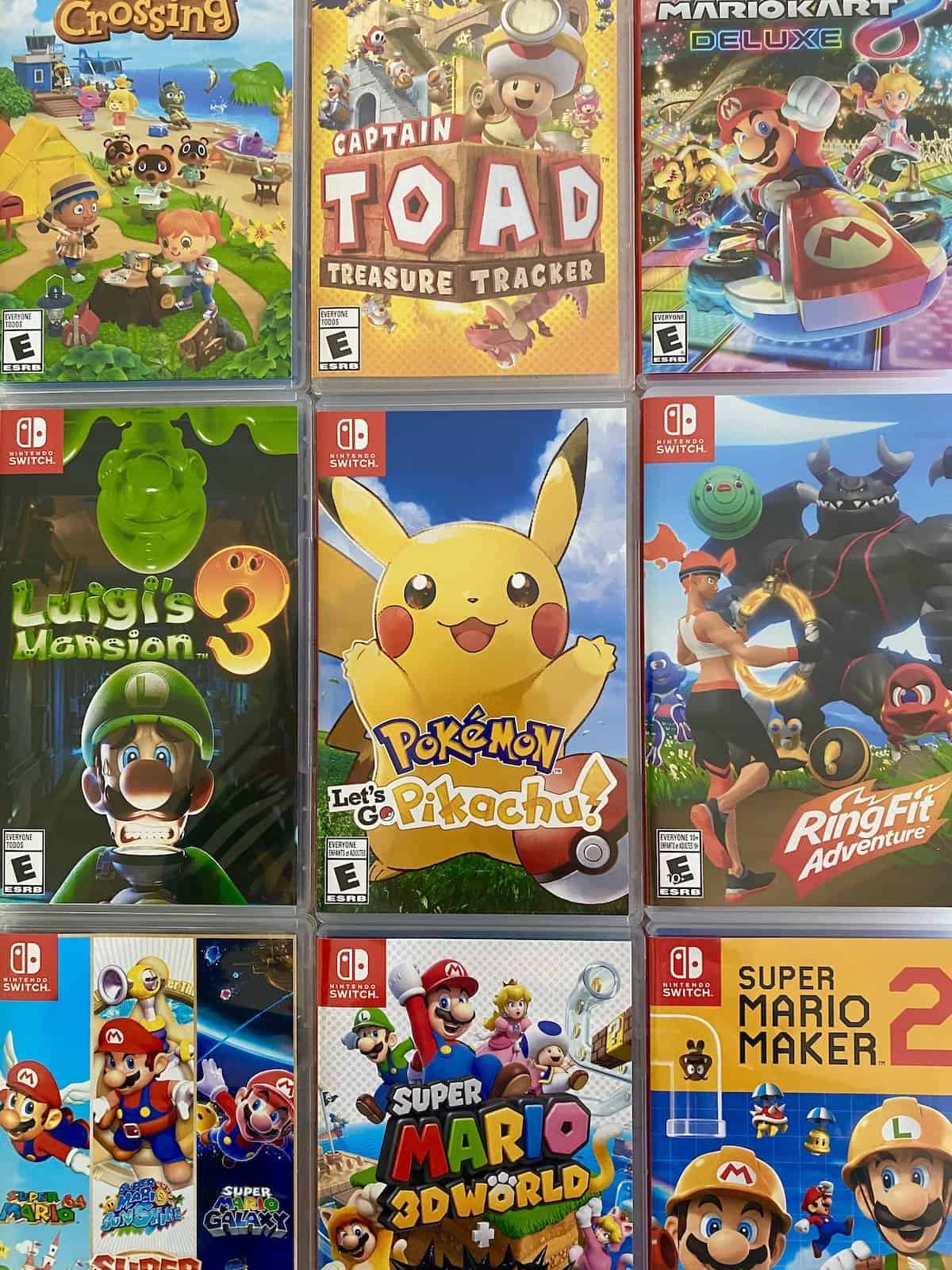
This analysis explores the pinnacle of the Switch library through a technical lens, evaluating how these titles push the boundaries of the ARM-based architecture to deliver experiences that rival their tethered competitors.
The Engineering Marvels of First-Party Software
Nintendo’s internal development teams possess an unparalleled advantage: deep-level access to the hardware’s microarchitecture. This synergy allows for “boutique” optimization, where software is tuned to extract every ounce of performance from the Tegra X1’s Maxwell-based GPU and 4GB of LPDDR4 RAM.
The Legend of Zelda: Tears of the Kingdom – A Triumph of Systemic Design
The Legend of Zelda: Tears of the Kingdom is arguably the most technically ambitious game on the platform. While its predecessor, Breath of the Wild, established the open-air formula, Tears of the Kingdom introduces a complex physics-based “Chemistry Engine” that operates across three distinct vertical layers: the Sky, the Surface, and the Depths.
From a technical standpoint, the game’s “Ultrahand” and “Fuse” mechanics are feats of computational physics. The engine must track the velocity, weight, and structural integrity of player-created objects in real-time without crashing the system’s limited memory. By utilizing dynamic resolution scaling (DRS) and clever asset streaming, Nintendo’s engineers managed to maintain a cohesive experience that feels remarkably seamless, proving that sophisticated systemic design can outweigh raw pixel counts.
Super Mario Odyssey: Fluidity and Animation
In the realm of 3D platformers, input latency and frame rate stability are the primary metrics of quality. Super Mario Odyssey targets a locked 60 frames per second (fps) in both docked and handheld modes. Achieving this on mobile hardware required a masterclass in asset management.
The game utilizes a technique called “Level of Detail” (LOD) swapping, where the complexity of character models and textures scales dynamically based on their distance from the camera. This ensures that the immediate environment—the “play space”—remains crisp and responsive. The technical success of Odyssey lies in its animation blending; the transition between Mario’s various states (running, jumping, capturing enemies) is handled with a level of micro-latency optimization that makes the hardware feel more powerful than its spec sheet suggests.
Metroid Dread: Visual Fidelity and Performance
Developed by MercurySteam in collaboration with Nintendo, Metroid Dread serves as a benchmark for 2D/3D hybrid rendering. By locking the frame rate to 60fps and utilizing high-quality baked lighting alongside real-time atmospheric effects, the developers created a visual experience that rivals high-end PC titles in artistic cohesion. The game’s use of cinematic transitions—moving from side-scrolling gameplay to over-the-shoulder cutscenes—demonstrates the Switch’s ability to handle high-fidelity assets when the scope of the environment is strictly controlled.
The “Impossible” Ports: Pushing the Tegra X1 Beyond Its Limits
The Nintendo Switch’s library is notable not just for its exclusives, but for the “impossible” ports of titles originally designed for the PlayStation 4 and Xbox One. These games represent the pinnacle of software optimization and creative engineering.
The Witcher 3: Wild Hunt – Complete Edition
When CD Projekt Red announced that The Witcher 3 was coming to Switch, the industry was skeptical. The game is a massive open-world RPG with heavy CPU demands. The porting specialists at Saber Interactive achieved this through a combination of aggressive memory management and the implementation of temporary anti-aliasing (TAA) to mask lower resolution textures.

By re-engineering the game’s “RedEngine” to fit within the Switch’s 3.5GB of available game RAM, the developers managed to keep the entire experience intact. It remains a case study in how developers can prioritize “content parity” over “visual parity,” allowing a mobile chipset to run a game designed for a 1.84 TFLOP console.
DOOM Eternal and the ID Tech 7 Engine
The work of Panic Button in porting DOOM Eternal is perhaps the most significant technical achievement in the Switch’s third-party catalog. The id Tech 7 engine is known for its high-speed performance, and on the Switch, it utilizes every modern trick available: dynamic resolution, aggressive LOD scaling, and a redesigned sound engine to save CPU cycles.
The result is a game that maintains the “combat loop” and “feel” of the original versions while running on a device that consumes a fraction of the power. This demonstrates that an optimized engine architecture can be scaled across vast hardware disparities if the core rendering pipeline is sufficiently modular.
Persona 5 Royal: The Perfection of Stylized Rendering
Not all technical triumphs require pushing polygons. Persona 5 Royal on the Switch highlights the importance of art direction and UI optimization. Because the game relies on a stylized, cel-shaded aesthetic rather than photorealism, it scales beautifully to the Switch’s 720p handheld screen. The technical accomplishment here is the optimization of load times and the preservation of the intricate, high-frame-rate UI animations that define the game’s identity, proving that “best” also includes “best-fitted” for the hardware’s form factor.
Indie Innovation and the Digital Ecosystem
The Nintendo Switch has become the “de facto” home for independent developers. The technical reason for this is the Switch’s support for major game engines like Unity and Unreal Engine 4, which allow for relatively straightforward cross-platform development.
Hades: High-Speed Roguelike Optimization
Supergiant Games’ Hades is a masterclass in 2D sprite-work and 3D environment synergy. On the Switch, the game maintains a blistering 60fps, which is crucial for the precise timing required in roguelike combat. The technical challenge for Hades was managing the visual “clutter”—particle effects, projectiles, and enemy animations—without dropping frames. Through efficient draw-call management, the developers ensured that the Switch version remains the preferred way to play for many, thanks to the inherent portability of the hardware.
Hollow Knight: Atmospheric Rendering on a Budget
Hollow Knight showcases how atmosphere can be generated through clever use of layers and parallax scrolling rather than heavy GPU-bound effects. By focusing on high-quality 2D assets and a hauntingly beautiful soundscape, Team Cherry created a world that feels expansive and immersive. On the Switch, the game’s minimal hardware footprint allows for exceptional battery life, a technical “stat” that is often overlooked but vital for portable gaming software.
Stardew Valley: The Power of Long-Tail Support
While not a graphical powerhouse, Stardew Valley represents a different kind of technical excellence: stability and lifecycle management. The game has been updated consistently for years, with the developer ensuring that the codebase remains efficient as new features (like multiplayer) are added. Its success on the Switch highlights the platform’s role as a digital-first ecosystem where small-scale software can find a massive audience through the eShop’s accessibility.
The Future of the Switch Ecosystem: Longevity and Technical Legacy
As we look toward the inevitable successor to the Switch, the current library stands as a testament to what can be achieved through software ingenuity in the face of hardware constraints.
Sustaining Performance in a Post-Next-Gen World
As the PlayStation 5 and Xbox Series X/S become the baseline for development, the technical gap between the Switch and other consoles has widened. However, techniques like FSR (FidelityFX Super Resolution) are now being implemented in Switch titles to provide a “checkerboarded” 1080p output from a lower internal resolution. This software-based upscaling allows the Switch to remain relevant, extending the lifecycle of the hardware far beyond its expected expiration date.
The Role of Cloud Gaming and Hybrid Infrastructure
Nintendo has also experimented with “Cloud Versions” of demanding titles like Control and Hitman 3. While these rely on high-speed internet rather than local hardware, they represent an interesting technical branch for the Switch. By offloading the rendering to remote servers and using the Switch as a thin-client terminal, Nintendo can offer experiences that the Tegra X1 could never natively support. While not the “best” native games, they are a significant part of the tech story regarding how Nintendo manages hardware limitations.

Final Thoughts on Technical Synergy
The best games for the Nintendo Switch are defined by their ability to harmonize with the platform’s unique constraints. Whether it is Nintendo’s own engineers squeezing physics simulations into a handheld or third-party developers performing “miracle” ports, the Switch library is a monument to the importance of optimization. It proves that in the world of technology, the elegance of the software is just as important as the power of the hardware. As the platform matures, these titles will be remembered not just as great games, but as technical benchmarks that challenged our understanding of what mobile gaming could achieve.
aViewFromTheCave is a participant in the Amazon Services LLC Associates Program, an affiliate advertising program designed to provide a means for sites to earn advertising fees by advertising and linking to Amazon.com. Amazon, the Amazon logo, AmazonSupply, and the AmazonSupply logo are trademarks of Amazon.com, Inc. or its affiliates. As an Amazon Associate we earn affiliate commissions from qualifying purchases.