
Choosing a veterinary college is one of the most significant financial decisions a student will ever make. While academic prestige, clinical facilities, and research opportunities are often the primary focus of prospective students, the modern economic landscape of veterinary medicine necessitates a shift toward a more pragmatic metric: Return on Investment (ROI). With the average debt for veterinary graduates often exceeding $180,000—and sometimes climbing well past $300,000—the “best” college is no longer just the one with the highest ranking, but the one that offers the most sustainable path to financial stability.
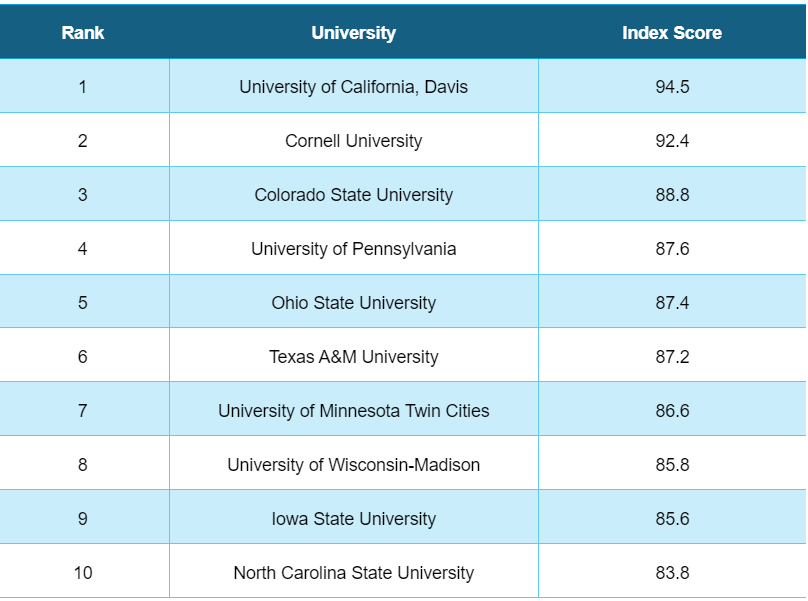
In this analysis, we will explore the best colleges for veterinary medicine through a purely financial lens, examining tuition structures, debt-to-income ratios, and the long-term earning potential associated with specific institutions.
1. Understanding the True Cost of a DVM: Tuition, Fees, and Opportunity Cost
Before identifying specific institutions, it is critical to deconstruct what “cost” actually means in the context of a Doctor of Veterinary Medicine (DVM) degree. The sticker price of tuition is only the beginning of the financial narrative. To accurately rank the best colleges, one must account for the total cost of attendance (COA) over four years.
In-State vs. Out-of-State: The $100,000 Difference
The single most impactful factor in the financial viability of a veterinary degree is residency status. Public land-grant universities offer significantly discounted tuition for residents of their respective states. For instance, a resident attending North Carolina State University or the University of Georgia may pay roughly $20,000 to $25,000 per year in tuition. Conversely, an out-of-state student at the same institution—or a student at a private university like the University of Pennsylvania—could face tuition upwards of $50,000 to $65,000 annually. Over four years, this creates a disparity of more than $100,000, which, when compounded with interest on student loans, can represent a quarter-million-dollar difference in lifetime wealth.
Hidden Costs: Living Expenses and Regional Economics
The location of a college plays a dual role in a student’s financial health. While a school like UC Davis is consistently ranked as a top global institution, the cost of living in Davis, California, is substantially higher than in Manhattan, Kansas (home to Kansas State University). When calculating the best college for your money, you must factor in rent, transportation, and local taxes. A “cheaper” tuition at an urban school can quickly be eclipsed by the high cost of housing, leading to a higher total debt load upon graduation.
The Opportunity Cost of Specialization
The best colleges for veterinary medicine also provide pathways to internships and residencies. While these postgraduate steps temporarily delay high-earning years, they often lead to specialized roles in surgery, oncology, or cardiology, where salaries can double or triple those of general practitioners. The financial “best” school is often one that has a high placement rate into these lucrative specialties.
2. Top-Tier Institutions with High Return on Investment (ROI)
When we analyze the landscape of veterinary schools through a financial lens, certain institutions stand out. These schools manage to balance high-quality education with financial structures that protect the student’s future net worth.
Texas A&M University: The Gold Standard of Value
Texas A&M University is frequently cited by financial advisors in the veterinary space as one of the best value propositions in the country. For Texas residents, the tuition is among the lowest in the nation. Furthermore, the university has a massive endowment and a robust scholarship program that significantly offsets the cost of attendance. When you combine low debt at graduation with the strong Texas economy—which offers high starting salaries for large-animal and mixed-animal practitioners—the ROI for an A&M graduate is among the highest in the profession.
North Carolina State University: Excellence Meets Affordability
NC State is a powerhouse in clinical research and specialized medicine. Despite its elite status, it remains remarkably affordable for residents. For out-of-state students, NC State offers a unique “pathway to residency” where students can often establish North Carolina residency after their first year, drastically reducing the cost for the final three years of the program. This policy alone makes it one of the best financial choices for students who do not have a veterinary school in their home state.
Cornell University: Prestige and Premium Earnings
While Cornell is an Ivy League institution with a higher price tag, it deserves a spot on the “best” list due to its institutional branding and alumni network. Cornell graduates often find themselves at the forefront of the industry, securing high-paying roles in corporate veterinary leadership, pharmaceuticals, and elite specialty practices. For a student focused on the “Money” niche—specifically high-level business finance or corporate consulting within the veterinary world—the Cornell brand acts as a catalyst for a higher salary ceiling that can justify the initial investment.

3. Debt-to-Income Ratios: Selecting Schools Based on Financial Sustainability
The American Veterinary Medical Association (AVMA) has long tracked the “Debt-to-Income” (DTI) ratio of new graduates. A sustainable DTI is generally considered to be 1.4:1 or lower. Unfortunately, many graduates currently face ratios of 2:1 or higher. The best colleges are those that actively work to keep their graduates’ DTI within a healthy range.
The AVMA Debt-to-Income Benchmark
Prospective students should look for schools that report transparent data on graduate outcomes. Schools like Iowa State University and Oklahoma State University often produce graduates with lower DTI ratios because they are located in areas where the cost of living is low, and they have resisted the aggressive tuition hikes seen in other regions. Choosing a school based on its historical DTI ratio is a more sophisticated financial move than choosing based on US News & World Report rankings.
Loan Forgiveness Programs and Institutional Support
Some colleges are “better” because they offer superior financial literacy programs. For example, the University of California, Davis, and the University of Minnesota provide extensive resources to help students navigate Public Service Loan Forgiveness (PSLF). For students intending to go into shelter medicine or government work, a school that helps them maximize these federal programs is effectively “cheaper” because it leads to tax-free loan discharge after ten years of service.
The Impact of Private vs. Public Institutions
The surge in private veterinary schools, such as Midwestern University or Lincoln Memorial University, has changed the financial landscape. These schools often have higher tuition and no in-state discount. From a strictly financial standpoint, these are often the most difficult to justify unless the student has significant personal wealth or a specific career path in a high-demand, high-pay niche that compensates for the increased debt load.
4. Strategic Financial Planning for Aspiring Veterinarians
Ultimately, the “best” college for veterinary medicine is the one that aligns with a student’s long-term business goals. If you view your degree as a financial asset, your choice of school should be dictated by your intended business model.
Private Practice Ownership and Equity
For those who intend to own their own practice, the goal should be to graduate with the least amount of debt possible. A lower debt load increases your “borrowing power” when you eventually seek a small business loan to purchase or start a clinic. Schools in the Midwest and South often provide the best foundation for this path, as they offer low tuition and are situated in regions where practice ownership remains highly profitable.
Scholarship Landscapes and Research Grants
Another way to evaluate the best colleges is to look at their internal funding. Some schools have massive research budgets. If a student is interested in a PhD/DVM dual degree, schools like Colorado State University or the University of Wisconsin-Madison are top choices. These programs are often “fully funded,” meaning the student receives a stipend and has their tuition waived. In terms of pure financial gain, a fully funded dual-degree program is the absolute pinnacle of veterinary education value.
Financial Literacy as Part of the Curriculum
The best colleges are now integrating business and finance into their veterinary curriculum. As the industry shifts toward corporate consolidation (with companies like VCA and Mars Veterinary Health buying up independent practices), veterinarians need to understand contract negotiation and equity stakes. Institutions that offer a “Business Certificate” alongside the DVM—such as the University of Florida—provide their graduates with a competitive edge in the labor market, allowing them to command higher starting bonuses and better benefit packages.

Conclusion: Making a Data-Driven Decision for Your Veterinary Career
The definition of the “best” veterinary college has evolved. While clinical skills and animal care remain the heartbeat of the profession, the financial health of the practitioner is what ensures the longevity of their career. To choose the right school, students must look past the prestige and look directly at the balance sheet.
The best colleges for veterinary medicine are those that offer a low-cost in-state option, a clear path to residency for out-of-state students, or a brand name that facilitates entry into high-paying specialties. By prioritizing the debt-to-income ratio and the total cost of attendance, an aspiring veterinarian can ensure that their passion for animals does not come at the expense of their lifelong financial freedom. In the end, the most prestigious degree is the one that is paid off the fastest, allowing the doctor to focus on medicine rather than interest rates.
aViewFromTheCave is a participant in the Amazon Services LLC Associates Program, an affiliate advertising program designed to provide a means for sites to earn advertising fees by advertising and linking to Amazon.com. Amazon, the Amazon logo, AmazonSupply, and the AmazonSupply logo are trademarks of Amazon.com, Inc. or its affiliates. As an Amazon Associate we earn affiliate commissions from qualifying purchases.