
In the modern financial landscape, the barrier to entry for entrepreneurship has never been lower, yet the complexity of choosing the right path has never been higher. Identifying the “best” business to start is no longer a matter of finding a vacant storefront on a busy street; it is about analyzing market gaps, understanding unit economics, and leveraging scalable systems to ensure a high return on investment (ROI).
To build a sustainable venture, one must look beyond temporary trends and focus on business models that prioritize cash flow, low overhead, and long-term equity. Whether you are looking to replace a primary income or build a scalable empire, the following sectors represent the most lucrative opportunities for founders today.
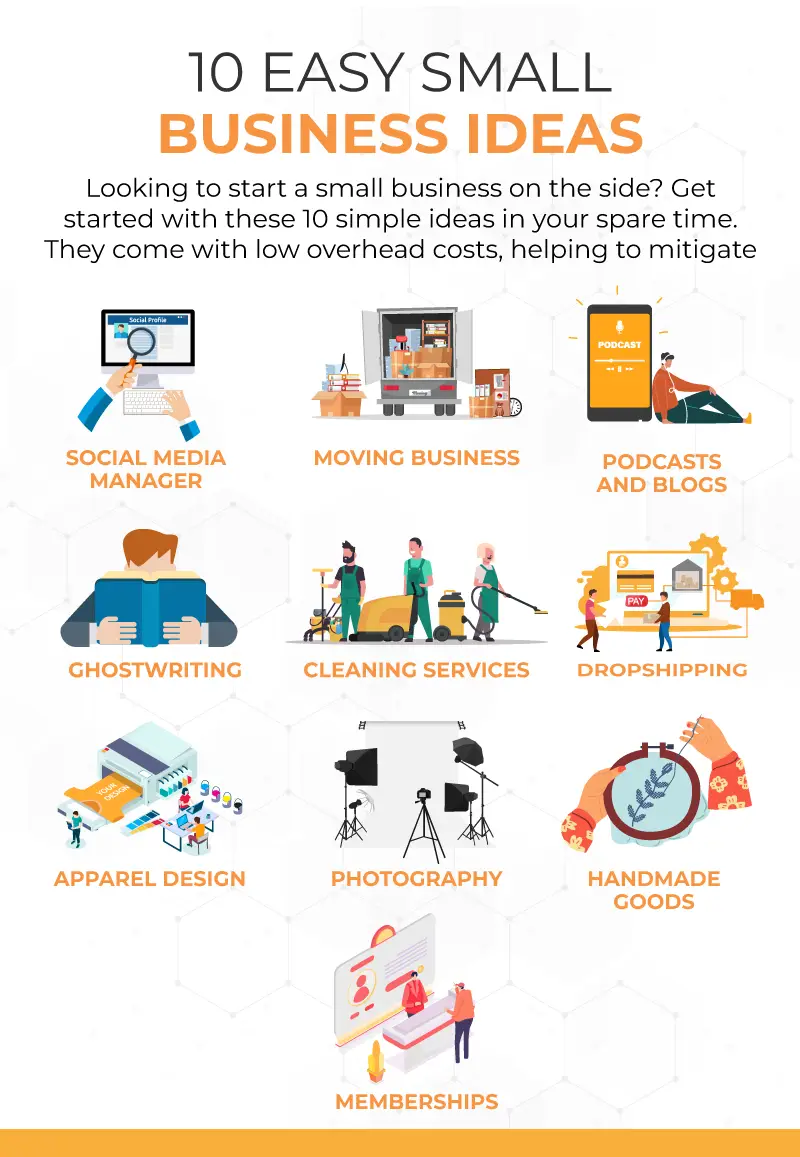
1. High-Margin Digital Service Models
One of the most efficient ways to generate wealth with minimal initial capital is through service-based businesses. Unlike physical product businesses, digital services eliminate the need for inventory, shipping, and manufacturing. This allows for nearly 100% gross margins in the early stages of the venture.
Specialized Consulting and High-Ticket Coaching
As the global economy becomes more specialized, companies and individuals are willing to pay a premium for specific, actionable expertise. The most profitable consulting businesses are those that solve “expensive” problems. For example, a consultant who helps a firm optimize its tax strategy or transition to a more efficient supply chain provides a direct financial benefit that justifies a high-ticket fee.
To succeed here, the focus must be on the “outcome-based” pricing model rather than hourly billing. By positioning yourself as a specialist rather than a generalist, you create a moat around your business that allows for significant price floor control and high profitability.
Content Monetization and Personal Media Brands
In the “Attention Economy,” the ability to aggregate an audience is a massive financial asset. Starting a niche-focused media brand—whether through a specialized newsletter, a professional podcast, or a data-driven blog—allows for multiple revenue streams.
The financial strength of this model lies in its diversity: sponsorship deals, affiliate marketing, and the eventual sale of digital products or memberships. A well-managed media brand functions like a digital real estate portfolio, where the cost of production is low, but the compounding value of the audience grows exponentially over time.
2. Scalable E-Commerce and Private Labeling
The retail landscape has permanently shifted toward digital storefronts. However, the best businesses in this space are no longer simple arbitrage plays. Instead, the real wealth is built by creating proprietary brands and leveraging sophisticated logistics.
Private Labeling and Brand Ownership
The “dropshipping” era has evolved into a more sophisticated “private label” model. To build a business with actual resale value, entrepreneurs should focus on sourcing high-quality products from manufacturers and branding them as their own. This allows for higher price points and customer loyalty.
From a financial perspective, the goal is to achieve high “Customer Lifetime Value” (CLV). By owning the brand, you control the margins and the customer data, which are the two most important variables when seeking a future exit or acquisition by a larger firm.
Niche E-commerce with Third-Party Logistics (3PL)
Scalability in e-commerce often fails because of the physical burden of fulfillment. The most successful modern e-commerce founders utilize Third-Party Logistics (3PL) to handle warehousing and shipping. This converts a fixed cost (renting a warehouse) into a variable cost (paying per item shipped), which protects the business during lean months. Focusing on a specific niche—such as eco-friendly home goods or specialized athletic equipment—allows for targeted marketing spend and higher conversion rates, ensuring that every dollar spent on advertising yields a maximum return.

3. The Rise of Productized Services
A productized service takes a traditional service (like graphic design, accounting, or lead generation) and packages it as a fixed-price product with a defined scope. This model is currently one of the best businesses to start because it combines the high margins of services with the scalability of software.
Subscription-Based Marketing and SEO Agencies
Many businesses struggle with the unpredictability of marketing costs. By offering a “Productized SEO” or “Monthly Content” package, you provide the client with price certainty and yourself with predictable Monthly Recurring Revenue (MRR).
The financial beauty of the productized model is the ability to build “standard operating procedures” (SOPs). Once the process is standardized, you can hire specialized talent to execute the work, allowing the founder to focus on business development and financial strategy rather than daily tasks. This is how a small agency scales from $10,000 to $100,000 in monthly revenue.
Specialized Financial and Compliance Services
As regulations increase in the digital and physical worlds, businesses are desperate for compliance help. Starting a productized service that handles bookkeeping, sales tax compliance for e-commerce, or fractional CFO services is incredibly lucrative. These are “sticky” businesses—once a client integrates your financial service into their operations, the churn rate is remarkably low, providing the founder with a stable, long-term income stream.
4. Asset-Backed and Cash-Flow Heavy Ventures
For those with some initial capital to deploy, the best businesses are those backed by physical or digital assets. These ventures often provide a hedge against inflation and offer significant tax advantages.
Short-Term Rental Management
You do not necessarily need to own property to start a high-cash-flow real estate business. Rental arbitrage—where you lease a property long-term and sub-lease it on short-term platforms like Airbnb—is a popular entry point. However, a more professionalized version is a “Management Agency” for short-term rentals. By taking a percentage of the revenue (typically 20-30%) in exchange for managing the listing, cleaning, and guest communication, you build a business with zero debt and high cash flow.
Specialized Storage and Industrial Real Estate
With the explosion of e-commerce, there is a massive demand for “micro-warehousing” and specialized storage solutions. Investing in or managing small-bay industrial flex spaces is currently one of the highest-yielding sectors in the property market. These businesses have low maintenance requirements compared to residential units and offer long-term leases with reliable corporate tenants, making them an excellent cornerstone for a wealth-building portfolio.
5. Financial Strategy for New Founders
Regardless of the niche you choose, the “best” business is ultimately the one that is managed with financial discipline. Many founders fail not because their idea was bad, but because their financial architecture was weak.
Understanding Unit Economics and Burn Rate
Before launching, you must understand your unit economics: what is the total cost to acquire one customer (CAC), and what is the total profit that customer will bring over their lifetime (LTV)? A healthy business typically maintains an LTV to CAC ratio of 3:1 or higher.
Furthermore, monitoring your “burn rate”—the amount of money you are spending each month before becoming profitable—is vital. In the early stages, the goal should be “default alive,” meaning the business will eventually become profitable even if it doesn’t receive further outside investment.

Capital Allocation and Scaling
Once a business model is proven, the challenge shifts to capital allocation. Should you reinvest profits into more advertising, better talent, or new equipment? The best entrepreneurs are essentially “asset managers” who happen to run a business. They look for the highest internal rate of return (IRR) within their own company. By focusing on high-leverage activities and maintaining a lean operation, you can ensure that your business remains a vehicle for wealth creation rather than a drain on your personal finances.
In conclusion, the best business to start today is one that aligns with your capital availability, utilizes modern digital leverage, and addresses a persistent market need. By focusing on high-margin services, scalable e-commerce, or asset-backed ventures, you position yourself to capture the immense financial opportunities of the current era. Success requires a blend of market insight and rigorous financial management, but for those who execute correctly, the rewards of business ownership remain the most effective path to financial independence.
aViewFromTheCave is a participant in the Amazon Services LLC Associates Program, an affiliate advertising program designed to provide a means for sites to earn advertising fees by advertising and linking to Amazon.com. Amazon, the Amazon logo, AmazonSupply, and the AmazonSupply logo are trademarks of Amazon.com, Inc. or its affiliates. As an Amazon Associate we earn affiliate commissions from qualifying purchases.