
Australia is often viewed as a monolith on the global stage, yet its economic landscape is a sophisticated mosaic of distinct jurisdictions. For investors, business leaders, and financial analysts, understanding what the Australian states are requires looking beyond geographic borders and into the specific economic engines, regulatory environments, and investment profiles that define each region. Australia is comprised of six states—New South Wales, Victoria, Queensland, Western Australia, South Australia, and Tasmania—and two major internal territories, the Australian Capital Territory and the Northern Territory.
From a financial perspective, these states operate with significant autonomy, managing their own budgets, levying certain taxes, and competing for international capital. This guide explores the Australian states through the lens of economic performance, industry specialization, and strategic investment opportunities.
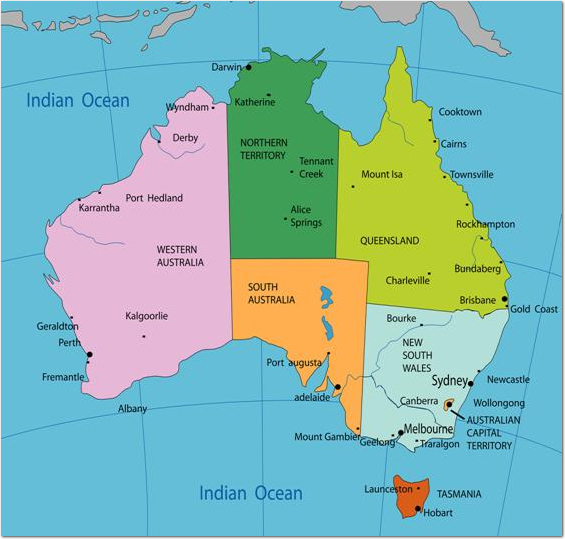
The Economic Powerhouses: New South Wales and Victoria
New South Wales (NSW) and Victoria (VIC) are the traditional heavyweights of the Australian economy, collectively accounting for more than half of the nation’s Gross Domestic Product (GDP). These states are characterized by highly diversified economies, sophisticated financial services sectors, and significant infrastructure pipelines.
New South Wales: The Financial Capital and Services Hub
New South Wales, centered around Sydney, is the financial engine of Australia. It is home to the Australian Securities Exchange (ASX) and the regional headquarters of the majority of multinational corporations operating in the Asia-Pacific region. The state’s economy is heavily weighted toward the “FIRE” sectors—Finance, Insurance, and Real Estate.
For the investor, NSW offers a deep pool of liquidity and a robust commercial property market. Sydney’s “Tech Central” precinct represents a multi-billion dollar investment in innovation, aiming to rival Silicon Valley by fostering startups and scale-ups in fintech and software development. However, the high cost of doing business and premium real estate prices mean that NSW investments often focus on capital growth and high-end services rather than low-cost production.
Victoria: Innovation, Education, and Tech Investments
Victoria, with Melbourne as its capital, has historically been the manufacturing heart of Australia. In recent decades, it has successfully transitioned into a knowledge-based economy. Victoria leads the nation in medical research, biotechnology, and international education—one of Australia’s largest service exports.
Melbourne’s economy is bolstered by a rapidly growing population, which fuels a consistent demand for residential and commercial infrastructure. From a financial standpoint, Victoria is often seen as a more affordable alternative to Sydney for corporate headquarters while maintaining high levels of professional talent. The state’s focus on the “Digital Economy Strategy” has made it a preferred destination for venture capital in the technology and gaming sectors.
The Resource-Rich Frontiers: Western Australia and Queensland
While the south-eastern states dominate services, Western Australia and Queensland are the pillars of Australia’s trade balance. These states are critical to the national economy due to their immense natural resource wealth and their proximity to Asian markets.
Western Australia: Mining, Energy, and Global Export
Western Australia (WA) is often referred to as the “Engine Room” of the Australian economy. Its vast territory holds some of the world’s largest deposits of iron ore, gold, and critical minerals like lithium, which are essential for the global transition to renewable energy. WA also produces a significant portion of the world’s Liquefied Natural Gas (LNG).
The financial profile of Western Australia is highly cyclical, closely tied to global commodity prices and Chinese industrial demand. For institutional investors, WA represents a play on global industrial cycles. Recently, the state government has pivoted toward “downstream processing”—moving from simply mining ore to refining it locally. This shift creates unique private equity and infrastructure investment opportunities in the renewable energy and battery chemical sectors.
Queensland: Diversified Growth and the Infrastructure Boom
Queensland (QLD) offers a unique economic mix of mining, agriculture, and a world-class tourism industry. Its capital, Brisbane, is currently undergoing an unprecedented infrastructure boom in preparation for the 2032 Olympic Games. This event is serving as a catalyst for massive public and private investment in transport, hospitality, and urban renewal.
In addition to its traditional strengths in coal and cattle, Queensland is positioning itself as a leader in green hydrogen production. With its abundant solar and wind resources, the state is attracting billions in foreign direct investment (FDI) aimed at creating a clean energy export industry. For property investors, Queensland has recently outperformed other states due to high interstate migration and a relatively lower entry price for residential assets compared to Sydney and Melbourne.
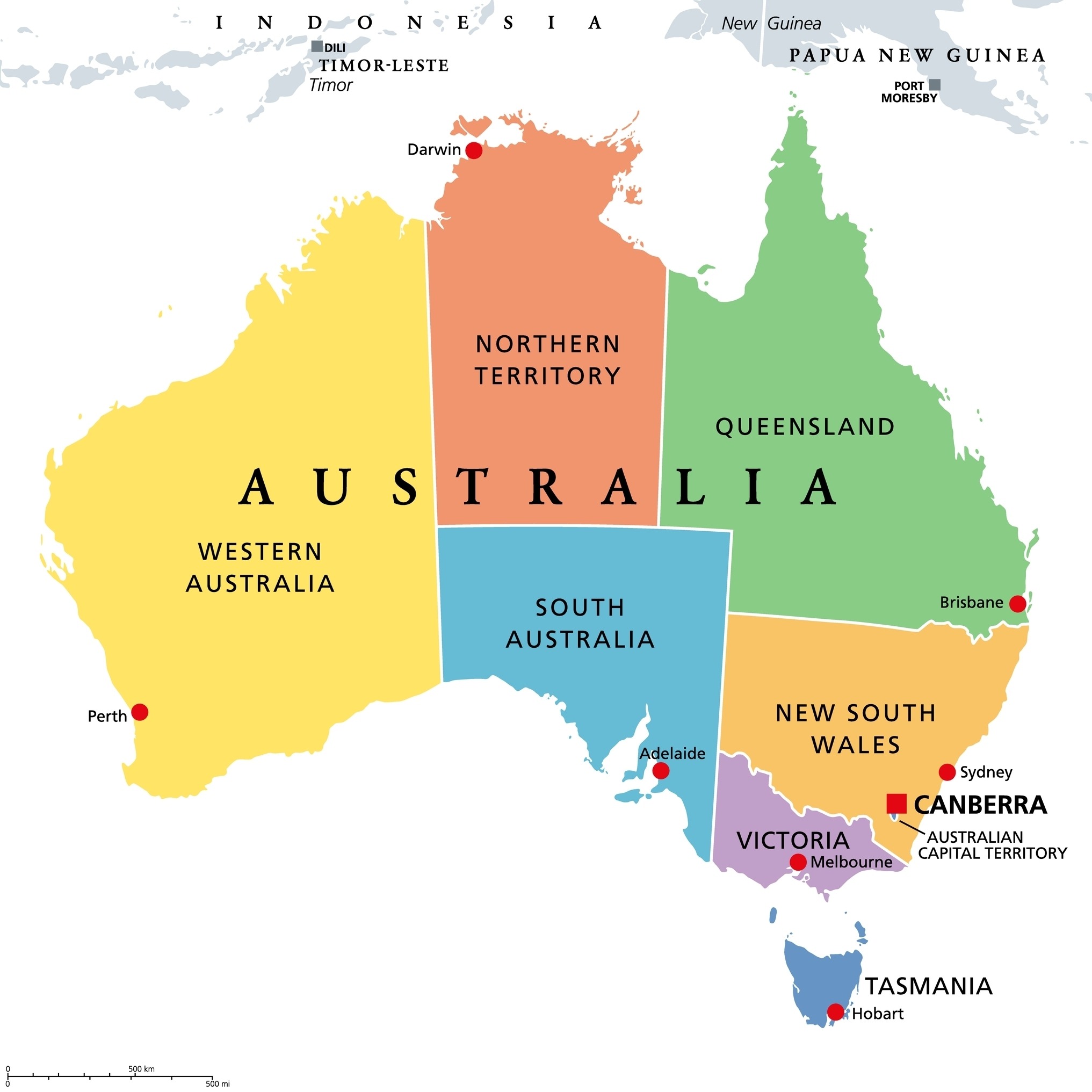
Stability and Strategic Value: South Australia and Tasmania
The smaller states of South Australia and Tasmania offer specialized economic environments that prioritize stability, high-tech manufacturing, and premium exports.
South Australia: Defense, Space, and High-Tech Manufacturing
South Australia (SA) has undergone a dramatic economic transformation. Once reliant on automotive manufacturing, the state is now the center of Australia’s sovereign defense and space industries. The presence of the Australian Space Agency in Adelaide has drawn a cluster of high-tech firms specializing in satellite technology, cybersecurity, and advanced electronics.
SA is also a global leader in renewable energy integration, with one of the highest penetrations of wind and solar power in any jurisdiction worldwide. This has attracted energy-intensive industries looking for sustainable footprints. From a business finance perspective, South Australia often provides attractive incentives for companies in the defense and tech sectors, making it a strategic hub for R&D-focused investments.
Tasmania: The Green Economy and Premium Exports
Tasmania (TAS) is Australia’s smallest state but boasts one of the most distinct economic profiles. It is the only state that is essentially carbon-neutral, thanks to its extensive hydroelectric and wind power infrastructure. This “green” brand has become a valuable asset, allowing Tasmanian producers to command premium prices for agricultural exports, including seafood, wine, and dairy.
The Tasmanian economy is characterized by high levels of government investment in renewable energy projects (such as “Battery of the Nation”) and a booming boutique tourism sector. While the scale of the market is smaller, the stability of the Tasmanian economy and its leadership in sustainability make it an attractive niche for ESG-focused (Environmental, Social, and Governance) investors.
Emerging Opportunities in the Territories
Though not officially states, the Northern Territory and the Australian Capital Territory play vital roles in the national financial landscape.
The Northern Territory: Gateway to Asia
The Northern Territory (NT) is strategically positioned as Australia’s gateway to Southeast Asia. Its economy is heavily influenced by large-scale gas projects and defense spending. Darwin, the capital, serves as a critical logistics and supply hub for the Indo-Pacific region. The NT government is currently pushing for the development of the “Middle Arm Sustainable Development Precinct,” which aims to attract high-value industries like green hydrogen and mineral processing.
The Australian Capital Territory: Government Stability
The Australian Capital Territory (ACT), home to the federal capital, Canberra, is the most economically stable region in the country. Its economy is dominated by the public sector and professional services catering to the government. For investors, the ACT offers the highest median incomes in Australia and the lowest unemployment rates, translating into a resilient residential property market and a steady demand for high-end commercial office space.
Comparative Investment Metrics: Navigating the State-by-State Landscape
Understanding what the Australian states are requires a comparative analysis of their fiscal health and investment climates. Each state maintains its own credit rating, which influences its ability to fund large-scale projects and impacts the overall business environment.
Property Markets and Yields
From a financial perspective, the Australian property market is not a single entity but a collection of state-based markets. Investors must navigate varying stamp duty rates, land taxes, and rental laws. While NSW and VIC offer the highest liquidity and long-term capital growth, states like WA and QLD often provide higher rental yields. The divergence in property cycles across the states allows diversified investors to hedge their bets against localized economic downturns.
State Taxes and Business Incentives
Each Australian state competes for business through various tax regimes and incentive programs. Payroll tax is a significant consideration for expanding companies, with rates and thresholds varying significantly between jurisdictions. For instance, some states offer payroll tax rebates for companies that relocate to regional areas or invest in specific “future industries” like renewable energy or medical technology.
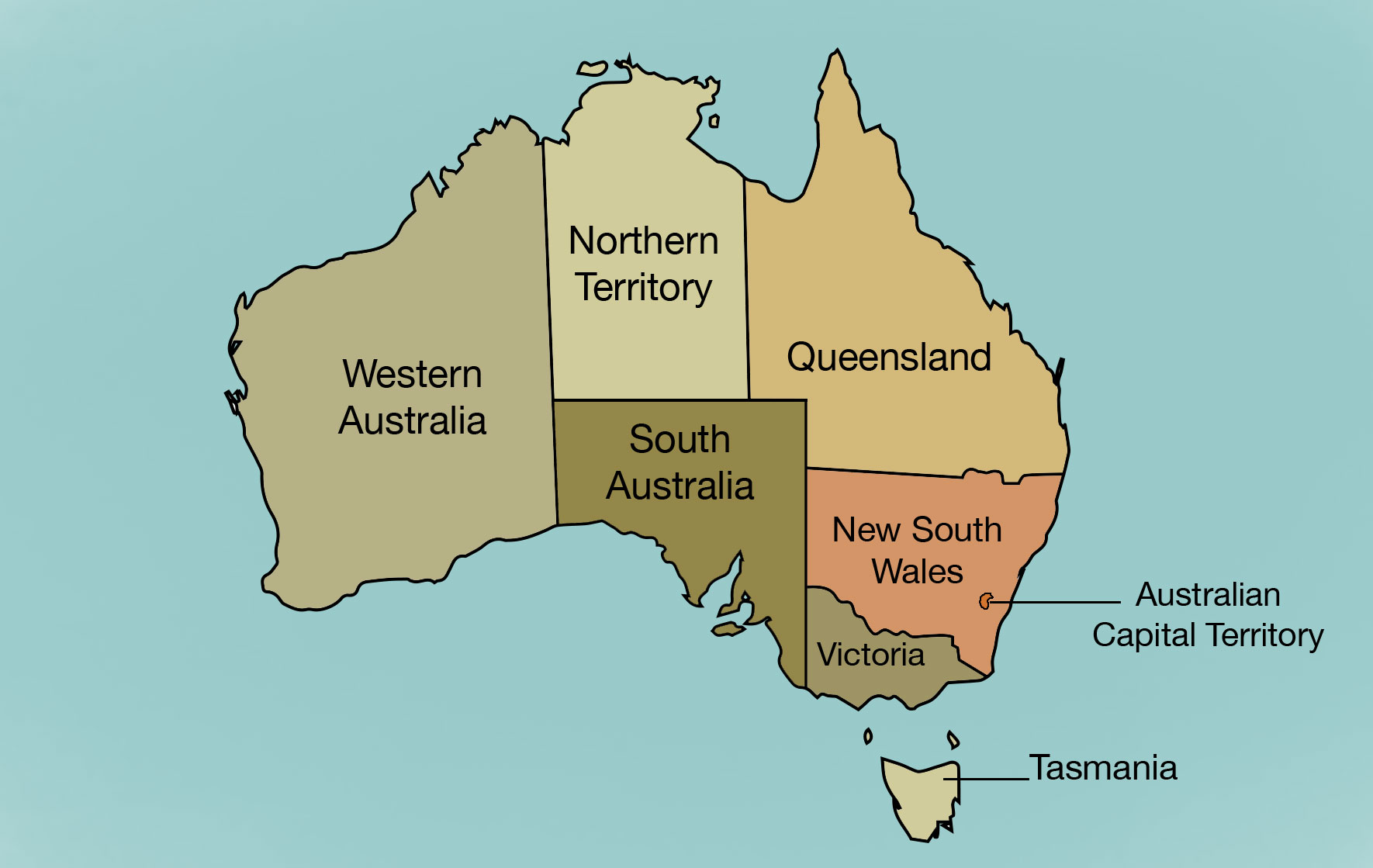
Infrastructure Pipelines
The financial health of an Australian state is often reflected in its infrastructure pipeline. Currently, NSW and VIC are managing record levels of infrastructure spending on rail and road projects. These public expenditures create significant “multiplier effects” in the private sector, particularly in construction, engineering, and logistics. Investors tracking these pipelines can identify “growth corridors” where property values and business activity are likely to increase over the next decade.
In summary, the question of “what are the Australian states” is answered through their unique economic contributions. Whether it is the financial services of New South Wales, the resource wealth of Western Australia, or the green energy leadership of Tasmania, each state offers a distinct risk-reward profile. For the sophisticated investor, Australia is not just one market, but a diverse portfolio of regional economies, each with its own path to growth and profitability.
aViewFromTheCave is a participant in the Amazon Services LLC Associates Program, an affiliate advertising program designed to provide a means for sites to earn advertising fees by advertising and linking to Amazon.com. Amazon, the Amazon logo, AmazonSupply, and the AmazonSupply logo are trademarks of Amazon.com, Inc. or its affiliates. As an Amazon Associate we earn affiliate commissions from qualifying purchases.