
New York City represents one of the most complex and lucrative economic ecosystems on the planet. To the casual observer, it is a single metropolis, but to the investor, business owner, and financial analyst, it is a collection of five distinct markets known as boroughs. Each borough—Manhattan, Brooklyn, Queens, The Bronx, and Staten Island—functions as a unique financial entity with its own tax implications, real estate trends, industrial strengths, and investment risk profiles. Understanding the “Five Boroughs” is not merely a lesson in geography; it is a fundamental requirement for navigating the capital markets of the world’s financial capital.

Manhattan: The Engine of Global Capital and High-Stakes Real Estate
Manhattan is frequently synonymous with New York City in the minds of global investors, and for good reason. It serves as the primary driver of the city’s economy, housing the world’s two largest stock exchanges (the NYSE and NASDAQ) and the headquarters of numerous Fortune 500 companies. From a financial perspective, Manhattan is characterized by its high density, extreme property valuations, and a concentration of the FIRE (Finance, Insurance, and Real Estate) sectors.
The Commercial Real Estate Powerhouse
Manhattan’s commercial real estate market is often viewed as a bellwether for the global economy. Despite the shift toward hybrid work models, the “flight to quality” remains a dominant trend. Institutional investors continue to pour capital into Class A office spaces in Midtown and the Financial District. The redevelopment of the Far West Side, specifically Hudson Yards, represents one of the largest private real estate developments in United States history, illustrating the sheer scale of capital deployment possible within this borough. For the sophisticated investor, Manhattan offers liquidity and prestige, though the entry costs are the highest in the nation.
Fintech and the Corporate Identity
Beyond traditional banking, Manhattan has evolved into a global fintech hub. The “Silicon Alley” corridor, stretching from the Flatiron District down through Chelsea and SoHo, attracts billions in venture capital. This concentration of tech talent and financial infrastructure creates a symbiotic environment where startups can scale rapidly. For brand strategists and corporate entities, a Manhattan address remains a vital component of corporate identity, signaling stability and access to a global talent pool.
Brooklyn: From Industrial Roots to a Multi-Billion Dollar Innovation Hub
In the last two decades, Brooklyn has undergone an economic transformation that has redefined its brand from a residential alternative to Manhattan into a standalone global powerhouse. If Brooklyn were an independent city, its economy would rank among the largest in the United States. Its financial narrative is defined by the “innovation economy” and significant residential appreciation.
The Tech Triangle and Creative Economy
The “Brooklyn Tech Triangle”—comprised of Downtown Brooklyn, DUMBO, and the Navy Yard—is the epicenter of the borough’s modern industrial growth. This area has seen a massive influx of tech firms, creative agencies, and advanced manufacturing startups. The Brooklyn Navy Yard alone houses over 500 businesses generating billions in annual economic output. For investors looking for high-growth potential outside of the traditional Manhattan core, Brooklyn’s commercial corridors offer a blend of historical industrial space repurposed for high-tech use, attracting a demographic of high-earning professionals.
Residential Investment and Gentrification ROI
Brooklyn’s residential real estate has seen some of the highest rates of appreciation in the country. Neighborhoods like Williamsburg, Greenpoint, and Bushwick have transitioned from industrial zones to high-demand luxury markets. The return on investment (ROI) for early movers in these areas was astronomical, though the market has now matured. Current investment strategies in Brooklyn often focus on “deep” Brooklyn—areas like Flatbush and Bedford-Stuyvesant—where multi-family housing still offers favorable cap rates compared to the saturated Manhattan market.
Queens: The Economic Power of Diversity and Global Connectivity
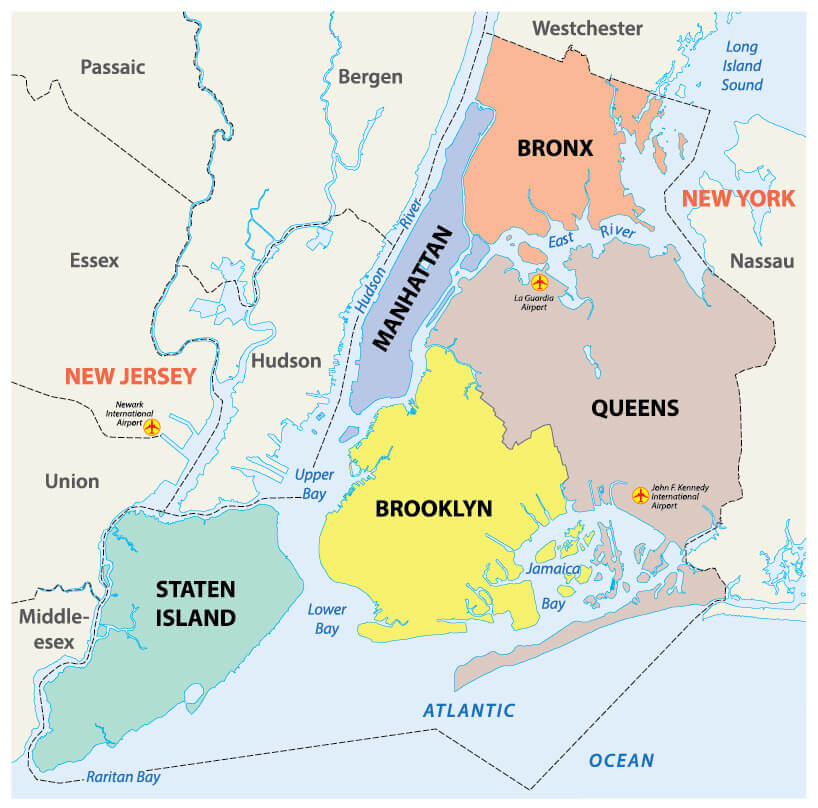
Queens is often referred to as the “World’s Borough” due to its status as the most ethnically diverse urban area on earth. This diversity is not just a social metric; it is a powerful economic engine. Queens boasts a resilient economy built on logistics, transportation, and a robust small-business ecosystem that serves as a hedge against the volatility of the financial markets.
The Transportation Hub: JFK and LaGuardia
The economic backbone of Queens is its unparalleled connectivity. Housing both John F. Kennedy International Airport and LaGuardia Airport, Queens is the primary gateway for international trade and tourism in the Northeast. The aviation industry and related logistics, warehousing, and hospitality sectors provide a stable employment base. Institutional investors often target Queens for industrial real estate, particularly last-mile delivery centers that support the e-commerce demands of the entire tri-state area.
Emerging Markets and Multi-Family Growth
Long Island City (LIC) has become a secondary central business district for the city. With its proximity to Manhattan and a massive surge in high-rise residential development, LIC has attracted significant institutional capital. Furthermore, neighborhoods like Astoria and Flushing represent high-velocity markets. Flushing, in particular, is a global destination for capital flight and investment from Asia, leading to a unique real estate market that often operates independently of broader U.S. economic trends. For investors, Queens offers a balanced portfolio of industrial stability and residential growth.
The Bronx: Unlocking Value in Industrial Logistics and Emerging Markets
For a long period, The Bronx was overlooked by major institutional capital, but that trend has reversed sharply in the last decade. The borough is currently experiencing a wave of investment focused on its strategic location and its role as the city’s logistical heart.
Industrial Logistics and the Hunts Point Market
The Bronx is home to the Hunts Point Food Distribution Center, one of the largest of its kind in the world. It processes billions of dollars in food products annually, supplying the majority of the city’s restaurants and grocery stores. This makes The Bronx an essential node in the city’s supply chain. Investors focusing on industrial real estate find The Bronx highly attractive due to its direct access to the interstate highway system, making it the premier location for distribution and cold storage facilities.
Institutional Investment in Affordable Housing
The South Bronx, particularly neighborhoods like Mott Haven, is undergoing a significant residential boom. Large-scale developers are betting on the “Port Morris” and “Mott Haven” waterfronts as the next frontier for luxury rentals at a lower price point than Manhattan or Brooklyn. Moreover, the borough remains a primary focus for public-private partnerships in affordable housing. For investors specializing in tax credits and government-backed development, The Bronx offers a wealth of opportunities to deploy capital in projects that satisfy both financial goals and social impact mandates.
Staten Island: Assessing the Stability and Growth of the Residential Frontier
Staten Island is often the most misunderstood borough from a financial perspective. While it lacks the high-rise density of Manhattan or the tech-hub status of Brooklyn, it offers a distinct value proposition based on maritime trade, small business resilience, and a stable residential tax base.
Maritime Economy and Infrastructure Projects
The Staten Island economy is heavily influenced by its maritime history and its position on the New York Harbor. The New York Container Terminal is a significant economic driver, facilitating global trade. Furthermore, the borough has seen significant investment in infrastructure, such as the St. George Waterfront redevelopment. These projects are designed to boost tourism and commercial activity, creating new opportunities for retail and hospitality investment in the “North Shore” district.

Land Development and Residential Stability
Unlike the other boroughs where vertical development is the norm, Staten Island offers more traditional land development opportunities. It remains a stronghold for middle-to-high-income residential investment, characterized by lower turnover and higher rates of homeownership. For the private equity investor or the individual looking for stable, long-term appreciation with lower volatility, Staten Island’s residential market provides a different risk-reward profile than the speculative bubbles often seen in the city’s more central districts.
In conclusion, New York City is not a monolithic market. Each of the five boroughs offers a specific financial narrative and investment thesis. Manhattan provides the prestige and liquidity of global finance; Brooklyn offers the high growth of the innovation economy; Queens provides the stability of global logistics and diversity; The Bronx offers the untapped potential of industrial revitalization; and Staten Island provides the reliability of a suburban-urban hybrid. For any professional operating in the realms of finance or business, mastering the nuances of these five distinct economies is the key to unlocking the full potential of the New York market.
aViewFromTheCave is a participant in the Amazon Services LLC Associates Program, an affiliate advertising program designed to provide a means for sites to earn advertising fees by advertising and linking to Amazon.com. Amazon, the Amazon logo, AmazonSupply, and the AmazonSupply logo are trademarks of Amazon.com, Inc. or its affiliates. As an Amazon Associate we earn affiliate commissions from qualifying purchases.