
While J.R.R. Tolkien’s The Hobbit is primarily a tale of adventure and self-discovery for Bilbo Baggins, it culminates in a massive conflict that reshapes the political landscape of Middle-earth: the Battle of Five Armies. Understanding the participants in this pivotal engagement offers profound insights into the motivations, capabilities, and strategic considerations that drive large-scale military operations. This analysis will delve into the core elements that define each of these five distinct forces, examining their composition, objectives, and the inherent strengths and weaknesses that influenced their participation and ultimate fates.
The Dwarven Host: Reclamation and Legacy
At the heart of the conflict lies the deeply ingrained desire of the Dwarves to reclaim their ancestral home and its legendary treasures. Led by Thorin Oakenshield, the Company of Thorin, though small in number, represents the proud and resilient spirit of their race. Their claim is rooted in historical right and an unyielding pride, fueled by the injustices they suffered under the dragon Smaug.
Composition and Core Strengths
The Dwarven host, though initially fragmented, coalesces into a formidable fighting force. Its core strength lies in its unwavering determination and millennia of martial tradition. Dwarves are renowned for their stoutness, their skill in crafting impenetrable armor, and their proficiency with axes and hammers. They are a people forged in the earth, accustomed to sieges and close-quarters combat within their mountain fortresses. Their resilience in the face of adversity is legendary, their courage often amplified by a deep sense of brotherhood and loyalty to their king.
Objectives and Motivations
The primary objective of Thorin’s Dwarves is the reclamation of Erebor, the Lonely Mountain, and the vast wealth it contains. This is not merely about material gain; it is about restoring their kingdom, honoring their ancestors, and asserting their rightful place in Middle-earth. The immense hoard of gold, jewels, and artifacts is a symbol of their past glory and a testament to their industrious nature. Their motivation is a potent blend of historical grievance, familial duty, and a profound cultural imperative to reclaim what was lost. The dragon’s occupation of their home is an existential threat that demands a decisive response, pushing them to the brink of war.
Weaknesses and Strategic Challenges
Despite their formidable nature, the Dwarves face significant strategic challenges. Their numbers are relatively small compared to other potential armies. Their reliance on traditional warfare tactics, while effective in certain situations, can be a disadvantage against more adaptable foes. Their pride and stubbornness, while a source of their strength, can also lead to inflexitility and a reluctance to compromise, as seen in Thorin’s initial refusal to share the treasure. Furthermore, their internal divisions, particularly concerning the division of the spoils, can weaken their unified front, making them vulnerable to external manipulation and internal strife.
The Elven Contingent: Guardianship and Ancient Pacts
The Woodland Elves of Mirkwood, led by King Thranduil, enter the fray with a more complex set of motivations. While not directly threatened by Smaug in the same way as the Dwarves, their participation is influenced by ancient pacts, regional stability, and a pragmatic assessment of the encroaching darkness. They are a force of ancient lineage, deeply connected to the natural world and possessing a keen understanding of the balance of power in Middle-earth.
Composition and Capabilities
The Elven contingent is a highly skilled and disciplined force. Composed of skilled archers, swift warriors, and keen-eyed scouts, they excel in forest warfare, utilizing their agility and knowledge of their domain to their advantage. Their bows are deadly accurate, capable of felling enemies from a distance, and their blades are sharp and swift. Elves possess an inherent grace and endurance that surpasses that of most mortal races, allowing them to fight for extended periods with remarkable stamina. Their leadership, embodied by Thranduil, is marked by strategic foresight and a deep understanding of the threats to their realm.
Objectives and Motivations
The primary motivation for the Elves’ involvement stems from a desire to maintain regional stability and prevent the potential unchecked spread of greed and conflict emanating from Erebor. While they have their own grievances with the Dwarves, their concern extends beyond immediate disputes. They are guardians of the ancient forests and recognize the potential for Smaug’s demise to unleash a power vacuum and a free-for-all that could destabilize the entire region. Their motivations are rooted in a sense of responsibility as ancient stewards of the land and a pragmatic understanding of the delicate balance of power that must be maintained. They seek to prevent the unchecked avarice of the Dwarves from leading to further bloodshed and to ensure that the dragon’s hoard does not fall into entirely the wrong hands.
Weaknesses and Strategic Constraints
The Elves, while powerful, are not without their limitations. Their numbers are also relatively modest, and their fighting style is often more suited to skirmishes and targeted strikes rather than large-scale, protracted engagements. Their pride and perceived arrogance can sometimes lead to a reluctance to fully cooperate with other races, creating friction and hindering unified action. Furthermore, their focus on the immediate threat of the Dwarves’ avarice, while understandable, can sometimes overshadow the larger existential threats that are also emerging in Middle-earth. Their strategic decisions are often tempered by a deep respect for life and a reluctance to engage in actions that could lead to unnecessary casualties or widespread devastation.
The Men of Dale: Rebuilding and Vengeance
The Men of Dale, decimated by Smaug’s initial attack, are a people seeking to reclaim their lost kingdom and avenge their fallen kin. Under the leadership of Bard the Bowman, they represent the resilience of humanity in the face of overwhelming tragedy. Their existence is a testament to the enduring spirit of survival and the desire for justice.
Composition and Strengths

The Men of Dale, though initially disorganized and scattered, are a determined and resourceful populace. Their primary strength lies in their collective will to rebuild and their intimate knowledge of the lands surrounding Erebor. Their fighting force, while not as seasoned as the Dwarves or Elves, is composed of brave individuals, many of whom have experienced firsthand the brutality of dragon-fire and the subsequent hardship. Bard, as their leader, is a beacon of hope and a skilled warrior whose prowess with a bow is unmatched, having personally slain Smaug. Their unity is forged in shared suffering and a burning desire for retribution.
Objectives and Motivations
The core objective for the Men of Dale is the restoration of their city and their way of life. They seek to rebuild Dale and reclaim the lands that were once theirs, freed from the shadow of the dragon. Vengeance for the destruction of their homes and the deaths of their families is a powerful driving force. They are also deeply concerned about the potential for the treasure of Erebor to fall into the wrong hands, as this could lead to further instability and oppression in their region. Their motivations are a potent mix of justice, economic recovery, and a yearning for peace and security.
Weaknesses and Strategic Considerations
The Men of Dale, by sheer numbers and inherent limitations, are arguably the most vulnerable of the five armies. Their initial strength is limited by their recent suffering and the scattering of their people. They lack the martial traditions of the Dwarves or the innate prowess of the Elves. Their reliance on Bard as their primary combat leader, while effective, also highlights their dependence on a few key individuals. Their strategic considerations are heavily influenced by their immediate needs for survival and the rebuilding of their shattered society, which can sometimes make them susceptible to being overlooked or manipulated by larger, more powerful factions.
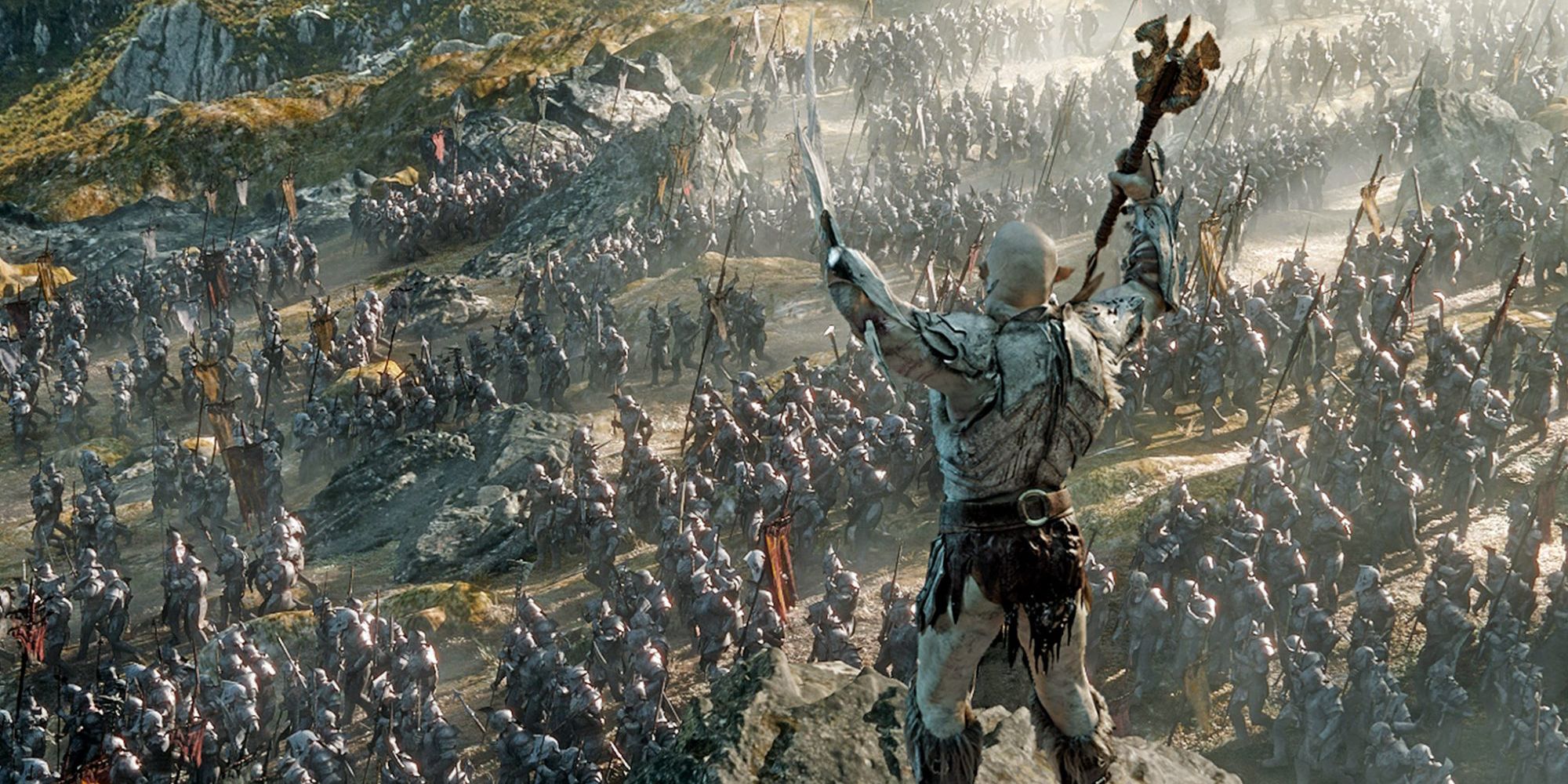
The Orcs and Goblins: An Unholy Alliance of Destruction
The Orcs and Goblins of the Misty Mountains, marshaled by Bolg, son of Azog, represent a formidable and relentless tide of destruction. Driven by malice and a deep-seated hatred for all free peoples, they are a force of pure chaos, united by their allegiance to their dark lords. Their presence in the Battle of Five Armies is a direct consequence of the power vacuum left by Smaug’s demise and the ensuing struggle for control of the Lonely Mountain.
Composition and Capabilities
This horde is comprised of countless Orcs and Goblins, a savage and brutal soldiery. They are characterized by their ferocity, their sheer numbers, and their willingness to engage in overwhelming assaults. While individually less skilled or disciplined than the other armies, their strength lies in their vast quantities, their disregard for life (both their own and their enemies’), and their brutal, unsubtle tactics. They are armed with crude but effective weapons and are often augmented by larger, more monstrous creatures like Wargs and Trolls, amplifying their destructive potential. Their leadership, while ruthless, is often driven by instinct and a primal hunger for violence.
Objectives and Motivations
The primary objective of the Orcs and Goblins is the conquest and subjugation of all who oppose them. They are driven by an inherent hatred for the free peoples and a desire to spread darkness and chaos throughout Middle-earth. The riches of Erebor are a secondary prize, a means to fuel their destructive endeavors and reward their loyal followers. Their motivations are rooted in pure malice, a thirst for domination, and an unthinking obedience to their dark masters. They represent the encroaching evil that threatens the very existence of the free races.
Weaknesses and Strategic Exploitation
Despite their overwhelming numbers, the Orcs and Goblins possess significant strategic weaknesses. Their lack of discipline and their inherent savagery mean they are prone to disorganization and can be easily thrown into disarray. They are often susceptible to coordinated attacks and well-executed traps. Their reliance on brute force makes them vulnerable to tactical ingenuity and superior weaponry. Furthermore, their lack of cohesive strategy and their tendency to prioritize individual gain over collective good can be exploited by more organized and intelligent adversaries. Their very nature makes them predictable in their aggression, a vulnerability that can be turned against them.
The Eagles of the Misty Mountains: Divine Intervention and Strategic Alliance
The Great Eagles of the Misty Mountains, led by their lord, Gwaihir, arrive not as a traditional army driven by territorial ambition or material wealth, but as a powerful force of nature and an allied contingent of ancient beings. Their intervention is a crucial turning point in the Battle of Five Armies, representing a higher power intervening to protect the innocent and restore balance.
Composition and Strengths
The Eagles are majestic creatures, possessing immense strength, speed, and a keen intellect. They are unmatched in aerial combat, capable of swooping down upon their enemies with devastating effect. Their talons are powerful weapons, and their ability to carry warriors and survey the battlefield from above provides invaluable tactical advantages. They are a force of immense natural power, capable of inspiring hope and striking fear into the hearts of their enemies. Their leadership, embodied by Gwaihir, is wise and just, guided by a deep sense of duty to protect the vulnerable.
Objectives and Motivations
The Eagles’ primary motivation is the preservation of justice and the protection of the innocent from overwhelming darkness. They are ancient allies of the free peoples, acting as guardians and messengers when dire threats emerge. They are not driven by greed or territorial expansion, but by a moral imperative to intervene when the balance of power is threatened by overwhelming evil. Their intervention in the Battle of Five Armies is a response to the dire circumstances and the desperate pleas for aid from the beleaguered free peoples. They fight to restore order and prevent the complete triumph of malevolence.

Weaknesses and Strategic Impact
While immensely powerful, the Eagles are not an inexhaustible force. Their numbers, while significant in their own right, are limited. Their strength lies in their ability to act as a decisive, mobile force, rather than engaging in prolonged ground warfare. Their strategic impact is therefore primarily catalytic, turning the tide of battle with timely interventions and devastating aerial assaults. They are a powerful strategic asset that, when deployed effectively, can neutralize overwhelming enemy forces and offer critical support to their allies, but they cannot single-handedly win every battle. Their presence, however, is often a symbol of hope and a powerful deterrent to the forces of darkness.
In conclusion, the Battle of Five Armies is a complex tapestry of competing interests, ancient grudges, and burgeoning alliances. Each army, with its unique composition, motivations, and strategic considerations, played a vital role in the unfolding conflict. Understanding these distinct forces provides a richer appreciation for the intricate political and military landscape of Middle-earth and the enduring themes of courage, greed, and the fight for survival.
aViewFromTheCave is a participant in the Amazon Services LLC Associates Program, an affiliate advertising program designed to provide a means for sites to earn advertising fees by advertising and linking to Amazon.com. Amazon, the Amazon logo, AmazonSupply, and the AmazonSupply logo are trademarks of Amazon.com, Inc. or its affiliates. As an Amazon Associate we earn affiliate commissions from qualifying purchases.