
Phospholipids, often overlooked in everyday discourse, are molecular powerhouses, fundamental to life and increasingly pivotal in the realm of advanced technology. These microscopic building blocks are not merely biological curiosities; their precise structure underpins revolutionary advancements in medicine, diagnostics, and materials science. Understanding their three core components is key to unlocking their potential in bioengineering and nanotechnological applications.
The Foundational Building Blocks of Biological Technology
At its heart, a phospholipid is an amphipathic molecule, meaning it possesses both hydrophilic (water-attracting) and hydrophobic (water-repelling) properties. This dual nature is critical for its biological role as the primary constituent of cell membranes, forming the essential barrier that separates the interior of a cell from its external environment. However, this inherent design also makes phospholipids incredibly valuable tools in modern biotechnology. From targeted drug delivery systems to advanced biosensors and even novel material development, the ability to engineer and manipulate phospholipid structures is a cornerstone of innovation. Dissecting the molecule into its three primary components reveals how these properties are generated and, more importantly, how they can be harnessed for technological benefit.
Component 1: The Hydrophilic Head Group
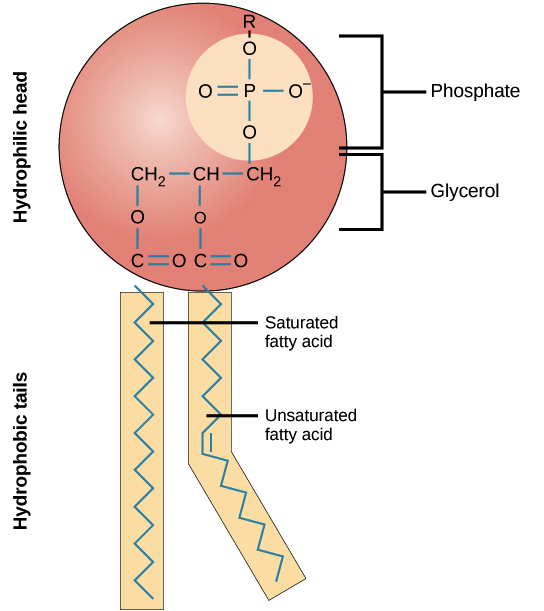
The first major component of a phospholipid is its hydrophilic head group, a polar assembly that readily interacts with water. This section of the molecule is responsible for its water-soluble characteristics and plays a crucial role in dictating the surface interactions of engineered systems. The hydrophilic head itself can be broken down into two or sometimes three distinct parts, each contributing to its overall charge and interaction profile.
The Phosphate Group: The Anchoring Point
Every phospholipid contains a phosphate group, a molecule with a central phosphorus atom bonded to four oxygen atoms. At physiological pH, this group typically carries a net negative charge, making it highly polar and responsible for the primary hydrophilic character of the head. In the context of technology, this negative charge is a vital feature. For instance, in drug delivery systems like liposomes, the surface charge conferred by the phosphate group influences how the vesicle interacts with cells, the circulatory system, and other biomolecules. Researchers can modify the charge density by varying phospholipid types, allowing for passive targeting or electrostatic interactions crucial for drug encapsulation stability and release kinetics. Furthermore, in biosensor design, the charged phosphate group can serve as a robust anchoring point for immobilizing other functional molecules or for creating a stable, charge-rich surface for detecting specific analytes through electrostatic binding.
The Glycerol Backbone: The Structural Connector
Linking the hydrophilic head to the hydrophobic tails is the glycerol backbone, a three-carbon alcohol molecule. This simple yet critical component serves as the structural pivot point, esterifying to both the phosphate group and the two fatty acid tails. In technological applications, the stability of this ester linkage is paramount. Engineering synthetic phospholipids often involves ensuring the integrity of this backbone to maintain the structural stability of the resulting nanostructures, whether they are liposomes, micelles, or lipid nanoparticles (LNPs). The chemical resilience of the glycerol backbone directly impacts the shelf-life and in-vivo stability of therapeutic formulations, ensuring that encapsulated drugs remain protected until they reach their target. Its relatively small size also contributes to the overall compact nature of the phospholipid, facilitating efficient packing in self-assembled structures.
The Variable Choline/Serine/Ethananolamine Group: Customization for Function
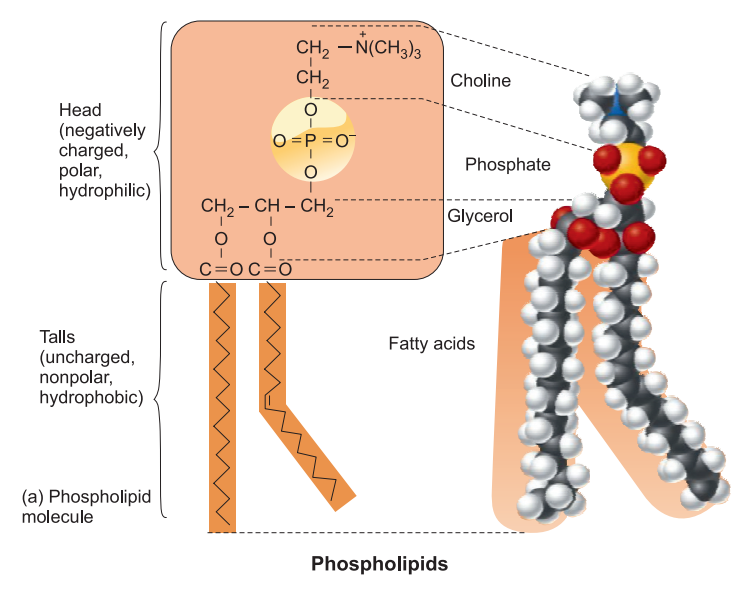
Attached to the phosphate group in many common phospholipids is an additional small, polar molecule, such as choline, ethanolamine, serine, or inositol. This ‘variable head group’ confers specific identities to different types of phospholipids (e.g., phosphatidylcholine, phosphatidylethanolamine, phosphatidylserine). These molecules often carry their own charges or have unique hydrogen-bonding capabilities, further modulating the overall charge and interaction profile of the hydrophilic head.
From a technological perspective, this variability is a powerful design tool. For example, phosphatidylserine, when exposed on the outer leaflet of cell membranes, acts as a “eat me” signal for phagocytes; leveraging this, researchers can design liposomes incorporating phosphatidylserine to enhance uptake by specific immune cells for targeted immunotherapy. Phosphatidylcholine, with its neutral charge and zwitterionic nature, is often used in stealth liposomes due to its relatively low interaction with serum proteins, allowing for longer circulation times. The precise choice of variable head group can significantly influence a lipid nanoparticle’s ability to evade the immune system, target specific cell types, or release its cargo effectively. This customizability is fundamental to developing highly specialized drug delivery vehicles and sophisticated bio-mimetic interfaces.
Component 2: The Hydrophobic Fatty Acid Tails

The second major component consists of two long hydrocarbon chains, known as fatty acid tails, which are covalently attached to the glycerol backbone. These tails are non-polar and therefore hydrophobic, repelling water and preferring to associate with other non-polar molecules. This hydrophobic nature is what drives the formation of lipid bilayers in aqueous environments, a principle extensively exploited in nanotechnology.
Saturated vs. Unsaturated: Controlling Membrane Fluidity and Stability
The characteristics of the fatty acid tails – specifically their length and degree of saturation – profoundly influence the physical properties of the phospholipid and, consequently, the membranes or nanostructures they form.
- Saturated Fatty Acids: These tails contain only single bonds between carbon atoms, allowing them to pack tightly together. This tight packing leads to more rigid and ordered membranes. In technological applications, phospholipids with longer, saturated fatty acids are often incorporated into liposomes or LNPs to increase their structural stability and decrease permeability. This is crucial for encapsulating sensitive molecules like mRNA or gene therapies, protecting them from degradation in the bloodstream and ensuring a controlled release at the target site. Higher melting temperatures of such lipids contribute to the overall robustness of the formulation during storage and transport.
- Unsaturated Fatty Acids: These tails contain one or more double bonds, which introduce “kinks” or bends into the hydrocarbon chain. These kinks prevent tight packing, leading to more fluid and less ordered membranes. Incorporating phospholipids with unsaturated tails can enhance the fluidity of a lipid bilayer, which can be advantageous for processes requiring membrane fusion or increased permeability, such as endosomal escape in drug delivery. For instance, in the design of mRNA vaccines, specific helper lipids with unsaturated tails are used to facilitate the fusion of the LNP with the endosomal membrane, releasing the mRNA into the cytoplasm for translation. Furthermore, the presence of double bonds can influence the biodegradability of the lipid, which is an important consideration for the safety and clearance of therapeutic agents.
The ability to precisely tailor the length and saturation of these fatty acid tails allows bioengineers to fine-tune the physicochemical properties of lipid-based nanoparticles. This control is essential for optimizing encapsulation efficiency, controlling drug release rates, and mediating interactions with cellular machinery, making it a critical aspect of nanomedicine formulation.
The Amphipathic Nature: Driving Self-Assembly in Technology
The combination of the hydrophilic head group and the hydrophobic fatty acid tails within a single molecule bestows upon phospholipids their remarkable amphipathic nature. This dual character is the driving force behind their spontaneous self-assembly into organized structures when placed in an aqueous environment. Rather than dissolving or clumping randomly, phospholipids will arrange themselves to minimize the unfavorable interactions of their hydrophobic tails with water, while maximizing the favorable interactions of their hydrophilic heads with water.
This intrinsic property is the bedrock of virtually all phospholipid-based biotechnological applications:
- Liposomes: When dispersed in water, phospholipids spontaneously form spherical vesicles called liposomes, consisting of a lipid bilayer enclosing an aqueous core. This structure is precisely what is needed for encapsulating water-soluble drugs (in the core) or lipid-soluble drugs (within the bilayer) for targeted delivery. The precise control over the phospholipid components allows engineers to create liposomes with specific sizes, surface charges, and membrane rigidities, optimizing them for various therapeutic applications from cancer chemotherapy to anti-fungal treatments.
- Micelles: At higher concentrations, or with specific lipid compositions (e.g., single-tailed lipids), phospholipids can also form micelles, spherical structures with hydrophobic cores and hydrophilic exteriors. These are effective for solubilizing and delivering hydrophobic drugs that would otherwise be insoluble in the bloodstream.
- Lipid Nanoparticles (LNPs): A more advanced evolution, LNPs often contain a mixture of different lipids, including phospholipids, cholesterol, and ionizable lipids, precisely formulated to encapsulate nucleic acids like mRNA or siRNA. The self-assembly process is tightly controlled during manufacturing to create stable nanoparticles capable of protecting their delicate cargo and delivering it efficiently into cells. The success of mRNA vaccines, for instance, is a testament to the sophisticated engineering of LNPs, where each phospholipid component plays a defined role in assembly, stability, and cellular delivery.
- Artificial Membranes and Biosensors: Researchers utilize the self-assembly property to create artificial lipid bilayers on solid supports. These bio-mimetic membranes can be used to study membrane proteins, screen drugs for membrane interactions, or serve as highly sensitive detection surfaces for biosensors. The phospholipids provide a stable and biologically relevant interface for sensing biomolecular events.
The mastery of this self-assembly process, guided by a deep understanding of each phospholipid component, allows for the creation of sophisticated nanocarriers and interfaces that are transforming medicine and diagnostics.
Engineering with Phospholipids: Impact on Modern Technology
The granular understanding of the three components of a phospholipid—the hydrophilic head (comprising the phosphate group, glycerol backbone, and variable group) and the two hydrophobic fatty acid tails—has moved these molecules far beyond their biological origins into the forefront of technological innovation. The ability to precisely manipulate these components has enabled a revolution in various fields.
In nanomedicine, phospholipids are foundational to developing advanced drug delivery systems. Liposomal formulations have already improved the therapeutic index of numerous drugs by increasing their specificity, reducing systemic toxicity, and enhancing their bioavailability. The success of lipid nanoparticles in mRNA vaccine technology highlights the pinnacle of this engineering, demonstrating how tailored lipid compositions can enable highly efficient intracellular delivery of genetic material.
In diagnostics and biosensing, synthetic phospholipid membranes create sophisticated platforms for detecting diseases and monitoring biological processes with high sensitivity and selectivity. By mimicking natural cell surfaces, these engineered systems provide accurate environments for studying molecular interactions, crucial for drug discovery and personalized medicine.
Looking forward, the ongoing research into novel phospholipid derivatives and composite lipid systems promises even greater advancements. From developing new forms of gene therapy and targeted cancer treatments to engineering self-healing materials and sustainable energy solutions inspired by biological membranes, the humble phospholipid remains a molecule of immense potential, continually pushing the boundaries of what is technologically possible.
aViewFromTheCave is a participant in the Amazon Services LLC Associates Program, an affiliate advertising program designed to provide a means for sites to earn advertising fees by advertising and linking to Amazon.com. Amazon, the Amazon logo, AmazonSupply, and the AmazonSupply logo are trademarks of Amazon.com, Inc. or its affiliates. As an Amazon Associate we earn affiliate commissions from qualifying purchases.