
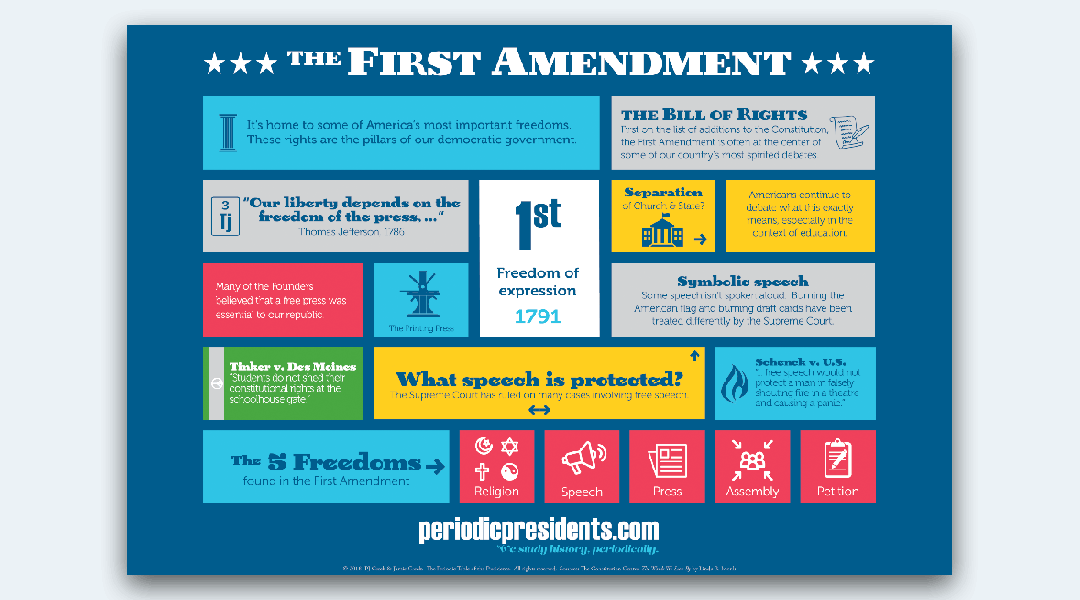
The First Amendment of the United States Constitution has long been the bedrock of American democracy, protecting the freedoms of speech, press, assembly, petition, and religion. However, the architects of the Bill of Rights could never have envisioned a world defined by fiber-optic cables, generative artificial intelligence, and global social media conglomerates. Today, the question of “what are the 1st Amendment rights” is no longer confined to the physical town square or the printing press; it is being litigated in the code of our most advanced software and the terms of service of our favorite apps.
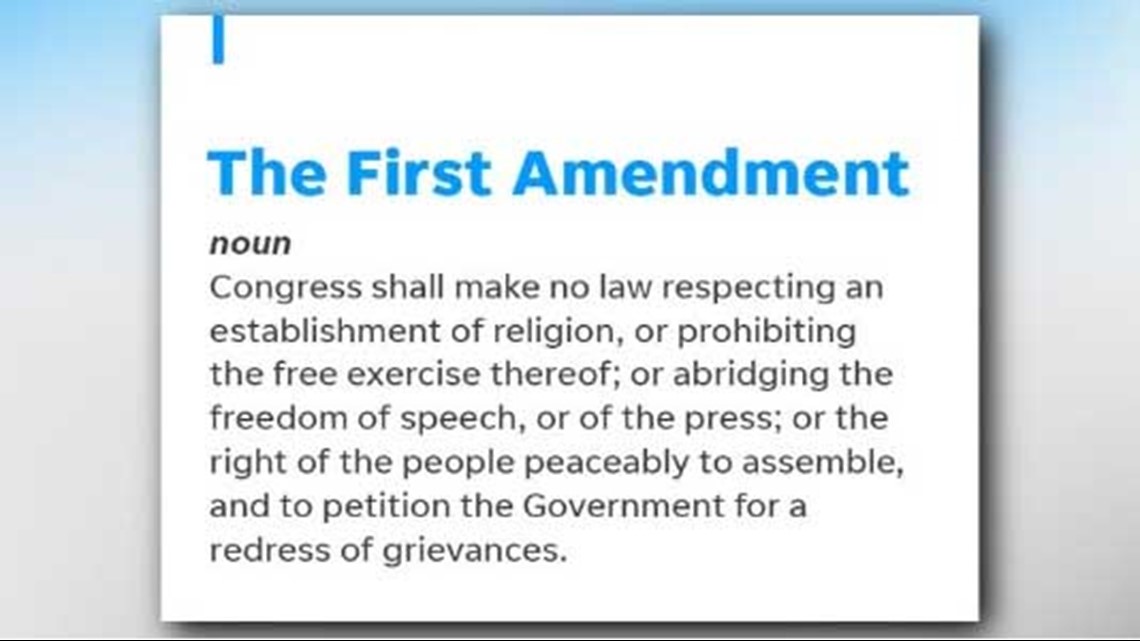
As technology continues to outpace legislation, understanding how these constitutional protections apply to the digital realm is essential for developers, tech leaders, and digital citizens alike. We must examine how traditional rights translate into a landscape of algorithms, data surveillance, and automated content moderation.
1. The Virtual Town Square: Content Moderation and Platform Liability
The most significant shift in First Amendment application over the last decade involves the transition from physical assembly to digital interaction. In the physical world, the government cannot prevent you from expressing an opinion in a public park. In the digital world, however, the “parks” are owned by private corporations like Meta, X (formerly Twitter), and Alphabet.
The Private vs. Public Distinction
Under current legal interpretations, the First Amendment only restricts government actors, not private companies. This means that when a social media platform bans a user or removes a post, it is generally not violating that user’s First Amendment rights. In fact, the platforms themselves have First Amendment rights to curate their “neighborhoods” as they see fit. This distinction is the cornerstone of digital tech policy, creating a complex dynamic where private entities wield more power over public discourse than the state itself.
The Role of Algorithms in Speech
A burgeoning area of tech law concerns whether an algorithm’s output constitutes protected speech. When a search engine ranks results or a social media feed prioritizes certain content, is that a form of “editorial discretion” protected by the First Amendment? Recent judicial trends suggest that the answer is yes. Courts have increasingly viewed the mathematical processes of tech companies as a form of expression, essentially granting software code the same constitutional status as a newspaper editor’s decisions.
2. Section 230: The Shield That Shaped the Modern Internet
To understand 1st Amendment rights in tech, one must understand Section 230 of the Communications Decency Act. While not part of the Constitution, it is the legislative framework that allows the First Amendment to function in the digital age by protecting intermediaries from liability for the speech of their users.
The “26 Words” That Created the Internet
Section 230 states that “No provider or user of an interactive computer service shall be treated as the publisher or speaker of any information provided by another information content provider.” This allows platforms to host billions of comments, videos, and photos without being sued for every instance of defamation or illegal content posted by a user. Without this protection, the risk of litigation would force tech companies to censor almost all user-generated content, effectively silencing the digital masses.
The Debate Over Reform
Current tech trends show a growing bipartisan movement to reform Section 230. Critics argue that the “shield” has become too broad, allowing tech giants to ignore harmful content under the guise of neutral hosting. Proponents, however, warn that any significant erosion of Section 230 would lead to a “heckler’s veto,” where companies over-censor to avoid legal risk, thereby stifling the very free speech the First Amendment aims to protect. The intersection of tech liability and constitutional rights remains one of the most volatile areas of modern law.
3. Artificial Intelligence and the New Expression

The rise of Generative AI (GenAI) introduces a philosophical and legal crisis for 1st Amendment rights. When a Large Language Model (LLM) like GPT-4 or a tool like Midjourney generates a response or an image based on a user prompt, who is “speaking,” and is that speech protected?
Can Code Be a Speaker?
Historically, First Amendment rights were reserved for humans and, later, corporations (as legal persons). The emergence of AI challenges the “human-centric” view of the Constitution. If the government were to pass a law banning AI from discussing certain political topics, would the AI developers have a First Amendment claim? Some legal scholars argue that because AI models are the product of human design and “expressive” training data, their outputs should be protected as the derivative speech of their creators.
The Threat of Deepfakes and Disinformation
Technological advancement has made it possible to create highly convincing “deepfakes”—synthetic media that portrays people saying or doing things they never did. Here, 1st Amendment rights clash with the right to privacy and the prevention of fraud. While “political parody” is protected speech, the use of AI tools to spread calculated disinformation or to harass individuals pushes the boundaries of constitutional protection. The tech industry is currently grappling with how to implement watermarking and provenance standards without infringing on the creative freedoms of legitimate users.
4. Digital Security, Encryption, and Protected Silence
The First Amendment does not only protect the right to speak; it also protects the right to speak anonymously and, in certain contexts, the right not to speak at all. In the tech world, this manifests most clearly in the debate over end-to-end encryption (E2EE) and digital privacy.
Encryption as a Form of Speech
In the landmark cases of the 1990s (the “Crypto Wars”), courts began to recognize that computer code is a form of speech. By extension, the use of encryption tools to protect communication is seen by many advocates as a First Amendment right. If the government compels a tech company to build a “backdoor” into its software, it is effectively forcing that company to change its “speech” (its code) to facilitate state surveillance.
The Right to Anonymity in a Data-Driven World
Technology has made total anonymity nearly impossible, yet the Supreme Court has historically held that anonymous speech is vital for a free society. As AI tools and data brokers make it easier to deanonymize users through metadata and behavioral patterns, the tech industry faces a moral and legal crossroads. Protecting the “right to be anonymous” in an era of facial recognition and persistent cookies is the new frontier of First Amendment advocacy. Tech companies that prioritize digital security often view themselves as the frontline defenders of these constitutional rights.
5. Global Policy and the Export of First Amendment Values
While the First Amendment is a uniquely American legal construct, the tech products built in Silicon Valley govern speech globally. This creates a friction point between U.S. “free speech” culture and the more restrictive “harm-based” regulations of the European Union or the censorship regimes of authoritarian states.
The Brussels Effect vs. Silicon Valley Values
The European Union’s Digital Services Act (DSA) mandates that tech companies take down “illegal content” or face massive fines. For a U.S.-based company, complying with the DSA often requires building moderation systems that are more aggressive than what the First Amendment would allow in a domestic context. This “Brussels Effect” means that European standards often become the global default, potentially diluting the robust free-speech protections that American tech companies were founded upon.
The Future of Decentralized Tech
In response to increasing regulation and perceived centralization, a new wave of “Web3” and decentralized technologies is emerging. These platforms use blockchain technology to host content in a way that no single entity—government or corporation—can censor. From a tech perspective, this is the ultimate manifestation of First Amendment rights: a system where speech is governed by immutable code rather than human moderators. However, these tools also pose significant challenges for preventing real-world harm, proving that the balance between technology and liberty is a moving target.
In conclusion, the First Amendment is no longer just a legal document; it is a design requirement for the future of the internet. As we move deeper into the era of AI and ubiquitous connectivity, the protection of our “digital speech” will depend less on the courts and more on the integrity of the software we build and the security protocols we choose to implement. Understanding “what are the 1st Amendment rights” today requires an understanding of the very code that powers our modern world.
aViewFromTheCave is a participant in the Amazon Services LLC Associates Program, an affiliate advertising program designed to provide a means for sites to earn advertising fees by advertising and linking to Amazon.com. Amazon, the Amazon logo, AmazonSupply, and the AmazonSupply logo are trademarks of Amazon.com, Inc. or its affiliates. As an Amazon Associate we earn affiliate commissions from qualifying purchases.