
When we discuss the pillars of modern American finance, we often look toward the Federal Reserve, the stock market, or the latest tax reform bills passed in Congress. However, the true bedrock of our current economic system—and the way every individual interacts with their own money—was forged in the early 20th century through two pivotal constitutional changes: the 16th and 17th Amendments.
While these are often relegated to the realm of history textbooks, their impact on personal finance, corporate strategy, and the flow of capital in the United States cannot be overstated. Understanding these amendments is essential for any investor, business owner, or taxpayer who wants to navigate the complexities of the modern financial landscape.

The 16th Amendment and the Birth of Modern Personal Finance
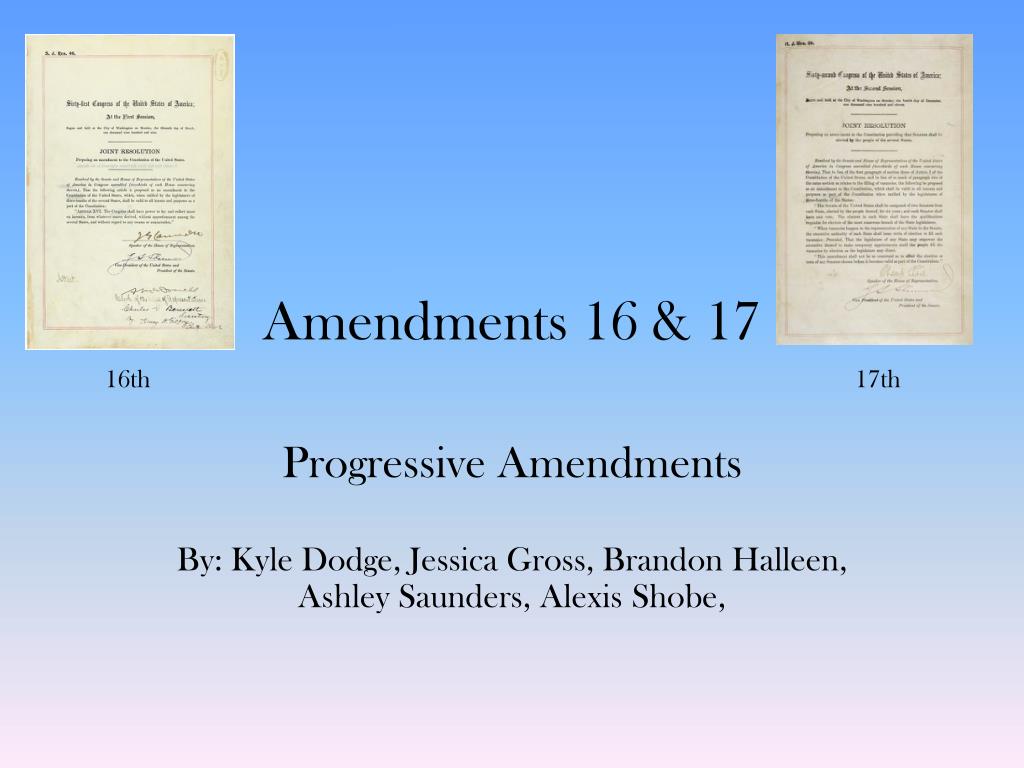
The 16th Amendment, ratified in 1913, granted Congress the power to lay and collect taxes on incomes, from whatever source derived, without apportionment among the several states. Before this, the federal government relied heavily on tariffs and excise taxes. The shift to a direct income tax fundamentally altered the relationship between the citizen and the state, and more importantly, it changed how Americans manage their wealth.
From Consumption Taxes to Income Taxation
Prior to 1913, the average American’s financial life was relatively untouched by federal oversight. Most taxes were “indirect,” meaning they were baked into the price of goods like sugar, tobacco, or imported textiles. The 16th Amendment shifted the burden from what you buy to what you earn. This necessitated the creation of the Internal Revenue Service (IRS) and introduced the concept of the tax return—a document that is now the cornerstone of personal financial planning.
How the 16th Amendment Influences Your Investment Strategy
The ability of the government to tax income “from whatever source derived” means that not all money is treated equal. Because of the 16th Amendment, we now have a complex hierarchy of taxation that distinguishes between ordinary income, short-term capital gains, and long-term capital gains.
For the modern investor, this amendment is the reason why “tax-drag” is a critical metric. When you decide to hold a stock for more than a year to qualify for a lower tax rate, or when you choose a municipal bond because its interest is tax-exempt, you are making a decision based on the legal framework established by the 16th Amendment. It turned every investor into a quasi-accountant, forced to weigh the “pre-tax” vs. “after-tax” return on every dollar.
The Progressive Tax System and Wealth Distribution
The 16th Amendment also enabled the “progressive” tax structure, where higher earners pay a higher percentage of their income. This has profound implications for career planning and business scaling. It introduced the “bracket” system, which influences everything from salary negotiations to the timing of bonuses. For high-net-worth individuals, the 16th Amendment made tax mitigation—through legal deductions, credits, and charitable giving—one of the most important aspects of wealth preservation.
The Economic Implications of the 17th Amendment
Ratified in the same year as the 16th, the 17th Amendment changed the way United States Senators were elected. Previously, they were chosen by state legislatures; the amendment mandated direct election by the people. While this is primarily viewed as a democratic reform, its economic and financial consequences have been massive, particularly concerning federal spending and corporate lobbying.
Shifting Power from State Legislatures to Voters
Before the 17th Amendment, Senators were essentially ambassadors for their state governments. Their financial priorities were often aligned with state-level fiscal responsibility. Once Senators became beholden to the general electorate, the incentive structure changed. To get re-elected, Senators began to focus on bringing federal “pork-barrel” spending back to their constituents. This shift contributed significantly to the expansion of the federal budget and, by extension, the national debt—a key factor that influences inflation and interest rates today.
Corporate Influence and the Cost of Political Campaigns
The direct election of Senators made campaigns significantly more expensive. Instead of winning over a few dozen state legislators, candidates now have to reach millions of voters through media and advertising. This created a massive demand for campaign capital, leading to the rise of modern political fundraising. From a business finance perspective, this amendment solidified the role of political action committees (PACs) and corporate lobbying as a necessary expense for companies looking to protect their interests in Washington.

The Rise of Lobbying and Fiscal Policy Regulation
Because Senators now answer to broad interest groups rather than state governments, federal legislation regarding finance, banking, and trade has become more susceptible to influence from powerful industries. For the personal investor, this means that the regulatory environment is often shaped by which industries can most effectively lobby the Senate. Understanding the 17th Amendment helps explain why certain sectors—like energy, pharmaceuticals, or big tech—often receive favorable tax treatments or subsidies that directly affect their stock prices and dividend yields.
Navigating the Modern Tax Landscape Shaped by These Amendments
The 16th and 17th Amendments created a feedback loop: the 16th provided the federal government with a massive, direct source of revenue (income tax), while the 17th changed the political incentives for how that money is spent and regulated. For those looking to optimize their money, this historical context provides a roadmap for modern financial health.
Tax-Advantaged Accounts as a Response to the 16th Amendment
The existence of 401(k)s, IRAs, and HSAs is a direct response to the high income-tax environment enabled by the 16th Amendment. These accounts are “loopholes” created by Congress to encourage specific financial behaviors, such as saving for retirement or healthcare. By using these tools, individuals are essentially clawing back a portion of the financial sovereignty that was shifted to the federal government in 1913. Understanding that the tax code is not just a list of rules, but a series of incentives, allows for more sophisticated wealth building.
The Macroeconomic Impact on Interest Rates and Inflation
The 17th Amendment’s role in expanding federal spending has long-term effects on the value of the dollar. As the federal government spends more to satisfy voter demands, it often runs deficits, which must be financed by issuing Treasury bonds. This impacts the interest rates you pay on your mortgage and the yield you get on your savings account. A savvy investor looks at Senate spending bills not just as political news, but as a lead indicator for future inflationary pressure and currency devaluation.
Tax Planning vs. Tax Evasion in a Post-16th World
In a world governed by the 16th Amendment, the distinction between tax planning (legal) and tax evasion (illegal) is the difference between financial success and ruin. Professional wealth management now requires a deep dive into the legalities of the tax code. This includes strategies like tax-loss harvesting—selling losing investments to offset gains—which is a direct result of the income tax laws. Without the 16th Amendment, the “financial services industry” as we know it today would barely exist.
The Future of Wealth and Taxation in the United States
As we look toward the future, the legacy of these two amendments continues to evolve. Discussions regarding wealth taxes, “unrealized” capital gains taxes, and the restructuring of the Senate all stem from the precedents set in 1913.
Proposed Changes to Capital Gains and Wealth Taxes
There is ongoing debate about whether the 16th Amendment allows for a “Wealth Tax”—a tax on what you own rather than what you earn. Current legal interpretations generally limit the 16th Amendment to “income.” However, any shift toward taxing net worth would represent the biggest change to personal finance since 1913. Investors must stay informed on these legal challenges, as they would fundamentally change the math of long-term compounding.
The Role of Direct Senate Representation in Modern Budgeting
The 17th Amendment ensures that fiscal policy remains a populist issue. As long as Senators are directly elected, there will be constant pressure for federal spending on social programs, infrastructure, and defense. For the individual, this means that the “tax-and-spend” cycle is likely a permanent feature of the American economy. Planning your personal finances around the assumption of higher future taxes and persistent inflation is a conservative and often necessary strategy.
Conclusion: Understanding History to Master Your Money
The 16th and 17th Amendments were more than just political milestones; they were the catalysts for the modern financial era. The 16th Amendment gave the government a claim on your paycheck, while the 17th Amendment changed the logic of how that money is reallocated across the economy.
For the modern individual, mastery of money requires more than just knowing how to budget; it requires an understanding of the systemic forces at play. By recognizing how these amendments influence tax brackets, investment incentives, and federal spending, you can move from being a passive participant in the economy to a strategic architect of your own financial future. History proves that while laws may change the rules of the game, those who understand the origins of those rules are best positioned to win.
aViewFromTheCave is a participant in the Amazon Services LLC Associates Program, an affiliate advertising program designed to provide a means for sites to earn advertising fees by advertising and linking to Amazon.com. Amazon, the Amazon logo, AmazonSupply, and the AmazonSupply logo are trademarks of Amazon.com, Inc. or its affiliates. As an Amazon Associate we earn affiliate commissions from qualifying purchases.