
In the rapidly evolving world of technology, the difference between a successful software launch and a catastrophic failure often lies in the rigor of the testing process. As software systems grow in complexity—integrating artificial intelligence, cloud infrastructure, and intricate microservices—the need for precision becomes paramount. At the heart of this precision lies the “test case.”
A test case is more than just a checklist; it is a foundational document in the Software Development Life Cycle (SDLC) that outlines the variables, steps, and conditions required to verify whether a specific feature or functionality performs as intended. By systematically validating software against its requirements, test cases ensure that the end-user receives a stable, secure, and high-performing product.
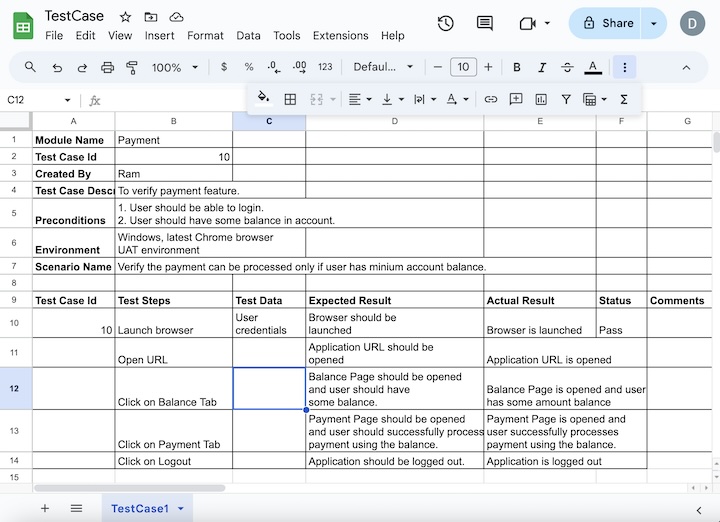
The Fundamental Building Blocks of a High-Quality Test Case
Creating an effective test case is an art as much as it is a science. A poorly written test case can lead to overlooked bugs, while a well-structured one acts as a roadmap for the entire Quality Assurance (QA) team. To maintain technical excellence, every test case should follow a standardized structure.
Key Components Every Test Case Must Have
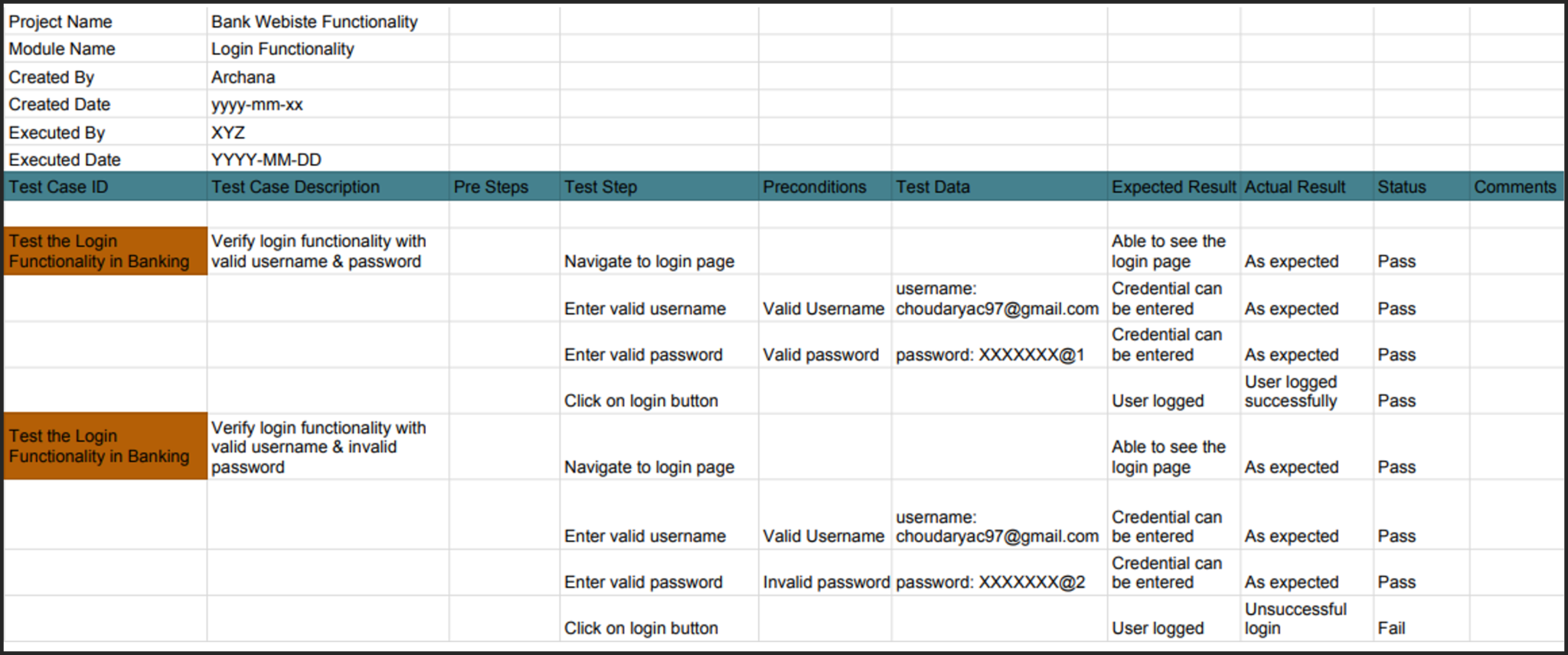
A robust test case is characterized by its clarity and repeatability. The standard components usually include:
- Test Case ID: A unique identifier that helps in tracking and referencing the test in management tools like Jira or TestRail.
- Test Description: A concise summary of what the test aims to achieve. For example, “Verify that the ‘Forgot Password’ link sends a reset email to a valid user.”
- Pre-conditions: Any state or configuration the system must be in before the test can begin (e.g., “The user must be logged out and on the login page”).
- Test Steps: A logical, step-by-step sequence of actions that the tester (or automation script) must perform.
- Test Data: The specific inputs required, such as a valid email address or a specific file format.
- Post-conditions: The expected state of the system after the test is completed.
Expected Result vs. Actual Result: The Core of Validation
The most critical element of any test case is the “Expected Result.” This is the benchmark defined by the software’s technical specifications. During execution, the tester compares the “Actual Result” against the expected outcome. If they match, the test passes. If there is a discrepancy, a defect is logged. This binary comparison is what allows developers to pinpoint exactly where the code logic has deviated from the intended design.
Boundary Value Analysis and Equivalence Partitioning
Technical testers often use specific strategies to design test cases. Boundary Value Analysis (BVA) focuses on the values at the edges of input ranges (e.g., testing if a field that accepts 1–100 works at 0, 1, 100, and 101). Equivalence Partitioning involves dividing input data into classes that are expected to be treated the same way by the software, reducing the total number of test cases while maintaining comprehensive coverage.
Navigating the Diverse Landscape of Test Case Types
Software testing is not a monolithic activity. Depending on the stage of development and the nature of the application, different types of test cases are utilized to probe various layers of the technology stack.
Functional Test Cases: Verifying the “What”
Functional test cases focus on the business requirements of the application. They ask: Does the software do what it is supposed to do? This includes testing user interfaces, APIs, databases, and client/server applications. For instance, in a fintech app, a functional test case would verify that a money transfer correctly deducts the balance from the sender and adds it to the recipient.
Non-Functional Test Cases: Evaluating the “How”
Modern technology demands more than just functionality; it demands performance and security. Non-functional test cases evaluate attributes like:
- Performance Testing: How does the system behave under a heavy load?
- Usability Testing: Is the interface intuitive for the end-user?
- Security Testing: Are there vulnerabilities that could lead to data breaches?
- Compatibility Testing: Does the app work across different browsers, operating systems, and mobile devices?
Smoke, Sanity, and Regression Testing
In continuous integration and continuous deployment (CI/CD) environments, the timing of test cases is vital.
- Smoke Testing: A small set of test cases run on each new build to ensure the most crucial functions work. If the “smoke” test fails, the build is rejected immediately.
- Sanity Testing: Performed after receiving a software build with minor code changes or issues fixed, to verify that the bugs are indeed gone.
- Regression Testing: Perhaps the most vital in Agile development, these test cases ensure that new code changes haven’t inadvertently broken existing functionality.
The Strategic Process: Designing and Managing Test Cases
Test cases do not exist in a vacuum. Their effectiveness is tied to how they are integrated into the broader development strategy.

Requirement Analysis and the Traceability Matrix
The process begins with a deep dive into the software requirement specifications (SRS). Every test case must be mapped back to a specific requirement. This is managed through a Requirements Traceability Matrix (RTM). The RTM ensures 100% test coverage, providing stakeholders with a clear view that every promised feature has been validated. If a requirement changes, the RTM allows the tech team to identify exactly which test cases need updating.
Test Case Prioritization: Risk-Based Testing
In high-pressure development environments, testing everything is often impossible. Technical leads use Risk-Based Testing to prioritize test cases. Features that are mission-critical (like payment processing) or high-risk (like new, complex algorithms) are tested first and more frequently. Low-risk UI elements might be tested later in the cycle. This strategic allocation of resources ensures that major technical failures are caught early.
Maintenance and Version Control in Agile Environments
Software is rarely static. As apps evolve, test cases must evolve with them. “Test Debt” occurs when a suite of test cases becomes outdated and produces false negatives or fails to cover new features. Maintenance involves regular reviews and versioning of test cases to reflect the current state of the codebase. In modern DevOps, test cases are often treated like code, stored in repositories (like Git), and subjected to peer reviews.
Industry Best Practices for Superior Test Case Authoring
Writing a test case that is useful for both a human tester and an automated script requires adherence to several industry-recognized best practices.
Embracing the “Single Purpose” Principle
A common mistake in QA is creating “mammoth” test cases that try to verify multiple things at once. If a test case with ten different validations fails, it is difficult to diagnose which specific component is broken. A superior test case follows the atomic principle: one case, one objective. This granularity makes debugging significantly faster and more accurate.
Writing for Reusability and Scalability
In large-scale enterprise software, thousands of test cases may exist. To manage this complexity, engineers design “modular” test cases. For example, a “Login” sequence can be a reusable module that is called by hundreds of other test cases. This reduces redundancy and ensures that if the login UI changes, the team only needs to update one module rather than hundreds of individual cases.
Balancing Detail with Clarity
A test case should be detailed enough that a new engineer can execute it without asking for help, but concise enough to be read quickly. This involves using technical but accessible language. Avoiding ambiguity—such as using the word “fast” instead of “under 2 seconds”—is the hallmark of a professional QA engineer.
The Future of Testing: Automation, AI, and Test Case Evolution
The landscape of software testing is undergoing a paradigm shift, driven by the rise of automation and artificial intelligence.
Transitioning from Manual to Automated Test Cases
While manual testing is essential for exploratory and usability scenarios, automation is the backbone of modern tech. Automated test cases, written in frameworks like Selenium, Playwright, or Cypress, allow for rapid execution of repetitive tasks. The goal is to transform “manual test cases” into “automated scripts” that can run overnight or as part of a deployment pipeline, providing instant feedback to developers.
AI-Driven Test Generation and Self-Healing Scripts
We are entering an era where AI tools can analyze code and automatically generate test cases. Generative AI and Large Language Models (LLMs) are now being used to write test steps and even predict where bugs are likely to occur based on historical data. Furthermore, “self-healing” automation scripts can detect if a UI element’s ID has changed and automatically update the test case to prevent it from breaking. This reduces the maintenance burden and allows tech teams to focus on more complex architectural testing.
The Shift-Left Approach
The “Shift-Left” philosophy encourages testing earlier in the development cycle. By designing test cases at the same time requirements are being written, teams can catch logic flaws before a single line of code is produced. This integration of testing into the very beginning of the tech workflow significantly reduces the cost of fixing bugs and accelerates time-to-market.
Conclusion
In the modern technology ecosystem, test cases are the guardians of quality. They bridge the gap between abstract requirements and tangible, working software. By understanding the anatomy of a test case, diversifying testing types, and embracing the power of automation and AI, software teams can build more resilient systems. Whether you are a developer, a QA specialist, or a tech lead, mastering the art of the test case is essential for delivering excellence in an increasingly digital world. Without them, software development is merely a leap of faith; with them, it is a disciplined engineering feat.
aViewFromTheCave is a participant in the Amazon Services LLC Associates Program, an affiliate advertising program designed to provide a means for sites to earn advertising fees by advertising and linking to Amazon.com. Amazon, the Amazon logo, AmazonSupply, and the AmazonSupply logo are trademarks of Amazon.com, Inc. or its affiliates. As an Amazon Associate we earn affiliate commissions from qualifying purchases.