
The term “swim shoes” often evokes images of simple rubber slippers worn at public pools or mesh booties used for beach vacations. However, in the contemporary landscape of specialized gear, swim shoes—often referred to as water shoes or aquatic footwear—represent a sophisticated branch of materials science and mechanical engineering. They are no longer just protective layers; they are high-performance tools designed to navigate the complex interface between terrestrial and aquatic environments.
To understand what swim shoes truly are, one must look beyond their aesthetic and examine the technological innovations that allow them to manage moisture, provide traction on low-friction surfaces, and protect the biological integrity of the human foot under extreme hydraulic pressure and abrasive conditions.

The Evolution of Aquatic Footwear: From Vulcanized Rubber to High-Performance Polymers
The history of swim shoes is a testament to the evolution of polymer science. In the early 20th century, aquatic footwear was limited to heavy, vulcanized rubber boots or flimsy canvas slippers that became waterlogged and heavy. Today, the “tech” inside a swim shoe involves complex chemical compositions designed to solve the primary conflict of aquatic gear: the need for protection versus the need for weightlessness.
The Hydrophobic Revolution in Textiles
At the core of modern swim shoes is the use of hydrophobic (water-repelling) synthetic fibers. Unlike natural fibers like cotton, which can absorb up to 25 times their weight in water, the mesh used in modern aquatic footwear is typically composed of polyester or nylon treated with Durable Water Repellent (DWR) coatings. This technology ensures that the textile does not hold onto water molecules. Instead, the surface tension of the water is broken, allowing it to bead off or pass through the weave without saturating the fiber’s core. This is critical for maintaining the shoe’s “dry weight” even when submerged, preventing the mechanical strain on the wearer’s ankles caused by added mass.
Thermodynamic Regulation and Neoprene Integration
For colder aquatic environments, the technology shifts toward neoprene—a synthetic rubber produced by the polymerization of chloroprene. Neoprene is a closed-cell foam, meaning it contains thousands of tiny nitrogen gas bubbles. This structure provides two technical advantages: buoyancy and thermal insulation. In the context of swim shoes, the thickness of the neoprene is engineered (ranging from 1mm to 7mm) to provide a specific “R-value” (thermal resistance). This allows users to maintain fine motor control of their toes and feet in sub-zero or high-altitude water conditions where nerve conduction would otherwise slow down.
Engineering the Anatomy: Drainage Systems and Traction Tech
A swim shoe is essentially a fluid management system. When a foot moves from water to land, the volume of water trapped inside the shoe creates a “slosh factor,” which can destabilize the gait and cause skin maceration (softening and breaking down of the skin due to prolonged moisture).
Micro-Perforation and One-Way Valve Technology
The most advanced swim shoes on the market utilize “midsole drainage ports.” These are not merely holes; they are often engineered as one-way valves or siphoning channels. Using the principles of fluid dynamics, engineers design the outsole so that the downward pressure of a footstep forces water out through lateral ports, while the upward movement of the foot does not allow debris or water to be sucked back in. Some high-end models incorporate metallic mesh screens within these ports to prevent sand and micro-plastics from entering the shoe’s internal chamber, effectively acting as a filtration system for the foot.
Friction Coefficients and Specialized Outsoles
Traction in aquatic environments is a matter of physics. On wet, non-porous surfaces like boat decks or mossy rocks, a thin film of water acts as a lubricant, leading to hydroplaning. To counter this, swim shoe outsoles utilize “siping”—a technology originally developed for car tires. Siping involves cutting thin, razor-like grooves into the rubber. When the shoe flexes, these grooves open up to create a vacuum effect, pulling water away from the contact point and allowing the rubber to grip the solid surface directly.
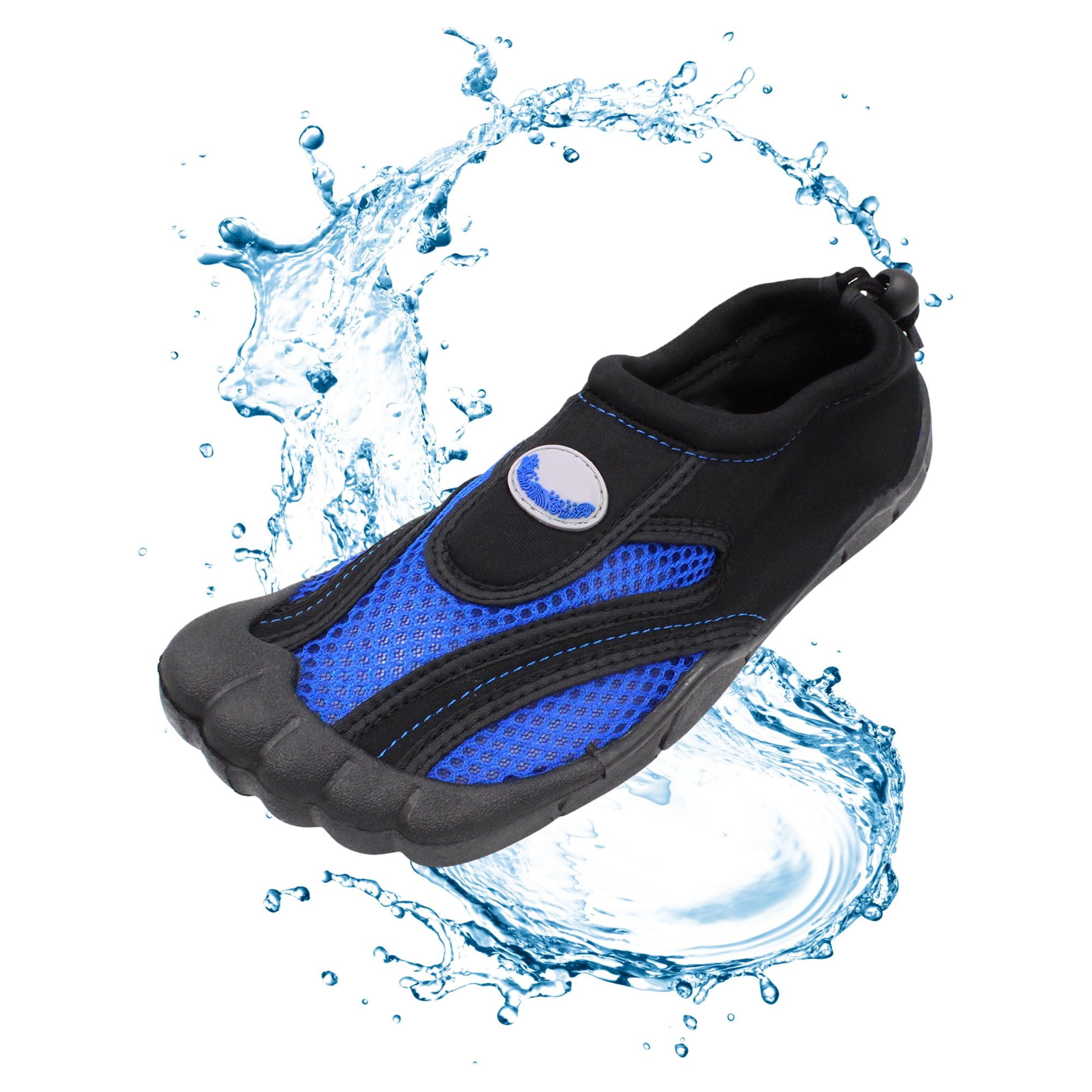
The chemical composition of the rubber itself is also modified. “Sticky” rubber compounds, which have a high coefficient of friction even when wet, are achieved by increasing the ratio of natural rubber to synthetic fillers. This tech ensures that the kinetic energy of the wearer is efficiently transferred to the ground without slipping.
Smart Integration and the Future of Wearable Aquatic Gear
As we move further into the decade, the definition of swim shoes is expanding to include “smart” features and advanced manufacturing techniques like 3D printing. The goal is to move away from “one-size-fits-all” and toward bio-mechanical optimization.
3D Printing and Custom Bio-Mechanical Fits
The footwear industry is increasingly adopting additive manufacturing (3D printing) to create lattice-structured midsoles. For swim shoes, this is a game-changer. A 3D-printed lattice can be programmed to have varying densities: firm in the arch for support, but highly porous in the heel for instant water evacuation. Unlike traditional foam, which can trap water in its pores, a 3D-printed structure is essentially a skeleton, providing the maximum possible drainage-to-surface-area ratio. This allows for a shoe that feels like a second skin while providing the structural integrity of a hiking boot.
Sensor Integration and Performance Tracking
The next frontier for aquatic footwear is the integration of Inertial Measurement Units (IMUs). While waterproof smartwatches track arm strokes, they often fail to capture the nuances of a swimmer’s kick or a river-trekker’s gait. Emerging tech involves embedding thin, flexible pressure sensors into the insole of the swim shoe. These sensors can transmit data via Bluetooth to a central hub, analyzing the efficiency of a diver’s finning technique or the stability of a trail runner crossing a stream. This transformation from a passive garment to an active data-collection tool is redefining what it means to “wear” a swim shoe.
Material Sustainability: The Shift Toward Bio-Synthetic Solutions
In the tech world, innovation is increasingly measured by sustainability. Because swim shoes are used in sensitive ecosystems like coral reefs and mountain streams, the materials they shed (micro-rubbers) and the chemicals used in their production are under intense scrutiny.
Algae-Based Foams and Recycled Ocean Plastics
One of the most impressive technological leaps in the niche is the development of “Bloom foam.” This material is created by harvesting excess algae from freshwater sources at risk of algae blooms. The algae biomass is processed into a flexible foam that replaces a significant portion of the petroleum-based EVA (Ethylene-vinyl acetate) typically found in swim shoes. This is a double-win for technology: it cleans the environment by removing harmful algae and results in a shoe that is naturally antimicrobial and highly resistant to UV degradation.
Durability vs. Biodegradability in Saline Environments
Saltwater is notoriously corrosive. It breaks down adhesives and stiffens synthetic fibers. The engineering challenge today is creating “biocompatible” shoes that can withstand the oxidative stress of salt and sun without using toxic glues. Advanced “welding” techniques, such as ultrasonic welding, are now used to fuse the upper and lower parts of the swim shoe using high-frequency vibrations. This eliminates the need for chemical adhesives, creating a mechanical bond that is more durable and less harmful to the marine environments where the shoes are used.
Conclusion
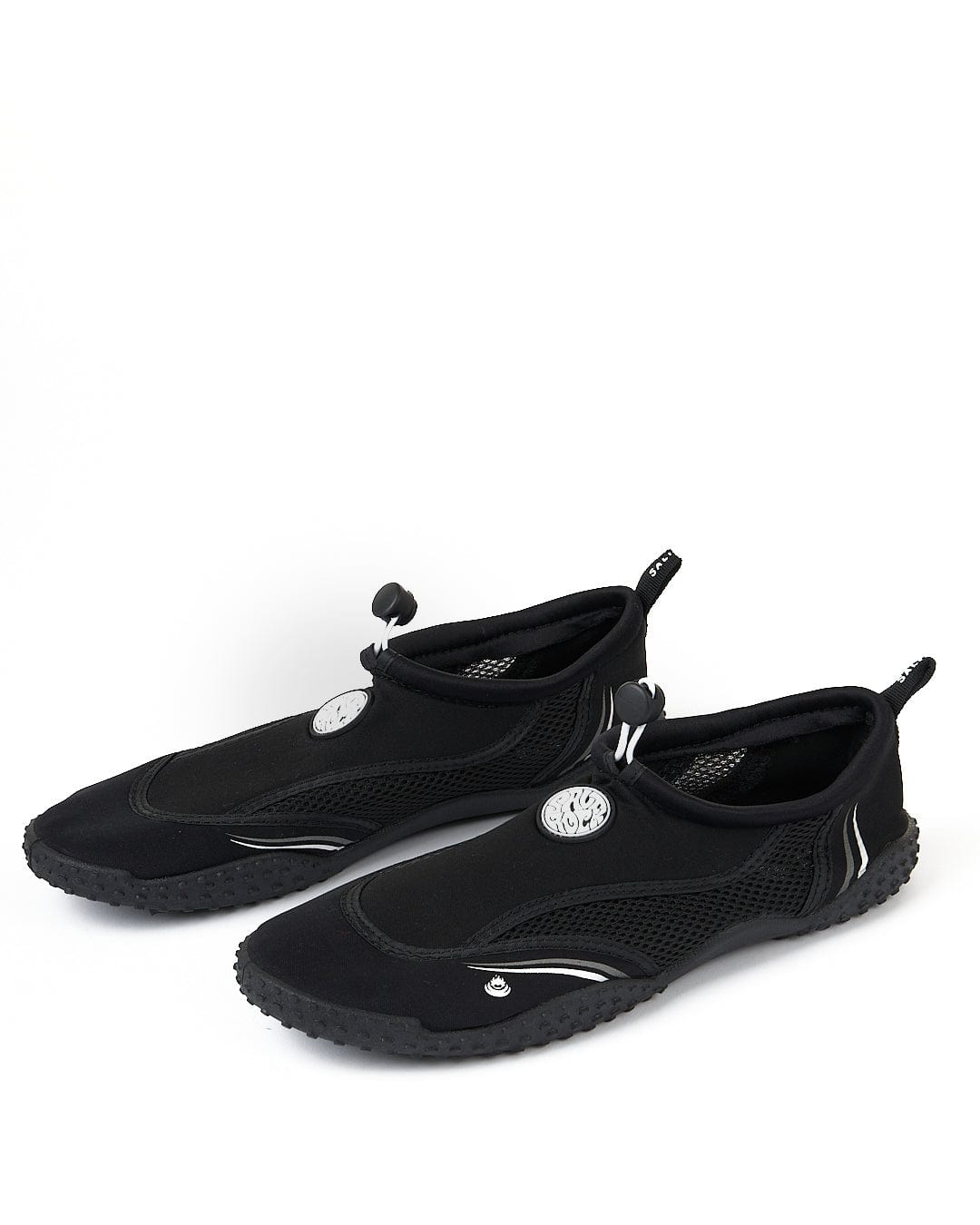
What are swim shoes? They are far more than a beach accessory. They are a sophisticated synthesis of hydrophobic textiles, fluid dynamic engineering, and advanced polymer science. From the siped outsoles that prevent hydroplaning to the 3D-printed lattices that optimize drainage, every element of a modern swim shoe is a calculated response to the challenges of the aquatic environment.
As we look toward the future, the integration of smart sensors and bio-synthetic materials will continue to push the boundaries of this category. In the digital and technological age, the humble swim shoe has evolved into a piece of essential “hardware” for anyone looking to bridge the gap between land and sea with safety, efficiency, and minimal environmental impact.
aViewFromTheCave is a participant in the Amazon Services LLC Associates Program, an affiliate advertising program designed to provide a means for sites to earn advertising fees by advertising and linking to Amazon.com. Amazon, the Amazon logo, AmazonSupply, and the AmazonSupply logo are trademarks of Amazon.com, Inc. or its affiliates. As an Amazon Associate we earn affiliate commissions from qualifying purchases.