
In the vast landscape of digital communication and technical documentation, certain typographical elements often go unnoticed, despite their fundamental importance. Among these, subscripts stand out as silent workhorses, playing a critical role in conveying precise information across a multitude of technical and scientific disciplines. Far more than just tiny characters positioned below the baseline, subscripts are integral to clarity, accuracy, and the unambiguous representation of data in software, scientific publications, and everyday digital tools.
This article delves into the world of subscripts, exploring their definition, diverse applications within technology, the mechanics of their implementation, and their enduring relevance in an increasingly digital and data-driven world. For anyone navigating the complexities of scientific research, software development, data analysis, or even just crafting a well-formatted document, understanding subscripts is not merely a typographical curiosity but a prerequisite for effective and accurate communication.
Understanding the Fundamentals: What Exactly is a Subscript?
At its core, a subscript is a character (or set of characters) that is set slightly below the normal line of text and is usually smaller than the rest of the text. This subtle visual alteration carries significant semantic weight, distinguishing it from regular text and conveying specific contextual meaning. While often taken for granted, the precise placement and reduced size of subscripts are deliberate design choices that serve vital functional purposes.
Defining Subscripts in Text Formatting
In the realm of typography and text formatting, a subscript is a foundational element. Imagine a standard line of text, flowing horizontally across a page or screen. A subscript deviates from this baseline, dipping just below it, creating a visual cue that signals a special relationship between the subscripted character(s) and the main text. For instance, in a chemical formula like H₂O, the ‘2’ is a subscript, indicating two atoms of hydrogen. Without this precise formatting, the formula would be ambiguous, potentially misinterpreted as “H2O” where ‘2’ is just a regular character, or even “H₂O” implying “H-squared-O” if it were a superscript.
This seemingly minor visual distinction is crucial. It allows for the compact and unambiguous representation of complex information without requiring extensive explanatory text. It’s a form of visual shorthand, universally understood within specific contexts, enabling rapid comprehension and reducing cognitive load.
Distinguishing Subscripts from Superscripts
While often discussed in tandem due to their shared characteristic of being offset from the baseline, subscripts and superscripts serve distinct purposes. A superscript is placed above the baseline, typically used for exponents in mathematics (e.g., x²), footnotes/endnotes (e.g., citation¹), or ordinal indicators (e.g., 1st). The function of a superscript is often to denote power, reference, or order.
A subscript, conversely, is positioned below the baseline. Its primary functions usually revolve around indexing, indicating a specific variant, or denoting atomic counts in chemical formulas. For example, in mathematics, a subscript might denote an element in a sequence (a₁, a₂, a₃) or the base of a logarithm (log₂ 8). In scientific contexts, the difference is critical: x² is “x squared,” while x₂ would typically refer to “x sub 2” or “the second x.” Misinterpreting one for the other can lead to profound errors in scientific, mathematical, or technical interpretation.
The Visual and Functional Purpose
The visual purpose of a subscript is immediate clarity and conciseness. By reducing the character size and offsetting its position, complex relationships can be conveyed within a small textual footprint. This is invaluable in fields where space is at a premium, such as scientific journals, data visualizations, or dense technical specifications.
Functionally, subscripts serve to:
- Index: Identify specific elements within a set or sequence (e.g., the ᵢ-th element).
- Differentiate: Distinguish between similar variables or components (e.g., V₁ for voltage 1, V₂ for voltage 2).
- Quantify: Express the number of atoms in a molecule (e.g., CO₂, H₂SO₄).
- Specify Bases: Indicate the base of a logarithm (e.g., log₁₀ x) or number system.
- Annotate: Provide additional context without breaking the flow of the main text.
Without subscripts, many scientific, mathematical, and technical notations would become cumbersome, requiring verbose explanations that hinder readability and introduce ambiguity. They are, in essence, a standardized form of metadata embedded directly within the text itself.
The Indispensable Role of Subscripts Across Technical Fields
The utility of subscripts transcends mere text formatting; they are fundamental to accurate communication and precise data representation across numerous technical and scientific disciplines. Their specialized usage helps maintain clarity and prevent misinterpretation in fields where precision is paramount.
Subscripts in Scientific Notation: Chemistry and Physics
Perhaps the most iconic use of subscripts is found in chemistry. Chemical formulas rely heavily on subscripts to denote the exact number of atoms of each element present in a molecule. For example, H₂O clearly indicates two hydrogen atoms and one oxygen atom forming a water molecule. Similarly, C₆H₁₂O₆ precisely defines the molecular structure of glucose. Without subscripts, these formulas would be vague, impossible to distinguish from simple concatenation of letters and numbers. The slight visual offset of the subscript is what transforms a sequence of characters into a universally recognized chemical compound.
In physics, subscripts are equally vital. They are used to differentiate between various physical quantities or states. For instance, in thermodynamics, T₁ and T₂ might represent initial and final temperatures, or Patm could denote atmospheric pressure. In electrical engineering, Irms (root mean square current) or V_peak (peak voltage) use subscripts to specify particular characteristics of a variable. They provide a concise way to add context to symbols, allowing complex equations and concepts to be expressed elegantly and without ambiguity.
Mathematical Precision: Indexing and Bases
Mathematics is another domain where subscripts are absolutely indispensable. Their applications here are widespread:
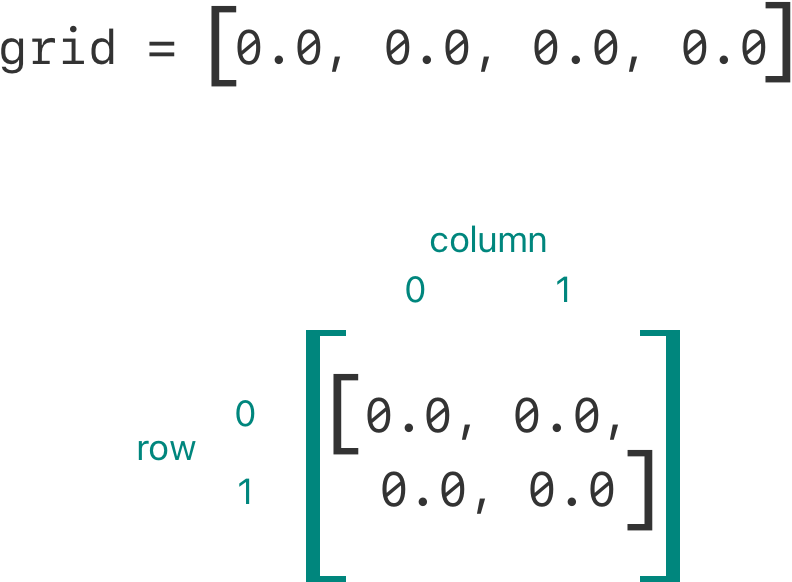
- Indexing: Subscripts are extensively used to denote elements within sequences, series, or matrices. For example, a₁ represents the first term in a sequence, an represents the n-th term, and Aij might denote the element in the i-th row and j-th column of a matrix. This indexing allows mathematicians to refer to specific components of a larger structure with precision.
- Bases: In logarithms, subscripts indicate the base of the logarithm (e.g., log₂ 8 = 3, meaning 2 to the power of 3 equals 8). Similarly, when working with different number systems, a subscript can denote the base (e.g., 1011₂ represents the binary number 1011).
- Variables: Subscripts can differentiate between related variables without requiring new symbols (e.g., x₁, x₂, x₃ representing different instances or components of a variable x).
These applications ensure that mathematical expressions are not only compact but also convey their intended meaning without confusion, a critical aspect of mathematical rigor.
Beyond Equations: Programming and Data Structures
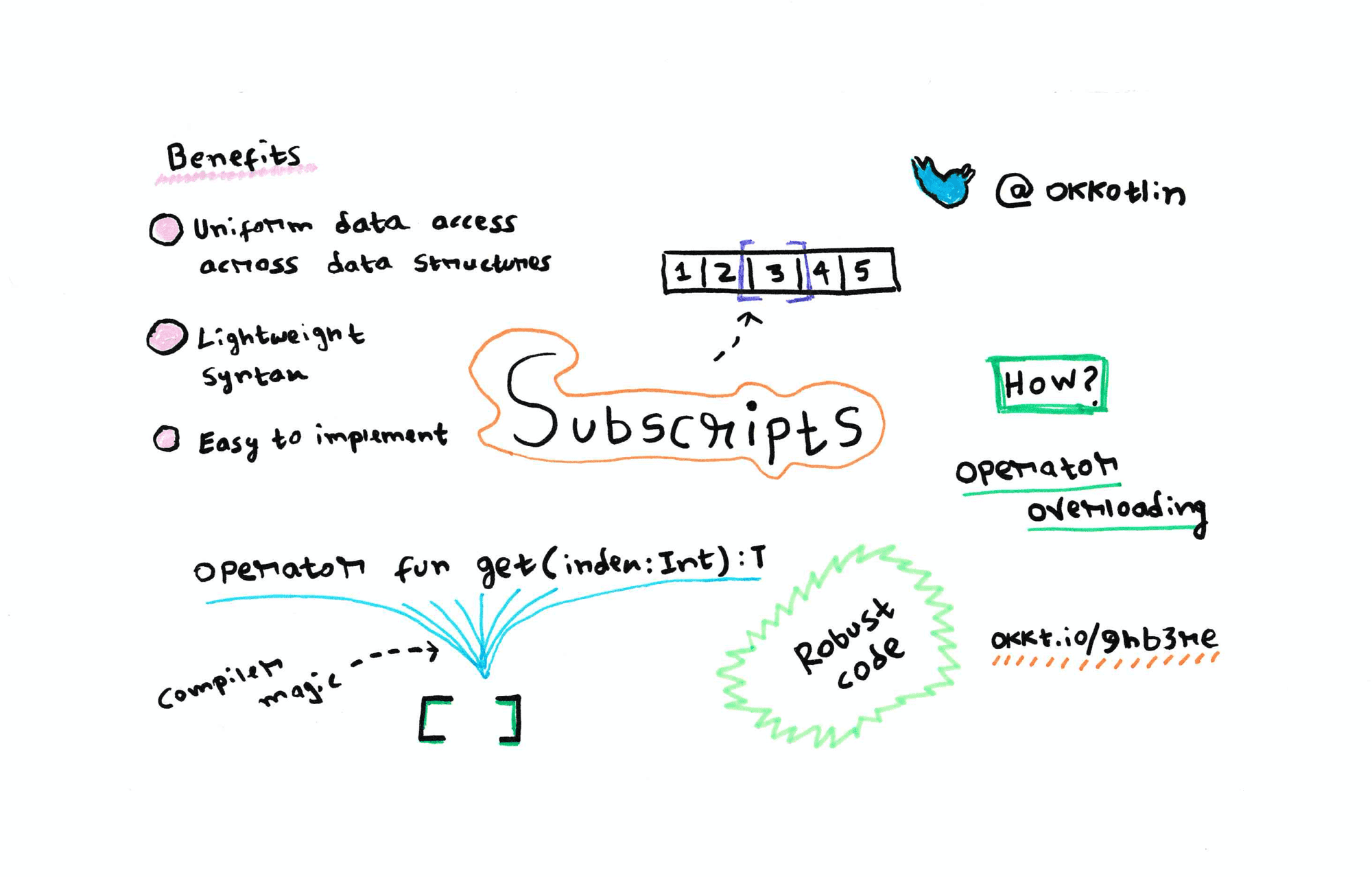
While less visually explicit in source code, the concept of subscripting is fundamental to programming languages and data structures. When a programmer refers to array[0] or list[i], the numbers 0 and i are acting as conceptual subscripts (or indices). They specify a particular element within a collection of data. Although typically rendered on the same line using square brackets in most programming contexts, their functional role is identical to a mathematical subscript: they point to a specific item in an ordered series.
In more advanced programming for scientific computing or data visualization (e.g., using libraries in Python, R, or MATLAB), subscripts are often rendered visually in output to match mathematical notation, especially when generating plots, reports, or interactive dashboards. Tools like LaTeX, often used by programmers for documentation, also provide robust support for rendering subscripts correctly in code examples and mathematical expressions within technical papers. This bridges the gap between the abstract data structure and its mathematical representation.
Mastering Subscripts: Practical Application in Software and Digital Tools
Given their widespread importance, virtually all modern software and digital tools designed for text creation and technical documentation offer robust support for subscripts. Knowing how to effectively use them is a key skill for anyone producing professional or scientific content.
Word Processors and Presentation Software
For everyday document creation, Microsoft Word, Google Docs, and similar word processors provide straightforward ways to apply subscript formatting. Typically, this involves selecting the text you wish to subscript and then clicking a dedicated “subscript” button (often denoted by ‘X₂’ or similar icon) in the font formatting section of the ribbon or toolbar. Keyboard shortcuts (e.g., Ctrl+= in Word) also provide quick access.
Similarly, Microsoft PowerPoint, Google Slides, and other presentation software offer the same functionality. Proper use of subscripts in presentations enhances readability of data, equations, and chemical formulas, preventing confusion that can arise from poorly formatted text on a large screen. This ease of access ensures that even non-technical users can format their documents correctly for academic, business, or scientific purposes.

Spreadsheets and Data Analysis
While raw data in spreadsheets like Excel or Google Sheets doesn’t typically feature subscripts within cells for numerical values (as H2O would be interpreted as text, not a formula), subscripts become relevant when preparing labels, annotations, or outputs. If a cell contains a textual label like “Concentration of O₂”, the ‘2’ would be subscripted for clarity.
Furthermore, when integrating spreadsheet data into reports or presentations generated by other software, the ability to render subscripts correctly becomes paramount. Advanced data analysis and visualization tools, particularly those used in scientific research, will often export data or plots with correctly formatted subscripts in legends, axis labels, and titles, drawing on capabilities of underlying rendering engines.
Specialized Software for STEM (LaTeX, MATLAB, Jupyter Notebooks)
For professionals in STEM fields, specialized tools offer advanced and often automatic subscript handling:
- LaTeX: This typesetting system is the gold standard for scientific and mathematical documents. Subscripts are a core feature, easily created using the underscore
_character (e.g.,$H_2O$). LaTeX’s robust mathematical mode ensures that subscripts are rendered beautifully and consistently, making it indispensable for academic papers, theses, and books. - MATLAB & Octave: These numerical computing environments allow for subscripting in plot labels, titles, and annotations using specific text formatting syntax. This ensures that complex scientific data visualizations are accurately labeled, such as
xlabel('$H_2O$ Concentration', 'interpreter', 'latex'). - Jupyter Notebooks: Popular among data scientists and researchers, Jupyter Notebooks support Markdown and LaTeX syntax. This means users can effortlessly include subscripted chemical formulas, mathematical equations, and indexed variables directly within their code explanations, results, and narratives, creating highly readable and interactive documents.
These tools highlight how subscripts are not just a formatting option but a fundamental language element in technical communication, integral to expressing complex ideas precisely.
Web Development and Markup Languages
In the world of web development, subscripts are handled through specific HTML and CSS tags:
- HTML: The
<sub>tag is specifically designed for subscripts. For example,H<sub>2</sub>Orenders as H₂O. This semantic tag ensures that browsers correctly interpret and display the subscripted text, maintaining the intended meaning and visual presentation on web pages. - CSS: While HTML handles the basic structure, CSS can be used to further style subscripts, adjusting their font size, vertical alignment, and color if needed, allowing for greater control over their visual appearance.
- MathML: For more complex mathematical expressions on the web, MathML (Mathematical Markup Language) provides a more powerful and semantic way to render equations, including subscripts and superscripts, ensuring accessibility and consistent rendering across different browsers and devices.
Proper implementation of subscripts in web content is vital for online scientific journals, educational platforms, technical documentation portals, and any website aiming for accuracy in presenting scientific or mathematical information.
The Technical Mechanics: How Subscripts are Rendered and Implemented
Behind the seamless appearance of subscripts on our screens and printouts lies a sophisticated interplay of font technologies, character encoding, and rendering engines. Understanding these technical underpinnings provides insight into why subscripts behave the way they do and how they are universally supported.
Font Technologies and OpenType Features
Modern fonts, particularly those adhering to the OpenType standard, often contain specific features designed to handle typographic variations like subscripts. Instead of simply shrinking and shifting a character, OpenType fonts can include specially designed glyphs for common subscripts (e.g., small ₁₂₃ characters). These pre-designed glyphs maintain better readability at smaller sizes and ensure consistent vertical alignment.
When you apply subscript formatting in a word processor, the software often leverages these OpenType features if the font supports them. If not, it falls back to a simpler method: reducing the font size of the selected characters and shifting them downwards. This “synthetic” subscripting can sometimes lead to less aesthetically pleasing results, but it ensures that subscripts can be displayed even with basic fonts. Advanced typography tools and professional publishing software will prioritize fonts with robust OpenType features for superior rendering.
Unicode and Character Encoding for Subscripts
The Unicode Standard plays a critical role in the universal representation of subscripts. Unicode assigns a unique number (code point) to every character, including a wide range of subscript and superscript digits and some letters. For instance, the subscript ‘2’ has the Unicode code point U+2082.
Using these specific Unicode characters means that the subscript is inherent to the character itself, rather than being a formatting instruction. This is particularly useful in plain text environments, programming, and data exchange where rich text formatting might not be preserved. While rich text editors might prefer applying a <sub> tag or a font styling, the existence of dedicated Unicode subscript characters ensures that information remains semantically correct even when formatting is lost, though their availability is limited to common digits and a few letters. This universal encoding is what allows subscripts to be correctly displayed across different operating systems, applications, and languages.
Accessibility Considerations for Subscripted Text
While visually effective, subscripts present unique challenges for accessibility, particularly for users with visual impairments who rely on screen readers. A screen reader might not always correctly interpret the semantic meaning of a subscript if it’s merely a visual styling.
For optimal accessibility:
- Semantic Markup: Using HTML’s
<sub>tag is crucial on the web, as it provides semantic meaning to screen readers, allowing them to announce the text appropriately (e.g., “H sub 2 O”). - MathML: For complex mathematical expressions, MathML is even better, as it provides a rich semantic structure that screen readers can fully interpret.
- Alternative Text/Descriptions: In cases where subscripts are part of images or complex diagrams, providing comprehensive alternative text or descriptive captions ensures that the information conveyed by the subscript is accessible to all users.
- Clarity in Context: Always ensure that the context makes the subscript’s meaning clear, even if the user cannot visually perceive the offset.
Ignoring accessibility can unintentionally exclude users and undermine the very clarity that subscripts are designed to provide. As digital content becomes more inclusive, careful consideration of subscript rendering and interpretation by assistive technologies is paramount.
The Future of Text: Subscripts in an Evolving Digital Landscape
The digital landscape is constantly evolving, with new technologies reshaping how we create, consume, and interact with information. Subscripts, despite being a relatively ancient typographic concept, continue to adapt and find new relevance in this changing environment, from AI-powered tools to dynamic content.
AI-Powered Text Generation and Subscripts
The rise of AI-powered text generation tools like large language models presents both opportunities and challenges for subscripts. On one hand, these models can be trained on vast datasets of scientific and technical documents, enabling them to generate content that correctly incorporates subscripts in chemical formulas, mathematical equations, and technical specifications. This can significantly accelerate the creation of accurate technical documentation.
On the other hand, ensuring that AI consistently applies subscripts semantically and stylistically correctly requires robust training and careful prompting. A minor error in subscript placement by an AI could lead to significant factual inaccuracies in scientific or engineering contexts. The future will likely see more sophisticated AI tools that not only generate correct subscripts but also understand their contextual meaning, perhaps even correcting human errors in formatting.
Dynamic Content and Interactive Subscripts
As digital platforms become more interactive, the role of subscripts might extend beyond static text. Imagine dynamic content where hovering over a subscripted chemical formula (e.g., CO₂) could instantly display its molecular weight, structure, or safety information. This level of interactivity, especially prevalent in educational technologies and scientific visualization platforms, leverages the subscript as an entry point to deeper, context-sensitive data.
In augmented reality (AR) or virtual reality (VR) environments, scientific models might feature real-time subscript annotations that adapt based on user focus or interaction, providing an immersive learning experience. The subscript, in this context, becomes not just a formatting element but a portal to rich, layered information.
The Enduring Relevance in Specialized Digital Communication
Despite all technological advancements, the fundamental need for precision in specialized digital communication remains constant. The core function of subscripts – to provide concise, unambiguous, and semantically rich information – ensures their enduring relevance. In fields like computational chemistry, bioinformatics, material science, and advanced engineering, where data volume is immense and accuracy is critical, subscripts continue to be the standard for expressing fundamental relationships.
Whether in a meticulously typeset LaTeX document, an interactive Jupyter Notebook, or a cutting-edge web application, subscripts will persist as an essential tool. Their ability to condense complex information into a universally understood visual cue makes them indispensable for fostering clarity, preventing misinterpretation, and ultimately, driving progress in scientific and technical discourse. The digital age, far from rendering them obsolete, has only amplified their importance in facilitating seamless and accurate information exchange across the global technological landscape.
aViewFromTheCave is a participant in the Amazon Services LLC Associates Program, an affiliate advertising program designed to provide a means for sites to earn advertising fees by advertising and linking to Amazon.com. Amazon, the Amazon logo, AmazonSupply, and the AmazonSupply logo are trademarks of Amazon.com, Inc. or its affiliates. As an Amazon Associate we earn affiliate commissions from qualifying purchases.