
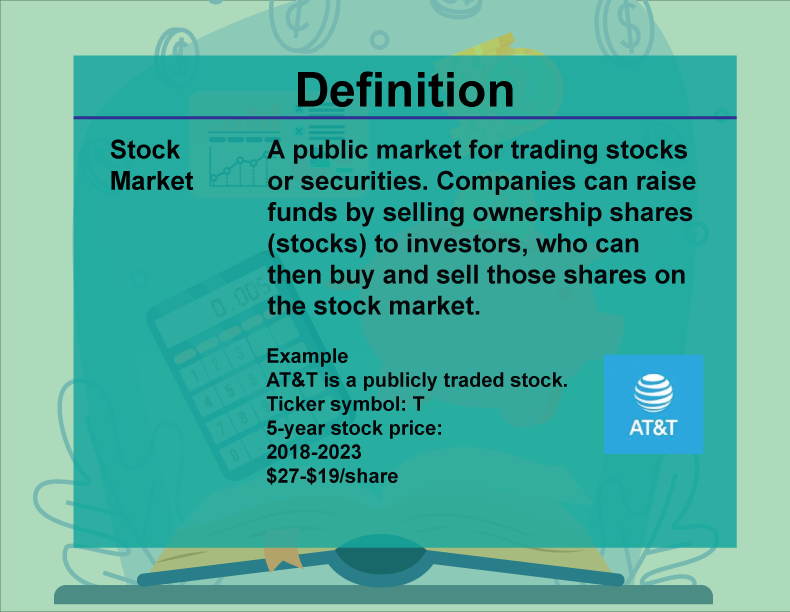
At its most fundamental level, a stock is a financial instrument that represents ownership in a corporation. When an individual or an institutional entity purchases stock, they are buying a “share” of that company’s assets and earnings. This fractional ownership grants the holder a claim on a portion of the company’s success—or a share in its losses. Stocks are the lifeblood of the global financial system, serving as a primary vehicle for companies to raise capital and for investors to build long-term wealth.
Understanding the definition of stocks requires looking beyond the digital tickers on a screen. It involves understanding the transition of a business from a private entity to a public one, the rights afforded to shareholders, and the mechanics of how value is created and distributed. Stocks, often referred to as “equities,” are the cornerstone of personal finance and institutional portfolios, offering a historical track record of outperforming inflation and traditional savings vehicles.

The Fundamental Definition: What Does It Mean to Own a Stock?
To define a stock accurately, one must understand the concept of “equity.” Equity is the value of an ownership interest in property or a business. In the context of the stock market, when a company decides to go public, it divides its total ownership into millions of small units called shares. These shares are then sold to the public through an Initial Public Offering (IPO).
Once a company is public, its shares trade on secondary markets, such as the New York Stock Exchange (NYSE) or the NASDAQ. The price of a single share is determined by the collective perception of the company’s current value and its future potential. If you own ten shares of a company that has one thousand shares outstanding, you own exactly 1% of that corporation. While most major corporations have millions or even billions of shares outstanding, the principle remains the same: you are a part-owner of the enterprise.
From Private to Public: The Lifecycle of a Share
Most companies begin as private entities owned by founders, family members, or early-stage venture capitalists. As a company grows, it often reaches a point where it needs significant capital to expand operations, fund research and development, or pay off debt. To raise this capital without taking on high-interest loans, the company may choose to “go public.”
The IPO process is a transformative moment. Investment banks evaluate the company, determine a fair price for the initial shares, and facilitate the sale to institutional and retail investors. From that point forward, the company is subject to strict regulatory oversight by bodies like the Securities and Exchange Commission (SEC), requiring transparency in financial reporting. For the investor, this transition provides liquidity—the ability to buy or sell ownership stakes instantly at a market-determined price.
Common vs. Preferred Stock: Understanding the Differences
Not all stocks are created equal. The definition of stock is typically split into two primary categories: common and preferred.
Common stock is what most people are referring to when they talk about “the stock market.” Holders of common stock usually have the right to vote on corporate policies and the election of the board of directors. Furthermore, common stock offers the highest potential for long-term capital appreciation. However, in the event of a corporate liquidation or bankruptcy, common stockholders are at the back of the line; they receive their share of assets only after bondholders and preferred stockholders have been paid.
Preferred stock acts as a hybrid between a stock and a bond. Preferred shareholders usually do not have voting rights, but they are guaranteed a fixed dividend payment, which must be paid before any dividends are distributed to common shareholders. In the event of a company’s insolvency, preferred stockholders have a higher claim on assets than common stockholders. This makes preferred stock a popular choice for investors seeking steady income with slightly less risk than common equity.
How Stocks Generate Value for Investors
The primary reason individuals invest in stocks is to generate a return on their capital. This return typically comes from two distinct sources: capital appreciation and dividend income. Understanding these two pillars is essential for any investor looking to build a strategy for financial independence.
Capital Appreciation: The Power of Growth
Capital appreciation occurs when the market price of a stock increases over time. If an investor purchases a share for $50 and its value rises to $75, the investor has realized a 50% gain in value. This price movement is driven by several factors, most notably the company’s earnings growth. As a company becomes more profitable, it becomes more valuable to prospective buyers, driving up the price of its shares.
The beauty of capital appreciation lies in the concept of compounding. As a company reinvests its profits into new products, markets, and technologies, its intrinsic value can grow exponentially over decades. This is why legendary investors often advocate for a “buy and hold” strategy. By holding shares in high-quality companies for the long term, investors benefit from the cumulative growth of the business without the friction of frequent trading fees or short-term capital gains taxes.
Dividend Income: Cash Flow and Yields
While capital appreciation focuses on the increase in share price, dividends represent a direct distribution of a company’s profits to its shareholders. Mature, profitable companies that do not need to reinvest every dollar of profit back into the business often choose to reward shareholders with regular cash payments.
Dividends provide a steady stream of income, making them highly attractive for retirees or those looking for passive cash flow. The “dividend yield” is a common metric used to evaluate these stocks; it is calculated by dividing the annual dividend payment by the current stock price. Many investors participate in Dividend Reinvestment Plans (DRIPs), which automatically use dividend payments to purchase additional shares of the stock, further accelerating the power of compounding over time.
Navigating the Stock Market: Exchanges, Indices, and Sectors
The stock market is a vast ecosystem of thousands of companies, each with different characteristics and risk profiles. To make sense of this complexity, the market is organized into exchanges, indices, and sectors.
The Role of Major Stock Exchanges
An exchange is a centralized platform where buyers and sellers meet to trade shares. Historically, these were physical locations with “trading floors,” but today, they are almost entirely electronic. The NYSE is the world’s largest exchange by market capitalization, known for hosting many of the world’s oldest and most established corporations. The NASDAQ, on the other hand, has a heavy concentration of technology and growth-oriented companies.
Global exchanges allow for the movement of capital across borders. An investor in London can easily purchase shares of a company based in Tokyo or New York. This connectivity provides liquidity, ensuring that investors can exit their positions and access their cash quickly when needed.
Market Indices as Performance Benchmarks
Because it is impossible to track every single stock simultaneously, investors use indices to gauge the overall “health” of the market. An index is a curated basket of stocks that represents a specific segment of the market.
-
The S&P 500: This index tracks 500 of the largest publicly traded companies in the United States. It is widely considered the most accurate barometer of the U.S. economy and the overall stock market.
-
The Dow Jones Industrial Average (DJIA): A price-weighted index of 30 prominent companies. While less comprehensive than the S&P 500, it provides a snapshot of the industrial and blue-chip landscape.
-
The Nasdaq Composite: This index includes almost all stocks listed on the Nasdaq exchange, providing a focused look at the performance of the technology and biotech sectors.
Categorization by Market Cap and Sector
To define stocks further, they are often grouped by “market capitalization,” which is the total dollar value of all outstanding shares.
-
Large-cap stocks: Companies with a market cap of $10 billion or more. These are usually stable, established industry leaders.
-
Mid-cap stocks: Companies with a market cap between $2 billion and $10 billion. They offer a balance between growth potential and stability.
-
Small-cap stocks: Companies with a market cap between $300 million and $2 billion. These are often younger companies with high growth potential but higher volatility.
Furthermore, stocks are divided into 11 GICS (Global Industry Classification Standard) sectors, including Technology, Healthcare, Energy, and Financials. Diversifying across these sectors is a fundamental strategy for managing risk, as different sectors often react differently to economic changes.
Risks and Rewards: Building a Resilient Portfolio
No discussion of the definition of stocks is complete without addressing risk. While stocks offer the potential for significant rewards, they do not come with guarantees. Understanding the types of risk is the first step toward becoming a disciplined investor.
Volatility and Market Cycles
Stock prices are rarely static. They fluctuate daily based on earnings reports, economic data, geopolitical events, and investor sentiment. This fluctuation is known as volatility. In the short term, the stock market can be a “voting machine,” reflecting the moods and fears of the public. In the long term, however, it acts as a “weighing machine,” reflecting the actual value and profitability of companies.
Investors must contend with market cycles, including “Bull Markets” (periods of rising prices and optimism) and “Bear Markets” (periods of falling prices, typically 20% or more from recent highs). Success in the stock market often depends more on “time in the market” rather than “timing the market.”
Diversification: The Only Free Lunch in Finance
The greatest risk in equity investing is “concentration risk”—having too much of your money in a single stock or sector. If that specific company fails, your entire investment could be wiped out. To mitigate this, professional investors use diversification.
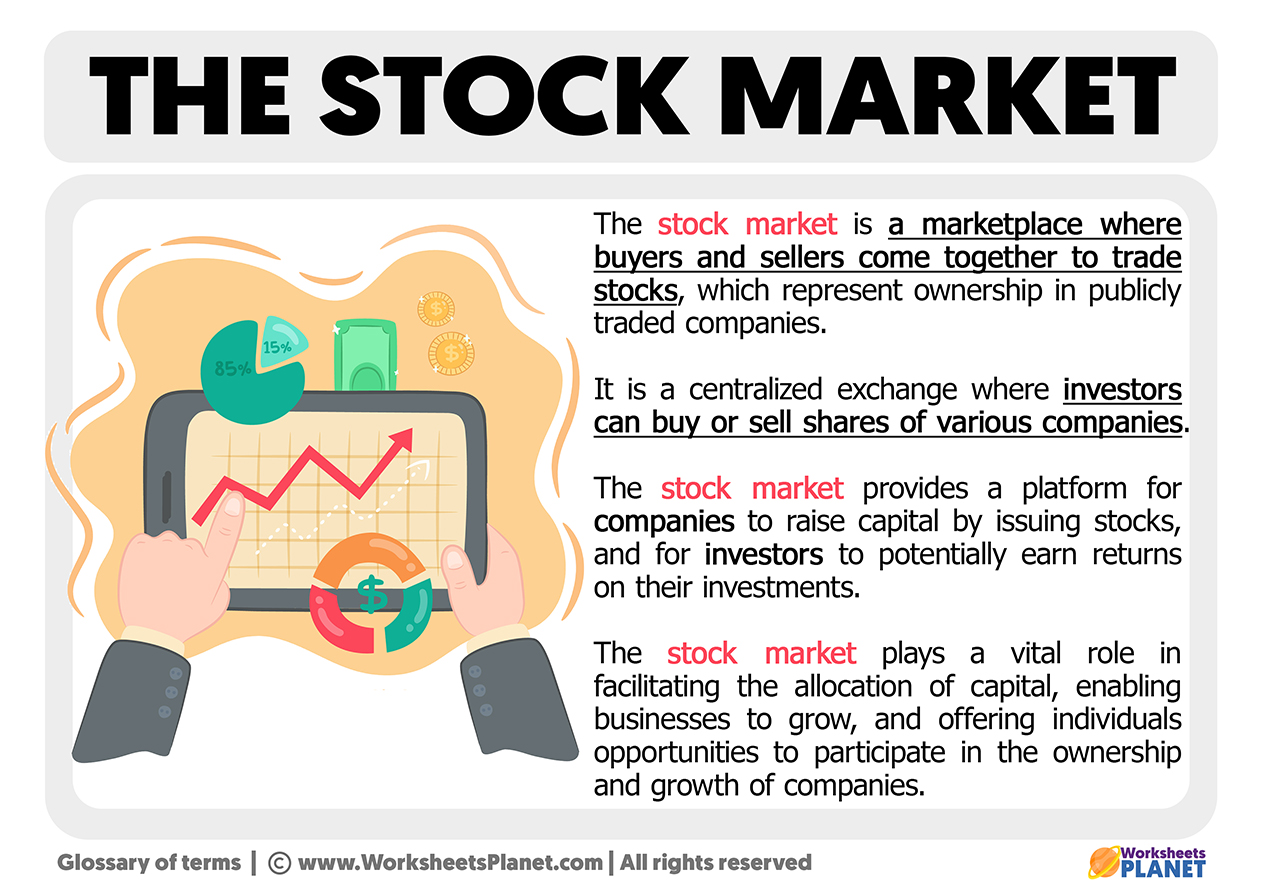
By owning a broad array of stocks across different industries, geographic locations, and market caps, you reduce the impact of any single company’s failure on your overall portfolio. This is why many modern investors choose Index Funds or Exchange-Traded Funds (ETFs). These financial tools allow you to buy a single “share” that represents a tiny piece of hundreds or even thousands of different companies, providing instant diversification and lowering the barrier to entry for the average person.
The Path to Wealth Creation
Defining “stocks” is about more than just understanding a financial term; it is about recognizing an opportunity for participation in the global economy. For the first time in history, a retail investor with a hundred dollars can own the same shares in a tech giant as a billionaire hedge fund manager.
Stocks provide a path to financial sovereignty. By shifting from being a pure consumer to becoming a partial owner of the brands and services we use every day, we align our financial interests with the most productive forces in society. Whether through a 401(k), an IRA, or a brokerage account, the journey of stock market investing begins with a clear understanding of what these instruments are and how they function within a balanced financial plan. Investing in stocks requires patience, a commitment to continuous learning, and a long-term perspective, but for those who master the discipline, the rewards can be life-changing.
aViewFromTheCave is a participant in the Amazon Services LLC Associates Program, an affiliate advertising program designed to provide a means for sites to earn advertising fees by advertising and linking to Amazon.com. Amazon, the Amazon logo, AmazonSupply, and the AmazonSupply logo are trademarks of Amazon.com, Inc. or its affiliates. As an Amazon Associate we earn affiliate commissions from qualifying purchases.