
The journey toward financial independence often begins with a fundamental question: where should I put my money so that it grows? For decades, the answer has primarily revolved around two core asset classes: stocks and bonds. While these terms are frequently used in tandem, they represent two distinct philosophies of finance—ownership and lending. Understanding the nuances of these instruments is not just a matter of academic interest; it is the cornerstone of effective asset allocation and long-term wealth preservation.
In the modern financial landscape, the barrier to entry has never been lower, but the complexity of choice has never been higher. To navigate the markets successfully, an investor must look beyond the ticker symbols and understand the underlying mechanics of how these assets generate value, the risks they carry, and the specific roles they play in a diversified portfolio.
Understanding Stocks: Owning a Piece of the Future
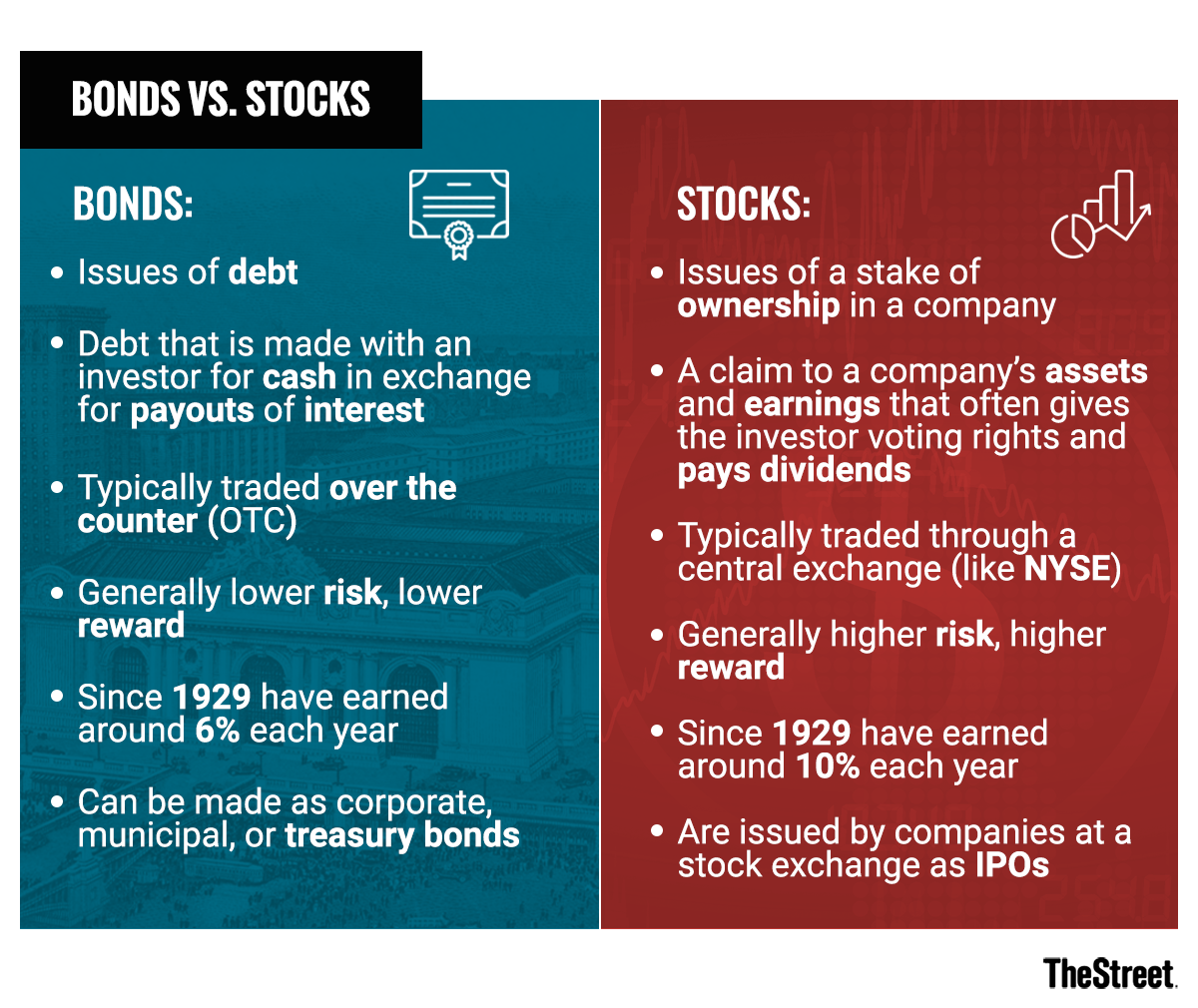
When you purchase a stock, you are essentially buying a piece of a corporation. This “equity” represents a claim on part of the corporation’s assets and earnings. From a financial perspective, stocks are the engine of growth in most investment portfolios, offering the potential for significant capital appreciation over time.
The Concept of Equity and Ownership
At its core, a stock (or share) represents fractional ownership. If a company has 1,000 shares outstanding and you own 10, you own 1% of that company. As a shareholder, you participate in the company’s successes—and its failures. When the company expands, innovates, and increases its profits, the value of your “slice” generally increases. Stocks are issued by companies to raise capital for expansion, research, and development without taking on the burden of debt.
How Investors Generate Wealth from Stocks
There are two primary ways to make money through stock ownership: capital gains and dividends. Capital gains occur when the market price of the stock increases above your purchase price. For example, buying a tech company’s stock at $50 and selling it at $100 yields a 100% capital gain. Dividends, on the other hand, are a portion of a company’s profit distributed to shareholders, usually on a quarterly basis. While not all companies pay dividends—many choose to reinvest profits back into the business—they provide a steady stream of passive income that can be particularly attractive during volatile market cycles.
Common vs. Preferred Stock
It is important to distinguish between the two main types of stock. Common stock is what most people are referring to when they talk about the stock market. It grants voting rights and the potential for high returns. Preferred stock behaves somewhat like a hybrid between a stock and a bond. It usually does not offer voting rights, but it provides a fixed dividend and has a higher claim on assets in the event of a liquidation. Understanding which type fits your risk profile is essential for strategic portfolio construction.
Deciphering Bonds: The Art of Lending for Income
If stocks are about ownership, bonds are about lending. When you buy a bond, you are acting as a lender to an entity, such as a government or a corporation. In exchange for your capital, the issuer promises to pay you back the principal amount on a specific date, along with periodic interest payments.
The Mechanics of the Bond “IOU”
A bond is essentially a formal contract of debt. Every bond comes with a “par value” (the amount you lend), a “coupon rate” (the interest rate you receive), and a “maturity date” (when the loan ends and your principal is returned). Because these payments are scheduled and generally fixed, bonds are often referred to as “fixed-income” securities. They provide a level of predictability that stocks cannot match, making them a favorite for investors seeking stability and regular cash flow.
Types of Bonds: From Treasuries to Corporate Debt
The bond market is vast and categorized primarily by the issuer.
-
Government Bonds: Often called “Treasuries” in the United States, these are backed by the “full faith and credit” of the government and are considered among the safest investments in the world.
-
Corporate Bonds: These are issued by companies to fund operations. They generally offer higher interest rates than government bonds to compensate for the higher risk of the company defaulting.
-
Municipal Bonds: Issued by states or cities to fund public projects like schools or highways. A major advantage of “munis” is that the interest earned is often exempt from federal (and sometimes state) taxes.
The Inverse Relationship Between Prices and Interest Rates
One of the most critical concepts in bond investing is the inverse relationship between bond prices and interest rates. When market interest rates rise, new bonds are issued with higher coupons, making existing bonds with lower coupons less attractive. Consequently, the price of those older bonds drops. Conversely, when rates fall, older bonds with higher interest rates become more valuable. Investors must understand this “duration risk” to manage their portfolios during different economic cycles.
Risk vs. Reward: Comparing the Two Pillars of Finance
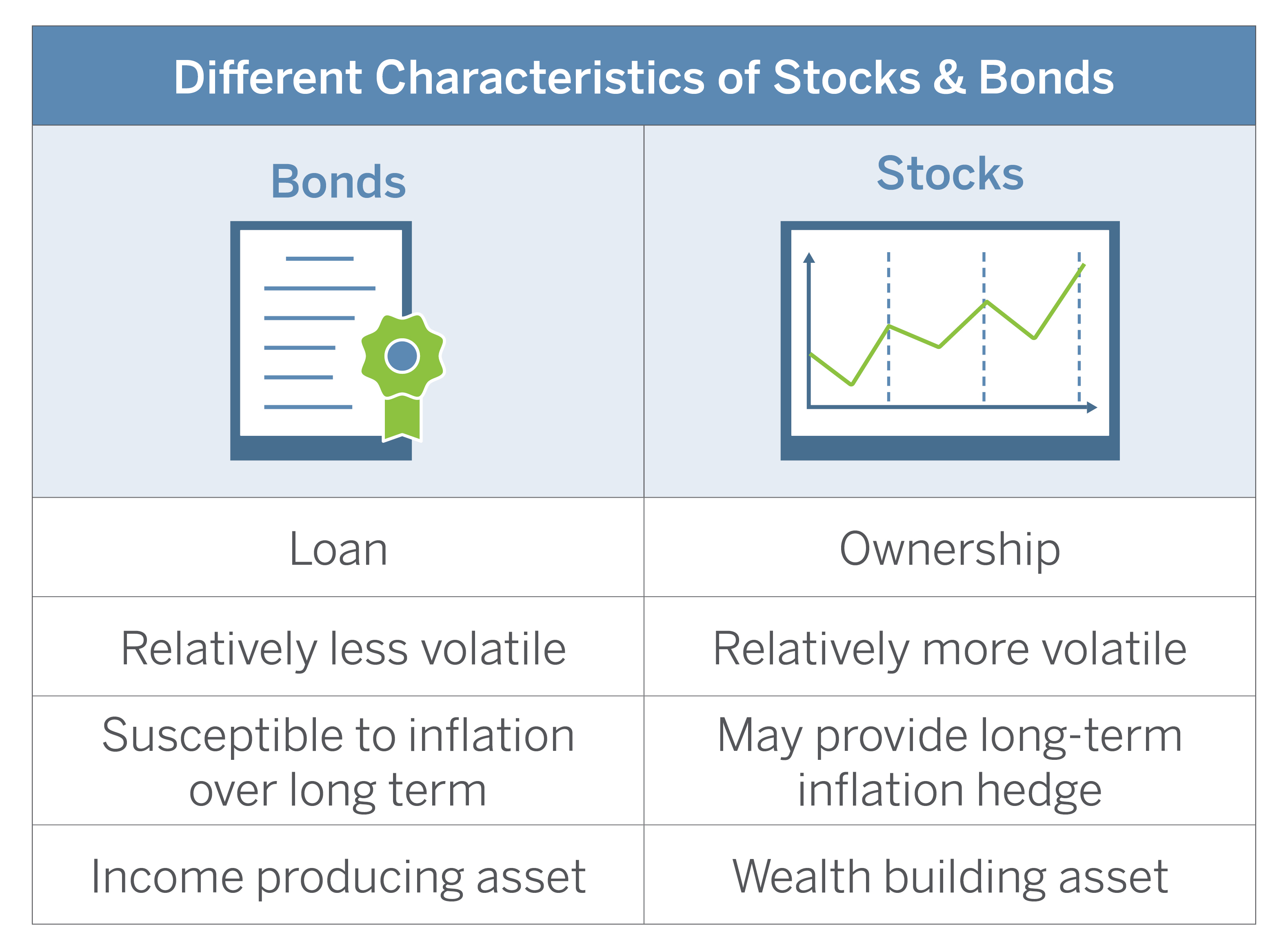
The fundamental law of investing is that higher potential rewards come with higher risks. Stocks and bonds sit on different rungs of the risk-reward ladder, and choosing between them requires an honest assessment of your financial goals and your stomach for volatility.
Volatility and the Risk Pyramid
Stocks are inherently more volatile than bonds. Their prices can swing wildly based on earnings reports, geopolitical events, or shifts in investor sentiment. In a worst-case scenario, a company can go bankrupt, and common stockholders are usually the last in line to receive any remaining assets, often resulting in a total loss. Bonds, while not risk-free, are generally more stable. Because bondholders are creditors, they have a higher legal claim on a company’s assets than shareholders.
Growth vs. Preservation
The primary role of stocks in a portfolio is growth. Over long periods, the stock market has historically outperformed inflation and bond yields, making it the primary tool for building a retirement nest egg. The primary role of bonds is capital preservation and income generation. Bonds act as a “buffer” during stock market downturns. When the equity market crashes, investors often flock to the safety of bonds, which can help stabilize the overall value of a diversified portfolio.
Inflation and Purchasing Power
While bonds offer stability, they carry a hidden risk: inflation. If you hold a bond paying 3% interest, but inflation is running at 5%, you are effectively losing 2% of your purchasing power every year. Stocks, however, often serve as a hedge against inflation. Companies can raise prices for their goods and services as costs rise, which can lead to higher earnings and stock prices, helping the investor keep pace with the cost of living.
Diversification and Asset Allocation: Finding Your Balance
Success in the financial markets is rarely about picking a single “winning” stock or bond; it is about how you combine them. Asset allocation is the process of deciding what percentage of your portfolio should be in stocks versus bonds based on your age, goals, and risk tolerance.
The 60/40 Rule and Modern Perspectives
For decades, the “60/40 portfolio” (60% stocks and 40% bonds) was considered the gold standard for a balanced investor. The idea was that the stocks provided the growth while the bonds provided the protection. While this ratio remains a popular benchmark, modern investors often customize this based on their “time horizon.” A 25-year-old might hold 90% stocks because they have decades to recover from market dips, whereas someone two years from retirement might shift toward a 50/50 or 40/60 split to protect their accumulated savings.
Rebalancing Your Portfolio
Over time, market fluctuations will change your original asset allocation. If stocks have a phenomenal year, they might grow to represent 75% of your portfolio instead of your intended 60%. This leaves you over-exposed to a potential market crash. Rebalancing is the disciplined practice of selling a portion of your “winners” (stocks) and buying more of your “underperformers” (bonds) to return to your target allocation. This forces you to “buy low and sell high,” a core tenet of professional investing.
Investing through Mutual Funds and ETFs
Most individual investors do not buy single stocks or individual bonds. Instead, they use Mutual Funds or Exchange-Traded Funds (ETFs). these vehicles allow you to pool your money with other investors to buy a basket of hundreds or thousands of securities at once. An S&P 500 index fund, for instance, gives you instant exposure to 500 of the largest U.S. companies. Similarly, a Total Bond Market ETF provides exposure to a wide range of government and corporate debt. This instant diversification is one of the most effective ways to mitigate the risk of any single entity failing.
Getting Started: Strategic Steps for New Investors
Understanding the theory of stocks and bonds is the first step; the second is implementation. The transition from a saver to an investor requires a shift in mindset and a clear strategic plan.
Setting Financial Goals and Time Horizons
Before deploying capital, you must define the “why” behind your investment. Are you saving for a house in three years or retirement in thirty? Money needed in the short term (less than three to five years) should generally stay in bonds or high-yield savings accounts to avoid the risk of a sudden stock market drop. Long-term goals are better suited for the stock market, where the power of compounding interest can work its magic over decades.

Understanding Tax-Advantaged Accounts
In the world of personal finance, it’s not just about what you earn, but what you keep. Utilizing tax-advantaged accounts like a 401(k) or an Individual Retirement Account (IRA) can significantly boost your long-term returns. These accounts often allow your stocks and bonds to grow tax-free or tax-deferred, ensuring that a larger portion of the market’s growth stays in your pocket rather than going to the government.
By mastering the relationship between stocks and bonds, you gain the ability to construct a portfolio that can weather economic storms while still capturing the growth of the global economy. Whether you are seeking the aggressive growth of equity or the steady reliability of debt, these two pillars of finance provide the essential tools needed to secure your financial future.
aViewFromTheCave is a participant in the Amazon Services LLC Associates Program, an affiliate advertising program designed to provide a means for sites to earn advertising fees by advertising and linking to Amazon.com. Amazon, the Amazon logo, AmazonSupply, and the AmazonSupply logo are trademarks of Amazon.com, Inc. or its affiliates. As an Amazon Associate we earn affiliate commissions from qualifying purchases.