
For both novice and seasoned investors, understanding the operational hours of the stock market is far more than a mere detail; it is a fundamental pillar of informed financial decision-making. The rhythm of the stock market, defined by its opening and closing bells, dictates when trades can be executed, when news has its most immediate impact, and when liquidity is at its peak. Today, as digital platforms democratize access to financial markets globally, knowing these hours, and the various extended trading sessions, becomes even more critical for effective strategy and risk management.
This comprehensive guide will demystify stock market hours, focusing primarily on the major U.S. exchanges like the New York Stock Exchange (NYSE) and NASDAQ, while also touching upon the broader implications for investors around the world. We’ll explore the standard trading window, delve into the extended hours that offer both opportunities and challenges, discuss the days when markets are closed, and consider why these timings are so crucial for your investment approach.
Understanding Standard Stock Market Trading Hours
The cornerstone of stock market operations is the standard trading session, a period characterized by high liquidity and intense activity. This is the window most retail investors are familiar with, and it’s where the vast majority of daily trading volume occurs.
The Core Trading Window
In the United States, the primary stock exchanges – the New York Stock Exchange (NYSE) and the NASDAQ Stock Market – operate under a unified standard trading schedule. This core trading window runs from 9:30 AM Eastern Time (ET) to 4:00 PM ET on weekdays. This seven-and-a-half-hour period is when brokers facilitate the buying and selling of stocks at publicly displayed prices, reacting to economic news, corporate announcements, and global events. The opening bell at 9:30 AM ET often heralds a period of heightened volatility as accumulated overnight news and orders are processed, while the closing bell at 4:00 PM ET can also see significant trading as investors adjust positions before the market closes.
Key U.S. Exchanges: NYSE and NASDAQ
While both the NYSE and NASDAQ adhere to the same 9:30 AM to 4:00 PM ET schedule, they represent distinct ecosystems within the broader U.S. equity market.
- NYSE (New York Stock Exchange): Often referred to as “the Big Board,” the NYSE is known for its traditional auction-market system and its iconic trading floor, although much trading is now electronic. It lists many of the world’s largest and oldest companies, from industrial giants to financial institutions. Its prestige and history often make its hours the default reference point for “stock market hours.”
- NASDAQ Stock Market: NASDAQ is an all-electronic exchange, celebrated for its technological innovation and its listing of growth-oriented companies, particularly in the tech and biotechnology sectors. It pioneered electronic trading and continues to be a hub for innovation. Despite their differences in structure and company focus, their operating hours are identical for the core session.
Understanding which exchange a particular stock trades on can sometimes influence liquidity or specific trading dynamics, but for standard hours, their calendars are synchronized.
Time Zone Considerations for Global Investors
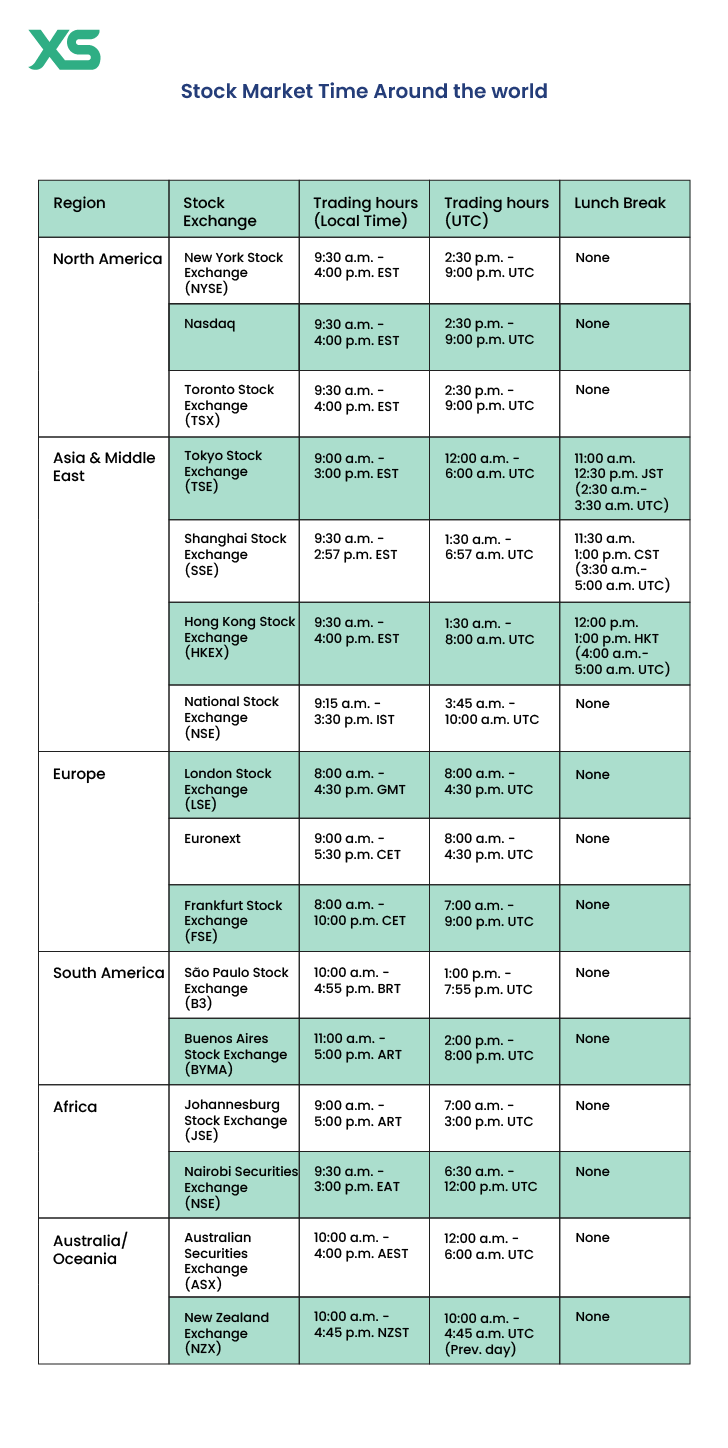
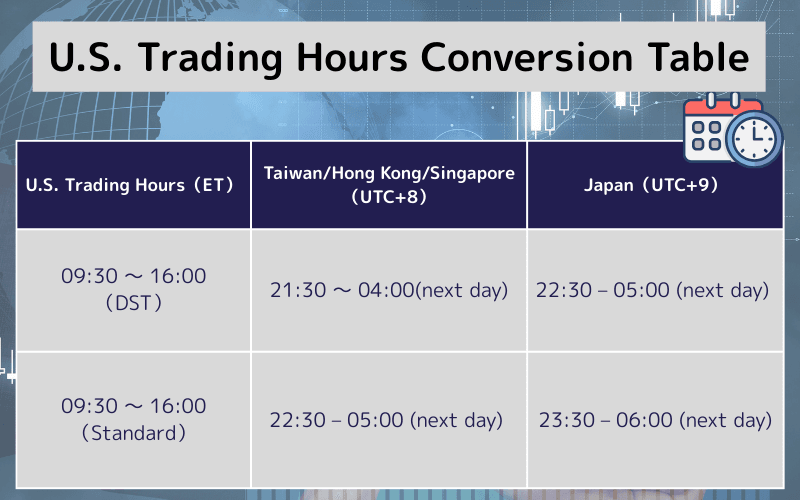
While the U.S. market operates on Eastern Time, investors from different parts of the world must adjust their schedules accordingly. For instance, an investor in London (GMT) would find the U.S. market opening at 2:30 PM GMT and closing at 9:00 PM GMT. An investor in Sydney, Australia (AEST), would see the market open at 11:30 PM AEST and close at 6:00 AM AEST the following day.
This global perspective highlights the importance of using a reliable time zone converter and understanding how your local time aligns with the target market’s operational hours. Many online brokers and financial news websites automatically display market hours in the user’s local time, which is a valuable feature for international investors. For active traders, aligning personal schedules with market hours is paramount, while long-term investors may focus more on checking prices and news updates during their own convenient times.
Beyond Standard Hours: Pre-Market and After-Hours Trading
The concept of a fixed 9:30 AM to 4:00 PM ET trading window has evolved significantly with technological advancements. Today, investors have access to extended trading sessions – pre-market and after-hours – which offer both opportunities and unique challenges.
Navigating Pre-Market Trading
Pre-market trading refers to the period before the official 9:30 AM ET market open. For U.S. exchanges, this session typically begins as early as 4:00 AM ET and runs until 9:30 AM ET. During this time, institutional investors, professional traders, and increasingly, retail investors, can place orders and execute trades.
The significance of pre-market trading often revolves around news releases. Companies frequently announce earnings, mergers, acquisitions, or other material information before the standard market opens. Traders who react quickly to this news in the pre-market session might gain an edge. However, this session is characterized by significantly lower liquidity compared to standard hours. Fewer participants mean wider bid-ask spreads and potentially larger price swings on smaller volumes, making it riskier for less experienced traders.
The Dynamics of After-Hours Trading
Conversely, after-hours trading takes place once the standard session concludes at 4:00 PM ET. This session can extend as late as 8:00 PM ET, although availability may vary by broker. Similar to pre-market, after-hours trading often sees reactions to news that breaks after the market close. For example, if a major tech company reports disappointing earnings at 4:05 PM ET, its stock price might plummet in after-hours trading before the next day’s open.
After-hours trading also suffers from reduced liquidity and increased volatility. The pool of active traders is smaller, leading to less efficient price discovery and greater susceptibility to large price movements based on limited trading volume. This can be a double-edged sword: while it offers flexibility to react to news, it also exposes traders to potentially exaggerated price movements that may not hold once the full market reopens.
Risks and Opportunities in Extended Trading Sessions
Extended trading hours present both enticing opportunities and considerable risks:
- Opportunities:
- Quick reaction to news: Allows traders to capitalize on or mitigate losses from breaking news outside standard hours.
- Flexibility: Accommodates investors in different time zones or those with busy daytime schedules.
- Potential for price discrepancies: Can sometimes buy or sell at advantageous prices before the wider market adjusts.
- Risks:
- Lower Liquidity: Fewer participants lead to wider bid-ask spreads, making it harder to get orders filled at desired prices and increasing transaction costs.
- Higher Volatility: Limited trading volume can cause exaggerated price swings on relatively small orders.
- Information Asymmetry: Major news or rumors can have a disproportionate impact on prices due to the limited information available to all participants.
- Competition: You’re often trading against highly sophisticated institutional investors.
- Broker Availability: Not all brokers offer access to the full range of extended trading hours, and some may have different order types available.
Investors participating in extended hours should use limit orders exclusively to control the price at which their trades are executed, rather than market orders which could fill at unexpectedly poor prices.
When the Markets Rest: Weekends, Holidays, and Early Closes
Just as understanding trading hours is crucial, knowing when the markets are closed is equally important. These periods of inactivity are essential for market participants to process information, rest, and prepare for the next trading cycle.
Stock Market Holiday Schedule
The major U.S. stock exchanges observe a set schedule of holidays throughout the year, during which they remain closed. These typically align with federal holidays, ensuring that financial professionals and supporting services also have time off. Common stock market holidays include:
- New Year’s Day
- Martin Luther King, Jr. Day
- Washington’s Birthday (Presidents’ Day)
- Good Friday
- Memorial Day
- Juneteenth National Independence Day
- Independence Day (July 4th)
- Labor Day
- Thanksgiving Day
- Christmas Day
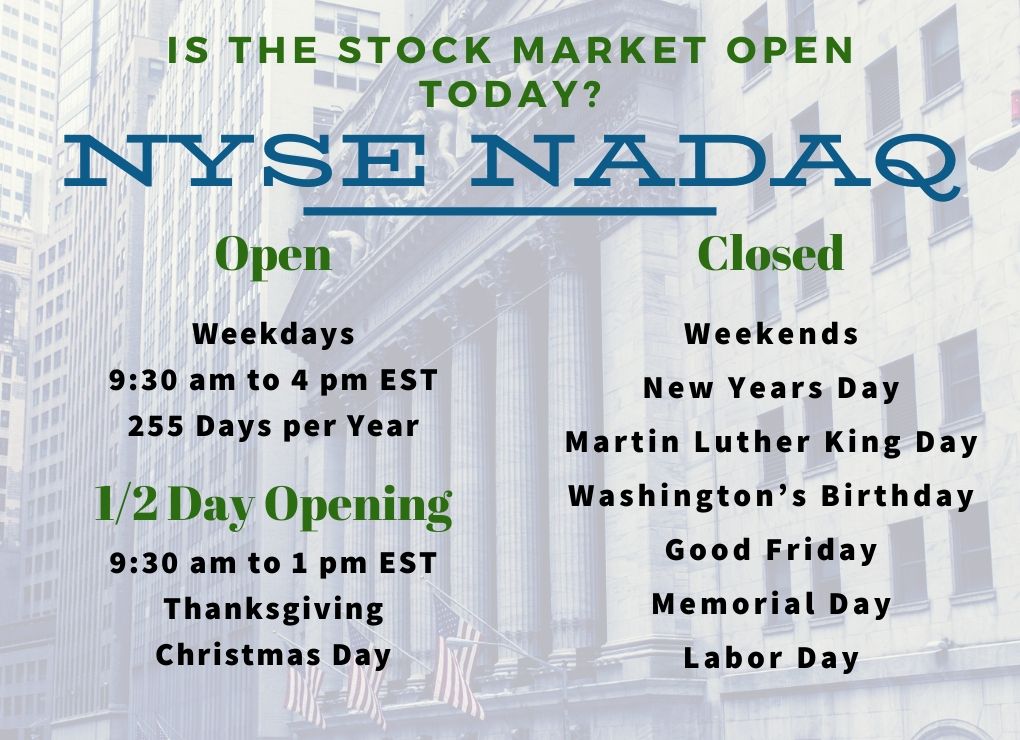
It’s important to note that if a holiday falls on a weekend, the market closure may shift to the preceding Friday or the following Monday. For example, if Christmas Day falls on a Saturday, the market might be closed on Friday, December 24th. Each year, the NYSE and NASDAQ publish their official holiday schedules, which investors should consult.
The Impact of Early Closures
In addition to full-day holidays, the stock market sometimes observes early closures on certain days, typically preceding or following a major holiday. For instance, on the day after Thanksgiving (Black Friday) or on Christmas Eve (if it falls on a weekday), the market might close early, often at 1:00 PM ET. These shortened trading days can still exhibit significant activity, but the reduced time frame can amplify volatility and impact liquidity, especially towards the end of the truncated session. Traders should be aware of these early closures as they can affect the execution of certain strategies or the timely processing of orders.
Global Market Calendars
While this discussion primarily focuses on U.S. stock market hours, it’s worth remembering that global markets operate on their own distinct schedules and observe their respective national holidays. Major exchanges in London, Tokyo, Shanghai, Frankfurt, and other financial hubs each have unique operating hours and holiday calendars.
- London Stock Exchange (LSE): Generally 8:00 AM to 4:30 PM GMT/BST.
- Tokyo Stock Exchange (TSE): Generally 9:00 AM to 11:30 AM JST (morning session) and 12:30 PM to 3:00 PM JST (afternoon session).
- Shanghai Stock Exchange (SSE): Similar split sessions as Tokyo, usually 9:30 AM to 11:30 AM CST and 1:00 PM to 3:00 PM CST.
Investors who dabble in international stocks or ETFs tracking global indices need to stay informed about the specific market hours and holidays relevant to their investments. Economic news or geopolitical events in one region can have ripple effects on other markets, even during their closed periods, influencing how they open on their next trading day.
The Strategic Importance of Market Hours for Investors
Understanding stock market hours goes beyond mere scheduling; it’s a critical component of strategic investment. The timing of market operations directly influences liquidity, volatility, and the speed of information dissemination, all of which are vital considerations for any investor.
Liquidity and Volatility Patterns
The relationship between market hours, liquidity, and volatility is profound. During the core 9:30 AM to 4:00 PM ET session, especially in the first and last hour, liquidity tends to be highest. This means there are many buyers and sellers, allowing for efficient trade execution with tight bid-ask spreads. High liquidity generally leads to less volatile price movements, as a large number of participants absorb buy and sell orders.
Conversely, during pre-market and after-hours trading, liquidity drops significantly. With fewer participants, even small orders can cause disproportionately large price swings. This heightened volatility can present opportunities for aggressive traders to capture quick gains, but it also carries substantially higher risk. Long-term investors, generally less concerned with intraday price fluctuations, might still want to avoid placing orders during these illiquid periods to ensure better execution prices during standard hours.
Information Flow and Price Discovery
Market hours also dictate the flow of information and the process of price discovery. Corporate earnings reports, analyst upgrades/downgrades, and major economic data releases are often strategically timed by companies and government agencies to occur either before the market opens or after it closes. This allows investors time to digest the information before the next trading session begins, theoretically leading to a more orderly opening.
However, in practice, news breaks can trigger immediate reactions in extended hours, setting a price direction that influences the subsequent standard session. The opening price of a stock at 9:30 AM ET often reflects the cumulative impact of all news and extended-hours trading activity since the previous close. Understanding this dynamic helps investors anticipate potential gaps up or down at the market open and adjust their strategies accordingly.
Adapting Trading Strategies to Market Timings
Different investment strategies benefit from different market timings:
- Day Traders: Heavily rely on the standard hours, particularly the opening and closing periods, for high liquidity and volatility to execute rapid trades. They often avoid extended hours due to high risk.
- Swing Traders: May monitor pre-market and after-hours activity to identify potential trends or reversals that could play out over a few days, but typically execute trades during standard hours.
- Long-Term Investors: Generally focus on fundamental analysis and are less concerned with intraday hours. However, they might use extended hours for convenience or to react to significant news that impacts their long-term holdings, often using limit orders.
- News Traders: Specifically target pre-market or after-hours sessions to capitalize on immediate reactions to news events, accepting the higher risks involved.
Regardless of the strategy, integrating knowledge of market hours into one’s trading plan is crucial. This includes knowing when to place orders, when to monitor positions most closely, and when to be wary of illiquid or volatile periods.
The Future of Trading Hours and Accessibility
The landscape of financial markets is constantly evolving, driven by technological advancements and changing investor demands. The traditional concept of fixed trading hours is increasingly being challenged, prompting discussions about continuous trading and enhanced accessibility.
The Role of Technology and Electronic Trading
Technology has already dramatically reshaped market access. Electronic communication networks (ECNs) and sophisticated trading algorithms have made extended trading hours possible, moving beyond the physical trading floor’s constraints. Online brokerage platforms provide seamless access to these extended sessions, empowering individual investors in ways previously unimaginable. This technological shift has blurred the lines between standard and extended hours, creating a near 24/5 trading environment for many assets.
Furthermore, the rise of fractional share ownership and commission-free trading has lowered barriers to entry, encouraging more people to participate. As technology continues to advance, we can expect even more sophisticated tools for analyzing market data and executing trades across various time zones and trading sessions.
Debates Around 24/7 Trading
The idea of 24/7 stock market trading, mirroring the always-on nature of cryptocurrency markets, is a recurring topic of debate. Proponents argue that continuous trading would increase liquidity, allow immediate reactions to global news, and better serve a global investor base. It could eliminate the concept of “gap ups” or “gap downs” at market open, leading to smoother price discovery.
However, opponents raise significant concerns:
- Market Fatigue: Continuous trading could lead to burnout for market professionals, analysts, and even individual investors, impacting decision quality.
- Reduced Liquidity: While 24/7 trading sounds appealing, it’s possible that liquidity would be thinly spread over an entire day, leading to longer periods of high volatility and wider spreads than current extended hours.
- Regulatory Challenges: Adapting existing market regulations for a 24/7 environment would be a complex undertaking.
- Investor Protection: Ensuring fair access and protecting retail investors in a non-stop trading environment poses challenges.
While a full 24/7 stock market might be a distant prospect for major exchanges, the trend toward longer and more accessible trading hours is undeniable.
Empowering the Modern Investor
For today’s investor, understanding stock market hours is not just about avoiding missed opportunities; it’s about making informed, strategic decisions. Leverage the readily available information from your broker, financial news outlets, and exchange websites to stay updated on current trading hours, holiday schedules, and any special early closures.
As you navigate the financial markets, remember that while extended hours offer flexibility, they also demand greater caution due to liquidity and volatility differences. Whether you’re a day trader meticulously planning your entries and exits around the opening and closing bells, or a long-term investor checking in on your portfolio, respecting the rhythm of the market hours is a key ingredient for consistent and informed investing. By staying informed and adapting your approach, you can effectively navigate the dynamic world of stock market trading, today and in the future.
aViewFromTheCave is a participant in the Amazon Services LLC Associates Program, an affiliate advertising program designed to provide a means for sites to earn advertising fees by advertising and linking to Amazon.com. Amazon, the Amazon logo, AmazonSupply, and the AmazonSupply logo are trademarks of Amazon.com, Inc. or its affiliates. As an Amazon Associate we earn affiliate commissions from qualifying purchases.