
In the modern commercial landscape, the ability to track, analyze, and optimize every individual asset is the difference between a thriving enterprise and a stagnant one. For any business dealing in physical goods, the fundamental building block of this oversight is the Stock Keeping Unit, or SKU. While often dismissed as a mere alphanumeric string on a warehouse label, the SKU is actually a critical financial tool. It serves as the bridge between physical inventory and fiscal data, allowing business owners to monitor cash flow, assess asset liquidity, and make data-driven decisions that impact the bottom line.

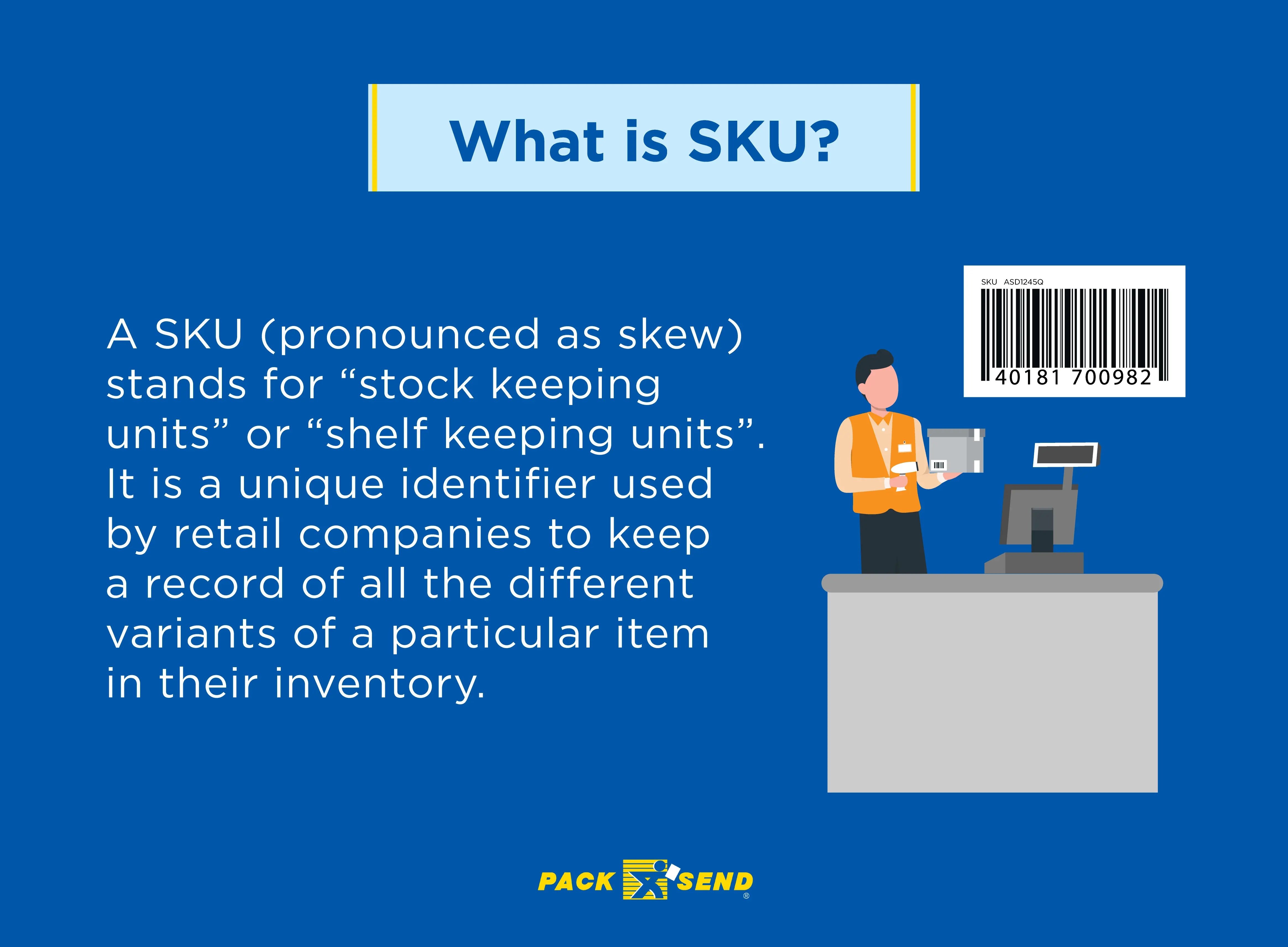
A Stock Keeping Unit is a unique identifier assigned to a specific product to help a business track its inventory internally. Unlike Universal Product Codes (UPCs), which are standardized for external retail use, SKUs are proprietary. They are designed by the business, for the business, reflecting the specific attributes that matter most to that organization’s financial health—such as color, size, material, and even warehouse location. Understanding the strategic application of SKUs is essential for any entrepreneur or financial manager looking to master business finance.
The Financial DNA of Inventory Management
At its core, an SKU system is about transforming physical products into actionable financial data. Every item sitting on a shelf represents “trapped” capital. Until that item is sold, it is an asset that carries costs rather than generating revenue. Effective SKU management allows a business to see exactly where its capital is tied up.
Translating Physical Products into Balance Sheet Data
For a Chief Financial Officer or a small business owner, the inventory listed on a balance sheet must be accurate. SKUs provide the granular detail necessary to conduct precise audits. By assigning a unique code to every variation of a product, a company can track the exact value of its current holdings. This is vital for calculating the Cost of Goods Sold (COGS) and determining gross profit margins. Without a robust SKU system, financial reporting becomes a game of guesswork, leading to discrepancies that can complicate tax filings and investor relations.
Optimizing Working Capital through SKU Rationalization
One of the most significant financial challenges in retail and distribution is “SKU Creep”—the gradual expansion of product variations that eventually outpaces demand. Each new SKU requires storage space, insurance, and management labor, all of which contribute to “carrying costs.”
SKU rationalization is the financial process of evaluating the profitability of each unit and deciding which should be kept and which should be discontinued. By analyzing SKU-level data, businesses can identify “dead stock”—items that have not moved in six months or more. Liquidating these items, even at a discount, frees up working capital that can be reinvested into higher-performing assets, thereby improving the company’s overall liquidity ratio.
SKU Architecture: Designing a System for Scalable Profitability
Creating an SKU system is not merely an administrative task; it is an architectural one. A well-designed SKU architecture allows a business to scale without losing control of its financial tracking. If the coding system is haphazard, the resulting data will be noisy and difficult to analyze for financial trends.
Anatomy of an Effective SKU Code
A financially sound SKU is typically alphanumeric and follows a logical hierarchy. It should move from the general to the specific. For example, a clothing retailer’s SKU might start with the category (W- for Women’s), followed by the product type (DRS- for Dress), then the style (MAX- for Maxi), and finally the size and color (04-BLU).
From a business finance perspective, this structure allows for “rollup” reporting. A manager can quickly run a report on all “DRS” items to see the total capital invested in dresses, or drill down into “BLU” to see if blue items are yielding a higher return on investment (ROI) than red ones this season. The goal is to create a language that the accounting software can easily interpret to provide high-level financial insights.
Avoiding the Pitfalls of SKU Proliferation
While it is tempting to offer every possible variation of a product to satisfy every customer niche, this is often a recipe for financial strain. Each SKU added to the system increases the complexity of the supply chain. Financial managers must work closely with inventory planners to ensure that the “marginal utility” of a new SKU justifies its operational cost.
A “lean” SKU strategy focuses on the “80/20 Rule”: typically, 80% of a company’s revenue comes from 20% of its SKUs. By identifying these “hero” units through their unique codes, businesses can prioritize their spending on the most profitable inventory, ensuring that they never run out of the items that drive the majority of their cash flow.
Leveraging SKUs for Financial Forecasting and Market Analysis
The true power of an SKU system lies in its ability to predict the future. By looking at historical data tied to specific units, financial analysts can move away from reactive management and toward proactive strategic planning.
Data-Driven Sales Forecasting
Accurate sales forecasting is the cornerstone of business finance. It dictates how much a company should borrow, how many people it should hire, and how much raw material it should purchase. Because SKUs track the velocity of specific items, they provide the most accurate baseline for these forecasts.
If SKU-506 (a specific laptop model) has seen a 15% month-over-month increase in sales velocity, the finance department can allocate budget for a larger bulk purchase to take advantage of volume discounts. This reduces the per-unit cost and increases the future profit margin. Without SKU-level tracking, these nuances are lost in the aggregate data, leading to missed opportunities or over-investment in the wrong areas.
Identifying High-Margin Winners vs. Dead Stock
Not all revenue is created equal. A product that generates $100,000 in sales but has a 5% margin is less valuable to a business’s long-term health than a product that generates $50,000 in sales with a 40% margin. SKUs allow businesses to perform a “Contribution Margin Analysis.”
By tying marketing spend and overhead costs back to specific SKUs, a business can see the true net profit of every item. This allows for strategic shifts in the business model. For instance, if the data reveals that certain low-cost accessories have a significantly higher ROI than the primary hardware they accompany, the business might pivot its marketing budget to focus on those high-margin SKUs, thereby increasing the overall net income without necessarily increasing total sales volume.
Strategic Integration: SKUs as the Foundation of Business Finance Tools
In the digital age, SKUs do not exist in a vacuum. They are the primary keys used by financial software, Enterprise Resource Planning (ERP) systems, and Point of Sale (POS) tools to synchronize a company’s physical reality with its digital records.
Automation and ERP Synchronization
Modern financial management relies heavily on automation. When an SKU is scanned at a warehouse or a checkout counter, it should trigger a chain reaction across the company’s financial ecosystem. The inventory asset account is credited, the COGS account is debited, and the revenue is recorded.
This real-time synchronization is only possible with a clean SKU system. For multi-channel businesses—those selling on Amazon, their own website, and in physical stores—SKUs act as the “single source of truth.” They ensure that the financial reports reflect the total global inventory, preventing the costly error of overselling or double-counting assets. This level of integration is essential for maintaining a healthy debt-to-equity ratio and ensuring the business remains attractive to lenders.
Tax Compliance and Audit Readiness
Tax authorities often require detailed records of inventory valuation, especially when using methods like FIFO (First-In, First-Out) or LIFO (Last-In, First-Out). Because SKUs can be tied to specific purchase orders and dates, they provide a transparent audit trail.
In the event of a financial audit, a robust SKU system allows the business to prove the value of its “Ending Inventory.” This transparency reduces the risk of penalties and ensures that the business is paying the correct amount of tax—neither overpaying due to poor records nor underpaying due to obscured data. For businesses operating internationally, SKUs can also help track landed costs, including duties and tariffs, which are essential for accurate international financial reporting.

Conclusion: The Bottom Line on SKU Management
While the term “Stock Keeping Unit” sounds like a concern for the warehouse manager, it is fundamentally a pillar of business finance. A well-organized SKU system provides the clarity needed to manage cash flow, optimize working capital, and drive scalable profitability.
By treating SKUs as financial instruments rather than just labels, business leaders can gain a deeper understanding of their operational efficiency. They can identify which products are true assets and which are liabilities in disguise. In an era where data is the most valuable currency, the SKU is the essential unit of account that keeps a business’s financial engine running smoothly. Whether you are a solo entrepreneur or managing a multi-national corporation, your mastery of the SKU is a direct reflection of your mastery over your business’s financial future.
aViewFromTheCave is a participant in the Amazon Services LLC Associates Program, an affiliate advertising program designed to provide a means for sites to earn advertising fees by advertising and linking to Amazon.com. Amazon, the Amazon logo, AmazonSupply, and the AmazonSupply logo are trademarks of Amazon.com, Inc. or its affiliates. As an Amazon Associate we earn affiliate commissions from qualifying purchases.