
In the sophisticated world of modern finance, the tools available to investors extend far beyond the simple acts of buying and selling shares of individual companies. Among the most powerful and versatile instruments in a professional trader’s arsenal are stock futures. While they may initially seem complex or reserved for institutional hedge funds, stock futures are increasingly accessible to individual investors looking to hedge risk, speculate on market movements, or gain leveraged exposure to the equity markets.
At its core, a stock future is a derivative contract—an agreement to buy or sell a specific amount of a stock or a stock index at a predetermined price on a specified date in the future. Because their value is derived from an underlying asset, they offer a unique way to interact with the market without ever actually owning the physical shares. This guide explores the mechanics, strategic applications, and inherent risks of stock futures within the broader context of personal and business finance.
Understanding the Mechanics of Stock Futures
To navigate the futures market effectively, one must first understand the structural components that make these contracts function. Unlike the spot market, where transactions are settled “on the spot,” the futures market is defined by its forward-looking nature and its high degree of standardization.
How Future Contracts Are Structured
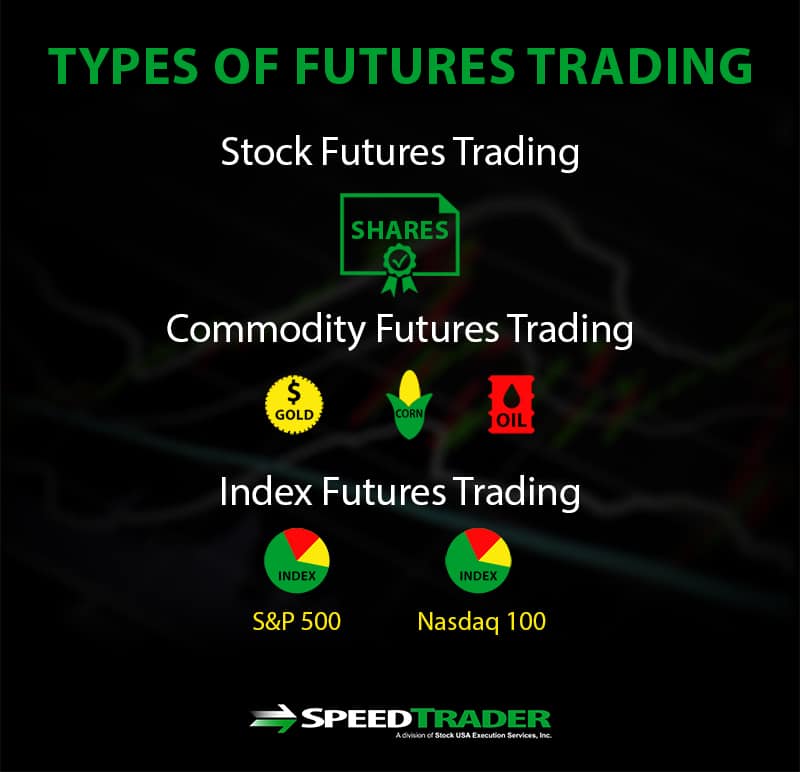
Every stock future contract is a standardized legal agreement traded on a regulated exchange, such as the Chicago Mercantile Exchange (CME). Standardization ensures liquidity; every participant knows exactly what they are trading. A contract specifies the underlying asset (e.g., the S&P 500 index or 100 shares of a specific company), the expiration date (often quarterly), and the “multiplier.”
For example, in the case of E-mini S&P 500 futures, the multiplier is $50. If the index is at 4,000, the notional value of one contract is $200,000. This standardization allows for seamless trading between parties who have never met, as the exchange acts as the intermediary and guarantor for every transaction.
Margin and Leverage: The Double-Edged Sword
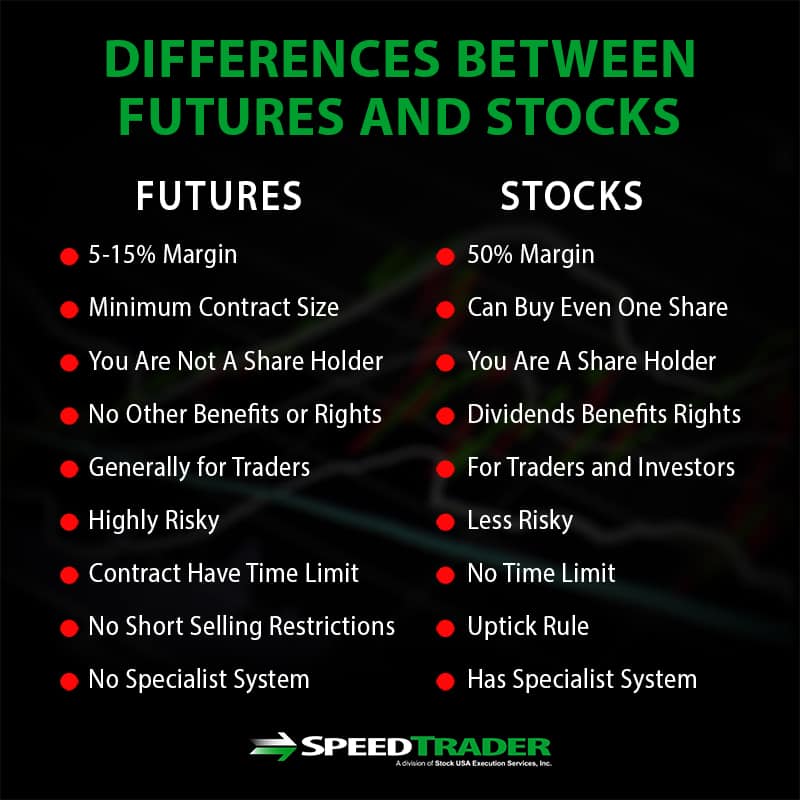
The defining characteristic of stock futures in the “Money” niche is leverage. When you buy a traditional stock, you generally pay the full price of the shares (unless using a margin account, which typically requires 50% equity). In the futures market, you are only required to post “initial margin,” which is often a small fraction—usually 3% to 12%—of the total contract value.
This high degree of leverage means that a small move in the underlying stock price can result in a significant percentage gain or loss on the invested capital. While leverage can amplify profits, it is the primary reason why futures are considered higher-risk instruments. A 5% drop in the underlying index could potentially wipe out an investor’s entire initial margin if they are over-leveraged.
Daily Settlement and “Marking to Market”
One of the most distinct financial processes in the futures market is “marking to market.” Unlike stocks, where gains or losses are “unrealized” until you sell, futures contracts are settled daily. At the end of each trading session, the exchange calculates the difference between the previous day’s closing price and the current day’s price. If the price moved in your favor, the profit is credited to your account that evening. If it moved against you, the loss is debited. This process ensures that no single party accumulates a massive debt that they cannot pay, maintaining the integrity of the financial system.
Strategic Reasons to Trade Stock Futures
Why would an investor choose a future over a traditional stock? The answer lies in the versatility of the instrument. Stock futures serve three primary purposes: hedging, speculation, and capital efficiency.
Hedging Against Market Volatility
For long-term investors or corporate entities with significant equity exposure, futures act as an insurance policy. This is known as hedging. Imagine an investor who holds a $1 million portfolio of blue-chip stocks. If they anticipate a short-term market downturn due to geopolitical instability but do not want to sell their shares (perhaps to avoid capital gains taxes), they can “short” stock index futures.
If the market falls, the losses in their physical stock portfolio will be largely offset by the gains in their short futures position. This allows the investor to lock in a specific value for their portfolio, providing peace of mind during turbulent economic cycles.
Speculation and Market Direction
Speculators are the lifeblood of the futures market, providing the liquidity that hedgers need. Because futures allow for easy “shorting” (betting that a price will go down), they are a favorite tool for traders who have a bearish outlook on the market. In the traditional stock market, shorting can be expensive and logistically difficult due to the need to borrow shares. In the futures market, going long (buying) and going short (selling) are equally simple.
A speculator might use futures to capitalize on macroeconomic trends. If a trader believes that upcoming inflation data will cause the Nasdaq-100 to rally, they can buy NQ futures to capture that upward movement with a relatively small amount of upfront capital.
Portfolio Diversification and Capital Efficiency
Because of the leverage mentioned earlier, stock futures allow an investor to gain exposure to the market while keeping a large portion of their cash in reserve or in other interest-bearing accounts. This is known as capital efficiency. Instead of tying up $100,000 to buy an index fund, an investor might use $10,000 as margin for a futures contract and keep the remaining $90,000 in high-yield savings or Treasury bills. This strategy can potentially enhance the overall “Return on Equity” (ROE) for a sophisticated portfolio.
Comparing Futures to Other Financial Instruments
To truly master the “Money” niche, one must understand how different tools interact. Stock futures are often compared to stock options and Exchange-Traded Funds (ETFs), yet they offer distinct advantages and disadvantages.
Futures vs. Options
While both are derivatives, the primary difference is the obligation. An option gives the holder the right, but not the obligation, to buy or sell an asset. A futures contract is a firm obligation for both parties.
Furthermore, options suffer from “time decay” (theta)—their value decreases as the expiration date approaches, even if the stock price stays the same. Futures do not have time decay in the same way. If the underlying stock stays flat, the future stays relatively flat (accounting for the “cost of carry”). This makes futures a more direct way to play price movements without worrying about the complexities of “The Greeks” in option pricing.
The Role of the Clearinghouse
In the world of business finance, counterparty risk is a major concern. If you enter a private contract with a neighbor to buy their car in three months, there is a risk they might back out. In the stock futures market, the Clearinghouse acts as the buyer to every seller and the seller to every buyer. By mandating margin and performing daily settlements, the clearinghouse virtually eliminates the risk that one party will default on their obligation. This institutional security is why billions of dollars flow through futures exchanges every day.
Cash Settlement vs. Physical Delivery
While commodity futures (like oil or wheat) sometimes involve physical delivery, almost all stock index futures are “cash-settled.” This means that upon expiration, no one is actually delivering 500 different stocks to your door. Instead, the final profit or loss is calculated based on the index’s closing price, and the balance is transferred electronically. This makes them a much cleaner instrument for the average financial participant to manage.
Risks and Critical Considerations for Investors
No discussion of financial instruments is complete without a sober look at the risks involved. Stock futures are powerful tools, but in the hands of an inexperienced investor, they can lead to rapid financial loss.
The Impact of Gap Risk
Because futures markets often trade nearly 24 hours a day, they are susceptible to “gaps.” A gap occurs when a major news event happens while the market is thin or between sessions, causing the price to jump significantly higher or lower without any trading happening in between. If an investor has a leveraged position and the market gaps against them, they may find themselves in a position where they owe more than the initial margin they deposited.
Margin Calls and Liquidation
In the stock market, if your shares drop 20%, you still own the shares and can wait for a recovery. In the futures market, if your account balance falls below the “maintenance margin” level due to daily losses, you will receive a margin call. You must either deposit more cash immediately or the exchange will automatically liquidate your position at the current market price, locking in your losses. This “forced exit” is one of the most significant risks of derivative trading.
The Cost of Carry and Contango
In business finance, nothing is free. The price of a stock future usually differs slightly from the current “spot” price. This difference is influenced by the “cost of carry,” which includes the interest lost on the money used for margin and the dividends that a futures holder does not receive (unlike a stock owner). When the future price is higher than the spot price, the market is in “Contango.” Understanding these nuances is vital for those who plan to hold futures positions for longer than a few days.
Conclusion: Integrating Futures into a Modern Financial Strategy
Stock futures represent the intersection of high-finance technology and strategic asset management. They are not merely “bets” on the market but are essential tools for price discovery, risk mitigation, and capital allocation.
For the individual investor, the journey into stock futures should begin with education and a clear understanding of one’s risk tolerance. When used correctly, futures provide a level of flexibility that traditional equities cannot match—allowing for protection during bear markets and efficient growth during bull markets. However, the requirement for disciplined risk management and a deep understanding of leverage cannot be overstated. In the grand tapestry of personal finance, stock futures are a sophisticated thread, best woven in by those who have mastered the fundamentals of the market.
aViewFromTheCave is a participant in the Amazon Services LLC Associates Program, an affiliate advertising program designed to provide a means for sites to earn advertising fees by advertising and linking to Amazon.com. Amazon, the Amazon logo, AmazonSupply, and the AmazonSupply logo are trademarks of Amazon.com, Inc. or its affiliates. As an Amazon Associate we earn affiliate commissions from qualifying purchases.