
For many, the world of investing feels like a labyrinth of complex jargon and volatile charts. However, at the heart of the global financial conversation lies a single term that acts as a pulse for the entire American economy: the S&P 500. Whether you are a seasoned investor or someone looking to open their first brokerage account, understanding the S&P 500 is not just a benefit—it is a necessity. It is the yardstick by which professional fund managers are measured and the primary vehicle through which millions of people build long-term wealth.

The Standard & Poor’s 500, commonly known as the S&P 500, is a stock market index tracking the performance of 500 of the largest companies listed on stock exchanges in the United States. It is widely regarded as the best single gauge of large-cap U.S. equities. Because the index represents approximately 80% of the total value of the U.S. stock market, its movement provides an immediate snapshot of the health of corporate America.
The Mechanics of the S&P 500: How the Index is Built and Maintained
The S&P 500 is often mistaken for a simple list of the 500 largest companies in America, but the reality is more nuanced. It is a curated index managed by the S&P Dow Jones Indices, and a company must meet rigorous eligibility criteria to earn a spot in this prestigious lineup.
Criteria for Inclusion
To be considered for the S&P 500, a company must be a U.S. corporation with a high degree of liquidity. As of 2024, the market capitalization requirement is typically above $14.5 billion. However, size is not the only factor. The S&P Index Committee also looks for financial viability, requiring that the sum of the company’s earnings over the most recent four consecutive quarters be positive, as well as the most recent quarter itself. This ensures that the index represents not just “big” companies, but “healthy” companies. This screening process distinguishes the S&P 500 from other indexes like the Russell 1000, which is strictly rules-based and does not involve a committee’s qualitative assessment of financial health.
Market-Cap Weighting and the “Float-Adjusted” Model
The S&P 500 is a float-adjusted market-capitalization-weighted index. This means that companies with the largest market values have the greatest impact on the index’s performance. “Float-adjusted” refers to the fact that the index only counts the shares available to the public, excluding shares held by insiders or government agencies.
Consequently, a 1% move in a trillion-dollar company like Apple or Microsoft affects the index significantly more than a 1% move in a smaller constituent like a regional utility company. This weighting reflects the reality of the market: the most valuable companies are the ones that drive the economy and investor sentiment. While this can lead to “top-heaviness,” it accurately mirrors where the majority of investor capital is currently concentrated.
The Strategic Role of the S&P 500 in Modern Portfolios
For the individual investor, the S&P 500 serves two primary roles: it is both a benchmark for performance and a core investment strategy. It has become the cornerstone of “passive investing,” a philosophy that suggests rather than trying to beat the market, one should simply be the market.
Diversification Across Sectors
One of the greatest strengths of the S&P 500 is its inherent diversification. While it is 100% concentrated in U.S. equities, it spans 11 different sectors, including Information Technology, Healthcare, Financials, Consumer Discretionary, and Energy. When the tech sector faces headwinds, the stability of consumer staples or the dividends from the energy sector often provide a buffer. By owning the S&P 500, an investor is not betting on a single product or a single CEO; they are betting on the collective ingenuity and productivity of the American corporate landscape.
Historical Performance and the Power of Compounding
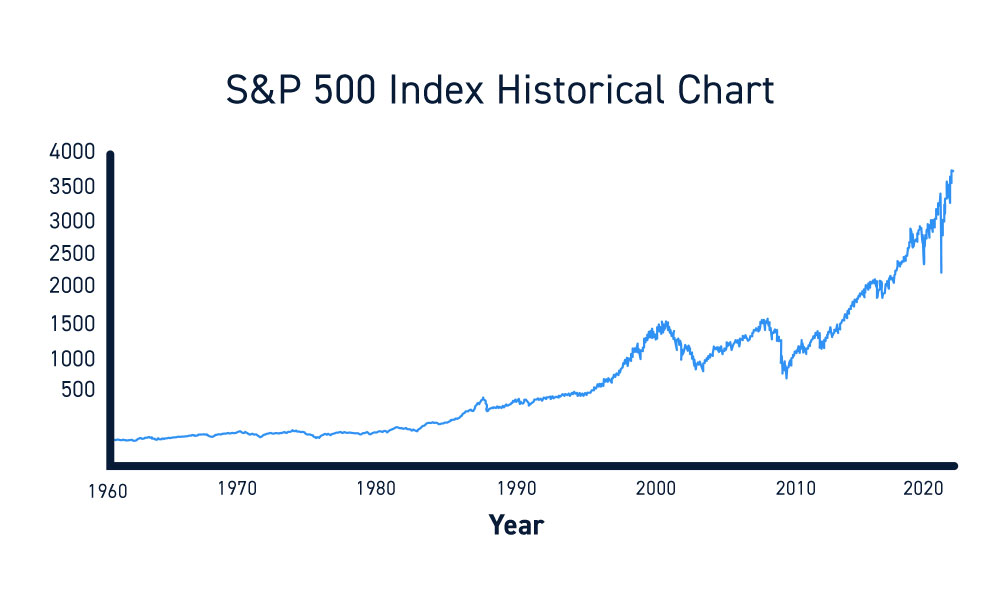
Historically, the S&P 500 has delivered an average annual return of approximately 10% before inflation. While this does not happen every year—some years see 30% gains and others see 20% losses—the long-term trajectory has been consistently upward.

For the “Money” conscious individual, the S&P 500 is the ultimate tool for compound interest. An investment of $10,000 in an S&P 500 index fund 30 years ago, with dividends reinvested, would have grown into a sum that far outpaces inflation and most other asset classes. This historical reliability is why legendary investor Warren Buffett has famously recommended that the average investor should simply buy a low-cost S&P 500 index fund and hold it for decades.
How to Invest: Practical Vehicles for Wealth Building
You cannot “buy” the S&P 500 index itself because it is merely a mathematical calculation. Instead, you must invest in a financial product that replicates the index’s holdings. This is primarily done through Index Funds or Exchange-Traded Funds (ETFs).
Index Funds vs. ETFs
Both vehicles aim to mirror the S&P 500, but they operate differently. S&P 500 Index Mutual Funds are typically purchased through a fund provider (like Vanguard or Fidelity) and trade only once a day at the closing price. They are excellent for automatic, recurring investments.
ETFs, on the other hand, trade like individual stocks on an exchange throughout the day. Popular tickers include SPY (the oldest ETF), IVV (BlackRock’s offering), and VOO (Vanguard’s offering). For most retail investors, ETFs are preferred due to their high liquidity and tax efficiency. They allow you to enter and exit positions at any time during market hours, providing flexibility that traditional mutual funds lack.
The Importance of Expense Ratios
When choosing an S&P 500 investment vehicle, the most critical number to look at—besides the ticker symbol—is the expense ratio. This is the annual fee the fund manager charges to maintain the fund. Because the S&P 500 is a “passive” index, it requires very little management. Therefore, you should never pay a high fee for it. Top-tier ETFs like VOO or IVV have expense ratios as low as 0.03%. This means for every $10,000 invested, you pay only $3 per year in fees. In the world of finance, where fees can often erode 1–2% of your wealth annually, the low-cost nature of S&P 500 funds is a massive advantage for the long-term saver.
Risks, Realities, and Market Volatility
Despite its reputation as a “safe” bet for long-term growth, the S&P 500 is not without risk. It is an equity-based investment, meaning it is subject to the whims of the economic cycle, geopolitical events, and investor psychology.
Concentration Risk in the Modern Era
A growing concern among financial analysts is the increasing concentration of the S&P 500. As of recently, a handful of mega-cap technology companies (often referred to as the “Magnificent Seven”) make up nearly 30% of the entire index’s value. While these companies are highly profitable, their dominance means the index is less diversified than it was 20 years ago. If the tech sector experiences a massive bubble burst, the S&P 500 will fall sharply, regardless of how well the other 493 companies are performing. This “concentration risk” is something every investor must monitor.
Emotional Resilience and the Long Game
The biggest risk to an S&P 500 investor isn’t the market—it’s the investor’s own behavior. During a market correction (a 10% drop) or a bear market (a 20% drop), the headlines often turn catastrophic. History shows that those who panic and sell their S&P 500 holdings during these periods lock in their losses and miss the inevitable recovery. Understanding that the S&P 500 is a volatile, short-term instrument but a reliable, long-term wealth builder is the psychological shift required for financial success.
Conclusion: The Gold Standard of Wealth Creation
The S&P 500 is more than just a list of stocks; it is a reflection of human progress, innovation, and the resilience of the global economy. By capturing the performance of the world’s most successful corporations, it provides a transparent and accessible way for anyone with a brokerage account to participate in the growth of the private sector.
For those focused on personal finance and building a secure future, the S&P 500 offers a compelling proposition: professional-grade diversification, historically high returns, and incredibly low costs. While it is not immune to the fluctuations of the market, its century-long track record suggests that for the patient investor, it remains the most effective engine for building generational wealth ever created. Whether you are saving for retirement, a child’s education, or financial independence, the S&P 500 is the benchmark against which all your other financial decisions should be measured.
aViewFromTheCave is a participant in the Amazon Services LLC Associates Program, an affiliate advertising program designed to provide a means for sites to earn advertising fees by advertising and linking to Amazon.com. Amazon, the Amazon logo, AmazonSupply, and the AmazonSupply logo are trademarks of Amazon.com, Inc. or its affiliates. As an Amazon Associate we earn affiliate commissions from qualifying purchases.