
In the rapidly evolving landscape of technology, language often struggles to keep pace with innovation. We find ourselves amidst a sea of “big words”—complex terminology and polysyllabic jargon that can feel like a barrier to entry for the uninitiated. However, these terms are more than just buzzwords; they represent the foundational concepts, architectural shifts, and ethical frameworks that define our digital era.
To navigate the current technological revolution, one must understand the lexicon that drives it. From the intricacies of neural networks to the defensive postures of modern cybersecurity, the “big words” of tech provide a roadmap for where we are headed. This article deconstructs the essential terminology within the tech sector, moving beyond the surface to explore the deep-seated trends they represent.
The Linguistic Architecture of Artificial Intelligence
Artificial Intelligence (AI) is perhaps the most significant generator of new technical vocabulary in the 21st century. As Large Language Models (LLMs) become ubiquitous, the “big words” associated with them describe not just how they function, but how they think and learn.
Parameters and Hyperparameters
In the context of machine learning, “parameters” are the internal variables that the model learns from the training data. If you imagine an AI as a massive biological brain, the parameters are akin to the strength of the synaptic connections between neurons. When we hear about models with trillions of parameters, we are discussing the model’s capacity for complexity and its ability to recognize nuanced patterns. “Hyperparameters,” conversely, are the configuration settings used to tune the learning process itself—the external levers pulled by data scientists to ensure the model converges on the right solutions efficiently.
Stochastic Parrots and Probabilistic Modeling
A term that has gained significant traction in academic and ethical circles is “stochastic parrots.” This phrase describes the tendency of large language models to mirror the patterns of their training data without a true semantic understanding of the content. They are “stochastic” because their outputs are based on probability—predicting the next likely word in a sequence—and “parrots” because they mimic human language without conscious thought. Understanding this “big word” is crucial for managing expectations regarding AI’s “reasoning” capabilities.
Multimodality and Cross-Platform Integration
Moving beyond text-only interfaces, “multimodality” refers to the ability of a single AI system to process and generate multiple types of data simultaneously—including text, images, audio, and video. A multimodal model can “see” a photograph and “write” a descriptive poem about it, or “listen” to a lecture and “render” an infographic. This represents a shift toward more holistic, human-like digital assistants that can interact with the world through various sensory inputs.
Decrypting the Infrastructure of the Modern Web
While AI captures the headlines, the underlying infrastructure of the internet is undergoing a silent but profound transformation. The “big words” here describe how data is stored, shared, and moved across the globe.
Decentralization and Distributed Ledgers
For decades, the web has been “centralized,” meaning data lives on servers owned by a few massive corporations. “Decentralization” is the architectural move away from these single points of failure. This is facilitated by “Distributed Ledger Technology” (DLT), where a database is consensually shared and synchronized across multiple sites, institutions, or geographies. This is the bedrock of blockchain and Web3, promising a future where users have greater sovereignty over their digital identities and assets.
Interoperability and API Ecosystems
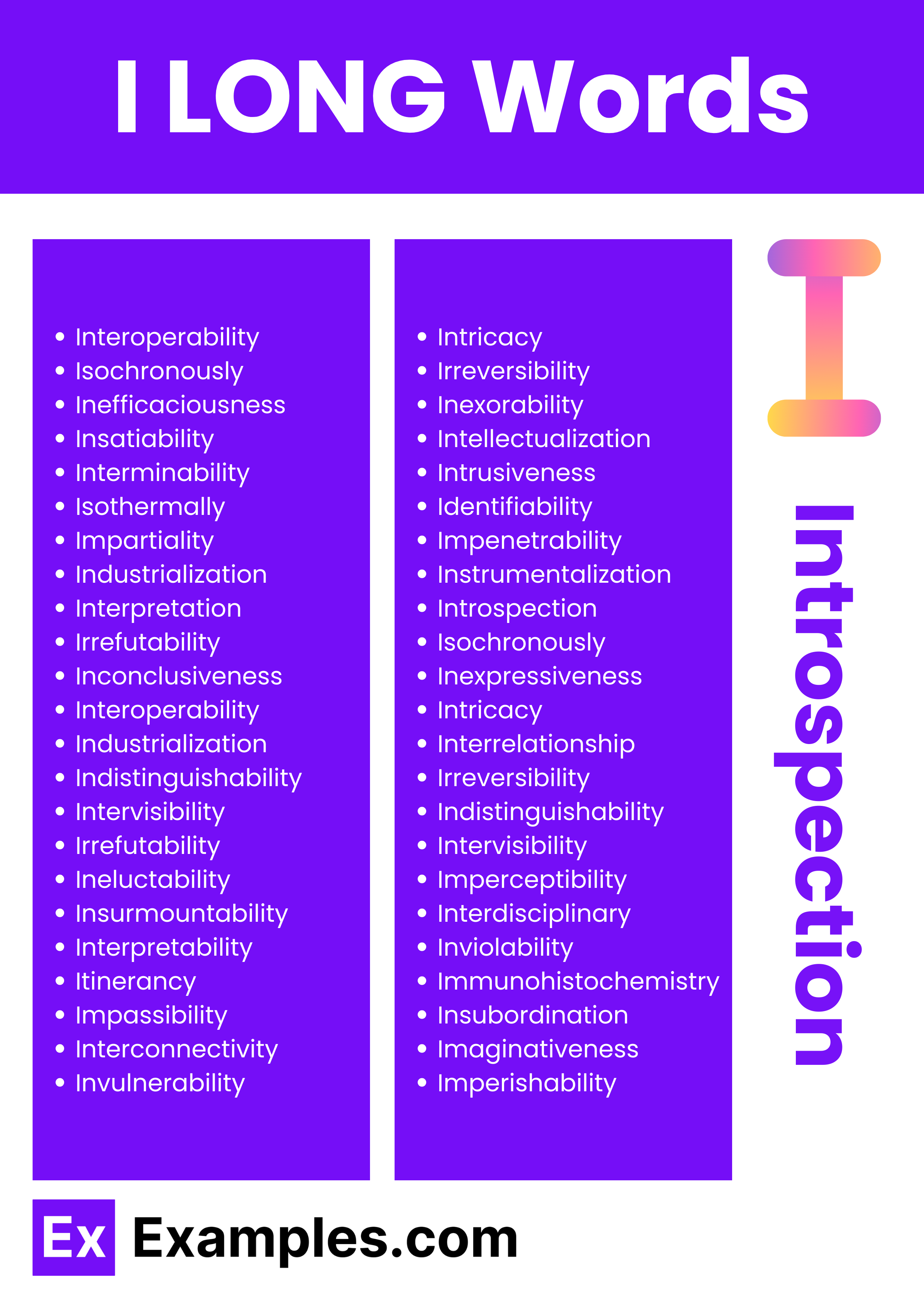
“Interoperability” is a mouthful of a word that carries immense weight in software development. It refers to the ability of different systems, devices, or applications to communicate and exchange data seamlessly. This is primarily achieved through “Application Programming Interfaces” (APIs). In a world of fragmented software solutions, a high degree of interoperability is the difference between a streamlined workflow and a collection of “data silos” that cannot talk to one another.
Edge Computing and Latency Reduction
As we move toward a world of autonomous vehicles and real-time industrial automation, “latency”—the delay before a transfer of data begins following an instruction—becomes a critical bottleneck. “Edge Computing” is the solution. Rather than sending data all the way to a centralized cloud server (which could be thousands of miles away), data is processed at the “edge” of the network, closer to the source (such as a local sensor or a 5G tower). This reduces the physical distance data must travel, enabling near-instantaneous response times.
The Lexicon of Digital Security and Privacy
As our lives migrate further into the digital realm, the stakes for security have never been higher. The vocabulary of cybersecurity has evolved from simple firewalls to complex, proactive defense strategies.
Zero-Trust Architecture (ZTA)
The traditional security model was the “castle and moat” approach: once you were inside the network, you were trusted. “Zero-Trust Architecture” flips this script. Its core philosophy is “never trust, always verify.” Regardless of whether a user is inside or outside the corporate network, every access request must be fully authenticated, authorized, and encrypted. This is a vital shift in an era where remote work and cloud services have dissolved the traditional perimeter.
End-to-End Encryption (E2EE) and Quantum Resistance
“End-to-End Encryption” ensures that only the communicating users can read the messages. Not even the service provider or an intervening ISP can access the data. However, a new “big word” is emerging on the horizon: “Quantum Resistance.” With the advent of quantum computers, traditional encryption methods may soon be easily cracked. Quantum-resistant (or post-quantum) cryptography involves developing mathematical algorithms that are secure against the immense processing power of future quantum machines.
Obfuscation and Data Anonymization
To protect user privacy while still allowing for data analysis, tech companies employ “obfuscation” and “data anonymization.” Obfuscation is the practice of making code or data intentionally difficult for humans (and hackers) to understand, while still allowing the machine to execute it. Data anonymization involves removing or modifying “Personally Identifiable Information” (PII) so that data sets can be studied for trends without compromising the privacy of individual users.
Emerging Trends: From Buzzwords to Breakthroughs
The tech industry is notorious for producing “buzzwords” that eventually mature into revolutionary technologies. Understanding these terms allows professionals to distinguish between hype and genuine utility.
Digital Twins and Industrial Simulation
A “Digital Twin” is a virtual representation that serves as the real-time digital counterpart of a physical object or process. Used heavily in manufacturing and urban planning, digital twins allow engineers to run simulations and predict failures before they happen in the physical world. If a jet engine has a digital twin, sensors on the physical engine feed data to the digital version, allowing for “predictive maintenance” that saves millions in repair costs and prevents accidents.
Neuromorphic Computing
Traditional computers use the von Neumann architecture, which separates processing from memory. “Neuromorphic Computing,” however, seeks to mimic the physical structure of the human brain. These chips are designed to process information in a way that is far more energy-efficient and adept at pattern recognition than standard CPUs. This represents a “big word” in the hardware space that could redefine the physical limits of AI.
The Ethical Framework: Explainability (XAI)
As AI systems make more decisions—from approving bank loans to diagnosing diseases—the “black box” nature of these models becomes a liability. “Explainability,” or “Explainable AI” (XAI), refers to methods and techniques in the application of artificial intelligence such that the results of the solution can be understood by human experts. It is the move away from “the computer said so” toward a transparent process where the logic behind an AI’s output is visible and auditable.
Conclusion: The Power of Precise Language
While “big words” in technology can often feel alienating, they serve a vital purpose. They allow us to categorize complex phenomena, standardize our approaches to global problems, and communicate the nuances of innovation with precision.
In the tech sector, vocabulary is not just about communication; it is about conceptualization. When we name a trend—whether it be “multimodality” or “zero-trust”—we give ourselves the tools to build, secure, and regulate it. For the modern professional, staying fluent in this evolving lexicon is not merely a matter of sounding smart; it is an essential requirement for participating in the digital transformation that is reshaping our world. By mastering these big words, we demystify the tools of the future and gain the clarity needed to navigate an increasingly complex technological landscape.
aViewFromTheCave is a participant in the Amazon Services LLC Associates Program, an affiliate advertising program designed to provide a means for sites to earn advertising fees by advertising and linking to Amazon.com. Amazon, the Amazon logo, AmazonSupply, and the AmazonSupply logo are trademarks of Amazon.com, Inc. or its affiliates. As an Amazon Associate we earn affiliate commissions from qualifying purchases.