
In the vast landscape of personal finance and investment, few terms are as fundamental yet often misunderstood as “shares.” For many, the stock market appears as a complex, intimidating entity, shrouded in jargon and unpredictable movements. Yet, at its core, understanding shares is the first crucial step towards demystifying the world of investing and potentially building long-term wealth.
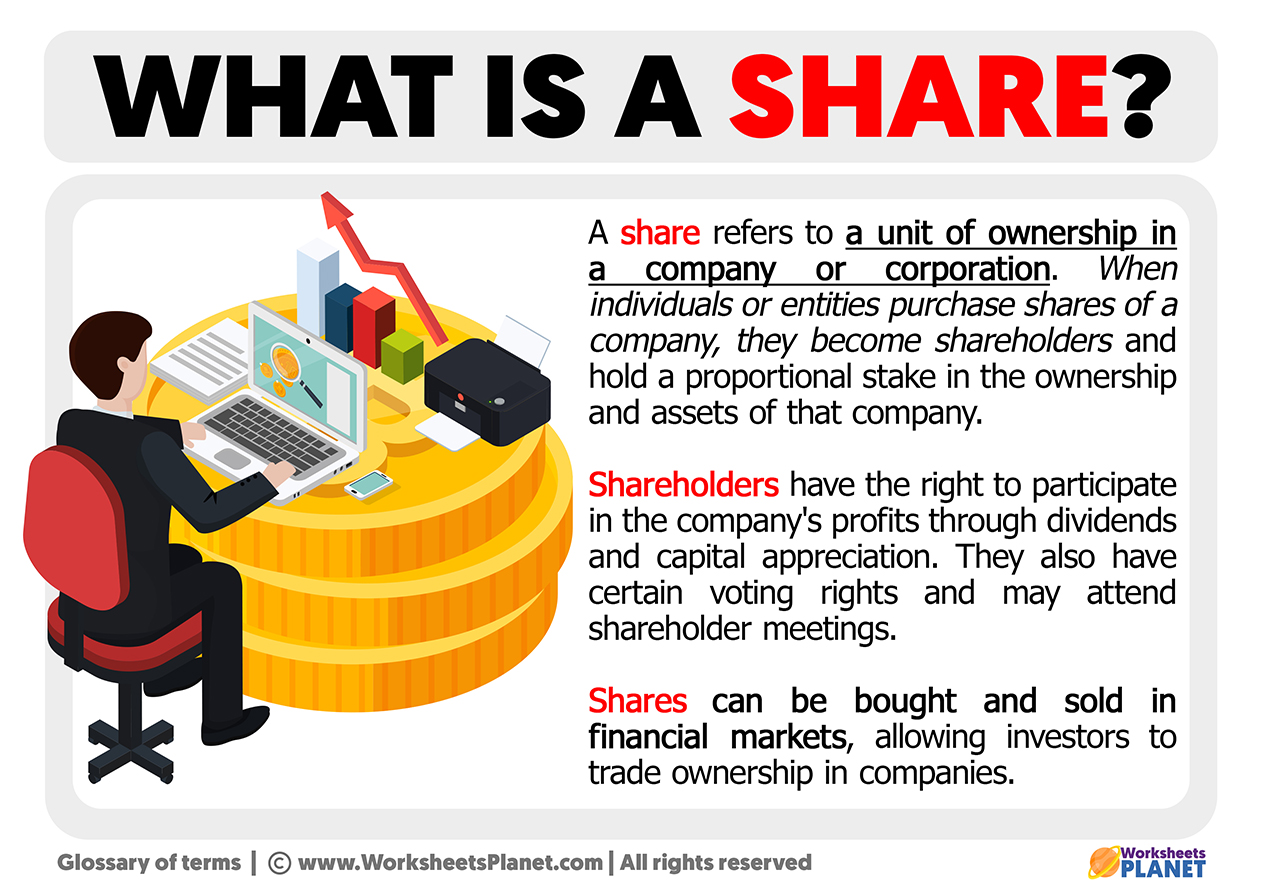
Shares, also commonly referred to as stocks or equities, represent units of ownership in a company. When you buy a share, you are essentially purchasing a tiny fraction of that company. This act transforms you from a mere consumer or observer into a part-owner, with all the inherent rights and responsibilities, albeit on a very small scale, that come with it. This article will delve into the intricacies of what shares are, why companies issue them, the different types available, how they are traded, and the crucial benefits and risks associated with investing in them. By the end, you should have a clearer, more confident grasp of this cornerstone of the financial world.
Understanding Shares: A Stake in Corporate Ownership
At the heart of the capital markets lies the concept of fractional ownership. Shares are the instruments that facilitate this, allowing individuals and institutions to own a piece of profitable enterprises. This fundamental understanding is critical for anyone looking to engage with the stock market.
The Essence of Equity
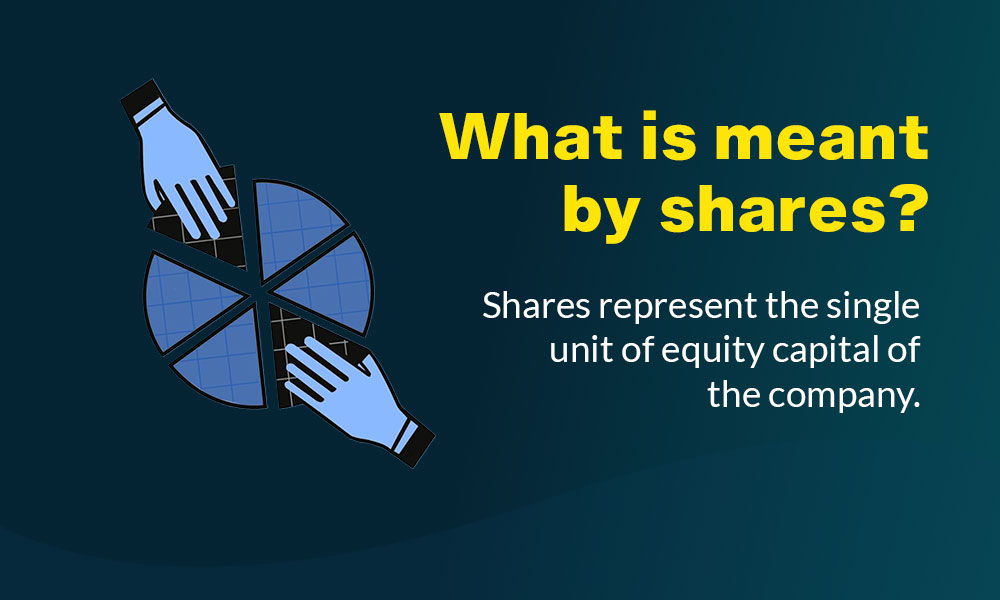
Equity is another term for ownership, and a share is a single unit of that ownership. When a company decides to go public, it divides its total ownership into millions or even billions of these individual units. Each share represents a claim on a portion of the company’s assets and earnings. For instance, if a company has 100 million shares outstanding and you own 1,000 of them, you own 0.001% of that company. This fractional ownership grants you certain rights, most notably the potential to benefit from the company’s success. As the company grows, increases its profits, and expands its market reach, the value of its shares typically increases, leading to capital appreciation for its owners.
Public vs. Private Companies
It’s important to distinguish between public and private companies in the context of shares. Private companies are owned by a small group of individuals, often the founders, their families, or private equity investors. Their shares are not traded on public exchanges and are generally not accessible to the average investor. Public companies, on the other hand, have sold a portion of their ownership to the general public through shares. These shares are listed on stock exchanges (like the New York Stock Exchange or NASDAQ) and can be bought and sold by anyone with a brokerage account. It is these publicly traded shares that most people refer to when discussing stock market investing. The ability to buy and sell these shares easily provides liquidity, making them an attractive investment vehicle.
Fractional Ownership Explained
The concept of fractional ownership is powerful because it democratizes investment. Instead of needing to buy an entire company, which would be prohibitively expensive for most, individuals can purchase small, manageable portions. This allows investors to diversify their portfolios across numerous companies and industries, spreading risk and capturing growth opportunities from a wide array of businesses. Furthermore, while the ownership is fractional, the collective power of shareholders is significant, especially through voting rights on critical company matters, which brings us to the distinction between common and preferred shares later on.
Why Companies Issue Shares: Capital Formation and Growth
For companies, issuing shares is a strategic move, primarily driven by the need to raise capital. This capital is the lifeblood that fuels innovation, expansion, and long-term sustainability. Understanding this corporate motivation sheds light on the very existence and function of the stock market.
Funding Operations and Expansion
The most compelling reason for a company to issue shares is to raise significant amounts of capital without incurring debt. When a private company decides to “go public” through an Initial Public Offering (IPO), it sells new shares to the public for the first time. The proceeds from this sale go directly to the company. This fresh infusion of capital can be used for various purposes: funding research and development for new products, expanding into new markets, acquiring other companies, paying off existing debts, or simply increasing working capital for day-to-day operations. Unlike taking out a loan, which requires regular interest payments regardless of company performance, issuing shares does not create a debt obligation. Investors only profit if the company succeeds, aligning their interests with the company’s long-term growth.
Spreading Ownership and Risk
By issuing shares, a company effectively spreads its ownership among many investors. While this means the original founders and early investors dilute their percentage of ownership, it also disperses the financial risk. Instead of a few individuals bearing all the financial burden of the company’s ventures, a broad base of shareholders shares both the potential rewards and the potential downsides. This distribution of risk makes larger, more ambitious projects feasible, as no single entity has to shoulder the full financial weight. It also allows companies to tap into a vast pool of capital that would be inaccessible otherwise.
The Role of the Primary Market (IPOs)
The initial sale of shares by a company to the public takes place in what is known as the primary market, most notably through an Initial Public Offering (IPO). During an IPO, investment banks help the company determine the offering price and market the shares to institutional investors and, sometimes, to retail investors. Once these shares are sold, the company receives the capital, and the shares then begin trading on a stock exchange in the secondary market. The IPO is a monumental event for a company, signifying its transition from a private entity to a public one, subject to greater scrutiny and regulation but also gaining access to unprecedented funding opportunities. Beyond IPOs, companies can also issue additional shares later on through “secondary offerings” or “follow-on offerings” to raise more capital for further growth.
Navigating the Types of Shares: Common vs. Preferred Stock
While the general concept of a “share” implies ownership, the financial world offers different categories of shares, each with distinct characteristics regarding rights, returns, and risks. The two primary types are common stock and preferred stock, and understanding their differences is crucial for any investor.
Common Stock: The Voice of the Investor
Common stock is the most prevalent type of share and what most people refer to when they talk about “stocks.” As an owner of common stock, you typically receive voting rights. This means you can vote on key corporate matters, such as electing the board of directors, approving mergers, or making significant changes to company policy. While individual retail investors’ votes might seem insignificant, collectively, common shareholders hold the power to influence company direction.
The primary benefit of common stock is its potential for capital appreciation. As the company grows and its profitability improves, the market value of its common shares can increase significantly, allowing investors to sell their shares for a profit. Common shareholders may also receive dividends, which are portions of the company’s profits distributed to shareholders. However, dividends are not guaranteed and are paid at the discretion of the company’s board of directors. Common stock also carries more risk and volatility; its value fluctuates more directly with the company’s performance and market sentiment. In the event of bankruptcy or liquidation, common shareholders are the last in line to receive any remaining assets, after bondholders and preferred shareholders.
Preferred Stock: Stability and Priority

Preferred stock, as its name suggests, offers certain preferences over common stock. The most significant of these is priority in receiving dividends and, in the event of liquidation, priority in receiving assets. Preferred shareholders typically receive a fixed dividend payment, much like interest on a bond, and this payment must be made before any dividends can be distributed to common shareholders. If a company misses a dividend payment, preferred shareholders often have a cumulative feature, meaning they are owed all missed payments before common shareholders receive anything.
However, preferred stock usually does not carry voting rights. This means preferred shareholders have no say in the company’s management or strategic decisions. While preferred stock generally offers more stable income through fixed dividends, its potential for capital appreciation is typically lower than common stock. Its price tends to be less volatile and behaves more like a bond, making it attractive to investors seeking income and stability rather than aggressive growth.
Beyond the Basics: Different Classes of Shares
Some companies issue multiple classes of common stock. For example, a company might issue Class A common stock and Class B common stock. These classes typically differ in their voting rights. Often, Class A shares might have one vote per share, while Class B shares (often held by founders or insiders) might have ten votes per share, allowing original stakeholders to maintain control even if they own a smaller percentage of the total equity. While less common for retail investors, it’s important to be aware that not all shares are created equal even within the “common stock” umbrella, and careful examination of a company’s share structure is always advisable.
The Mechanics of Share Trading: How the Market Works
Once shares are issued, they become tradable assets. The ability to buy and sell these shares efficiently is what defines the dynamism of the stock market. This process primarily occurs in the secondary market, facilitated by sophisticated infrastructure and a network of financial intermediaries.
The Secondary Market: Exchanges and Brokers
After shares are initially sold by a company in the primary market (e.g., via an IPO), they are then bought and sold among investors on the secondary market. This is where the vast majority of daily stock trading takes place. Stock exchanges, such as the New York Stock Exchange (NYSE), NASDAQ, London Stock Exchange (LSE), or Tokyo Stock Exchange (TSE), are the organized marketplaces where these transactions occur. These exchanges provide the infrastructure and regulatory oversight to ensure fair and orderly trading.
For individual investors, access to these exchanges is provided through brokerage firms. A brokerage firm (e.g., Fidelity, Charles Schwab, Robinhood) acts as an intermediary, executing buy and sell orders on behalf of its clients. When you place an order to buy or sell shares, your broker sends that order to the relevant exchange, where it is matched with an opposing order from another investor. The advent of online brokerage platforms has made share trading more accessible and affordable than ever before, enabling individual investors to manage their own portfolios with relative ease.
Supply and Demand: Driving Share Prices
The price of a share on the secondary market is determined by the fundamental economic principles of supply and demand. If more investors want to buy a particular share than sell it (high demand, low supply), its price will tend to rise. Conversely, if more investors want to sell a share than buy it (low demand, high supply), its price will tend to fall. This constant interplay of buying and selling orders, influenced by news, company performance, economic data, industry trends, and investor sentiment, causes share prices to fluctuate throughout the trading day.
A company’s market capitalization, often abbreviated as “market cap,” is a key metric calculated by multiplying the current share price by the total number of outstanding shares. This figure represents the total market value of the company and is a common way to classify companies (e.g., large-cap, mid-cap, small-cap).
Key Market Metrics and Indices
To track the overall performance of the stock market or specific segments, investors rely on stock market indices. An index is a hypothetical portfolio of investment holdings that represents a segment of the financial market. Prominent examples include the S&P 500 (representing 500 large U.S. companies), the Dow Jones Industrial Average (DJIA), and the NASDAQ Composite. These indices are not investments themselves but serve as benchmarks to gauge market health and investor returns. For instance, if the S&P 500 is up, it generally indicates that large U.S. companies, on average, are performing well. Understanding these metrics helps investors put individual share performance into broader market context.
The Investor’s Perspective: Rewards, Risks, and Responsible Investing
Investing in shares can be a powerful avenue for wealth creation, but it is not without its perils. A balanced understanding of both the potential rewards and inherent risks is essential for making informed investment decisions and fostering a responsible approach to building a portfolio.
Potential Returns: Capital Gains and Dividends
The allure of share investing primarily stems from two potential avenues for returns:
- Capital Appreciation (Capital Gains): This is the profit you make when you sell shares for a higher price than you paid for them. If you buy shares at $50 and sell them at $75, you realize a capital gain of $25 per share. Over the long term, successful companies tend to grow their earnings and assets, which often translates into higher share prices.
- Dividends: As discussed, some companies distribute a portion of their profits to shareholders in the form of dividends. These are typically paid quarterly and can provide a regular income stream, particularly appealing to retirees or income-focused investors. Reinvesting dividends (using them to buy more shares) is a powerful strategy to compound returns over time.
Historically, equities have outperformed most other asset classes over the long run, making them a cornerstone of many successful investment strategies.
Inherent Risks: Volatility and Loss
Despite the potential for attractive returns, share investing carries significant risks:
- Market Volatility: Share prices can fluctuate wildly in the short term due to economic news, geopolitical events, company-specific announcements, or shifts in investor sentiment. What goes up can come down, sometimes dramatically and unexpectedly.
- Loss of Capital: It is entirely possible to lose money when investing in shares. If a company performs poorly, its share price can fall, and if it goes bankrupt, investors could lose their entire investment. Unlike bank deposits, shares are not typically insured.
- Company-Specific Risks: Beyond broad market movements, individual companies face specific risks, such as management issues, competitive threats, technological obsolescence, regulatory changes, or product failures.
- Inflation Risk: While shares can hedge against inflation, if returns fail to keep pace with rising prices, the purchasing power of your investment could erode.
Strategic Investing: Research and Diversification
Responsible investing in shares involves mitigating risks through strategic approaches:
- Thorough Research (Due Diligence): Before investing, thoroughly research the company. Understand its business model, financial health (revenue, profit, debt), management team, competitive landscape, and future prospects. Don’t invest in what you don’t understand.
- Diversification: This is perhaps the most crucial risk management strategy. Instead of putting all your money into one company or even one industry, spread your investments across various companies, sectors, and geographical regions. If one investment underperforms, others may compensate, reducing the overall impact on your portfolio.
- Long-Term Horizon: Historically, the stock market has trended upwards over extended periods, despite short-term downturns. Adopting a long-term investment horizon (e.g., 5-10+ years) allows your investments time to recover from volatility and benefit from the power of compounding.
Getting Started: A Practical Pathway
For those new to share investing, the path typically begins with setting clear financial goals and understanding your personal risk tolerance. This helps determine how much to invest and which types of companies or investment vehicles (like individual stocks, exchange-traded funds (ETFs) that hold baskets of stocks, or mutual funds) are appropriate. Next, open a brokerage account with a reputable firm. Start by investing amounts you are comfortable with and continue to educate yourself. Begin with broad-market ETFs or mutual funds if individual stock picking seems too daunting, as they offer immediate diversification. Consistency, patience, and a commitment to continuous learning are the hallmarks of a successful share investor.
In conclusion, shares are more than just numbers on a screen; they are direct ownership stakes in the companies that drive our global economy. Understanding their fundamental nature, the reasons for their existence, their different forms, and the dynamics of their trading empowers individuals to participate thoughtfully in financial markets. While opportunities for growth abound, a mindful approach, underscored by diligent research and strategic diversification, is paramount to harnessing the full potential of share investing.
aViewFromTheCave is a participant in the Amazon Services LLC Associates Program, an affiliate advertising program designed to provide a means for sites to earn advertising fees by advertising and linking to Amazon.com. Amazon, the Amazon logo, AmazonSupply, and the AmazonSupply logo are trademarks of Amazon.com, Inc. or its affiliates. As an Amazon Associate we earn affiliate commissions from qualifying purchases.