
The share market, often referred to interchangeably as the stock market, represents one of the most powerful engines for wealth creation in the modern financial era. At its core, the share market is a centralized platform where buyers and sellers congregate to trade ownership stakes in publicly listed companies. For the individual investor, it offers a gateway to participate in the growth of global corporations, ranging from emerging tech startups to established multinational conglomerates. Understanding the share market is not merely about tracking price movements; it is about comprehending the fundamental mechanics of capital, the psychology of valuation, and the strategic deployment of assets to achieve long-term financial independence.
Understanding the Foundations: How the Share Market Operates
To navigate the complexities of the financial world, one must first understand what a “share” actually represents. When a company decides to expand—perhaps to build new factories, develop innovative software, or enter international markets—it requires significant capital. Instead of taking on massive debt through bank loans, the company may choose to “go public” by issuing shares. Each share represents a unit of ownership. When you purchase a share, you become a partial owner (a shareholder) of that corporation, entitling you to a portion of its assets and earnings.
The Lifecycle of a Stock: Primary vs. Secondary Markets
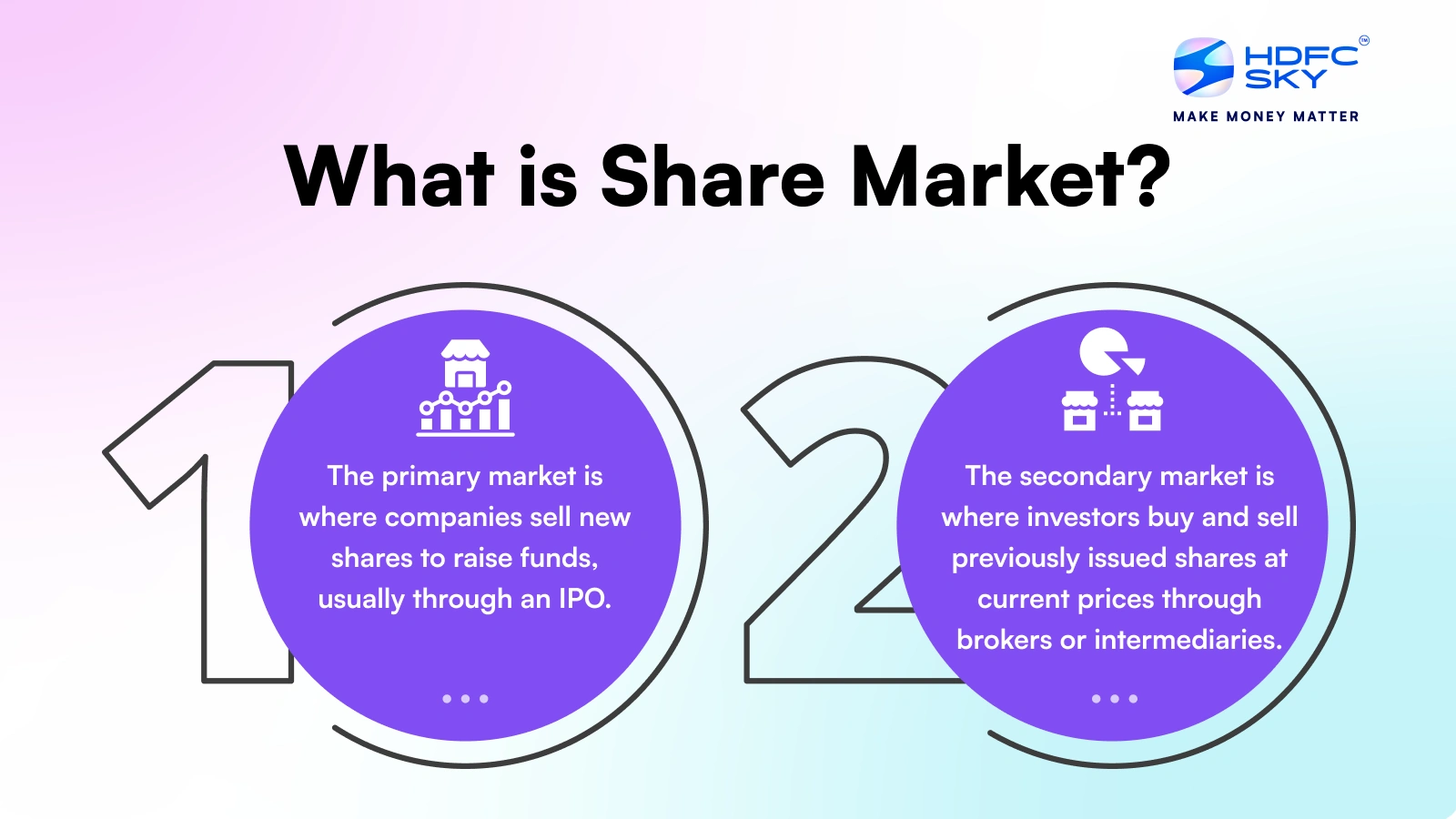
The journey of a stock begins in the primary market through an Initial Public Offering (IPO). This is the first time a private company sells its shares to the general public. In this phase, the money paid by investors goes directly to the company to fund its growth initiatives. Once the IPO is complete and the shares are issued, they begin trading on the secondary market.
The secondary market is what most people refer to when they talk about “the share market.” Here, investors trade shares among themselves. If you buy shares of a tech giant today, you are likely buying them from another investor who wants to sell, rather than from the company itself. The price is determined by the laws of supply and demand, influenced by the company’s performance, economic conditions, and investor sentiment.
The Role of Stock Exchanges and Regulators
Stock exchanges, such as the New York Stock Exchange (NYSE), the Nasdaq, or the London Stock Exchange, act as the facilitated infrastructure for these trades. They provide a regulated environment that ensures transparency, liquidity, and fair pricing. In the digital age, these exchanges operate through sophisticated electronic networks that process millions of transactions per second.
Overseeing these exchanges are regulatory bodies—such as the Securities and Exchange Commission (SEC) in the United States. These organizations enforce rules designed to protect investors from fraud, ensure that companies provide accurate financial disclosures, and maintain the overall integrity of the financial system.
Why Invest in the Share Market? The Power of Compounding and Growth
While the share market is often associated with volatility, its historical performance has consistently outpaced traditional savings accounts and fixed-income instruments over the long term. For those looking to build significant wealth, the share market provides three primary avenues for profit: capital appreciation, dividend income, and the geometric growth provided by compounding.
Capital Appreciation and Beating Inflation
The most common way to profit in the share market is through capital appreciation—buying a stock at a lower price and selling it at a higher price. As a company grows its revenue, expands its market share, and improves its profitability, the intrinsic value of the business increases, which is eventually reflected in its stock price.
Crucially, investing in shares is a vital hedge against inflation. Inflation erodes the purchasing power of cash over time. Because companies can often raise prices for their goods and services as costs rise, their earnings—and consequently their stock prices—tend to keep pace with or exceed the rate of inflation, preserving the investor’s real wealth.
The Role of Dividends and Passive Income
Not all companies reinvest all their profits back into the business. Mature, profitable companies often distribute a portion of their earnings back to shareholders in the form of dividends. For the investor, dividends represent a steady stream of passive income. Many seasoned investors focus on “Dividend Aristocrats”—companies that have a long history of not only paying dividends but increasing them annually. By reinvesting these dividends to purchase more shares, an investor can significantly accelerate the growth of their portfolio without contributing additional capital.
The Magic of Compounding
Compounding is often described as the “eighth wonder of the world.” In the context of the share market, compounding occurs when the returns on your investments (both capital gains and reinvested dividends) begin to generate their own returns. Over a period of twenty or thirty years, the effect of compounding is exponential. A relatively small initial investment can grow into a substantial fortune, provided the investor remains disciplined and allows the “snowball effect” to take place over several market cycles.
Key Participants and Investment Instruments

The share market is a diverse ecosystem populated by various types of investors and a wide array of financial instruments. Understanding who participates and what products are available is essential for tailoring an investment strategy to one’s personal financial goals.
Retail vs. Institutional Investors
Retail investors are individual people who trade shares for their personal accounts. With the advent of zero-commission trading apps, retail participation has reached record highs. Institutional investors, on the other hand, are large organizations like mutual funds, pension funds, insurance companies, and hedge funds. These entities manage billions of dollars and often have access to high-level research and high-frequency trading technology. While institutional investors often drive market trends due to their sheer volume, retail investors have the advantage of agility and the ability to focus on long-term value without the pressure of quarterly reporting to clients.
Common Stocks vs. Preferred Stocks
When entering the market, it is important to distinguish between types of equity. Common stock is the most prevalent form. It offers potential for high capital growth and usually comes with voting rights at shareholder meetings. However, in the event of bankruptcy, common stockholders are last in line to receive any remaining assets. Preferred stock behaves somewhat like a hybrid between a stock and a bond. It typically pays a fixed dividend and has a higher claim on assets than common stock, but it usually offers less potential for price appreciation and does not carry voting rights.
Understanding Market Indices
An index is a statistical measure that tracks the performance of a specific group of stocks, acting as a barometer for the overall market or a specific sector. For example, the S&P 500 tracks 500 of the largest publicly traded companies in the U.S., while the Dow Jones Industrial Average (DJIA) follows 30 major blue-chip corporations. Investors use indices to gauge market health and as benchmarks to see if their personal portfolios are “beating the market.”
Navigating Risk and Market Volatility
Investing in the share market is not without risk. Prices can fluctuate wildly based on geopolitical events, economic shifts, or poor corporate management. However, risk is not something to be feared, but rather something to be managed through strategic planning and emotional discipline.
Diversification: The Only Free Lunch
One of the most effective ways to mitigate risk is through diversification. This involves spreading your investments across different companies, industries, and geographic regions. If you invest all your money in a single tech company and that company fails, you lose everything. However, if you hold a basket of fifty companies across technology, healthcare, energy, and consumer goods, a decline in one sector is often offset by stability or growth in another.
Fundamental vs. Technical Analysis
To determine which shares to buy, investors generally use two methodologies. Fundamental analysis involves looking at the “inner workings” of a company—its earnings reports, balance sheets, management quality, and competitive advantages. The goal is to find “undervalued” companies that are trading for less than their true worth.
Technical analysis, conversely, focuses on market action. Technical analysts study historical price charts and volume data to identify patterns and trends. While fundamental analysis is typically used for long-term investing, technical analysis is more common among short-term traders looking to capitalize on price momentum.
The Psychology of Investing
Perhaps the greatest challenge in the share market is managing one’s own emotions. The market is driven by two primary forces: fear and greed. During a “Bull Market,” when prices are rising, greed can lead investors to take on excessive risk. During a “Bear Market,” when prices fall, fear often drives investors to sell at the bottom, locking in losses. Successful investors maintain a “long-term horizon,” understanding that volatility is a natural part of the journey. They view market downturns as opportunities to buy high-quality assets at a discount rather than as a reason to panic.
Getting Started: A Step-by-Step Approach
For a beginner, the share market can seem intimidating, but the process of starting has never been more accessible. The key is to begin with a clear plan and a commitment to continuous learning.
Choosing a Brokerage and Account Type
The first step is opening a brokerage account. Modern platforms offer user-friendly interfaces, educational resources, and the ability to buy fractional shares (allowing you to buy $10 worth of an expensive stock). It is also important to consider the type of account—such as a standard taxable brokerage account or a tax-advantaged retirement account like an IRA or 401(k), which can provide significant tax savings over time.
Developing an Investment Policy Statement
Before placing your first trade, define your goals. Are you investing for retirement thirty years away, or are you saving for a down payment on a house in five years? Your timeline will dictate your “risk tolerance.” A younger investor can afford to hold more aggressive growth stocks because they have time to recover from market dips, whereas someone nearing retirement may prefer stable, dividend-paying stocks and bonds.

Continuous Education and Execution
The share market is a dynamic entity that evolves with technology and global shifts. Staying informed by reading financial news, following corporate earnings reports, and understanding macroeconomic trends like interest rate changes is crucial. However, the most important step is simply to start. By consistently investing a portion of your income—a strategy known as dollar-cost averaging—you remove the need to “time the market” and begin the process of building a portfolio that can provide financial security for decades to come.
In conclusion, the share market is a sophisticated system of capital allocation that rewards patience, research, and discipline. While it requires a high degree of responsibility, it remains the most effective tool available to the public for capturing the value created by human innovation and industrial progress. By mastering its principles, an individual can transform from a mere consumer in the economy to a part-owner of the global engines of production.
aViewFromTheCave is a participant in the Amazon Services LLC Associates Program, an affiliate advertising program designed to provide a means for sites to earn advertising fees by advertising and linking to Amazon.com. Amazon, the Amazon logo, AmazonSupply, and the AmazonSupply logo are trademarks of Amazon.com, Inc. or its affiliates. As an Amazon Associate we earn affiliate commissions from qualifying purchases.