
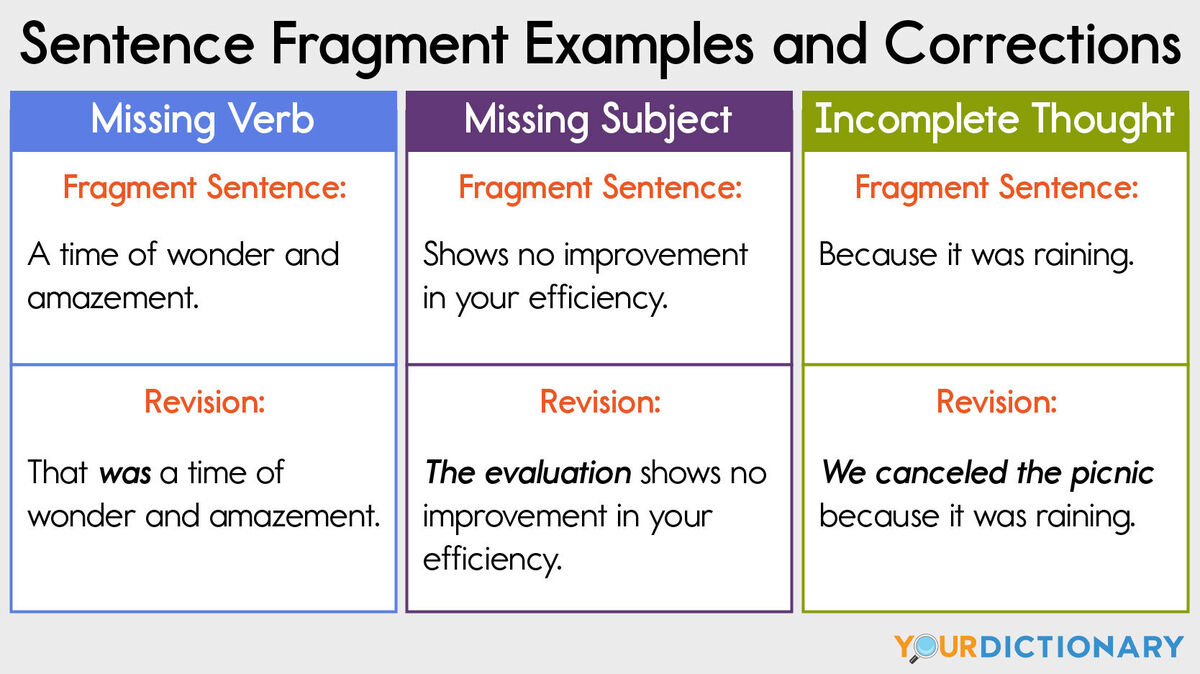
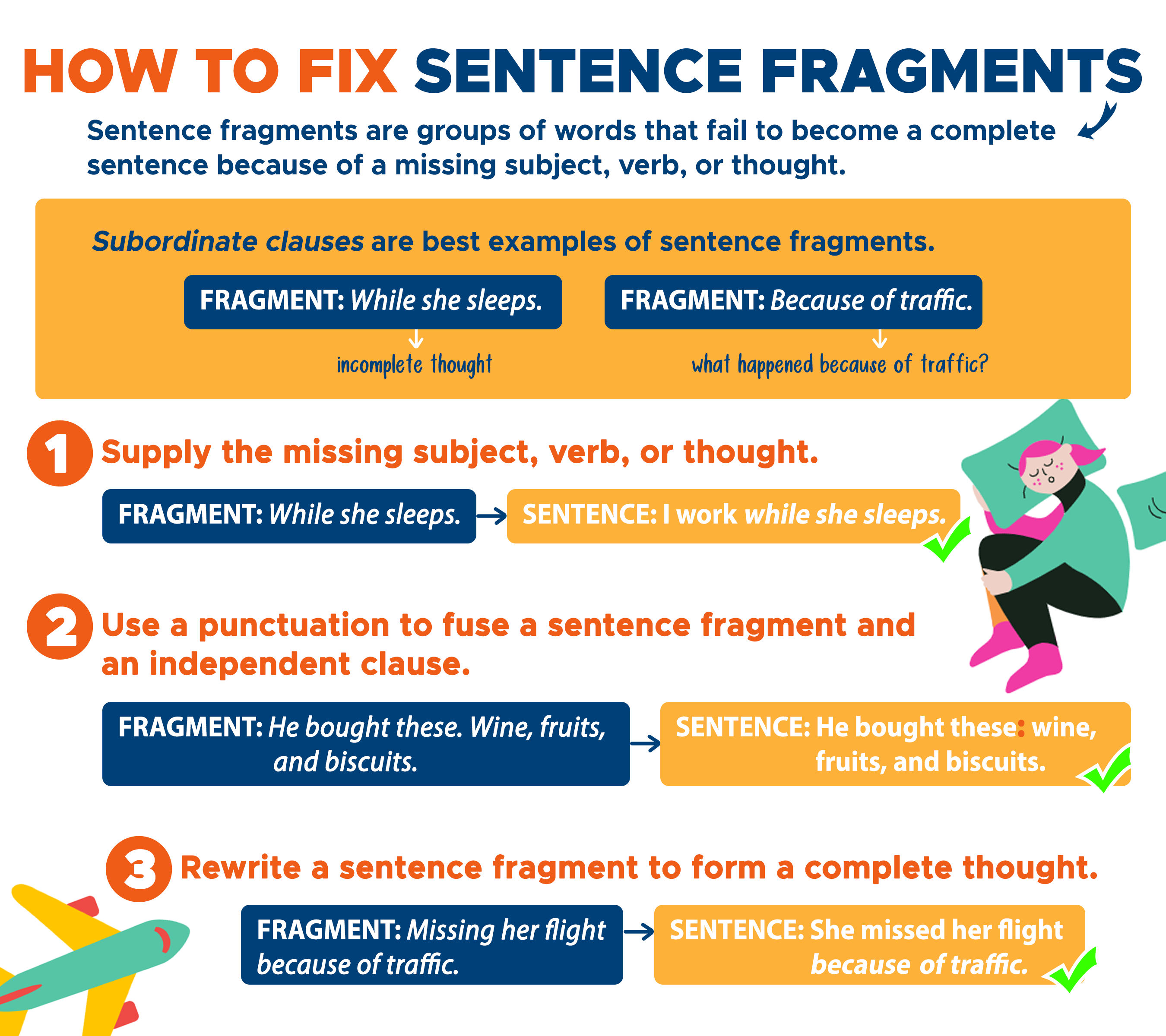
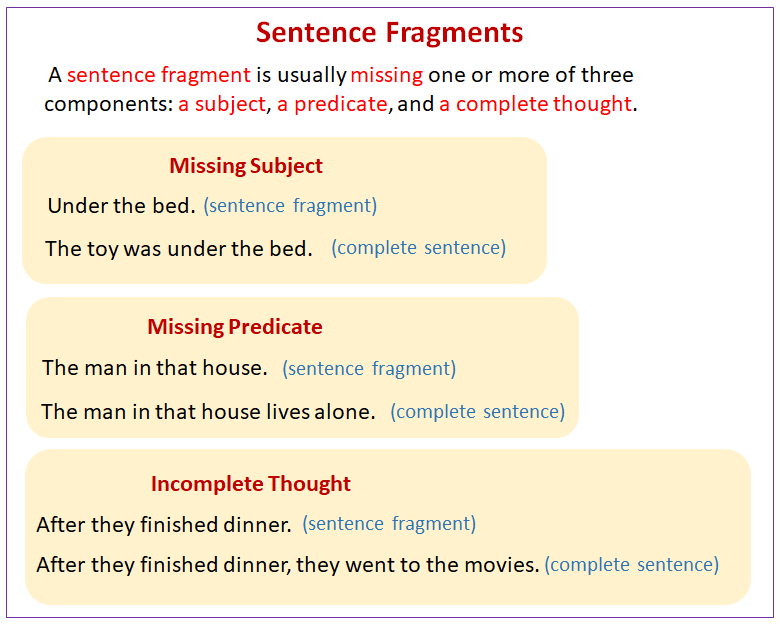
In the traditional study of linguistics, a sentence fragment is often viewed as a failure of syntax—a grammatical “error” where a group of words fails to express a complete thought because it lacks a subject, a verb, or a finished idea. However, in the rapidly evolving landscape of technology, particularly within the realms of Natural Language Processing (NLP), Artificial Intelligence (AI), and User Interface (UI) design, the “sentence fragment” has evolved from a mistake to a critical data point.
As we move toward a world dominated by conversational AI and semantic search, understanding what constitutes a sentence fragment—and how machines interpret them—is no longer just a task for English teachers. It is a fundamental challenge for software engineers, data scientists, and technical communicators. This article explores the technical dimensions of sentence fragments, their role in machine learning, and how they define the modern digital experience.
The Linguistic Architecture of Natural Language Processing
To understand how technology treats a sentence fragment, we must first look at how computers “read.” Unlike humans, who use intuition and context to fill in the blanks, software relies on structured parsing. In the early days of computational linguistics, sentence fragments were the “noise” that broke the system. Today, they are the signal.
How Machines Parse Human “Incompleteness”
Natural Language Processing (NLP) utilizes various models to break down human speech into machine-readable formats. When an AI encounters a sentence fragment—such as “Looking for data…”—it performs what is known as dependency parsing. In a complete sentence, the parser identifies a clear root (usually the main verb) and its dependencies (the subject and object).
In a fragment, the parser may find a “floating” participle or a noun phrase without a predicate. Modern AI tools, powered by Transformer architectures, use “Attention Mechanisms” to look at surrounding text to determine what is missing. If a user types a fragment into a tech support bot, the AI doesn’t reject it as ungrammatical; it uses probabilistic logic to infer the missing subject, transforming a fragment into a functional command.
The Role of Syntax Trees in Identifying Fragments
For developers building grammar-checking software or AI editors, identifying a fragment requires the construction of a syntax tree. A syntax tree is a hierarchical representation of the structure of a sentence. In tech-driven editing tools, the algorithm looks for the “S” node (the Sentence node). If the tree terminates without satisfying the requirements of an “S” node—for example, if it only contains a Prepositional Phrase (PP) or a Noun Phrase (NP)—the system flags it as a fragment. This technological capability allows software to provide real-time feedback to writers, ensuring clarity in technical documentation and professional communication.
Sentence Fragments in Human-Computer Interaction (HCI)
In the niche of technology, brevity is often a requirement rather than a flaw. This is most evident in how we interact with hardware and software interfaces. From the “Submit” button on a web app to the truncated notifications on a smartwatch, the tech industry relies heavily on functional fragments.
Conversational AI and the Art of the Short Prompt
The rise of Large Language Models (LLMs) like GPT-4 and Claude has changed our relationship with sentence fragments. When prompting an AI, users rarely speak in perfect, academic sentences. We use fragments: “More examples,” “Make it shorter,” or “Code for a Python loop.”
This “fragmented prompting” is a feature of efficient Human-Computer Interaction (HCI). Developers must optimize these models to recognize “intent” over “syntax.” If a model required a perfectly structured sentence to function, it would fail the user experience (UX) test. Therefore, in the world of AI tools, the sentence fragment is the primary unit of command. The tech must be robust enough to understand that “Summarize this” (an imperative fragment) is a complete instruction in a digital context.
Micro-copy and UI/UX: Where Fragments are Features, Not Bugs
In software development, “micro-copy” refers to the small bits of text that guide users through an application. Think of error messages (“Invalid password”), tooltips (“Click to expand”), or loading states (“Fetching results…”). These are all sentence fragments.
From a technical design perspective, these fragments are superior to full sentences because they reduce cognitive load. A mobile app developer knows that a user’s attention is a scarce resource. By using high-impact fragments, developers can convey complex technical status updates in a fraction of the screen space. The “fragment” here is a deliberate design choice aimed at maximizing digital efficiency and accessibility.
Technical Challenges: Training LLMs to Understand Contextual Fragments
One of the greatest hurdles in digital security and software engineering is the “ambiguity of fragments.” While a human might understand a fragment based on social cues, a machine must rely on training data.
Overcoming the “Incomplete Thought” Bias in Data Sets
Large Language Models are trained on massive datasets like Common Crawl, which contains billions of pages from the internet. This data is messy and filled with sentence fragments—titles, list items, and social media posts. Early AI models struggled with this, often hallucinating missing information because they were biased toward “completeness.”
To solve this, engineers use “masked language modeling.” By intentionally hiding parts of a sentence during the training phase, the model learns to predict what should come next, effectively learning how to “repair” fragments. This technology is what allows your smartphone’s auto-complete feature to suggest the next word even when you’ve only typed a fragmented thought. It is the science of teaching a machine to anticipate the end of an incomplete idea.
Contextual Embeddings: Filling the Gaps in Fragmented Data
In data science, we use “embeddings” to represent words as vectors in a multi-dimensional space. Sentence fragments present a unique challenge for vectorization because their meaning is almost entirely dependent on what came before them.
For instance, the fragment “Not now” means something very different in a digital security context (denying a permission request) than it does in a messaging app. Tech companies utilize “Contextual Embeddings” to solve this. These models analyze the metadata surrounding the fragment—the user’s previous action, the specific page they are on, and even their geographic location—to assign a precise mathematical value to the fragment. This ensures that the software reacts correctly to an incomplete input.
The Future of Semantic Search and Fragment Optimization
The most significant technological impact of sentence fragments is felt in the world of search engines and SEO (Search Engine Optimization). We no longer search the web using the “Dewey Decimal” style of keywords; we search using fragments of natural language.
Google’s BERT and the Shift Toward Natural Language Fragments
In 2019, Google introduced BERT (Bidirectional Encoder Representations from Transformers), a revolutionary update designed to better understand the nuances of language. Before BERT, search engines often ignored “stop words” and fragments, focusing only on the “big” nouns.
Now, the technology is sophisticated enough to understand that the fragment “to Brazil” in the query “traveler from USA to Brazil” is the most important part of the sentence. This shift represents a move toward “Semantic Search,” where the technology parses the relationship between fragments to provide a single, accurate answer rather than a list of vaguely related links. For developers and digital marketers, this means that “fragment optimization”—making sure content answers the specific, fragmented questions people ask—is the new frontier of the web.
Voice Search: Why Fragments are the New Keyword Goldmine
With the ubiquity of smart speakers and voice assistants, the way we input data has become even more fragmented. When we speak, we are naturally less formal than when we type. We ask: “Siri, nearest gas station?” This is a classic sentence fragment.
The underlying technology for voice search relies on Automatic Speech Recognition (ASR) to turn those sound waves into text fragments, which are then processed by an NLP engine. As voice-to-text technology becomes more accurate, the tech industry is shifting its focus away from “Keywords” and toward “Key-fragments.” This change is influencing everything from how websites are coded (using Schema markup to identify fragments) to how AI-driven customer service bots are programmed to listen.
Conclusion
What are sentence fragments in the world of technology? They are far more than just grammatical errors. In the context of NLP, AI development, and UI design, sentence fragments are the building blocks of efficient communication. They represent the bridge between rigid machine logic and the fluid, often “incomplete” nature of human thought.
As we continue to advance into an era of more intuitive AI tools and seamless digital security, the ability of our software to handle, interpret, and generate fragments will be a hallmark of its sophistication. Whether it is a developer writing micro-copy for a new app, a data scientist training an LLM to understand intent, or a search engine parsing a voice command, the fragment is a vital tool in the modern tech stack. By embracing the fragment, technology is finally learning to speak our language—one incomplete thought at a time.
aViewFromTheCave is a participant in the Amazon Services LLC Associates Program, an affiliate advertising program designed to provide a means for sites to earn advertising fees by advertising and linking to Amazon.com. Amazon, the Amazon logo, AmazonSupply, and the AmazonSupply logo are trademarks of Amazon.com, Inc. or its affiliates. As an Amazon Associate we earn affiliate commissions from qualifying purchases.