
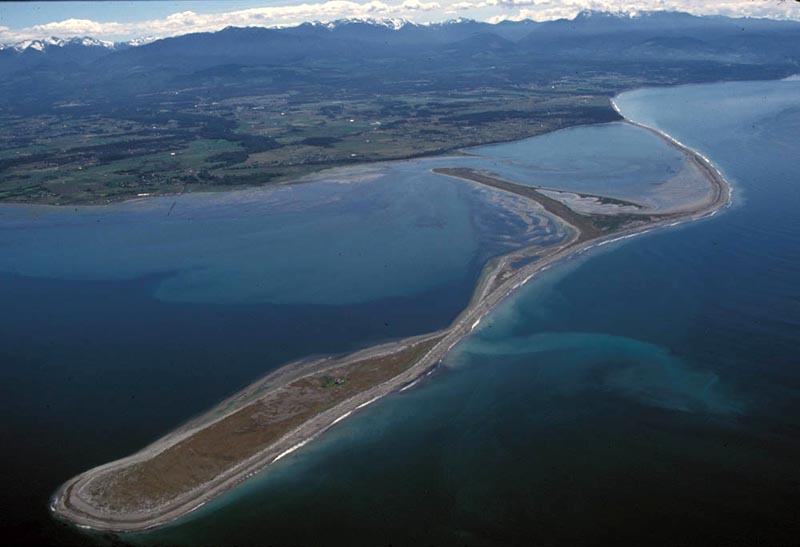
In the world of high-stakes real estate and infrastructure investment, geography is more than just a backdrop—it is the fundamental driver of asset valuation. Among the most complex and dynamic geographical features for investors to navigate are sand spits. A sand spit is a linear accumulation of sand and shingle that extends from the mainland into the sea or across a bay, typically formed by the process of longshore drift. While a geologist might see a fascinating study in sediment transport, a savvy investor sees something else: a high-reward, high-risk landform that represents some of the most sought-after—and volatile—real estate on the planet.
Understanding what sand spits are and how they behave is essential for anyone involved in coastal development, hospitality management, or large-scale personal finance. Because these landforms are essentially “land in motion,” they present unique challenges for wealth preservation and capital growth.
The Financial Anatomy of a Sand Spit
To understand the economic potential of a sand spit, one must first understand the mechanics of its creation. From a financial perspective, a sand spit is an emergent asset. It is land that is literally being built by the ocean’s natural processes.
Defining Sand Spits in an Economic Context
Geographically, a spit begins where the coastline changes direction, such as at a headland or the mouth of an estuary. Waves hitting the shore at an angle carry sediment along the coast (longshore drift). When the coastline turns, the water loses energy and drops its sediment, gradually building a narrow “finger” of land. For an investor, this represents the creation of new littoral acreage.
In many jurisdictions, the legal status of newly formed land can be complex. Investors must consider “accretion” laws—whereby a landowner may gain title to land gradually added by the sea—versus “avulsion,” where sudden changes do not necessarily shift property lines. The economic value of a sand spit lies in its exclusivity; these are often thin strips of land with water access on both sides, making them prime locations for luxury residential compounds or premium resort brands.
Natural Asset Appreciation vs. Depreciation
Unlike solid bedrock, a sand spit is a transient asset. It can grow (progradation) or shrink (erosion) depending on storm frequency, current patterns, and human intervention. This makes the valuation of sand spit properties highly sensitive to time. An investment made on the “growing” end of a spit can see massive appreciation as new land is formed, effectively increasing the square footage of a parcel. Conversely, properties on the “neck” of a spit are subject to narrowing, which can lead to the total loss of capital if the spit breaches and becomes an island.
Investment Opportunities in Accretion Zones
Despite the inherent volatility, the financial allure of sand spits is undeniable. Some of the most expensive zip codes in the world, from the Hamptons in New York to the prestigious Sandbanks in the United Kingdom, are built on these geologically active formations.
Tourism and Hospitality Potential
The primary economic engine of sand spits is the luxury tourism sector. Because spits create a sheltered “lee” side (often featuring calm lagoons or marshes) and a high-energy “seaward” side (featuring beaches), they allow developers to offer two distinct aquatic experiences in one location.
For commercial real estate investors, this dual-nature allows for diversified revenue streams. A resort on a sand spit can host high-end surfing and water sports on the ocean side while operating a private marina and tranquil spa on the bay side. The scarcity of such geographical layouts drives up the Average Daily Rate (ADR) for hospitality assets, often allowing for a faster Return on Investment (ROI) despite higher initial construction costs.
Exclusive Residential Development on Barrier Landforms
For personal finance and private wealth management, sand spit properties are often viewed as “trophy assets.” These properties hold their value not just through utility, but through extreme scarcity. Because environmental regulations now strictly limit new construction on coastal landforms, existing residential titles on sand spits have become gold-standard investments.
However, the “Money” aspect of these residences extends beyond the purchase price. Investors must calculate the “carrying cost” of such assets, which includes specialized architectural engineering, salt-air mitigation, and the potential for private beach nourishment projects to protect the shoreline.
Risk Management and the Cost of Volatility
Investing in a sand spit is fundamentally a play on environmental stability. In the era of climate change and rising sea levels, the risk profile of these assets has shifted significantly, requiring a more sophisticated approach to due diligence.

Longshore Drift: The Invisible Architect of Wealth and Loss
Longshore drift is the conveyor belt of the coastal economy. If a neighboring municipality builds a groin or a jetty “up-drift” from a sand spit, they may inadvertently cut off the sediment supply that maintains the spit. This is a classic “external risk” in business finance.
When the sediment supply is choked, the spit begins to “starve,” leading to rapid erosion. Investors must look beyond their own property lines to the broader regional coastal management strategy. A failure to account for regional engineering can result in an asset that literally washes away within a decade.
Insurance Premium Implications for Sand-Based Infrastructure
One of the most significant hurdles in financing sand spit developments is the rising cost of insurance. Actuarial models are increasingly aggressive in pricing the risk of “overwash”—where storm surges push water entirely across the spit.
In many regions, traditional insurers are retreating from these zones, forcing owners into high-cost “surplus lines” or state-backed FAIR plans. For a multi-million dollar asset, insurance premiums can represent a significant percentage of annual operating expenses, directly impacting the Net Operating Income (NOI). Smart money in this space often utilizes “Parametric Insurance,” which pays out based on the intensity of a storm event rather than a traditional damage assessment, providing faster liquidity for repairs.
Environmental Regulations and Litigation Risks
The intersection of private property rights and public environmental protection is nowhere more contentious than on sand spits. This creates a unique landscape of legal risk for the coastal investor.
Zoning and Permitting Challenges in Evolving Landscapes
Because sand spits are often home to fragile ecosystems, including dunes and nesting grounds for migratory birds, they are heavily regulated. For a developer, the “Entitlement” phase of a project on a sand spit can be a multi-year, million-dollar endeavor.
Investors must be wary of “regulatory takings,” where new environmental laws might prevent any further development or even the repair of existing structures. The financial viability of a sand spit project often hinges on the ability to secure “hardened” permits that allow for sea walls or revetments, though many modern jurisdictions are moving toward “soft” solutions like dune restoration, which may be less effective in protecting capital-intensive buildings.
Sustainable ROI: Integrating Conservation with Profit
There is a growing trend in “Blue Finance”—investing in coastal assets that integrate conservation. For sand spits, this means that the most profitable long-term strategy may be one that prioritizes the health of the dune system.
Healthy dunes act as natural capital, providing a buffer against storm damage and reducing the need for expensive artificial renourishment. Investors who bake environmental stewardship into their business models can often access “Green Bonds” or ESG-focused capital, which may offer more favorable terms than traditional commercial lending for coastal projects.
The Future of Coastal Portfolios
As we look toward the mid-21st century, the approach to sand spit investment is evolving from a “buy and hold” strategy to a “dynamic management” strategy. The ability to predict how these landforms will move is becoming a key competitive advantage in the real estate market.
Predictive Analytics in Coastal Real Estate
The integration of technology and finance is changing how sand spits are valued. Institutional investors are now using satellite-based bathymetry and AI-driven erosion models to forecast the lifespan of a spit.
If a model suggests a spit is stable for the next 30 years but faces a 70% chance of breaching in 50 years, the investment thesis changes from a generational legacy hold to a mid-term “yield play.” Understanding the data behind the geography allows investors to time their exit strategies before the physical risk translates into a market-wide price correction.

Strategic Diversification in Dynamic Environments
The ultimate lesson for the coastal investor is that sand spits are high-beta assets. They provide outsized returns when the market is up and the weather is calm, but they are the first to suffer in a downturn or a climate event.
Strategic wealth management requires that sand spit assets be balanced with more stable, inland “core” holdings. For those who can navigate the complexities of longshore drift, insurance hurdles, and regulatory shifts, sand spits remain some of the most lucrative opportunities in the global property market. They are a testament to the fact that in finance, as in nature, the highest rewards often go to those who understand the fluid dynamics of the world around them.
aViewFromTheCave is a participant in the Amazon Services LLC Associates Program, an affiliate advertising program designed to provide a means for sites to earn advertising fees by advertising and linking to Amazon.com. Amazon, the Amazon logo, AmazonSupply, and the AmazonSupply logo are trademarks of Amazon.com, Inc. or its affiliates. As an Amazon Associate we earn affiliate commissions from qualifying purchases.