
Since their debut in 2000, the Sacagawea “Golden Dollar” has occupied a unique space in American numismatics and personal finance. While the United States Mint originally intended for these coins to replace the one-dollar paper bill in daily transactions, they instead became a favorite among collectors and niche investors. For the average person holding a handful of these gold-colored coins, the primary question is simple: Are they worth more than their face value?
The answer is multifaceted. While most Sacagawea dollars in circulation are worth exactly one dollar, specific rare varieties, minting errors, and high-grade specimens can fetch anywhere from $20 to over $100,000. Understanding the financial landscape of these coins requires a deep dive into grading, rarity, and the specific historical anomalies that drive market demand.

Understanding the Market Value of Sacagawea Dollars
To determine the worth of a Sacagawea dollar, one must first distinguish between “spendable” currency and “numismatic” assets. In the world of personal finance, coins are often viewed as a hedge against inflation or a speculative investment, but the vast majority of these dollars remain common currency.
Circulation vs. Uncirculated Condition
If you find a Sacagawea dollar in your pocket change today, it is almost certainly a “circulation” strike. Between 2000 and 2001, the U.S. Mint produced over a billion of these coins. Because they were minted in such massive quantities, a coin that shows signs of wear—scratches, dullness, or smoothed edges—is generally worth only its face value of $1.00.
However, “uncirculated” coins—those that have never been used in trade and retain their original mint luster—occupy a different tier. Collectors are often willing to pay a premium for coins that have been preserved in “Mint State” (MS) condition. A common 2000-P Sacagawea dollar in MS-65 condition might retail for $5 to $10, representing a 500% to 1000% increase over its face value.
Proof Sets and Special Mint Finishes
The U.S. Mint also produces “Proof” versions of the Sacagawea dollar specifically for collectors. These coins are struck multiple times using polished dies, resulting in a mirror-like background and frosted foreground. Proof coins (designated as PF or PR) are typically sold in protective plastic sets. While their silver-level counterparts are highly sought after, standard manganese-brass proof Sacagawea dollars usually trade for $5 to $15, depending on the year and the quality of the “Deep Cameo” effect.
Identifying High-Value Rare Varieties and Mint Errors
For the serious investor or the lucky treasure hunter, the real financial opportunity lies in rare varieties and errors. These are coins that, due to mistakes at the mint or limited experimental runs, possess unique characteristics that make them incredibly scarce.
The “Cheerios” Dollar (2000-P Pattern)
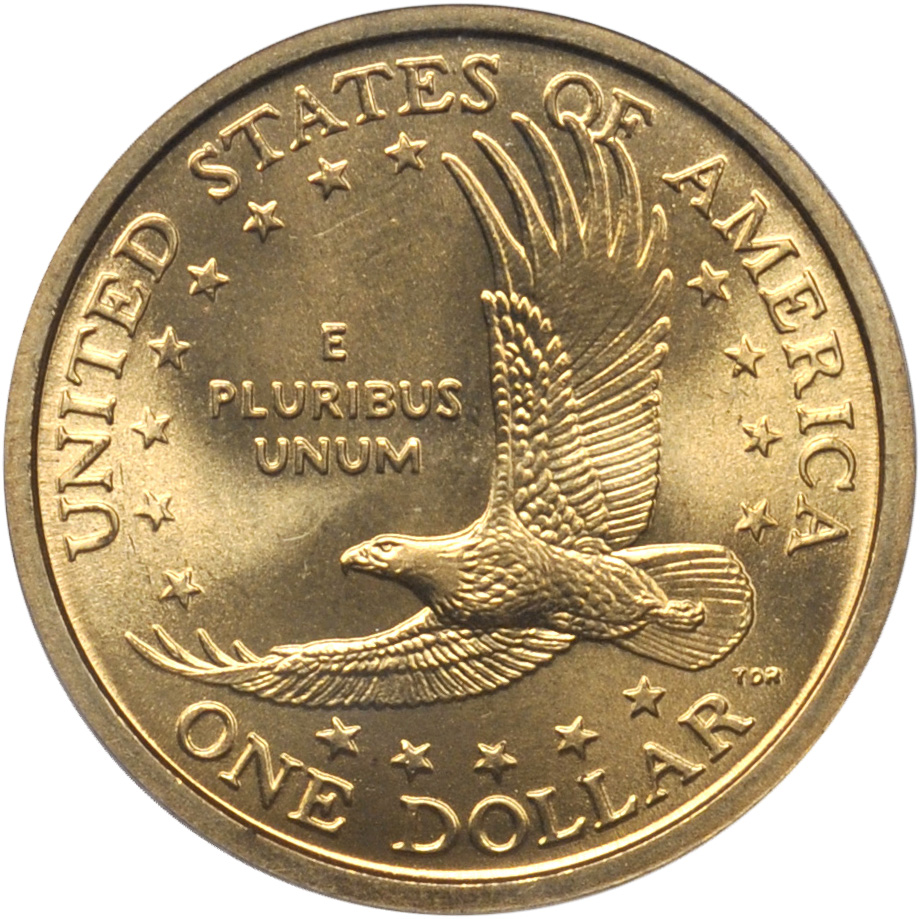
The most famous high-value Sacagawea dollar is known as the “Cheerios Dollar.” In early 2000, as part of a promotion, the U.S. Mint included 5,500 Sacagawea dollars in boxes of Cheerios cereal. Most of these were standard coins, but a small number were struck using “pattern dies” that featured enhanced detail on the eagle’s tail feathers.
If you look at the reverse of the coin and see crisp, defined veins in the tail feathers, you may be looking at a coin worth between $5,000 and $25,000. Because so many of these were likely spent by children who found them in their breakfast cereal, the surviving population of high-grade “Cheerios Dollars” is incredibly low, driving their investment value to astronomical heights.
The “Wounded Eagle” Variety
Another highly profitable variety is the 2000-P “Wounded Eagle.” This coin features a prominent die gouge that runs horizontally across the eagle’s belly, looking like a spear or an arrow piercing the bird. This was not an intentional design choice but a flaw in the minting die. Because of its visual distinctness and rarity, a “Wounded Eagle” in high grade can sell for $500 to $2,000 at auction.
The 2000-P Mule Error (Sacagawea/Quarter Hybrid)
The holy grail of modern American errors is the “Mule” dollar. A “mule” occurs when a coin is struck with the obverse (heads) die of one denomination and the reverse (tails) die of another. In the year 2000, a small number of coins were struck using a Washington Statehood Quarter obverse die and a Sacagawea Dollar reverse die.
The resulting coin is easily identifiable: it has the image of George Washington on a gold-colored dollar-sized planchet. Only about 20 of these are known to exist. These coins are legendary in the financial world of numismatics, with some specimens selling for upwards of $150,000.
Factors Influencing Long-Term Investment Potential
If you are looking at Sacagawea dollars as a part of a diversified investment portfolio, you must understand the factors that dictate price appreciation. Like any commodity, the value of a coin is driven by supply, demand, and third-party verification.
The Role of Professional Grading (PCGS and NGC)
In the coin market, “condition is king.” Two coins that look identical to the naked eye can have a price difference of thousands of dollars based on microscopic imperfections. Professional grading services, such as the Professional Coin Grading Service (PCGS) and the Numismatic Guaranty Company (NGC), provide an objective assessment of a coin’s quality on a scale from 1 to 70.
For an investor, paying for professional grading is a calculated risk. If you have a 2000-P dollar that looks absolutely flawless, getting it graded as an MS-68 or MS-69 can turn a $1 coin into a $3,000 asset. However, if the coin returns a grade of MS-64, the cost of the grading service might exceed the value of the coin itself.
Scarcity and Mintage Figures (2002–2008)
After the initial hype of 2000 and 2001, the public largely rejected the dollar coin. Consequently, from 2002 to 2008, the U.S. Mint did not produce Sacagawea dollars for general circulation. They were only produced in limited quantities for collectors and sold at a premium directly from the Mint.
Because these “NIFC” (Not Intended For Circulation) years have much lower mintage numbers (often only a few million compared to the billion in 2000), they carry a built-in scarcity. While they aren’t “get rich quick” items, they tend to hold their value better than the 2000-dated coins and represent a more stable, albeit slower-growing, investment.
The Native American $1 Coin Program (2009–Present)
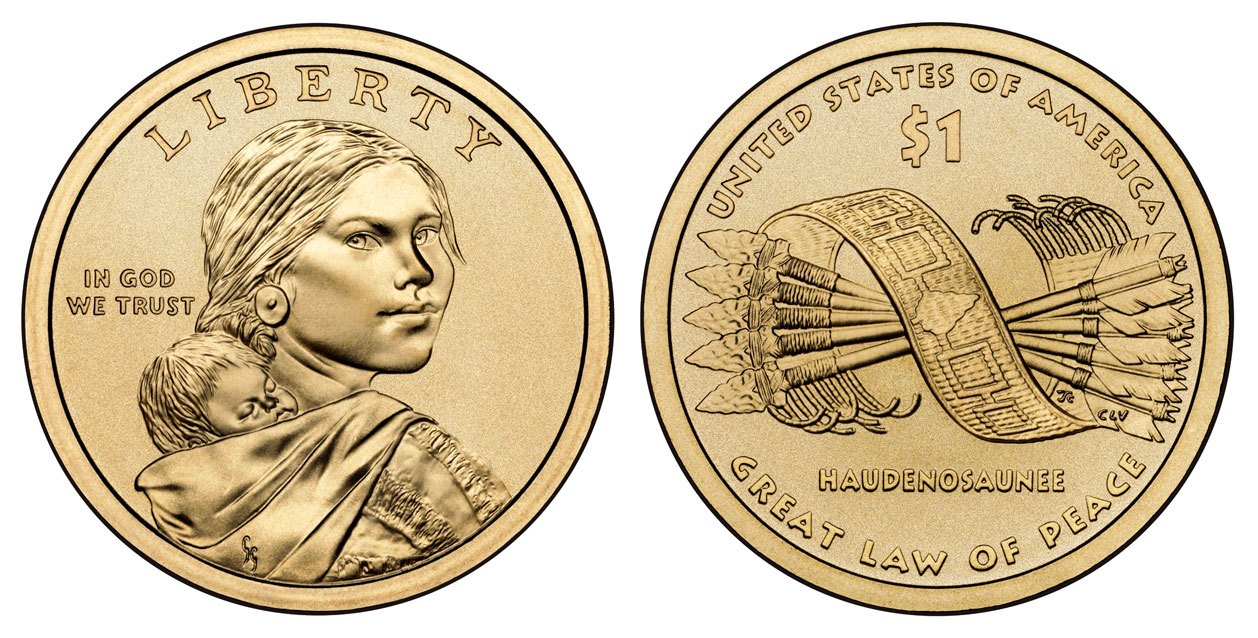
In 2009, the series evolved into the “Native American $1 Coin” program. While the obverse remains Sacagawea, the reverse design changes every year to honor different aspects of Native American history. For those looking to build a collection with future resale value, completing a “Registry Set” of these yearly variations in the highest possible grades is a popular financial strategy.
How to Liquidate and Sell for Maximum Profit
Possessing a valuable coin is only half the battle; the other half is successfully liquidating that asset at its peak market value. The venue where you choose to sell can significantly impact your net take-home pay.
Online Marketplaces vs. Professional Auction Houses
For common uncirculated coins or low-level varieties worth $20 to $100, online platforms like eBay are often the best choice. They provide access to a wide pool of buyers and lower fees than high-end houses. However, for “Cheerios Dollars” or “Mule Errors,” an investor should utilize a professional auction house like Heritage Auctions or Stacks Bowers. These venues attract high-net-worth collectors who are willing to bid aggressively for rare items, often resulting in prices far higher than what could be achieved in a private sale.
Avoiding “We Buy Gold” Shops
A common mistake for those new to the money market is taking rare coins to “Cash for Gold” or pawn shops. These businesses typically pay a percentage of the metal’s melt value or a small fraction of the coin’s face value. Since Sacagawea dollars contain no actual gold (they are composed of a copper core with a manganese-brass cladding), their “melt value” is negligible. Their value is purely numismatic. To get a fair price, always consult with a dedicated coin dealer or an authorized PCGS/NGC dealer.
Conclusion: Are Sacagawea Dollars a Good Investment?
From a personal finance perspective, Sacagawea dollars are a “high-search, high-reward” niche. For the average consumer, they are likely just a dollar. However, for those willing to educate themselves on the technical nuances of die varieties and the intricacies of the grading scale, these coins offer a fascinating entry point into the world of tangible asset investing.
Whether you are hunting for a “Cheerios Dollar” in a dusty collection or strategically purchasing graded NIFC years, the Sacagawea dollar remains a vibrant part of the American financial story. By focusing on rarity, condition, and proper certification, you can transform these “golden” coins from mere pocket change into a meaningful part of your financial portfolio.
aViewFromTheCave is a participant in the Amazon Services LLC Associates Program, an affiliate advertising program designed to provide a means for sites to earn advertising fees by advertising and linking to Amazon.com. Amazon, the Amazon logo, AmazonSupply, and the AmazonSupply logo are trademarks of Amazon.com, Inc. or its affiliates. As an Amazon Associate we earn affiliate commissions from qualifying purchases.