
In the dynamic world of business, managing finances effectively is not just a necessity; it’s a strategic imperative. From tracking every penny to projecting future growth, sound financial management is the bedrock upon which successful enterprises are built. Amidst a plethora of tools designed to aid this crucial function, one name consistently rises to the forefront: QuickBooks. Far more than mere accounting software, QuickBooks has evolved into a comprehensive ecosystem that empowers businesses of all sizes to streamline their financial operations, gain critical insights, and foster sustainable growth. This article delves into the essence of QuickBooks, exploring its core functions, diverse applications, and profound impact on modern business finance, firmly rooting our discussion within the realm of financial tools and business finance.
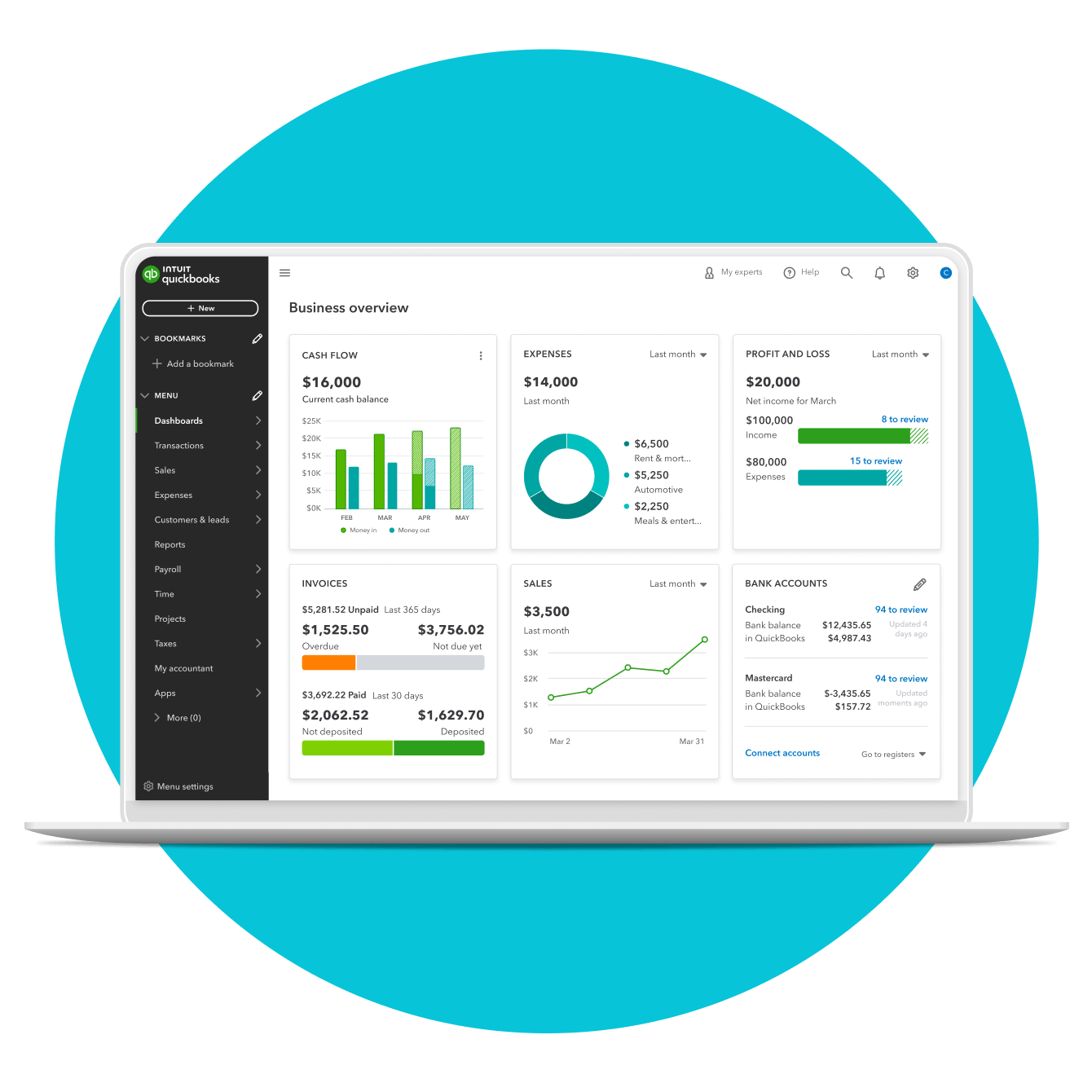
QuickBooks: The Cornerstone of Modern Business Accounting
At its heart, QuickBooks is a suite of accounting software developed and marketed by Intuit. It is meticulously designed to simplify the complex world of financial record-keeping for small and mid-sized businesses. Before the advent of sophisticated digital tools, business owners grappled with manual ledgers, stacks of paper invoices, and painstaking reconciliations—a process prone to errors, incredibly time-consuming, and often opaque. QuickBooks emerged as a transformative solution, digitizing and automating many of these traditionally cumbersome tasks, thereby democratizing robust financial management for entrepreneurs and small businesses alike.
Defining QuickBooks: More Than Just Software
To truly understand “what are QuickBooks,” one must look beyond its software classification. QuickBooks is, first and foremost, a financial management platform. It provides a centralized system where all financial transactions—from sales and purchases to payroll and tax preparations—can be recorded, organized, and analyzed. Its primary objective is to offer clarity and control over a business’s financial health, helping owners understand where their money comes from, where it goes, and what their true profitability stands at any given moment. This comprehensive approach transforms the often-dreaded task of bookkeeping into an accessible, manageable, and even insightful process.
The Evolution of Accounting: From Ledgers to Digital Dashflows
The journey of business accounting has been a long one, from ancient clay tablets to modern-day cloud computing. QuickBooks represents a significant leap in this evolution. Traditional accounting relied heavily on manual entries and ledgers, demanding specialized knowledge and considerable time. The advent of personal computers brought about the first wave of digital accounting tools, but it was QuickBooks, particularly with its user-friendly interface and focus on small business needs, that truly revolutionized the landscape.
Today, QuickBooks offers an array of versions—desktop and online—each tailored to different operational needs and preferences. The move towards cloud-based solutions (QuickBooks Online) has further enhanced its utility, offering real-time data access, collaboration features, and seamless integration with other financial and operational tools. This evolution ensures that businesses, regardless of their size or industry, have access to sophisticated financial management capabilities that were once exclusive to large corporations.
Core Financial Functions and Features for Businesses
The utility of QuickBooks stems from its comprehensive suite of financial management features. Each component is designed to address a specific financial operation, collectively offering a holistic view of a company’s monetary movements.
Streamlining Income and Expense Tracking
One of the most fundamental aspects of any business is meticulously tracking every dollar earned and spent. QuickBooks excels at this. It allows businesses to categorize expenses, link bank and credit card accounts for automatic transaction imports, and reconcile accounts with ease. This automation significantly reduces manual data entry, minimizes errors, and provides an up-to-date picture of cash flow. For businesses, knowing their exact income and outgoings is paramount for budgeting, tax preparation, and identifying areas for cost reduction.
Simplifying Invoicing and Accounts Receivable
Generating professional invoices and ensuring timely payment from clients are critical for maintaining healthy cash flow. QuickBooks simplifies the entire accounts receivable process. Users can create customized invoices, send them directly to clients via email, track their status (sent, viewed, paid), and even set up recurring invoices for subscription-based services. The system can also send automated payment reminders, significantly reducing the administrative burden and improving collection rates. This direct impact on cash inflow makes it an indispensable tool for revenue management.
Mastering Accounts Payable and Bill Management
Just as important as collecting money is managing what you owe. QuickBooks provides robust tools for accounts payable, allowing businesses to enter vendor bills, schedule payments, and track outstanding liabilities. This centralized system helps avoid late payment fees, maintains good vendor relationships, and ensures accurate recording of expenses. By managing payables effectively, businesses can optimize their cash outflows and maintain financial stability.
Payroll Management: Keeping Your Team Paid Accurately
For businesses with employees, payroll is often one of the most complex and time-sensitive financial tasks. QuickBooks offers integrated payroll services that automate calculating wages, deductions, taxes, and direct deposits. It handles federal and state tax filings, ensuring compliance and preventing costly penalties. This feature frees up significant time and resources, allowing business owners to focus on core operations rather than getting bogged down in intricate payroll calculations and compliance issues.
Leveraging QuickBooks for Deeper Financial Insight
Beyond basic bookkeeping, QuickBooks empowers businesses to transform raw financial data into actionable insights, facilitating informed decision-making and strategic planning.
Comprehensive Financial Reporting and Analytics
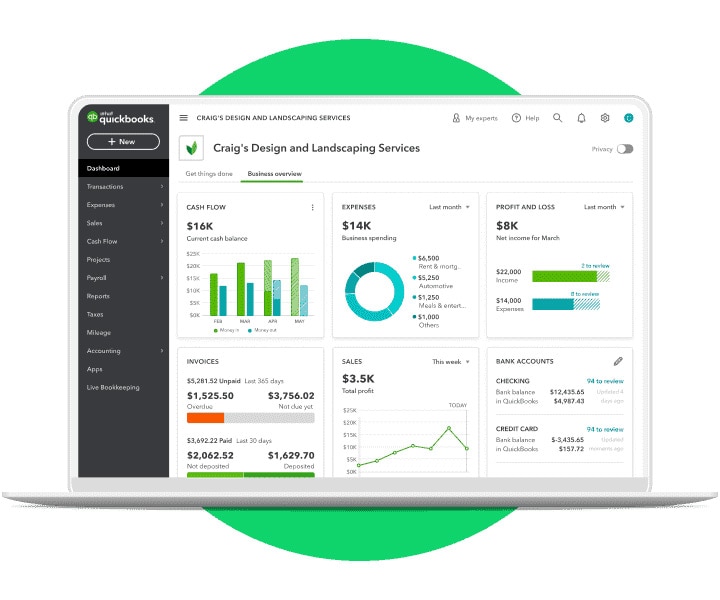
The true power of QuickBooks as a financial tool lies in its reporting capabilities. It can generate a wide array of customizable financial reports, including Profit & Loss statements, Balance Sheets, Cash Flow statements, Accounts Receivable aging, Accounts Payable aging, and Sales reports. These reports offer a bird’s-eye view of a company’s financial health, enabling business owners to:
- Assess profitability over various periods.
- Understand assets, liabilities, and equity.
- Analyze cash inflows and outflows.
- Identify top-performing products or services.
- Spot trends and anomalies in revenue and expenses.
- Prepare for tax season with accurate and organized data.
These insights are crucial for evaluating past performance and charting future strategies, making QuickBooks an analytical powerhouse for financial scrutiny.
Inventory Management and Job Costing (for relevant businesses)
For product-based businesses, inventory management is a critical financial component. QuickBooks offers features to track inventory levels, cost of goods sold, and reorder points. This helps in optimizing stock levels, reducing carrying costs, and preventing stockouts. For project-based or service businesses, job costing features allow businesses to track expenses and revenues specific to individual projects. This provides precise profitability analysis for each job, helping in future quoting and resource allocation, directly impacting the financial viability of projects.
Budgeting and Forecasting: Planning for Growth
Effective financial planning is essential for long-term success. QuickBooks enables businesses to create and monitor budgets, comparing actual performance against planned expenditures and revenues. This helps in identifying deviations early, allowing for corrective actions. While not a full-fledged forecasting tool, the historical data within QuickBooks, combined with its reporting capabilities, provides a solid foundation for financial projections and strategic planning, empowering businesses to set realistic goals and allocate resources wisely for future growth.
Different QuickBooks Editions: Finding Your Financial Fit
Intuit understands that businesses are not monolithic, and neither are their financial management needs. Consequently, QuickBooks is offered in several editions, each designed to cater to specific business sizes, operational complexities, and preferences.
QuickBooks Online: Cloud-Powered Flexibility
QuickBooks Online (QBO) is the flagship cloud-based version. Its key advantage is accessibility: users can access their financial data from anywhere, on any device with an internet connection. This makes it ideal for businesses with remote teams, mobile workforces, or owners who need to keep an eye on their finances while on the go. QBO also offers seamless integration with hundreds of third-party apps, enhancing its functionality for specific industry needs. Its subscription model provides continuous updates and security patches, ensuring businesses always have the latest features and robust protection.
QuickBooks Desktop: Robust On-Premise Solutions
For businesses that prefer installed software and have specific industry needs, QuickBooks Desktop (Pro, Premier, Enterprise) offers powerful on-premise solutions. Desktop versions often provide more granular control over certain accounting processes and have features tailored for specific industries (e.g., Contractor, Retail, Manufacturing & Wholesale, Non-Profit editions). While requiring installation on a local computer, many users find its interface familiar and its performance robust, especially for larger datasets or complex transactions. Recent developments have also introduced hosted desktop solutions, blending desktop power with cloud accessibility.
Specialized QuickBooks Products: Enterprise, Self-Employed, and POS
Beyond the main Desktop and Online versions, Intuit offers specialized QuickBooks products:
- QuickBooks Enterprise: Designed for larger businesses that have outgrown the Premier version, offering advanced inventory management, increased user capacity, and more sophisticated reporting.
- QuickBooks Self-Employed: A simplified version tailored for freelancers, independent contractors, and sole proprietors who need to track income, expenses, and mileage specifically for tax purposes. It streamlines quarterly tax estimates and Schedule C preparation.
- QuickBooks Point of Sale (POS): An integrated system for retail businesses that combines sales transactions, inventory management, and customer tracking directly with QuickBooks accounting.
Each edition targets a distinct segment of the market, ensuring that whether you are a solo freelancer or a growing enterprise, there’s a QuickBooks solution designed to meet your specific financial management challenges.
The ROI of QuickBooks: Beyond Just Tracking Numbers
Investing in a financial management system like QuickBooks delivers a significant return on investment that extends far beyond merely tracking numbers. It fundamentally transforms how businesses operate and make decisions.
Time Savings and Operational Efficiency
One of the most immediate benefits of QuickBooks is the substantial time savings it offers. By automating repetitive tasks such as data entry, reconciliation, and report generation, business owners and their teams can reclaim hours previously spent on manual bookkeeping. This efficiency allows them to focus on core business activities, strategy, and growth initiatives, rather than getting bogged down in administrative minutiae. The streamlined workflows contribute directly to a more productive and efficient operation.
Enhanced Accuracy and Compliance
Manual accounting is inherently prone to human error. QuickBooks minimizes this risk through automation, integrated calculations, and double-entry accounting principles. This enhanced accuracy is crucial for producing reliable financial statements, which are vital for internal decision-making, securing loans, and attracting investors. Furthermore, QuickBooks helps businesses stay compliant with tax regulations by meticulously categorizing transactions and generating accurate reports, significantly easing the burden of tax preparation and reducing the likelihood of costly audits or penalties.
Empowering Strategic Financial Decisions
Perhaps the most impactful ROI of QuickBooks is its ability to empower strategic financial decision-making. With real-time access to accurate financial data and insightful reports, business owners can:
- Identify profitable segments and prioritize resource allocation.
- Pinpoint areas of wasteful spending and implement cost-saving measures.
- Monitor cash flow to avoid liquidity crises.
- Understand their financial position to negotiate better terms with suppliers or lenders.
- Evaluate the performance of marketing campaigns or new product launches based on financial outcomes.
These insights move a business from reactive problem-solving to proactive, data-driven strategy, fostering sustainable growth and resilience.
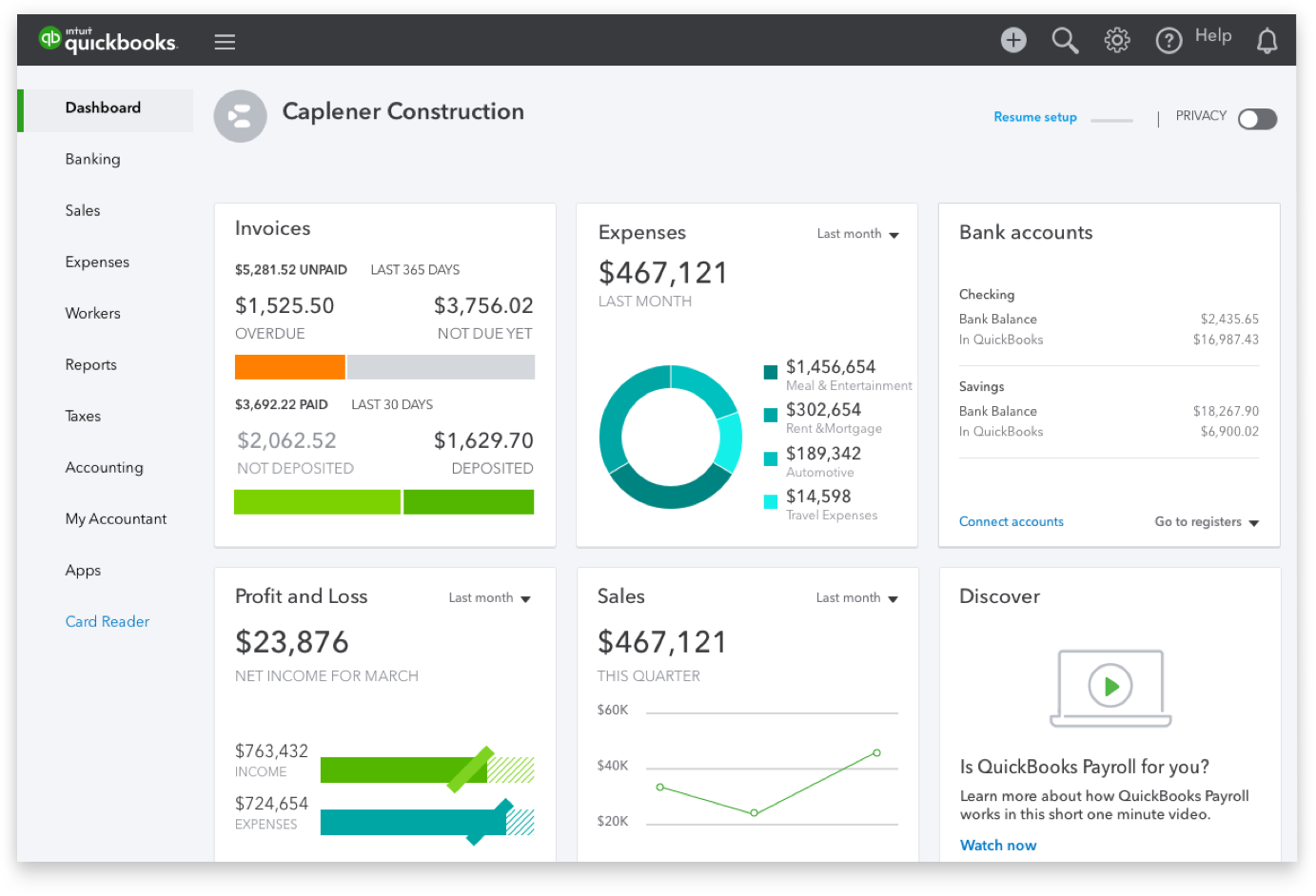
Scalability and Future-Proofing Your Finances
As a business grows, its financial complexities multiply. QuickBooks is designed to scale with your business. Whether you’re adding employees, expanding product lines, opening new locations, or increasing transaction volume, the various editions and features of QuickBooks can accommodate these changes. This scalability means you don’t have to switch accounting systems every time your business evolves, providing a future-proof foundation for your financial management and ensuring continuity as you expand.
In conclusion, QuickBooks stands as a quintessential financial tool in the modern business landscape. It demystifies accounting, automates mundane tasks, provides deep financial insights, and offers flexible solutions tailored to a diverse array of business needs. For any entity looking to gain control over its finances, enhance operational efficiency, and make informed strategic decisions, understanding “what are QuickBooks” is the first step towards unlocking a powerful partner in financial success.
aViewFromTheCave is a participant in the Amazon Services LLC Associates Program, an affiliate advertising program designed to provide a means for sites to earn advertising fees by advertising and linking to Amazon.com. Amazon, the Amazon logo, AmazonSupply, and the AmazonSupply logo are trademarks of Amazon.com, Inc. or its affiliates. As an Amazon Associate we earn affiliate commissions from qualifying purchases.