
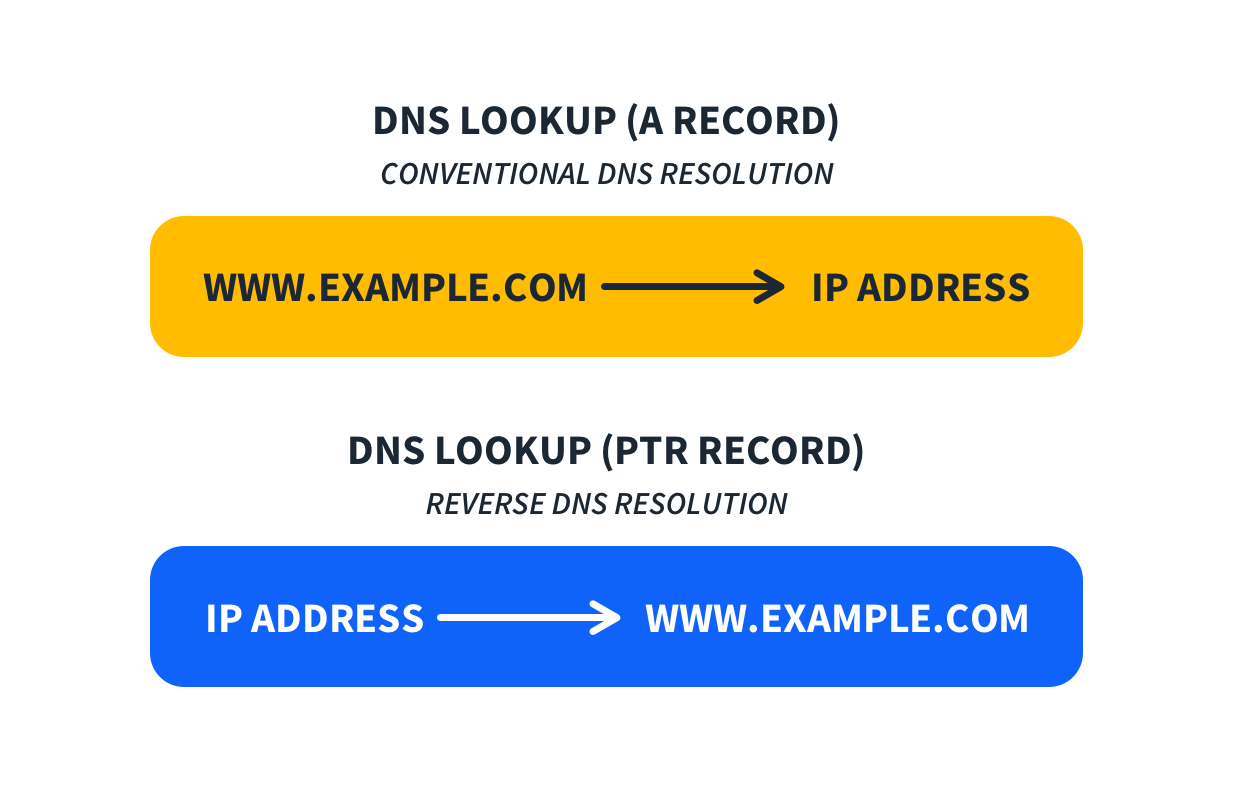
In the vast, intricate web of the internet, countless mechanisms operate silently behind the scenes, ensuring that our digital interactions are smooth, secure, and reliable. Among these unsung heroes are PTR records, often overlooked by the casual user but absolutely critical for anyone managing a server, sending emails, or concerned with their online reputation. A PTR record, short for “Pointer Record,” is a fundamental component of the Domain Name System (DNS) that performs the exact opposite function of what most people associate with DNS. While an A record translates a human-readable domain name (like example.com) into an IP address (like 192.0.2.1), a PTR record translates an IP address back into a domain name. This reverse lookup capability, known as Reverse DNS (rDNS), might seem like a niche technical detail, but its implications span across digital security, email deliverability, network management, and even the financial health of businesses.
For websites focusing on “Tech,” understanding PTR records is foundational to network architecture, server administration, and cybersecurity protocols. From a “Brand” perspective, they are indispensable for maintaining a trustworthy online presence, particularly in ensuring email communications reach their intended recipients without being flagged as spam. And for “Money,” the direct correlation between reliable digital communication and business revenue means that neglected PTR records can literally translate into lost sales, diminished marketing ROI, and a tangible hit to the bottom line. This article will delve into the technicalities of PTR records, illuminate their critical functions, and explore why they are more relevant than ever in our interconnected digital economy.
Understanding the Fundamentals of PTR Records
To truly appreciate the importance of PTR records, it’s essential to first grasp the basic architecture of the Domain Name System and how it facilitates virtually every online interaction.
DNS Explained: Forward vs. Reverse Lookups
At its core, the Domain Name System acts as the internet’s phonebook. When you type a website address like “google.com” into your browser, DNS translates that human-friendly name into an IP address – a numerical label that identifies a specific device on a network. This is known as a forward DNS lookup, and the records responsible for this translation are primarily A records (for IPv4) and AAAA records (for IPv6). Without forward DNS, navigating the internet would involve memorizing long strings of numbers, an impractical feat for anyone.
PTR records, on the other hand, facilitate reverse DNS lookups. Instead of asking “What’s the IP for example.com?”, a reverse lookup asks “What domain name is associated with this IP address 192.0.2.1?”. This might seem like an unnecessary step, but its utility becomes clear when considering scenarios where an IP address is the initial piece of information, and its corresponding domain name is needed for verification or identification. While most casual internet users never directly interact with reverse DNS, network administrators, email servers, and security systems rely on it heavily for validation and context.
The Mechanics of a PTR Record
A PTR record follows a specific format to enable this reverse translation. Unlike other DNS records that are typically managed within your domain’s DNS zone, PTR records are managed by the entity that owns the IP address block – usually your Internet Service Provider (ISP) or hosting provider.
Here’s how it works: for an IPv4 address, the IP address is reversed, and “.in-addr.arpa” is appended to it. For example, for the IP address 192.0.2.1, the PTR record would be queried for “1.2.0.192.in-addr.arpa.” For IPv6 addresses, a similar structure using “.ip6.arpa” is employed. The value of this PTR record then points to the canonical domain name associated with that IP address. So, if 192.0.2.1 belongs to “mail.example.com”, the PTR record for 1.2.0.192.in-addr.arpa would be “mail.example.com”.
When a system needs to perform a reverse DNS lookup, it queries a DNS server for the PTR record corresponding to a given IP address. The DNS server then provides the associated domain name, confirming the identity of the device at that IP address. This simple mapping is powerful for establishing trust and context in various network operations.
Why Aren’t PTR Records Always Necessary (But Often Recommended)?
It’s true that not every IP address needs a PTR record to function on the internet. A web server can host a website without a PTR record, and you can browse the internet perfectly fine. However, in specific and critical applications, particularly those involving communication and security, PTR records transition from being optional to absolutely essential.
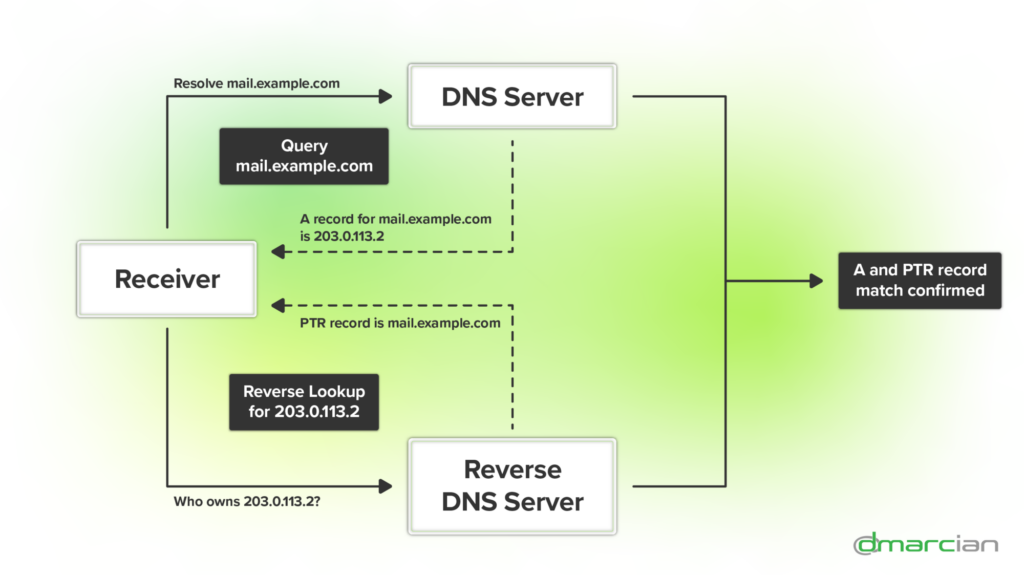
For instance, while a web server doesn’t strictly need a PTR record, an email server almost always does. The reason lies in the way modern email systems combat spam. Many mail servers are configured to perform a reverse DNS lookup on the IP address of an incoming email. If the IP address does not resolve to a valid hostname (i.e., there’s no PTR record, or it points to a generic or suspicious hostname), the email might be flagged as spam, rejected outright, or experience significant delays.
Similarly, certain network logging and monitoring tools rely on PTR records to display human-readable hostnames instead of just IP addresses, making troubleshooting and analysis much more efficient for IT professionals. While not strictly “necessary” for basic connectivity, PTR records are a cornerstone of robust, reliable, and secure internet operations, making them highly recommended for any server or service that interacts with external systems.
The Critical Role of PTR Records in Digital Security and Deliverability
The implications of properly configured PTR records extend far beyond mere technical curiosities. They play a vital, often invisible, role in safeguarding digital communications and bolstering the trustworthiness of online entities.
Bolstering Email Deliverability and Trust
Perhaps the most significant impact of PTR records is on email deliverability. In an era plagued by spam, phishing attempts, and malicious emails, email service providers (ESPs) and corporate mail servers employ sophisticated mechanisms to verify the authenticity of incoming messages. A well-configured PTR record is one of the primary checks in this arsenal.
When an email server receives a message, it typically performs a series of checks on the sending server’s IP address. One of these critical checks is a reverse DNS lookup. If the IP address of the sending server resolves to a legitimate and expected domain name via its PTR record, it adds a layer of credibility to the sender. Conversely, if the reverse DNS lookup fails (no PTR record exists) or if the PTR record points to a generic or suspicious hostname (e.g., “unknown.static.isp.net”), the email is far more likely to be marked as spam, quarantined, or even outright rejected.
This directly affects a Brand’s reputation and marketing efforts. Imagine a marketing campaign sending out newsletters or transactional emails. If these emails fail to reach their recipients due to poor PTR record configuration, it’s not just a technical glitch; it’s a loss of potential sales, damaged customer trust, and wasted marketing spend. A strong PTR record, alongside SPF, DKIM, and DMARC, signals to the world that your brand’s email communications are legitimate and trustworthy, fostering better engagement and protecting your sender reputation. It’s a silent guardian of your digital communication integrity.
Enhancing Network Security and Anomaly Detection
Beyond email, PTR records contribute significantly to overall Tech infrastructure security and operational efficiency. For network administrators and security professionals, reverse DNS is an invaluable tool for identifying and understanding network traffic.
When analyzing server logs, firewalls, or intrusion detection systems, entries are often recorded as IP addresses. Performing a reverse DNS lookup on these IPs instantly provides a human-readable hostname, making it much easier to identify the source of traffic, whether it’s a legitimate service, a known partner, or a potentially malicious actor. For example, if a log shows a high volume of connections from an IP address, a quick rDNS check can reveal if it’s coming from a legitimate service provider like AWS or Google Cloud, or from a suspicious domain associated with malware.
This capability is crucial for:
- Incident Response: Quickly identifying compromised systems or sources of attacks.
- Auditing and Compliance: Maintaining clear records of network access and activity.
- Troubleshooting: Pinpointing specific devices or services experiencing issues.
- Firewall Rules: Creating more intelligent and granular firewall policies based on hostnames.
Without PTR records, these tasks would be significantly more challenging, relying solely on numerical IP addresses, which offer less context and slower identification, potentially leaving systems vulnerable for longer periods.
Meeting Compliance and Operational Requirements

In certain highly regulated industries or for specific online services, the presence of properly configured PTR records isn’t just a recommendation but a strict requirement. Some governmental entities, financial institutions, or specialized online platforms mandate robust authentication protocols, which often include reverse DNS validation as a baseline security measure.
For instance, some payment processors or secure data transfer protocols might enforce PTR record checks to ensure that only legitimate, identifiable servers are initiating connections. Similarly, certain data centers or colocation providers might include PTR record configuration as part of their service level agreements (SLAs) to maintain the integrity and security of their network. Neglecting this aspect can lead to non-compliance, service disruptions, or even fines, underlining the direct link between Tech implementation and Money implications in a regulated environment. Ensuring that these technical requirements are met is not just good practice, but a critical component of risk management and maintaining operational continuity.
PTR Records and Your Digital Presence: A Tech, Brand, and Money Perspective
The digital landscape is a battlefield where seamless operation, strong reputation, and financial viability are constantly intertwined. PTR records, though seemingly minor, play a strategic role across these domains.
Tech: Optimizing Server Performance and Diagnostics
From a pure Tech standpoint, PTR records are a vital component of efficient server management and diagnostics. For IT administrators, the ability to quickly resolve an IP address to a hostname saves invaluable time during troubleshooting. Imagine a server experiencing performance issues or a network experiencing unusual traffic spikes. Without reverse DNS, logs would be filled with anonymous IP addresses, making it difficult to pinpoint the exact services, applications, or external systems involved.
With PTR records, system administrators can instantly see that an IP address belongs to, say, “database-server-01.company.com” or “backup-storage.externalcloud.net.” This clarity accelerates problem identification, reduces downtime, and allows for more precise network monitoring and resource allocation. It streamlines the process of integrating various services, from load balancers to VPNs, where trust relationships can often be based on hostname verification. Effective utilization of PTR records is a hallmark of a well-maintained and robust technical infrastructure, ensuring that applications run smoothly and users experience minimal disruption.
Brand: Protecting Your Reputation and Ensuring Communication
Your Brand is one of your most valuable assets, and in the digital age, it’s inextricably linked to your ability to communicate reliably. As discussed, email deliverability is heavily influenced by PTR records. For any brand that relies on email for marketing, customer service, transactional notifications, or internal communications, the failure to deliver messages due to poor PTR configuration can be catastrophic.
Undelivered emails mean missed opportunities for sales, reduced engagement with marketing campaigns, frustrated customers who don’t receive essential updates, and ultimately, a tarnished brand image. Customers expect seamless communication; if your emails consistently land in spam folders, it erodes trust and professionalism. A brand that invests in proper email authentication, including robust PTR records, demonstrates a commitment to professionalism and reliability. It signals that you are a legitimate entity, not a spammer, fostering a positive perception and strengthening customer relationships. This proactive approach to email hygiene is a critical element of modern brand management and digital marketing strategy.
Money: The Business Impact of Reliable Connectivity
The financial implications of neglecting PTR records are often underestimated. For businesses relying on Online Income, side hustles that involve digital communication, or extensive marketing efforts, PTR records directly impact revenue generation and operational costs.
Consider an e-commerce business. If transactional emails (order confirmations, shipping updates) don’t reach customers because of a missing PTR record, it can lead to confusion, chargebacks, and ultimately, lost sales. A company running an email marketing campaign could invest heavily in content creation and list building, only to see its ROI plummet because emails are being blocked by spam filters. This translates to wasted marketing budget and unrealized revenue.
Moreover, poor email deliverability can indirectly lead to increased support costs, as customers call or email about missing communications. For businesses dealing with sensitive data, the security enhancements provided by PTR records (as discussed in anomaly detection) translate into reduced risk of breaches, which can be incredibly costly in terms of fines, reputational damage, and recovery efforts. In essence, ensuring proper PTR record configuration is not just a technical chore; it’s a strategic investment in reliable communication, enhanced security, and sustained profitability in the digital marketplace. It’s a small technical detail that can have a significant impact on a business’s financial health and competitive edge.
Implementing and Managing PTR Records
While the importance of PTR records is clear, their implementation and management differ slightly from other DNS records, primarily because they are tied to the IP address itself rather than your domain name.
Who Manages PTR Records?
This is a crucial distinction: PTR records are managed by the entity that owns the IP address block. In most cases, this will be your Internet Service Provider (ISP) or your hosting provider (if you are using a dedicated server or VPS with a fixed IP). Unlike A records, CNAME records, or MX records, which you typically configure through your domain registrar or DNS hosting provider, you usually cannot directly create or modify a PTR record within your domain’s DNS zone.
If you have a dedicated IP address (which is almost always the case for email servers, for example), you will need to contact your ISP or hosting provider’s support team to request that they configure the PTR record for your IP address. You will need to provide them with the IP address and the fully qualified domain name (FQDN) that you want it to resolve to (e.g., mail.yourdomain.com). They will then add this entry to their authoritative DNS servers for that IP block. For cloud services, providers like AWS, Google Cloud, or Azure often provide an interface within their console to manage reverse DNS for allocated IP addresses.
Best Practices for PTR Record Configuration
Once you’ve identified who manages your PTR records, adhering to best practices ensures optimal performance and reliability:
- Consistency: The domain name specified in your PTR record should ideally match the hostname your server identifies itself with (e.g., in its SMTP HELO/EHLO greetings for an email server) and, wherever possible, resolve back to the same IP address via a forward A record. This “double-check” (forward and reverse match) significantly boosts credibility, especially for email.
- Specific Hostname: Avoid generic hostnames like “broadband-user.isp.com.” Use a descriptive FQDN that clearly identifies the server’s function, such as “mail.yourdomain.com,” “webserver.yourdomain.com,” or “vpn.yourdomain.com.”
- Regular Verification: Even after configuration, it’s wise to periodically check your PTR records to ensure they are correctly set up and haven’t been inadvertently changed or removed. This is particularly important after IP address changes or server migrations.
- Timely Updates: If you change your server’s hostname or move to a new IP address, remember to update the corresponding PTR record with your ISP or hosting provider promptly. Delays can lead to service disruptions and communication failures.
Tools for Checking PTR Records
Verifying your PTR record is straightforward. Numerous free online tools and command-line utilities can perform a reverse DNS lookup:
- Online Tools: Websites like
mxtoolbox.com,whatsmydns.net, orip-lookup.netoften include a reverse DNS lookup feature. You simply enter your IP address, and it will return the associated PTR record. - Command Line (Linux/macOS):
dig -x <IP_address>: This is a powerful DNS lookup utility. For example,dig -x 8.8.8.8would show the PTR record for Google’s public DNS server.host <IP_address>: A simpler command. For example,host 8.8.8.8.
- Command Line (Windows):
nslookup <IP_address>: The classic Windows DNS lookup tool. For example,nslookup 8.8.8.8.
These tools provide quick confirmation that your PTR records are correctly resolving, offering peace of mind and enabling proactive management of your digital infrastructure.
Conclusion
PTR records are a quintessential example of the “invisible infrastructure” that underpins the modern internet. While not as frequently discussed as A records or CNAMEs, their role in ensuring the integrity, security, and reliability of online communications is absolutely fundamental. From a Tech perspective, they are indispensable for efficient network management, troubleshooting, and bolstering cybersecurity defenses. For any Brand seeking to establish and maintain a trustworthy online presence, properly configured PTR records are a critical component of email deliverability, directly impacting customer perception and communication effectiveness. And when it comes to Money, the consequences of neglecting PTR records can be tangible and severe, leading to lost sales, wasted marketing spend, increased operational costs, and even regulatory non-compliance.
In an increasingly complex digital world, where every byte of data and every email sent contributes to a business’s success or failure, overlooking the simple yet profound power of a PTR record is a costly oversight. Investing the small effort to properly configure and maintain these records is a smart move for anyone serious about their digital footprint, ensuring their servers speak clearly, their emails arrive safely, and their online ventures thrive in a secure and trustworthy environment.
aViewFromTheCave is a participant in the Amazon Services LLC Associates Program, an affiliate advertising program designed to provide a means for sites to earn advertising fees by advertising and linking to Amazon.com. Amazon, the Amazon logo, AmazonSupply, and the AmazonSupply logo are trademarks of Amazon.com, Inc. or its affiliates. As an Amazon Associate we earn affiliate commissions from qualifying purchases.