
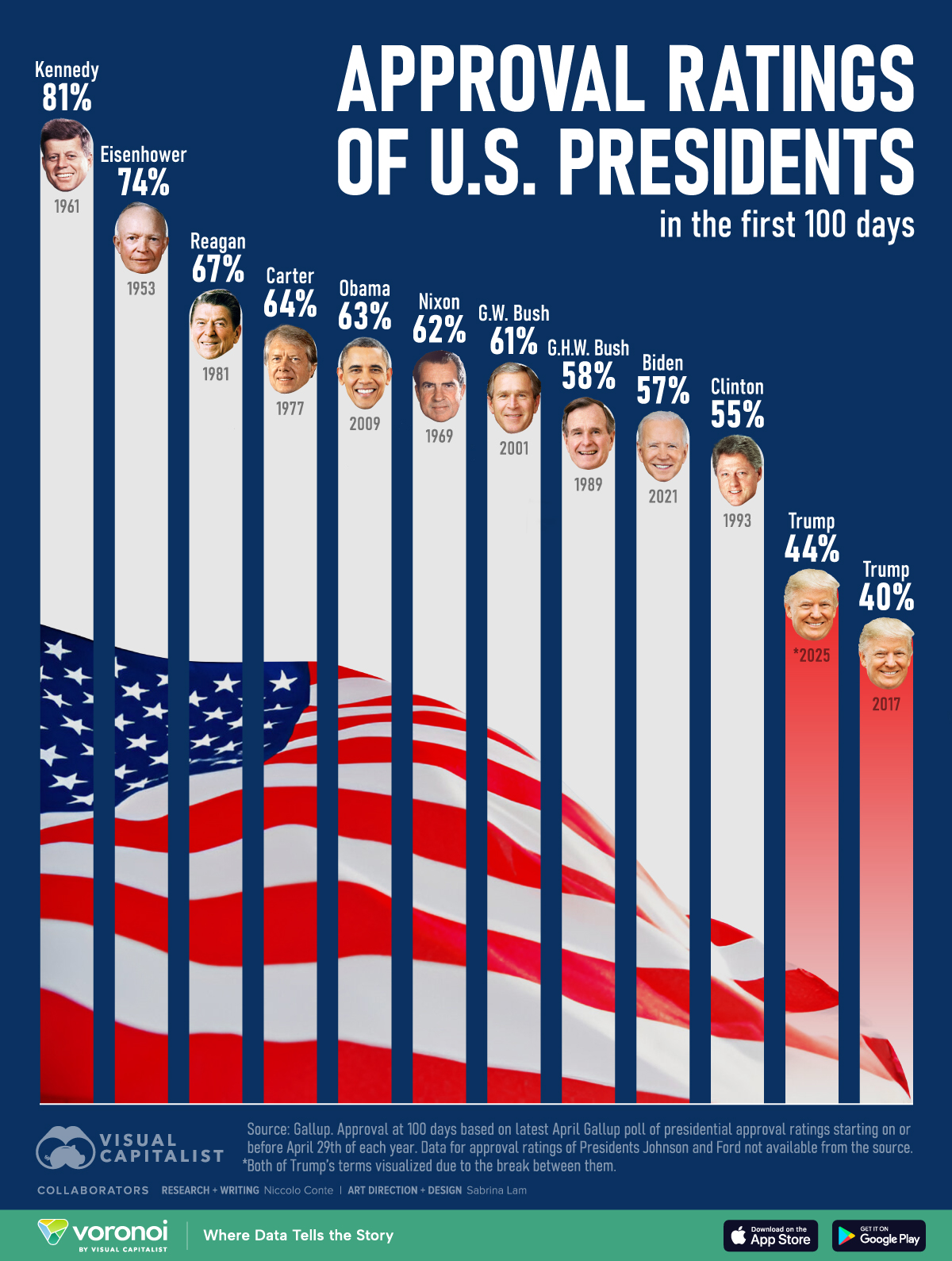
In the world of corporate strategy, a brand’s value is often measured by its Net Promoter Score (NPS), market share, and consumer sentiment. However, one of the most sophisticated examples of brand management exists outside the boardroom and within the corridors of the White House. Presidential approval ratings are, in essence, the ultimate real-time brand health metric. They represent the collective sentiment of a “market” consisting of hundreds of millions of stakeholders.
To understand presidential approval ratings through the lens of brand strategy is to understand how identity, perception, and performance intersect to create long-term brand equity. For a sitting president, these ratings are not just numbers; they are a reflection of the brand’s resonance with its target audience and its resilience against “market” volatility.
1. The Anatomy of a Political Brand
A presidency is a multifaceted brand that must appeal to a diverse demographic while maintaining a core identity. Just like a global corporation, the executive office operates on a foundation of brand pillars that dictate how the public perceives every action, statement, and policy.
The Brand Promise vs. Product Delivery
In branding, the “Brand Promise” is what a company commits to its customers. For a president, this promise is established during the campaign—the “marketing phase.” Presidential approval ratings serve as the consumer’s feedback on whether the “product” (the administration’s actions) aligns with the promise. When there is a gap between campaign rhetoric and executive delivery, the brand experiences “cognitive dissonance,” leading to a decline in approval. Strategic brand managers recognize that high approval ratings are maintained when the delivery consistently meets or exceeds the narrative set during the acquisition phase.
Visual and Narrative Identity
Every successful brand has a distinct voice and visual identity. In the context of the presidency, this includes everything from the tone of State of the Union addresses to the curated imagery of the Oval Office. A president’s brand identity is designed to evoke specific emotions—trust, strength, empathy, or innovation. Approval ratings often fluctuate based on how well the president “stays on brand.” A sudden shift in messaging can confuse the “customer base,” leading to brand erosion.
The Role of Corporate Identity in Governance
A president does not act alone; they lead an “organization” (the administration). Just as a CEO is held accountable for the actions of their employees, a president’s approval rating is influenced by the “corporate identity” of their cabinet and staff. High-profile successes or failures by subsidiary departments—such as the Treasury or State Department—reflect directly on the parent brand. Managing this corporate identity requires a rigorous adherence to the brand’s core values across all levels of the hierarchy.
2. Measuring Market Sentiment: The Data Science of Polling
To a brand strategist, a presidential approval rating is a sophisticated form of market research. It provides a snapshot of public sentiment, allowing the administration to pivot its strategy, double down on successful “campaigns,” or mitigate damage from PR crises.
Methodology: The Focus Groups of Democracy
Approval ratings are derived from rigorous sampling methods that mirror corporate market research. Pollsters use demographic weighting to ensure that the “sample size” reflects the total “market” (the voting public). By analyzing these ratings across different segments—such as age, geography, and socioeconomic status—brand managers in the political sphere can identify which “customer segments” are loyal and which are at risk of churning. This data-driven approach allows for hyper-targeted communication strategies.
The Net Promoter Score of Politics
In the business world, the Net Promoter Score (NPS) measures how likely a customer is to recommend a brand. Presidential approval ratings function similarly. A rating above 50% indicates a “Healthy Brand” with positive equity, while a rating below 40% suggests a “Distressed Brand.” Understanding the nuances of these numbers helps strategists determine the “Brand Elasticity”—how much political capital the president can spend on controversial “product launches” (policies) before losing the support of their core audience.
Volatility and Market Sentiment
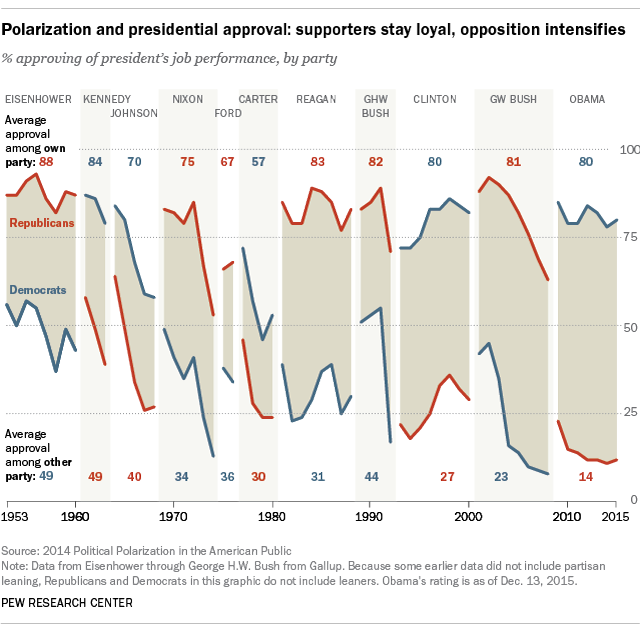
Market sentiment is rarely static. Just as a tech company’s stock might dip after a mediocre product launch, a president’s approval rating is subject to “market shocks.” Economic downturns, international conflicts, or internal scandals act as external pressures on the brand. Strategic brand management involves anticipating these shocks and building enough “Brand Loyalty” during stable times to weather the inevitable periods of volatility.
3. Brand Erosion and Crisis Management
No brand is immune to crisis. For a president, a crisis is a direct threat to the brand’s longevity and its ability to influence the market. The way an administration handles a dip in approval ratings provides a masterclass in corporate crisis management.
The Impact of Brand Dilution
Brand dilution occurs when a brand tries to be everything to everyone, losing its core appeal in the process. In politics, a president who tries to appease every faction often sees a decline in approval ratings across the board. This is a classic branding trap. Successful brand strategy requires making choices—deciding who the brand is for and, more importantly, who it is not for. Presidential approval ratings often stabilize when an administration refocuses on its “Primary Target Audience” rather than chasing a broad, unachievable consensus.
Pivot Strategies and Rebranding
When approval ratings hit a critical low, administrations often engage in a “brand pivot.” This might involve a change in personnel (a “management reshuffle”), a shift in policy focus (a “product pivot”), or a new communication style (a “rebranding campaign”). These moves are designed to signal to the market that the brand is listening and evolving. However, for a pivot to be successful, it must feel authentic. If the public perceives the change as a desperate marketing ploy, the brand’s credibility—and its ratings—will continue to suffer.
Managing External Market Factors
Often, a brand’s health is affected by factors outside its control. A global recession or a pandemic acts as a “market disruption.” In these instances, presidential approval ratings become a measure of “Crisis Leadership.” Brands that project stability, empathy, and a clear path forward during a crisis often see a “rally ’round the flag” effect, where approval ratings spike despite the difficult circumstances. This is the ultimate test of brand resilience.
4. The Multi-Channel Brand Experience
In the digital age, a brand is experienced across multiple touchpoints. For a president, the brand experience is no longer confined to evening news segments; it is a 24/7 multi-channel operation.
Media Influence and Brand Perception
The media serves as the “distribution channel” for the political brand. Just as a brand’s reputation is shaped by reviews and influencers, a president’s approval rating is heavily influenced by media narratives. Strategic brand management involves “Media Relations”—the art of shaping the narrative to ensure that the brand’s strengths are highlighted and its weaknesses are contextualized. The rise of partisan media has created “Brand Bubbles,” where different segments of the market receive entirely different versions of the brand story.
Digital Footprint and Social Media Strategy
Modern presidential branding requires a robust digital strategy. Social media platforms allow for “Direct-to-Consumer” (DTC) communication, bypassing traditional media gatekeepers. A president’s digital footprint—their tweets, videos, and live streams—builds a sense of intimacy and transparency with the brand. This direct engagement is a powerful tool for maintaining high approval ratings among younger, digitally-native demographics who value authenticity and real-time interaction.
Community Management and Advocacy
A strong brand has a community of advocates who defend it against criticism. In politics, these are the “Brand Loyalists”—the base. High approval ratings are often sustained not by converting critics, but by energizing the existing community. Strategic community management involves providing these advocates with the tools and narratives they need to spread the brand’s message within their own networks, effectively turning “customers” into “brand ambassadors.”
5. Lessons for Corporate Brand Managers
The study of presidential approval ratings offers invaluable insights for corporate brand managers and CEOs. The presidency is perhaps the most scrutinized “C-suite” position in the world, and the lessons learned in the political arena are directly applicable to the corporate world.
Resilience and Long-Term Equity
The goal of any brand should be to build enough equity to survive the occasional failure. A president with a high “base” approval rating can survive a bad news cycle because they have established a “reservoir of goodwill.” Corporate brands must similarly focus on building deep emotional connections with their customers, ensuring that a single product defect or PR blunder doesn’t lead to total brand collapse.
Authenticity as a Competitive Advantage
In an era of skepticism, authenticity is the most valuable currency a brand can have. Presidential approval ratings often reward leaders who appear genuine and consistent, even if their policies are controversial. For corporate brands, this means moving beyond corporate-speak and engaging with customers in a way that feels human and transparent. Authenticity builds trust, and trust is the foundation of high approval—whether in the voting booth or at the checkout counter.
The Power of Data-Driven Decision Making
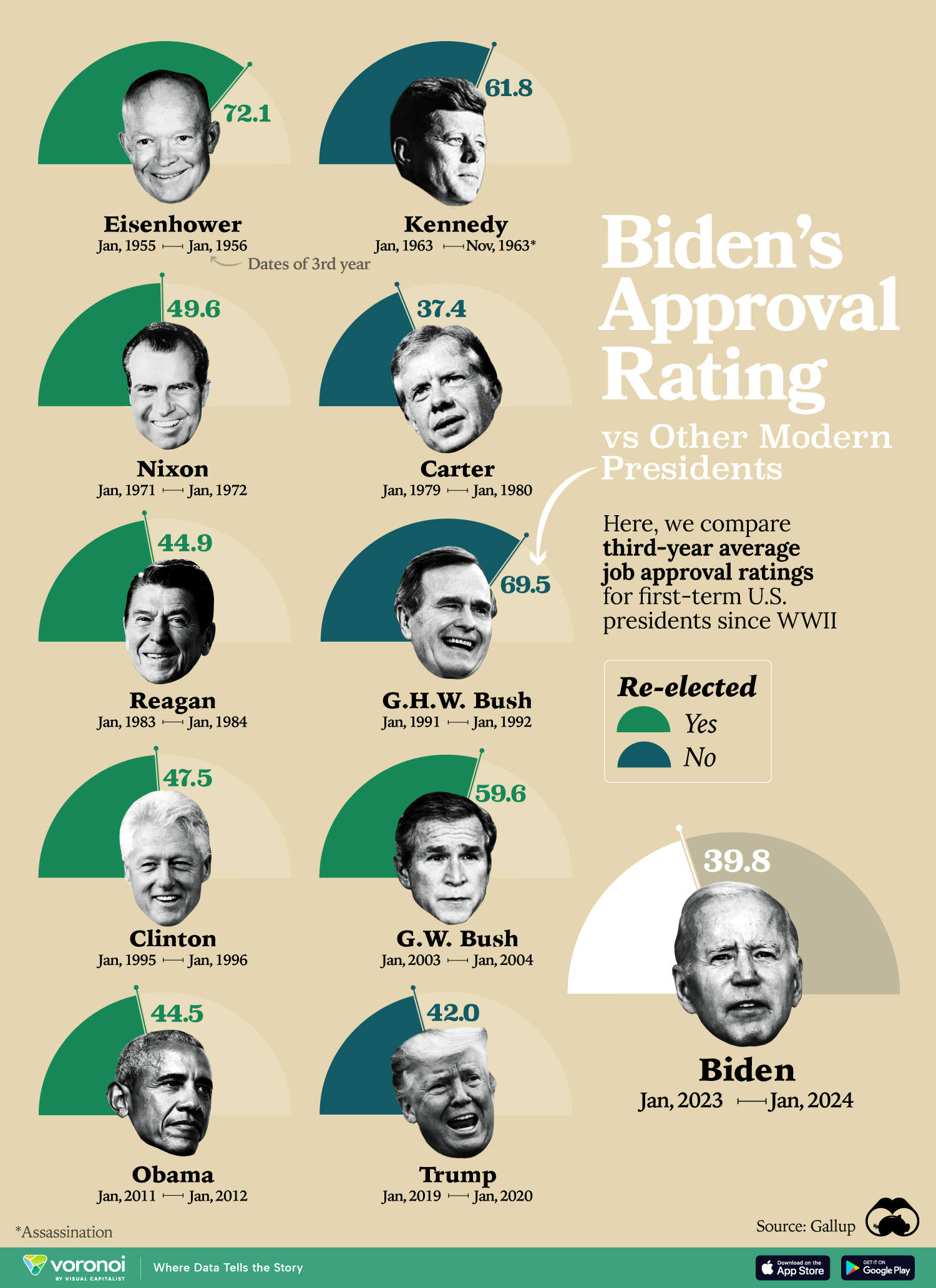
Finally, the use of polling data to guide presidential strategy highlights the importance of data-driven decision-making in brand management. Successful brands do not guess how their customers feel; they measure it. By constantly monitoring approval ratings and sentiment, an administration can make proactive adjustments rather than reactive ones. In the fast-paced world of global business, the ability to read and react to market sentiment is the difference between a brand that thrives and one that fades into irrelevance.
In conclusion, presidential approval ratings are far more than a political scorecard. They are a complex, data-rich reflection of brand health, market sentiment, and strategic execution. By treating the presidency as a brand, we gain a deeper understanding of how public perception is shaped, managed, and maintained in the most high-pressure environment on earth. For any brand strategist, the White House offers a perpetual case study in the art and science of identity management.
aViewFromTheCave is a participant in the Amazon Services LLC Associates Program, an affiliate advertising program designed to provide a means for sites to earn advertising fees by advertising and linking to Amazon.com. Amazon, the Amazon logo, AmazonSupply, and the AmazonSupply logo are trademarks of Amazon.com, Inc. or its affiliates. As an Amazon Associate we earn affiliate commissions from qualifying purchases.