
The term “prayer beads” evokes images of serene devotion, ancient traditions, and contemplative practices. Across diverse cultures and religions, these rosaries, malas, and tasbihs have served as tangible anchors for spiritual focus, aiding in the recitation of prayers, mantras, and affirmations. While their primary function is deeply rooted in spiritual discipline, the intricate craftsmanship, material variations, and historical significance offer a fascinating lens through which to understand human devotion and the enduring quest for meaning. This exploration delves into the essence of prayer beads, their widespread presence, and the profound role they play in the lives of millions.

The Universal Language of Devotion: Origins and Evolution of Prayer Beads
Prayer beads, in their myriad forms, are not confined to a single religious tradition. Their existence is a testament to a shared human need for structured contemplation and a way to engage with the divine. The earliest forms of prayer beads can be traced back to ancient India, with evidence suggesting their use in Hinduism and Buddhism as early as the 8th century BCE. These early iterations, often made from seeds, stones, or wood, were designed to facilitate the counting of mantras, a practice central to achieving spiritual liberation.
Ancient Roots: From India to the Abrahamic Faiths
The concept of using strung beads for repetitive prayer or meditation spread across Asia. In Buddhism, the mala developed as a string of 108 beads, each representing a repetition of a mantra. This number is considered sacred, as it is believed to be the number of earthly desires that must be overcome to achieve enlightenment. Similarly, in Hinduism, malas are used for chanting mantras, often dedicated to specific deities.
The Abrahamic faiths also adopted and adapted the use of prayer beads. While the exact origins are debated, the development of the rosary in Christianity is often linked to the 12th or 13th century. Early Christian prayer beads likely evolved from simpler strings of beads used for counting psalms or prayers, eventually becoming the structured 150-bead rosary that is widely recognized today, with specific sets of prayers assigned to each bead or group of beads. The Catholic Church officially recognized the rosary in the 16th century.
In Islam, the tasbih or misbaha is used for the remembrance of Allah (dhikr). Typically consisting of 33 or 99 beads, it is used to recite specific phrases of praise and glorification of God. The practice is rooted in the Quran and the Sunnah of the Prophet Muhammad. Each bead serves as a tactile cue to maintain focus and ensure that the prescribed number of repetitions is completed.
The Form and Function: Anatomy of a Prayer Bead Set
Despite their diverse religious affiliations, most prayer bead sets share a common structural blueprint. While variations exist, the core components remain consistent, serving specific functional and symbolic purposes.
The Beads Themselves: Materials and Meanings
The beads are the most prominent feature of any prayer bead set. Historically, materials were dictated by availability and cultural significance. In early traditions, natural elements like seeds, nuts, and polished stones were common. Today, the range of materials is vast, encompassing:
- Wood: Sandalwood, bodhi wood, rosewood, and ebony are popular choices, often chosen for their aroma, texture, and perceived spiritual properties.
- Stones and Gemstones: Amethyst, quartz, agate, turquoise, and coral are frequently used, each believed to possess its own unique energetic or healing qualities, adding another layer of meaning to the prayer experience.
- Seed Beads: Rudraksha seeds, derived from the Elaeocarpus ganitrus tree, are highly revered in Hinduism and Buddhism for their purported spiritual benefits.
- Glass and Crystal: These materials offer aesthetic appeal and are sometimes chosen for their ability to refract light, adding a visual dimension to contemplation.
- Metals and Synthetics: While less traditional, some modern prayer beads incorporate metal beads or synthetic materials for durability and specific design intentions.
The choice of material is often a personal one, influenced by religious tradition, aesthetic preference, or a belief in the inherent properties of the substance.
The Guru Bead/Tassel: Markers of Transition and Completion
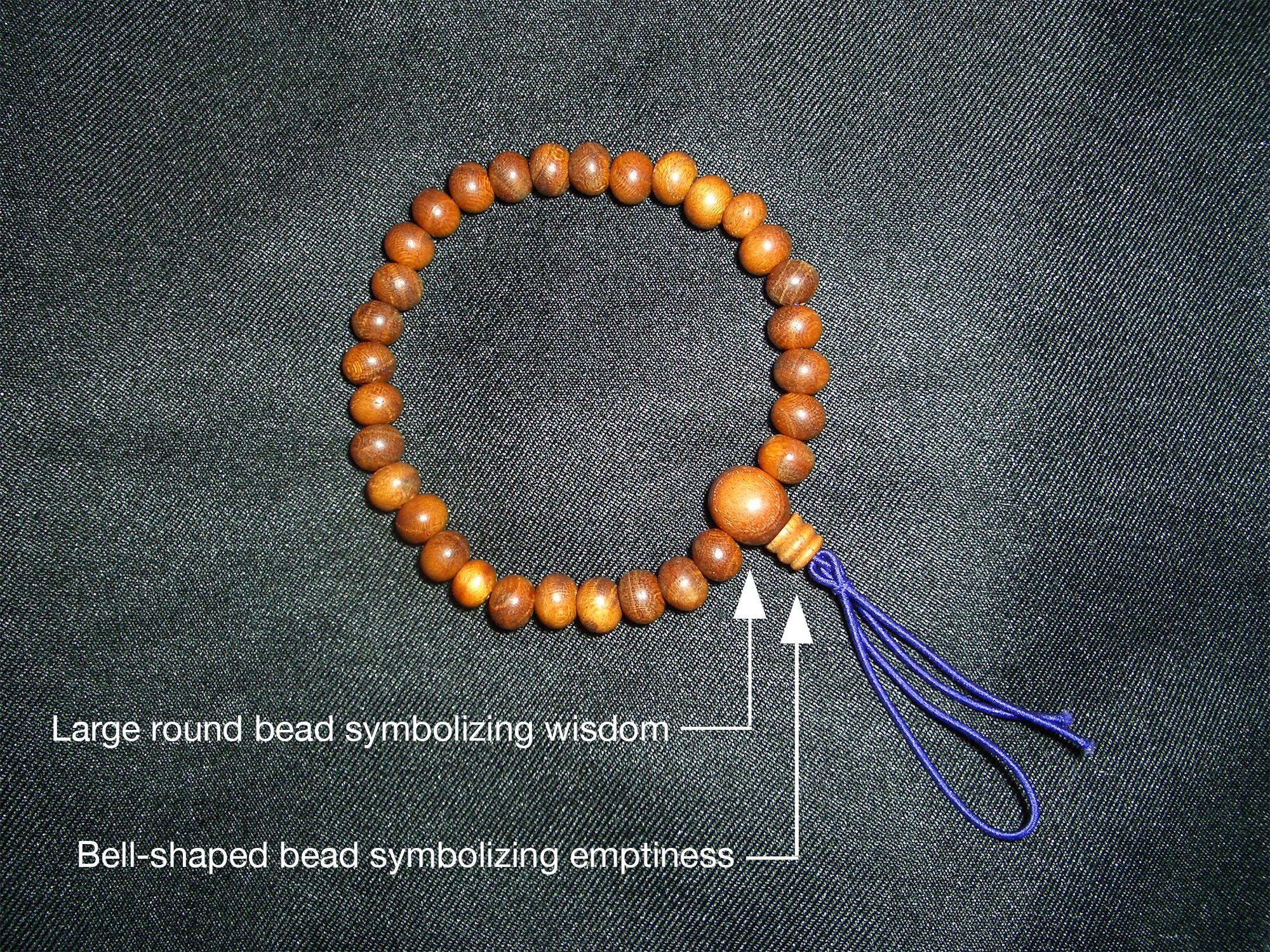
Most prayer bead sets include a larger, distinct bead, often referred to as the “guru bead” (in Hindu and Buddhist traditions) or a “marker bead” (in Islamic and Christian traditions). This bead signifies the beginning and end of a cycle of repetitions and is typically not counted in the recitation. It serves as a point of pause and reflection, indicating the completion of one round and the transition to the next.
Many prayer bead sets also feature a tassel. In Buddhist malas, the tassel is often seen as a symbol of the Buddha’s teachings or the interconnectedness of all things. In Christian rosaries, the crucifix often serves a similar function to the guru bead, acting as a starting and ending point. The tassel can also serve as a tactile aid, helping the user to navigate the beads without looking.
Spacers and Markers: Enhancing the Practice
Some prayer bead sets incorporate additional elements, such as smaller “spacer beads” or distinct “marker beads” placed at intervals. These are particularly common in longer rosaries or malas. Their purpose is to break up long sequences of prayer, providing tactile cues to help the user keep track of their progress without needing to count each individual bead. This is especially helpful during extended meditation or prayer sessions.
The Spiritual Significance: Prayer Beads as Tools for Mindfulness and Connection
Beyond their physical attributes, prayer beads hold profound spiritual significance. They are not merely decorative objects but deliberate tools designed to facilitate a deeper connection with the divine, cultivate inner peace, and foster spiritual growth. Their repetitive nature is key to their efficacy.
Cultivating Mindfulness and Focus
In a world often characterized by distraction and mental clutter, prayer beads offer a tangible pathway to mindfulness. The rhythmic act of moving the beads through one’s fingers, accompanied by the recitation of prayers or mantras, helps to anchor the mind in the present moment. This focused repetition can quiet the internal monologue, reduce anxiety, and create a space for introspection and spiritual awareness.
The tactile sensation of the beads serves as a constant, gentle reminder to return to the practice, preventing the mind from wandering. This steady engagement with a physical object allows the practitioner to transcend the mundane and enter a more contemplative state.
Facilitating Prayer and Mantra Repetition
For many, prayer beads are indispensable for the accurate and dedicated recitation of prayers, mantras, or affirmations. The beads provide a structured system for counting, ensuring that the prescribed number of repetitions is completed without error or mental fatigue. This accuracy is important in many traditions, where specific numbers of recitations are believed to unlock particular spiritual benefits or to honor deities with precision.
Whether chanting a mantra 108 times in Buddhism, reciting a rosary in Christianity, or performing dhikr in Islam, the beads ensure consistency and dedication. This repetitive action can lead to a state of meditative absorption, where the words and their meanings become deeply internalized.
Connecting with the Divine and Inner Self
Ultimately, the purpose of prayer beads is to facilitate a deeper connection – with the divine, with one’s inner self, and with the spiritual community. The focused repetition and contemplative state achieved through their use can open pathways to spiritual insight, grace, and understanding.
For some, the beads are a direct conduit to a higher power, a physical representation of their devotion. For others, they are a tool for self-discovery, helping to quiet the ego and access a deeper, more authentic sense of self. The shared practice of using prayer beads across generations and cultures also fosters a sense of continuity and belonging within spiritual traditions.
Diverse Traditions, Shared Purpose: Prayer Beads Across Religions
While the form and specific practices surrounding prayer beads may differ, their underlying purpose remains remarkably consistent across the major world religions. They serve as a universal language of devotion, offering a tangible aid to spiritual discipline for billions.
The Christian Rosary: A Meditative Journey Through the Life of Christ
The Christian rosary, most prominently used in Catholicism, is a string of beads used to count a series of prayers, primarily the Hail Mary, Our Father, and Glory Be. It is structured around “decades” (groups of ten Hail Marys), each preceded by an Our Father and followed by a Glory Be. The rosary is not merely rote recitation; it is intended to be a meditative journey through the significant events in the life of Jesus Christ and the Virgin Mary, known as the “mysteries.”
There are three sets of mysteries: the Joyful Mysteries (meditating on Jesus’ birth and early life), the Luminous Mysteries (meditating on Jesus’ public ministry), the Sorrowful Mysteries (meditating on Jesus’ passion and death), and the Glorious Mysteries (meditating on Jesus’ resurrection and Mary’s heavenly reign). By meditating on these mysteries while reciting the prayers, the user engages in a contemplative practice that seeks to deepen their understanding of Christian faith and draw closer to God. The crucifix at the beginning often serves as a starting point for prayer and a symbol of faith.
The Buddhist Mala: Chanting for Enlightenment
In Buddhism, the mala is a string of beads, traditionally 108 in number, used for counting mantras or the names of Buddhas. The number 108 is highly significant, often representing the 108 defilements or negative states of mind that must be overcome to achieve enlightenment. Each bead allows the practitioner to count a repetition of a specific mantra, such as “Om Mani Padme Hum,” a mantra of compassion.
The practice of using a mala is integral to many Buddhist meditation techniques. By focusing on the breath, the mantra, and the physical sensation of the beads, practitioners aim to purify the mind, accumulate merit, and cultivate wisdom and compassion. The guru bead on a mala marks the beginning and end of a cycle, and the practitioner typically reverses direction at this point to avoid crossing over it, symbolizing a continuity of practice.
The Islamic Tasbih: Remembrance of Allah
The tasbih, also known as the misbaha or sibha, is an instrument of remembrance for Muslims. It typically consists of 33 or 99 beads, used for reciting specific phrases that glorify Allah, such as “Subhan Allah” (Glory be to God), “Alhamdulillah” (Praise be to God), and “Allahu Akbar” (God is the Greatest). The practice of dhikr (remembrance) is central to Islamic spirituality, encouraging a constant awareness of God’s presence.
The tasbih provides a structured way to perform dhikr, ensuring that the prescribed number of repetitions is achieved. It is often used after daily prayers or during moments of reflection to maintain a spiritual connection and to seek divine blessings. The beads serve as a tangible reminder of God’s attributes and the importance of constant devotion.
Beyond Tradition: Modern Interpretations and Personal Use
While prayer beads are deeply embedded in ancient religious and spiritual traditions, their appeal has transcended these boundaries. In contemporary society, many individuals are drawn to prayer beads for reasons that may extend beyond strict religious adherence, reflecting a broader interest in mindfulness, personal well-being, and tangible objects that evoke a sense of calm and purpose.
The Rise of Mindfulness and Secular Use
The global resurgence of interest in mindfulness and meditation has seen prayer beads, particularly malas, gain traction among those seeking secular tools for stress reduction and mental clarity. While not necessarily used for prayer in a religious sense, these individuals may use them to count breaths, focus their attention during meditation, or simply as a tactile anchor to remain present. The aesthetic appeal and the perceived calming energy of the materials also contribute to their popularity.
Personalization and Artistic Expression
The market for prayer beads has expanded to include a vast array of styles, materials, and designs. This has allowed for greater personalization, enabling individuals to choose beads that resonate with their personal aesthetic, spiritual inclinations, or even as a form of artistic expression. From minimalist designs crafted from natural wood to elaborate creations featuring semi-precious stones and intricate charms, there is a prayer bead set to suit almost any preference. This personalization can enhance the user’s connection to their chosen tool, making the practice more intimate and meaningful.

Prayer Beads as Symbols of Faith and Identity
For many, prayer beads remain deeply significant symbols of their faith and identity. They are worn or carried as outward expressions of their spiritual commitment, a constant reminder of their beliefs and values. In some cultures, prayer beads are passed down through generations, carrying with them a legacy of devotion and family history. They can also serve as conversation starters, offering an opportunity to share one’s faith and connect with others on a spiritual level.
In conclusion, prayer beads, in their diverse forms and across their myriad traditions, are far more than simple strings of beads. They are potent tools for spiritual discipline, anchors for mindfulness, and tangible symbols of devotion that have resonated with humanity for millennia. Whether used for prayer, meditation, or personal reflection, they continue to offer a pathway to inner peace, spiritual connection, and a deeper understanding of oneself and the world.
aViewFromTheCave is a participant in the Amazon Services LLC Associates Program, an affiliate advertising program designed to provide a means for sites to earn advertising fees by advertising and linking to Amazon.com. Amazon, the Amazon logo, AmazonSupply, and the AmazonSupply logo are trademarks of Amazon.com, Inc. or its affiliates. As an Amazon Associate we earn affiliate commissions from qualifying purchases.