
At first glance, a pool ball appears to be a simple, colorful sphere designed for recreation. However, from the perspective of materials science and precision engineering, these objects are marvels of modern technology. To understand what pool table balls are made of is to trace the history of industrial chemistry—from the exploitation of natural resources to the invention of the first plastics and the development of high-tech polymers that can withstand tons of pressure per square inch.
In the world of professional billiards, the “tech” is not found in software or screens, but in the molecular structure of the equipment. A pool ball must possess perfect sphericity, consistent density, and a unique elastic coefficient that allows for the precise transfer of kinetic energy.
From Nature to Laboratory: The Evolution of Billiard Ball Technology
The technological journey of the pool ball began with a crisis of sustainability and ethics. In the 19th century, the high-end billiard industry relied almost exclusively on organic materials, which proved to be both technologically inconsistent and ecologically devastating.
The Ethical and Physical Limits of Ivory
For decades, the finest billiard balls were carved from the tusks of elephants. From a technical standpoint, ivory was favored because of its natural weight and relatively smooth texture. However, ivory is an anisotropic material, meaning its physical properties vary depending on the direction of the grain. This led to “wobbling” over time as the organic material reacted to changes in humidity and temperature. Furthermore, the sheer cost and the environmental impact of ivory production necessitated a technological pivot.
Celluloid and the Dangerous Dawn of Synthetics
In 1869, an inventor named John Wesley Hyatt entered a contest to find a substitute for ivory. His solution was celluloid—the first semi-synthetic plastic. While this was a massive leap in chemical engineering, early celluloid balls had a volatile technical flaw: they were highly flammable. Because nitrocellulose was a primary component, a particularly hard “break” shot could occasionally result in a small explosion or a puff of smoke upon impact. This era highlighted the need for a more stable chemical formulation that could handle high-velocity kinetic stress.
The Breakthrough of Bakelite and Early Plastics
By the early 20th century, the tech shifted toward Bakelite, the world’s first truly synthetic plastic. Bakelite offered heat resistance and a level of durability that celluloid lacked. This marked the transition of billiard ball production from a craft involving carving to an industrial process involving thermosetting resins. This shift laid the groundwork for the modern phenolic resins used in high-performance tournament play today.
The Gold Standard: Phenolic Resin and Molecular Engineering
Today, the pinnacle of billiard ball technology is phenolic resin. If you visit a professional tournament, you are almost certainly watching balls manufactured by companies like Saluc, the Belgian firm behind the Aramith brand. These balls are not merely “plastic”; they are the result of sophisticated polymer engineering.
Why Phenolic Resin Dominates the Industry
Phenolic resin is a thermosetting plastic that undergoes a chemical change when heated, creating a permanent, rigid structure that cannot be remelted. From a technical perspective, this material is preferred because it is entirely homogeneous. Unlike cheaper alternatives, the density is uniform from the core to the surface. This ensures that the center of gravity is exactly in the center of the sphere, which is critical for the “true” roll required in professional sports.
The Saluc Manufacturing Process: A Case Study in Precision
The manufacturing of a phenolic resin ball is an exercise in high-tech quality control. The process involves several stages:
- Chemical Synthesis: The resin is formulated with specific additives to enhance impact resistance.
- Casting: The liquid resin is poured into precision molds.
- Curing: The balls are subjected to high-temperature ovens to complete the polymerization process.
- Grinding and Polishing: Computer-controlled lathes grind the spheres to within microns of a perfect diameter.
- Final Calibration: Each ball is electronically tested for balance, weight, and sphericity.
Density Control and the Center of Gravity
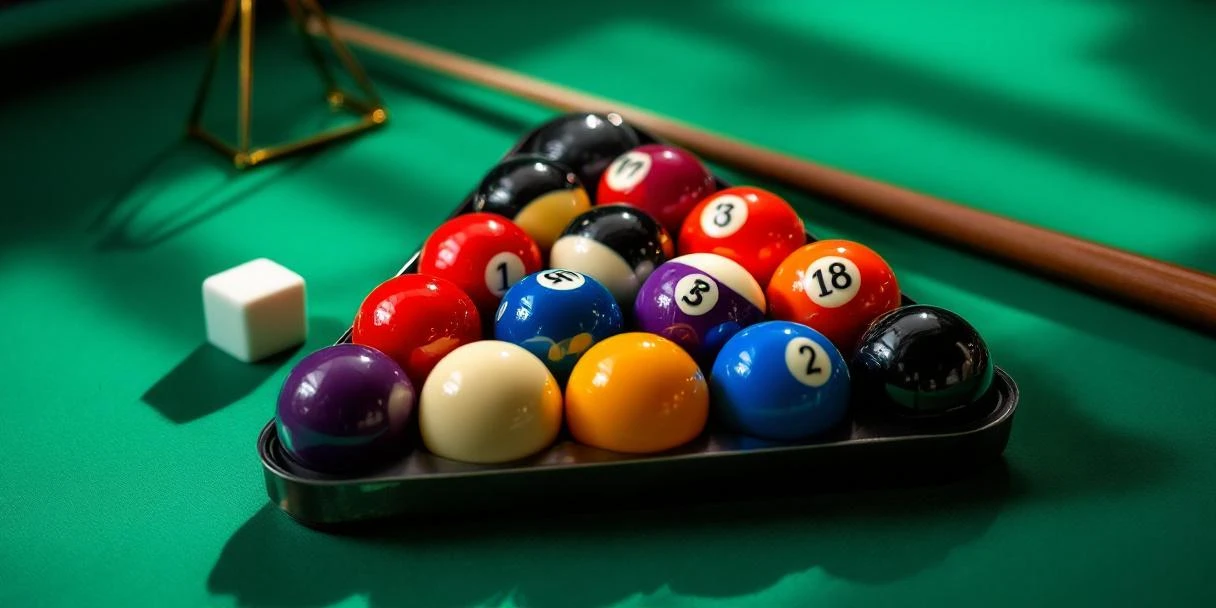
A major tech hurdle in ball manufacturing is ensuring that the “plug” (the colored number or stripe) has the exact same density as the rest of the ball. If the numbered insert were heavier or lighter than the white resin surrounding it, the ball would develop a “bias,” causing it to curve slightly during slow rolls. High-tech phenolic balls solve this by using the same base resin for both the body and the inlay, dyed with different pigments to maintain molecular uniformity.
Alternative Materials: Polyester and Acrylic Formulations
While phenolic resin represents the high-end “Pro-Tech” tier, the majority of consumer-grade pool balls utilize different chemical compositions. These are often categorized as polyester or acrylic-based polymers.
The Chemistry of Lower-Cost Polymer Alternatives
Polyester balls are the standard for home use and budget-friendly billiard halls. The technology behind polyester involves mixing a resin with a hardening agent. While these balls can be manufactured quickly and cheaply, they lack the molecular “tightness” of phenolic resin. On a microscopic level, polyester is more porous and less elastic.
Performance Trade-offs: Heat Resistance vs. Elasticity
One of the most significant technical differences between materials is their reaction to friction. When a cue ball is struck with force, the friction between the ball and the cloth can generate temperatures upwards of 480°F (250°C) for a fraction of a second.
- Phenolic Resin: Highly resistant to “burn spots,” preserving both the ball and the table felt.
- Polyester/Acrylic: More susceptible to heat damage, which leads to flat spots on the ball and premature wear on the expensive table cloth. This makes the choice of material a long-term maintenance consideration for facility operators.
Future Tech: Smart Balls and Advanced Composite Materials
As we look toward the future, the technology of the billiard ball continues to evolve. While the physical requirements of the game remain constant, the integration of digital technology and advanced materials science is opening new doors.
Tracking Tech and Embedded Sensors
In the realm of broadcast and training, “Smart Balls” are beginning to emerge. These utilize embedded RFID (Radio Frequency Identification) tags or high-contrast visual markers that allow high-speed cameras and AI software to track the ball’s rotation, velocity, and deflection in real-time. This tech provides players with data-driven insights into their “spin” or “English,” transforming a physical skill into measurable data points.
Carbon Fiber and Next-Gen Nanomaterials
Just as the cue stick industry has been revolutionized by carbon fiber, there is ongoing research into using composite materials for the balls themselves. By utilizing carbon nanotubes or ceramic-infused polymers, engineers aim to create a ball that is virtually indestructible and immune to thermal expansion. The challenge remains maintaining the “feel” and acoustic properties that players expect—a ball that is too hard can damage the rails or sound “tinny” upon impact.
Sustainable Manufacturing and Green Chemistry
With increasing pressure on industrial manufacturers to reduce their carbon footprint, the next wave of billiard ball tech may focus on bio-based resins. Engineers are exploring polymers derived from renewable sources that can match the structural integrity of petroleum-based phenolics. This would represent the full circle of the ball’s history: moving back toward natural inputs, but with the precision of 21st-century molecular engineering.
Conclusion: The Invisible Tech of the Table
The next time you see a rack of pool balls, consider the immense amount of technological history and material science packed into those 2.25-inch spheres. From the dangerous experiments with celluloid to the micron-precise engineering of phenolic resins, the pool ball is a testament to human ingenuity. Whether it is the pursuit of the perfect center of gravity or the development of heat-resistant polymers, the technology behind the game is what allows for the incredible feats of physics performed by professional players. In the world of billiards, science and sport are truly inseparable.
aViewFromTheCave is a participant in the Amazon Services LLC Associates Program, an affiliate advertising program designed to provide a means for sites to earn advertising fees by advertising and linking to Amazon.com. Amazon, the Amazon logo, AmazonSupply, and the AmazonSupply logo are trademarks of Amazon.com, Inc. or its affiliates. As an Amazon Associate we earn affiliate commissions from qualifying purchases.