
In the relentless march of technological innovation, we often focus on the silicon chips, the intricate algorithms, and the sleek interfaces that define our digital world. Yet, beneath the surface of our interconnected lives, and in the very blueprints of life itself, lie fundamental molecular structures that enable existence and drive progress. Among these crucial building blocks are phosphodiester bonds, a seemingly simple chemical linkage that underpins everything from the storage of genetic information to the development of revolutionary biotechnologies. While often discussed in the realm of molecular biology, the profound implications of phosphodiester bonds resonate deeply within the technological landscape, particularly in areas like genetic engineering, synthetic biology, and the development of advanced diagnostic and therapeutic tools. Understanding these bonds is not just an academic exercise; it’s a gateway to comprehending the very technologies that are reshaping medicine, agriculture, and even our understanding of life.

The Molecular Architecture: Understanding the Phosphodiester Bond’s Structure and Function
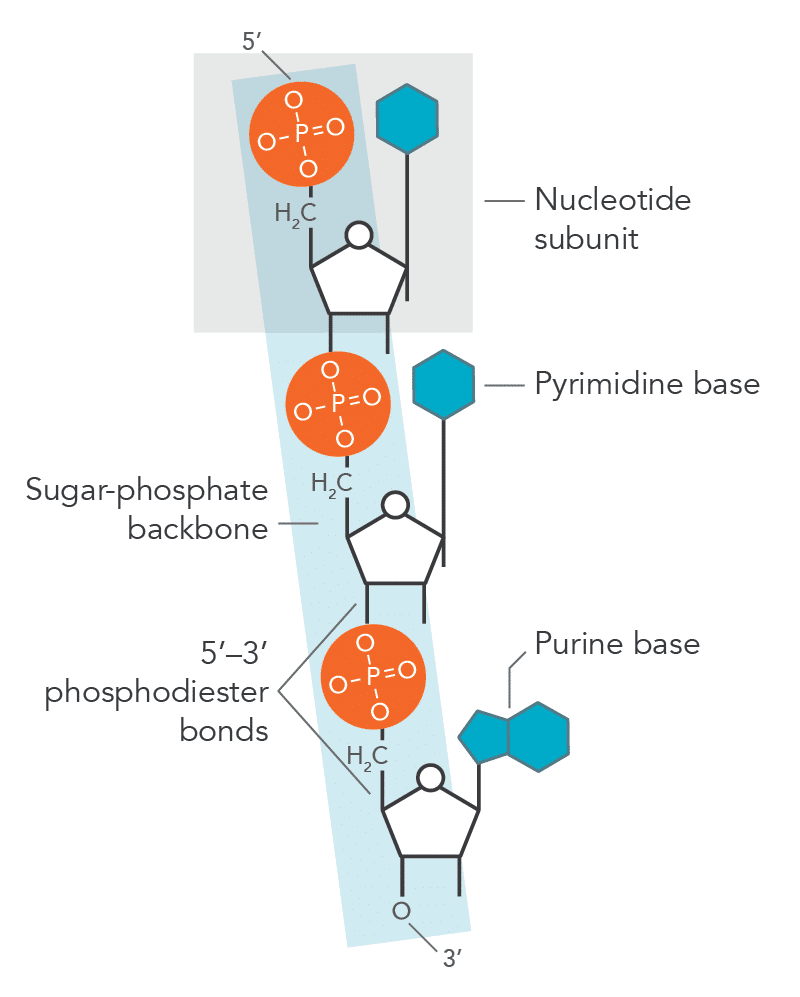
At its core, a phosphodiester bond is a type of ester linkage that connects two phosphate groups via an alcohol group. In the context of nucleic acids – the fundamental molecules of genetic information like DNA and RNA – this definition takes on immense significance. These bonds form the sugar-phosphate backbone, a continuous chain that lends structural integrity and facilitates the sequential arrangement of nucleotide bases.
The Sugar-Phosphate Backbone: A Molecular Scaffold
The sugar-phosphate backbone of DNA and RNA is constructed through a series of phosphodiester bonds. Each nucleotide, the monomeric unit of nucleic acids, consists of three components: a nitrogenous base (adenine, guanine, cytosine, thymine in DNA, or uracil in RNA), a five-carbon sugar (deoxyribose in DNA, ribose in RNA), and a phosphate group. The phosphate group of one nucleotide is linked to the 3′ carbon of the sugar of the preceding nucleotide via a phosphodiester bond. This creates a directional chain, typically described as having a 5′ end and a 3′ end, which is critical for the transmission and replication of genetic information.
Imagine a long, beaded necklace. The beads themselves are the nitrogenous bases, carrying the genetic code. The string holding them together, providing strength and flexibility, is the sugar-phosphate backbone. The phosphodiester bonds are the knots that secure each bead to the string, ensuring the sequence remains unbroken and readable. This robust yet adaptable structure is essential for DNA’s ability to store vast amounts of genetic information and for RNA’s diverse roles in protein synthesis and gene regulation.
Chemical Properties and Stability: Why They Matter for Technology
The chemical nature of the phosphodiester bond contributes to its stability and its susceptibility to specific enzymatic cleavage. This duality is precisely what makes them so valuable in technological applications. The covalent nature of the bond makes the nucleic acid chain relatively stable under physiological conditions, allowing genetic information to be preserved over time. However, specific enzymes known as nucleases can break these bonds, a process that is fundamental to DNA replication, repair, and recombination, as well as to many biotechnological processes.
The bond’s susceptibility to hydrolysis, especially under acidic or alkaline conditions, is also a consideration. However, under controlled biological and laboratory conditions, they remain remarkably robust. This balance of stability and controlled reactivity is a testament to nature’s elegant design and a key feature that molecular technologies exploit. For instance, understanding the conditions under which these bonds can be formed or broken allows scientists to synthesize custom DNA or RNA molecules, or to precisely cut and modify existing ones.
Phosphodiester Bonds in Action: Driving Biotechnological Frontiers
The fundamental understanding of phosphodiester bonds is not confined to textbooks; it is the bedrock upon which many of the most transformative technologies of our era are built. From deciphering genomes to engineering novel organisms, these bonds are actively manipulated and utilized.
Genetic Engineering and DNA Synthesis: Building with the Blueprint
The ability to synthesize custom DNA sequences with specific properties is a cornerstone of genetic engineering and synthetic biology. This process, known as oligonucleotide synthesis, relies entirely on the controlled formation of phosphodiester bonds. Chemical synthesis machines meticulously add individual nucleotides, one after another, to a growing DNA strand. Each addition involves forming a phosphodiester bond between the 3′ hydroxyl group of the growing chain and the 5′ phosphate group of the incoming nucleotide.
This technology allows scientists to create DNA fragments for research purposes, design primers for PCR (Polymerase Chain Reaction) to amplify specific gene segments, and even synthesize entire genes or genomes. The precision with which these bonds are formed dictates the accuracy of the synthesized DNA, which is paramount for any downstream application, whether it’s developing gene therapies, engineering crops for increased yield, or creating novel enzymes for industrial processes. The accuracy of phosphodiester bond formation directly translates to the accuracy of the genetic code being engineered, making it a critical factor in the success of countless biotech ventures.

RNA Interference (RNAi) and Therapeutic Applications: Silencing Genes with Precision
RNA interference (RNAi) is a natural biological process that uses small RNA molecules to regulate gene expression by targeting messenger RNA (mRNA) for degradation. Technologies based on RNAi, such as small interfering RNAs (siRNAs) and short hairpin RNAs (shRNAs), are revolutionizing therapeutic approaches. These therapeutic molecules are essentially RNA strands, held together by phosphodiester bonds, designed to specifically bind to and trigger the degradation of disease-causing mRNA.
The stability of these RNA molecules, maintained by their phosphodiester backbones, is crucial for their effectiveness in the body. Furthermore, chemical modifications are often introduced to these therapeutic RNAs to enhance their stability, delivery, and reduce off-target effects. These modifications, while altering the chemical properties of the RNA molecule, still rely on the fundamental phosphodiester linkage to maintain its structural integrity. The ability to design and synthesize these precisely tailored RNA molecules, with their specific sequence and chemical modifications, all enabled by the controlled formation of phosphodiester bonds, has opened up new avenues for treating genetic disorders, viral infections, and cancers.
Next-Generation Sequencing (NGS): Reading the Language of Life
The explosion in our ability to sequence genomes rapidly and affordably, powered by Next-Generation Sequencing (NGS) technologies, is another area profoundly impacted by the understanding and manipulation of phosphodiester bonds. NGS workflows often involve fragmenting DNA, ligating adapters to these fragments, and then amplifying them. Each of these steps implicitly relies on the chemical properties and enzymatic manipulation of phosphodiester bonds.
For example, DNA fragmentation can be achieved through physical methods or enzymatic digestion, where specific enzymes cleave phosphodiester bonds at particular sites. DNA ligases, on the other hand, are enzymes that catalyze the formation of phosphodiester bonds to join DNA fragments, a crucial step in preparing DNA libraries for sequencing. The sheer volume of data generated by NGS platforms is a testament to the efficiency and accuracy of these biochemical processes, which are all fundamentally governed by the formation and cleavage of phosphodiester bonds. Without this fundamental chemical linkage, the ability to read and interpret the vast instructions encoded in genomes would remain a distant dream.
The Future of Bio-Inspired Technology and the Role of Phosphodiester Bonds
As technology continues to converge with biology, the intricate molecular mechanisms that govern life, including the humble phosphodiester bond, will become even more central to innovation. The ongoing research in areas like synthetic biology, gene editing, and the development of bio-inspired materials promises to unlock new possibilities.
Synthetic Biology: Engineering New Biological Systems
Synthetic biology aims to design and construct new biological parts, devices, and systems, or to re-design existing, natural biological systems for useful purposes. At its core, this field manipulates the genetic code, which is a sequence of nucleotides linked by phosphodiester bonds. Scientists can design and synthesize novel DNA or RNA sequences to program cells with new functions, creating organisms that can produce biofuels, pharmaceuticals, or novel materials.
The ability to precisely assemble these engineered genetic circuits, often involving the creation and manipulation of numerous phosphodiester bonds, is what empowers synthetic biologists. This field is rapidly advancing, and its progress is inextricably linked to our ability to control and engineer the fundamental chemical linkages that form the basis of genetic information.
Advanced Drug Delivery and Diagnostics: Targeting with Molecular Precision
The development of advanced drug delivery systems and diagnostic tools increasingly leverages biomolecules and their specific interactions. Nucleic acids, modified with various chemical functionalities and held together by phosphodiester bonds, are being employed as scaffolds for drug delivery, as probes for disease detection, and as components in biosensors.
For instance, aptamers, which are short, single-stranded DNA or RNA molecules that can bind to specific target molecules, are synthesized using oligonucleotide synthesis, relying on phosphodiester bonds. These aptamers can be functionalized with drugs or imaging agents for targeted therapies or diagnostics. The stability and specificity of these nucleic acid-based tools are directly influenced by the integrity of their phosphodiester backbones and any modifications made to them. This area of bio-inspired technology is poised for significant growth, further underscoring the importance of understanding and manipulating these foundational molecular bonds.
The Unseen Foundation of Digital Life
While we may not interact with phosphodiester bonds directly in our daily use of technology, they are, in a profound sense, the unseen foundation of much of our digital world and the revolutionary advancements transforming medicine and life sciences. From the DNA sequences that dictate our biological makeup to the engineered genetic material driving innovation in healthcare and industry, phosphodiester bonds are the essential, robust connectors that make it all possible. As our technological capabilities expand, our deeper understanding and precise manipulation of these fundamental molecular linkages will undoubtedly continue to be a driving force behind the next wave of scientific and technological breakthroughs. They are, in essence, the sturdy, reliable code that writes the story of life and empowers the technologies that are increasingly reading, rewriting, and building upon it.
aViewFromTheCave is a participant in the Amazon Services LLC Associates Program, an affiliate advertising program designed to provide a means for sites to earn advertising fees by advertising and linking to Amazon.com. Amazon, the Amazon logo, AmazonSupply, and the AmazonSupply logo are trademarks of Amazon.com, Inc. or its affiliates. As an Amazon Associate we earn affiliate commissions from qualifying purchases.