
For more than two decades, the word “Google” has functioned as both a noun and a verb, representing a near-total hegemony over how humanity accesses information. However, the technological landscape is shifting. Concerns over data privacy, the rise of large language models (LLMs), and the desire for specialized results have led to a resurgence in alternative search engines. Understanding these alternatives is no longer just a matter of preference; it is a strategic move for users looking to reclaim their digital privacy or leverage cutting-edge AI tools.
The dominance of a single algorithm creates what technologists call a “filter bubble,” where results are personalized based on past behavior, often at the expense of objectivity and privacy. By exploring the broader ecosystem of search technology, users can find tools that prioritize security, provide computational answers, or offer deep dives into specialized databases that Google’s general-purpose crawlers might prioritize differently.
Privacy-First Search Engines: Reclaiming Digital Sovereignty
The most significant movement away from Google has been driven by digital security and data ethics. Most traditional search engines build a profile of the user to serve targeted advertisements. Privacy-centric engines, conversely, utilize technical architectures that decouple search queries from individual identities.
DuckDuckGo: The Pioneer of Non-Tracking Search
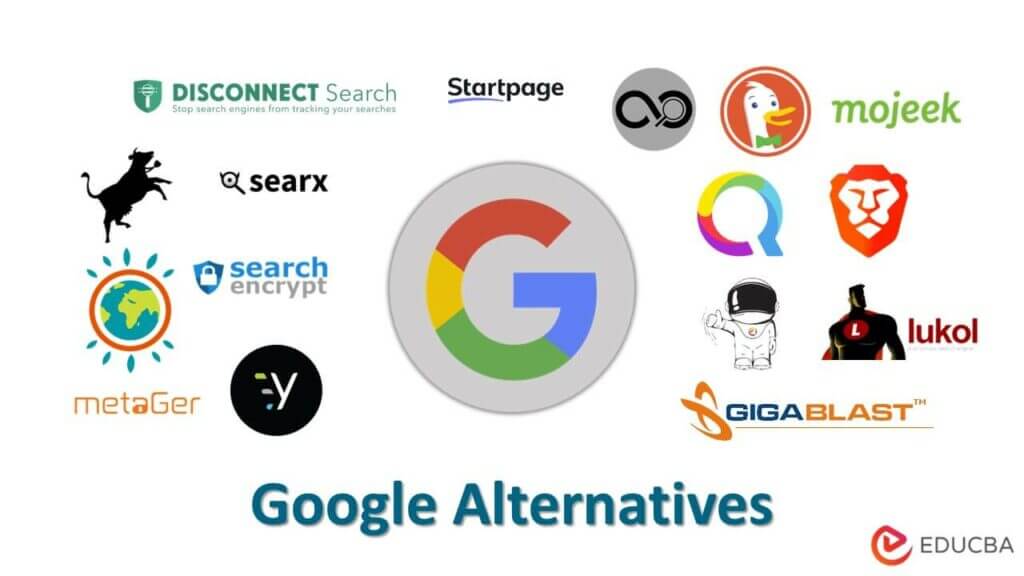
DuckDuckGo has become the gold standard for users seeking to avoid the “surveillance capitalism” model. Unlike engines that track your IP address and search history, DuckDuckGo does not store personal information. From a technical standpoint, it serves results from a variety of sources, including its own crawler (DuckDuckBot) and over 400 other sources like Bing and Wikipedia.
One of its most appreciated tech features is the “!bangs” system. This allows users to search other websites directly from the DuckDuckGo search bar. For instance, typing “!w” followed by a query searches Wikipedia immediately, and “!github” searches the code repositories of GitHub. This streamlines the workflow for developers and researchers who need to bypass general search results to reach specific databases.
Brave Search: Independent Indexing
While many alternative search engines are “metasearch” tools—meaning they pull results from larger indexes like Bing or Google—Brave Search has taken the ambitious step of building its own independent web index. This is a massive technical undertaking that ensures the results are not influenced by the biases or censorship policies of the tech giants.
Brave also features “Goggles,” a tool that allows users to apply their own filters and rankings to search results. This allows a community-driven approach to search, where a user can choose to prioritize results from independent blogs over mainstream media, or academic papers over commercial sites.
Startpage: The Privacy Proxy
Startpage offers a unique technical compromise: it delivers Google search results but without the tracking. It acts as an intermediary, sending your query to Google anonymously and returning the results to you. Google never sees your IP address or sets tracking cookies on your device. For users who find Google’s search quality superior but detest its data collection practices, Startpage provides a “Private View” feature that allows you to visit the resulting websites through a proxy, further masking your digital footprint.
The AI Revolution: Generative Search and Answer Engines
The introduction of Generative AI has transformed search from a list of links into a dialogue. New “answer engines” use Large Language Models to synthesize information from across the web, providing direct answers with cited sources.
Perplexity AI: The Researcher’s Companion
Perplexity AI represents the forefront of AI-integrated search. Unlike a chatbot that might “hallucinate” or provide outdated information, Perplexity uses a Retrieval-Augmented Generation (RAG) framework. When a query is entered, the system searches the live web, identifies high-authority sources, and then uses an LLM to summarize those findings into a coherent answer.
Each claim made by Perplexity is accompanied by a numerical citation that links directly to the source. This transparency is vital for technical research, allowing users to verify the data instantly. It bridges the gap between traditional search and the conversational efficiency of AI.
Microsoft Bing: The GPT-Powered Giant
Microsoft’s heavy investment in OpenAI has turned Bing from a struggling underdog into a powerhouse of AI search. By integrating GPT-4 directly into the search experience (now branded as Copilot), Bing allows users to toggle between traditional link-based results and a sophisticated AI assistant.
Technically, Bing excels in multi-modal search, allowing users to search via images, voice, and text simultaneously. Its integration into the Windows ecosystem and the Edge browser makes it a seamless alternative for users already embedded in the Microsoft software stack.
You.com: Customization and Privacy in AI
You.com positions itself as a customizable search engine that prioritizes user control. It allows users to “upvote” or “downvote” specific sources, training the algorithm to prioritize the websites they trust. It also features a suite of AI tools, including YouCode, which is specifically designed for developers. YouCode can search through Stack Overflow, GitHub, and technical documentation to provide code snippets and troubleshooting advice directly in the search interface.
Specialized and Computational Search Tools
General search engines are designed to find documents and websites. However, when the query requires complex mathematical computations, data visualization, or environmental transparency, specialized engines are far more effective.
WolframAlpha: Computational Intelligence
WolframAlpha is not a search engine in the traditional sense; it is a “computational knowledge engine.” While Google searches the web for pages containing your keywords, WolframAlpha uses a massive internal database of structured data and sophisticated algorithms to calculate answers.
If you input a complex calculus problem, a chemical formula, or a request to compare the GDP of three different countries over twenty years, WolframAlpha will generate the answer from scratch. For engineers, scientists, and students, it is an indispensable tool that handles structured data in a way that no LLM or keyword-based crawler can match.
Ecosia: The Tech-for-Good Alternative
Ecosia addresses the environmental cost of the massive data centers required to power modern search. Running on servers powered by 100% renewable energy, Ecosia uses its ad revenue to fund reforestation projects globally. From a technical perspective, Ecosia is powered by Bing’s index but adds its own layers of privacy and social responsibility. It is a prime example of how software choices can align with ethical and environmental values without sacrificing the quality of the user experience.
Swisscows: Semantic Search and Family Safety
Based in Switzerland, Swisscows utilizes semantic data recognition to provide search results. Unlike traditional engines that rely heavily on keywords, semantic search attempts to understand the context and intent behind a query. Furthermore, Swisscows is built with a strict “family-friendly” ethos, using AI-driven filters to exclude violent or pornographic content automatically. Its servers are located in a high-security data bunker in the Swiss Alps, benefiting from some of the world’s strictest privacy laws.
The Technical Architecture of Search: Metasearch vs. Indexing
To truly understand the landscape of search alternatives, one must distinguish between how these engines gather information. This technical distinction determines the speed, diversity, and privacy of the results.
Independent Indexers
Engines like Google, Bing, and Mojeek maintain their own “index” of the web. This requires massive infrastructure: “spiders” or “crawlers” that constantly browse the internet, download pages, and store them in enormous databases. Maintaining an independent index is prohibitively expensive, which is why there are so few of them. However, an independent index is the only way to ensure that search results are not subject to the editorial or algorithmic biases of a third party.
Metasearch Engines
Metasearch engines, such as Searx or Dogpile, do not crawl the web themselves. Instead, they send your query to multiple other search engines simultaneously, gather the results, and present them in a unified list. This is highly effective for getting a “bird’s-eye view” of what the internet has to offer on a specific topic. Searx, in particular, is an open-source metasearch engine that users can host on their own servers, providing the ultimate level of privacy and control over the search process.
Why Diversifying Your Search Tools Matters
The evolution of search technology suggests that the “one-size-fits-all” approach of the past is becoming obsolete. A developer might use DuckDuckGo for general browsing to avoid trackers, switch to Perplexity for researching a new API, and utilize WolframAlpha for hardware load calculations.
The reliance on a single search provider creates a single point of failure for our information accuracy and a single point of data collection for our personal lives. By integrating these various tech-forward alternatives into your workflow, you gain access to more specialized data, more efficient AI-driven summaries, and a significantly higher level of digital security. As we move further into the age of AI and decentralized data, the ability to navigate these different search architectures will become a fundamental skill for any tech-literate individual.
aViewFromTheCave is a participant in the Amazon Services LLC Associates Program, an affiliate advertising program designed to provide a means for sites to earn advertising fees by advertising and linking to Amazon.com. Amazon, the Amazon logo, AmazonSupply, and the AmazonSupply logo are trademarks of Amazon.com, Inc. or its affiliates. As an Amazon Associate we earn affiliate commissions from qualifying purchases.