
In the early days of telecommunications, an area code was a strictly geographic marker, a physical tether to a specific switchboard in a specific city. Today, as we navigate a world defined by Voice over Internet Protocol (VoIP), cloud-based communication, and sophisticated digital security protocols, the concept of the area code has evolved. In the state of Ohio—a burgeoning hub for technology and data centers—understanding the distribution and technical management of area codes is essential for grasping how the region connects to the global digital grid.

This guide explores the technical infrastructure of Ohio’s area codes, the shift toward digital overlays, and the role of modern software in managing these vital telecommunication resources.
The Evolution of Telecommunications Infrastructure in Ohio
The North American Numbering Plan (NANP) was established in 1947 to simplify and facilitate direct-dial long-distance calling. Originally, Ohio was assigned a handful of codes that corresponded to its major industrial hubs. However, the explosion of the digital age—characterized by the proliferation of smartphones, tablets, and IoT devices—demanded a radical restructuring of this legacy system.
The Transition from Landlines to VoIP
Historically, an area code was tied to a physical copper wire running into a home or business. In the modern tech stack, however, “virtual” numbers have become the standard. VoIP technology allows businesses in Columbus or Cleveland to operate using local Ohio area codes while their servers are hosted in different states or even different countries. This transition from hardware-centric telephony to software-defined networking (SDN) has changed the way we perceive geographic identifiers. Ohio’s area codes now serve more as digital metadata than physical locations, allowing for seamless integration into CRM software and automated communication platforms.
Managing the Digital Grid: Why Area Codes Multiply
As the number of connected devices grows, the pool of available seven-digit numbers within a single area code (which yields roughly 7.92 million usable combinations) eventually runs dry. This phenomenon, known as “number exhaustion,” has forced a move toward technological solutions like “overlays.” An overlay occurs when a new area code is added to the same geographic region as an existing one, requiring 10-digit dialing. This change is managed at the software level by telecommunications providers, ensuring that data packets reach the correct destination regardless of whether the prefix is the “legacy” code or the “new” overlay.
Mapping Ohio’s Digital Geography: A Breakdown of Regional Identifiers
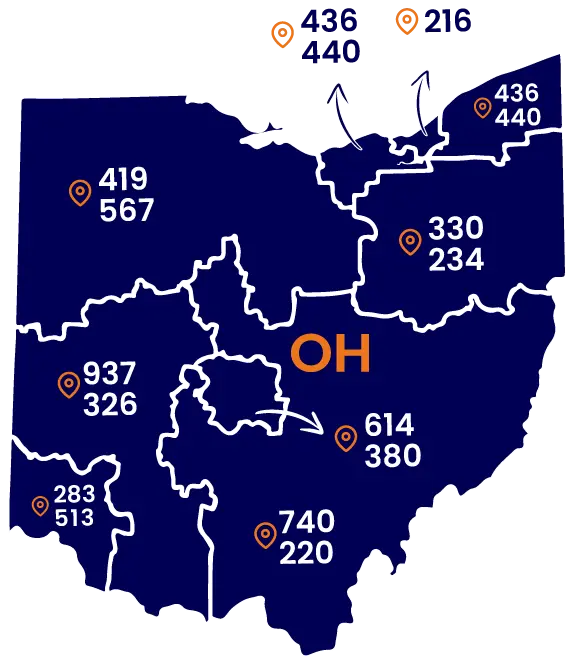
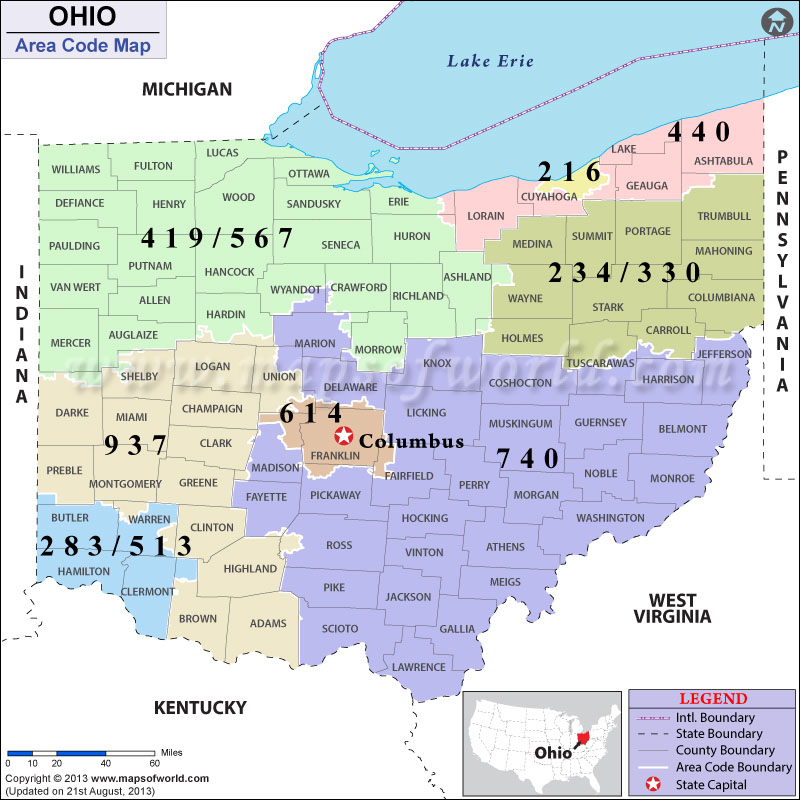
Ohio’s digital map is divided into several distinct regions, each represented by a cluster of area codes. These codes are not just numbers; they represent the digital gateways to the state’s various economic and technological sectors.
Northern Ohio and the Legacy of 216, 440, and 330
Cleveland and its surrounding suburbs are served by a network of codes that have seen significant shifts over the decades.
- 216: This is one of the original NANP codes, now focused primarily on the city of Cleveland.
- 440: Serving the surrounding suburbs to the east, west, and south, the 440 code was a result of a geographic split in the late 1990s.
- 330 and 234: These codes serve the Akron, Canton, and Youngstown areas. The 234 code was implemented as an overlay to the 330 region, a technical maneuver that allowed the region to expand its device capacity without forcing existing users to change their numbers.
Central Ohio’s Tech Hub: The 614 and 380 Overlay
Columbus has emerged as a major player in the tech world, hosting massive data centers for giants like Amazon Web Services (AWS) and Google. This growth led to the exhaustion of the historic 614 area code. In 2016, the 380 overlay was activated. From a technical standpoint, this required a massive update to the local routing tables and switching software to handle mandatory 10-digit dialing, ensuring that the city’s tech infrastructure remained scalable.
Southern and Western Ohio Connectivity: 513, 283, 937, and 326
The Cincinnati and Dayton corridors are vital to Ohio’s aerospace and manufacturing technology sectors.
- 513 and 283: Cincinnati’s 513 code recently received the 283 overlay to accommodate the surge in mobile and smart-device activations.
- 937 and 326: Dayton and much of southwestern Ohio utilize the 937 code, with the 326 overlay providing the necessary “headroom” for future digital growth.
The 740 and 220 Region: The Rural-Urban Digital Bridge
Covering a vast portion of southeastern and central Ohio, the 740 code (and its 220 overlay) represents a unique challenge in telecommunications. Bridging rural landscapes with expanding tech suburbs requires robust fiber-optic deployment and sophisticated signal routing to maintain low latency across such a large geographic footprint.
The Technology Behind Area Code Overlays and Number Portability
The seamless transition between these codes is made possible by sophisticated backend software and international standards. Without these technological advancements, the management of Ohio’s numbering resources would be a chaotic manual process.
Software Solutions for Local Number Portability (LNP)
One of the most significant tech milestones in telecommunications was the implementation of Local Number Portability (LNP). This allows a user to keep their Ohio area code even if they switch providers or move to a different part of the state. Behind the scenes, this is managed by a centralized database that directs calls based on a “Location Routing Number” (LRN) rather than the area code alone. This software-driven approach decouples the phone number from the physical switch, providing users with digital mobility.
The Role of the NANPA in Digital Resource Management
The North American Numbering Plan Administrator (NANPA) uses predictive modeling and data analytics to determine when an Ohio area code will reach exhaustion. By monitoring “fill rates” and the pace of new number assignments, they can trigger the implementation of new overlays years in advance. This proactive technical management ensures that Ohio’s digital economy is never throttled by a lack of communication identifiers.
Digital Security: Area Codes in the Age of Spoofing and Verification
While area codes are useful for identification, they have also become a tool for cybercriminals. In the tech world, “neighbor spoofing” is a significant security concern, where malicious actors use software to mimic a local Ohio area code to gain the trust of a target.
Understanding Caller ID Spoofing Technology
Spoofing occurs at the application layer of the telecommunications stack. Using VoIP software, an attacker can modify the “From” field in the SIP (Session Initiation Protocol) header of an IP call. This makes a call originating from an offshore botnet appear as though it is coming from a local 614 or 216 number. Understanding this vulnerability is the first step in developing the tech-side defenses necessary to protect Ohio citizens.
Leveraging STIR/SHAKEN and AI to Combat Fraud
To combat this, the tech industry has implemented the STIR/SHAKEN framework. These are acronyms for Secure Telephone Identity Revisited (STIR) and Signature-based Handling of Asserted Information Using toKENs (SHAKEN).
- How it works: When a call is placed from an Ohio number, it is digitally signed with a certificate of authenticity.
- Verification: The receiving carrier validates the certificate. If the software detects a mismatch, the call is flagged as “Potential Spam” or blocked entirely.
Furthermore, many modern smartphone apps now use AI-driven heuristics to analyze call patterns in real-time. If a “216” number is making 5,000 calls per hour, the system’s algorithms identify this as non-human behavior and blacklist the source across the network.
The Future of Geographic Identifiers in a Borderless World
As we look toward the future of 5G and 6G connectivity, the relevance of the “area code” continues to shift. We are moving toward a unified digital identity system where a phone number might eventually be replaced by a blockchain-verified universal ID. However, for the foreseeable future, Ohio’s area codes remain the primary “digital zip codes” of the state.
The technical management of these codes—through overlays, VoIP integration, and STIR/SHAKEN security—ensures that Ohio remains a competitive and connected player in the global tech ecosystem. Whether you are a developer building a new communication app or a business owner scaling your digital presence, understanding the “how” and “why” of Ohio’s area codes is a vital component of navigating the modern technological landscape. By treating these numbers not just as digits, but as parts of a complex, software-driven network, we can better appreciate the invisible infrastructure that keeps the Buckeye State connected to the world.
aViewFromTheCave is a participant in the Amazon Services LLC Associates Program, an affiliate advertising program designed to provide a means for sites to earn advertising fees by advertising and linking to Amazon.com. Amazon, the Amazon logo, AmazonSupply, and the AmazonSupply logo are trademarks of Amazon.com, Inc. or its affiliates. As an Amazon Associate we earn affiliate commissions from qualifying purchases.