
In the complex and highly regulated landscape of the United States healthcare system, a seemingly simple 10-digit number plays an indispensable role in ensuring smooth operations, financial transactions, and compliance: the National Provider Identifier (NPI). Far more than just an ID, an NPI is a unique federal identification number issued to healthcare providers by the Centers for Medicare and Medicaid Services (CMS). Its primary purpose is to simplify and standardize the identification of healthcare providers across all administrative and financial transactions. For any entity or individual engaged in the provision of healthcare services, understanding the NPI, its application, and its profound implications for business finance is not merely beneficial—it is absolutely critical. This article delves into the financial imperative behind NPIs, their role in the broader healthcare financial ecosystem, and the strategic considerations for healthcare businesses.
The Financial Imperative: Why NPIs Matter for Healthcare Providers
At the heart of every healthcare practice, hospital, or clinic lies a robust financial engine powered by billing, claims, and reimbursement. The NPI acts as a foundational cog in this machinery, dictating the efficiency, legality, and ultimate success of a provider’s financial operations. Without a valid and correctly used NPI, healthcare providers face significant hurdles that can disrupt cash flow, incur penalties, and even jeopardize their ability to operate.
Streamlining Billing and Reimbursement
Before the advent of the NPI, healthcare providers used a variety of different identification numbers, including UPINs, Medicaid numbers, and commercial payer numbers. This fragmentation created a chaotic and inefficient billing environment, leading to increased administrative costs, higher error rates, and delayed reimbursements. The Health Insurance Portability and Accountability Act (HIPAA) of 1996 mandated the adoption of a single, standard identifier for healthcare providers, giving birth to the NPI.
The NPI’s introduction revolutionized the billing process. Now, regardless of the payer—be it Medicare, Medicaid, or a commercial insurance company—the provider’s NPI remains constant. This standardization significantly streamlines the creation and submission of claims. For billing departments, it means fewer errors related to incorrect provider identification, faster processing times, and ultimately, quicker and more reliable reimbursement. From a financial perspective, this efficiency translates directly into improved revenue cycle management and more predictable cash flow, which is vital for any business’s solvency and growth. Without this standardized identifier, the costs associated with manual review, resubmissions, and denied claims would skyrocket, directly impacting a provider’s bottom line.
Ensuring Regulatory Compliance and Avoiding Penalties
Compliance is a non-negotiable aspect of the healthcare industry, and the NPI is central to meeting numerous regulatory requirements. HIPAA not only mandated the NPI but also established strict standards for electronic healthcare transactions. The use of an NPI is a core component of these standards, making it mandatory for all HIPAA-covered entities. Covered entities include healthcare providers who transmit health information electronically in connection with a transaction for which CMS has adopted a standard, health plans, and healthcare clearinghouses.
Failure to comply with NPI regulations can lead to substantial financial penalties. Non-compliant claims will be rejected, resulting in lost revenue and increased administrative costs associated with rework. Furthermore, consistent non-compliance can trigger audits, fines, and even exclusion from federal healthcare programs like Medicare and Medicaid, which can be a death knell for many practices. By ensuring proper NPI usage, providers safeguard their financial viability, mitigate legal risks, and maintain their eligibility to participate in crucial payment programs. It’s an investment in financial security as much as it is an adherence to legal mandates.
Facilitating Electronic Transactions and Claim Processing
The modern healthcare financial landscape is increasingly digital. Electronic Data Interchange (EDI) for claims submission (e.g., ANSI X12 837), remittance advice (e.g., ANSI X12 835), and eligibility verification (e.g., ANSI X12 270/271) relies heavily on the NPI. These electronic transactions are fundamental to the efficient flow of money within the healthcare system.
The NPI serves as the unique digital fingerprint for a provider, allowing automated systems to accurately route, process, and reconcile financial data. This automation drastically reduces the need for manual data entry, minimizes human error, and accelerates the entire claim-to-payment cycle. For providers, this translates into reduced operational costs associated with paper processing, improved accuracy in financial reporting, and a faster conversion of services rendered into actual revenue. In an era where optimizing financial operations is key to sustainability, the NPI underpins the technological infrastructure that enables seamless and secure financial data exchange.
Navigating the NPI Application and Management Process
Understanding the financial importance of an NPI is only the first step; actively obtaining and managing it correctly is where its practical financial impact truly materializes. The application process is straightforward, but attention to detail is crucial to avoid delays that could impact billing capabilities.
Who Needs an NPI? Individuals vs. Organizations
Any healthcare provider who is a HIPAA-covered entity must obtain an NPI. This encompasses a broad spectrum of individuals and organizations:
-
Individual Healthcare Providers (Type 1 NPI): This category includes physicians, dentists, nurses, therapists, chiropractors, pharmacists, and any other healthcare professional who provides medical or health services. Even if an individual provider works for an organization, they must have their own Type 1 NPI. This NPI is tied to their personal credentials and remains with them regardless of their employment changes. From a financial perspective, this ensures that their services can be billed under their unique identifier, allowing for accurate tracking of their contributions to revenue.
-
Organizational Healthcare Providers (Type 2 NPI): This category covers entities such as hospitals, clinics, group practices, home health agencies, nursing homes, and laboratories. A Type 2 NPI identifies the organization as a whole. Group practices, for example, will use their Type 2 NPI for billing purposes when submitting claims under the group’s name, while individual practitioners within the group will also use their Type 1 NPIs. This dual structure is essential for clear financial reporting, allowing payers to distinguish between services provided by an individual and services billed under an organizational umbrella, which often impacts reimbursement rates and contractual agreements.
The Application Journey: From CMS to Claim Submission
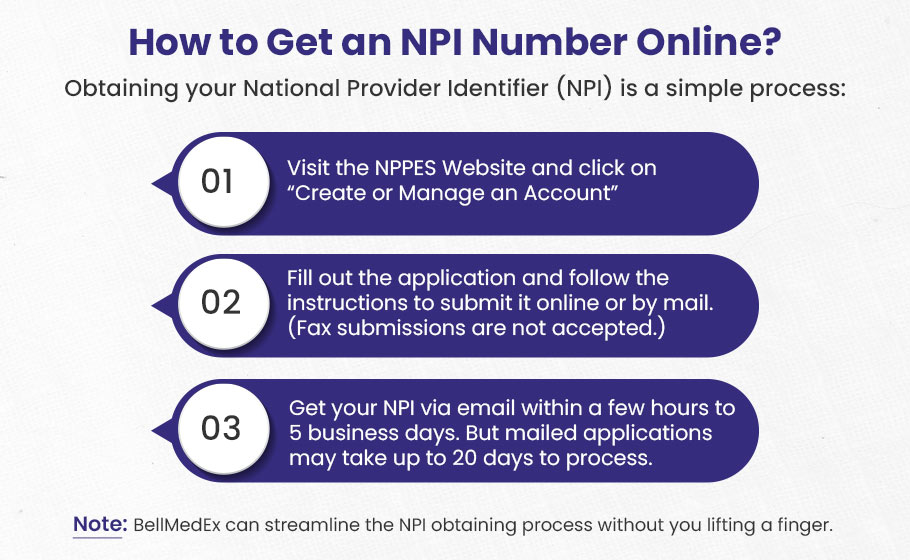
The NPI application is managed through the National Plan and Provider Enumeration System (NPPES), a web-based system operated by CMS. The process typically involves:
-
Accessing NPPES: Providers can apply online via the NPPES website, which is the most common and efficient method.
-
Gathering Information: Applicants must provide detailed information, including their legal name, business name (if applicable), tax ID number, physical address, contact information, and specific healthcare provider taxonomy codes that accurately describe their type of practice or specialty. For financial clarity, ensuring the tax ID and other identifying details match existing business records is paramount to prevent billing discrepancies.
-
Submitting the Application: Once all required fields are completed, the application is submitted electronically.
-
Receiving the NPI: After successful verification, CMS issues the 10-digit NPI. This process typically takes a few days to a few weeks.
Crucially, upon receiving the NPI, providers must immediately update their practice management systems, electronic health record (EHR) systems, and billing software. They also need to notify all relevant payers and clearinghouses. Any delay in integrating the new NPI can lead to claim rejections, payment delays, and significant disruptions to the revenue cycle, directly impacting the financial health of the practice.
Maintaining Your NPI: Updates and Renewals
An NPI does not expire, but it requires diligent maintenance. Providers are legally obligated to keep their NPI information current in the NPPES system. Any changes to key data points, such as:
-
Provider’s name (for individuals or organizations)
-
Business mailing address or practice location
-
Tax ID number
-
Contact information
-
Healthcare provider taxonomy
must be updated promptly. Failure to update this information can lead to claim denials, delayed payments, and communication breakdowns with payers. For example, if a billing address is outdated, remittance advice (payment information) might be sent to the wrong location, causing financial reconciliation issues. Regularly reviewing and updating NPI data ensures continuous compliance, uninterrupted billing, and accurate financial communications, all of which are essential for maintaining a healthy revenue stream.
NPIs in the Broader Healthcare Financial Ecosystem
The NPI’s influence extends beyond individual provider operations, acting as a critical linchpin within the entire healthcare financial ecosystem, facilitating interactions between various stakeholders and underpinning the efficiency of revenue flows.
Interplay with Insurance Payers and Government Programs
Insurance companies, both commercial and government-sponsored (Medicare, Medicaid, TRICARE), rely on the NPI as the primary identifier for providers. When a claim is submitted, the payer’s system uses the NPI to:
-
Verify Provider Eligibility: Confirm that the provider is legitimate and enrolled with their plan.
-
Process Claims: Route claims to the correct internal departments for adjudication based on provider type and specialty.
-
Issue Reimbursements: Ensure that payments are directed to the correct provider account.
-
Detect Fraud and Abuse: Monitor billing patterns and identify potential fraudulent activities by tracking claims associated with specific NPIs.
For providers, the accurate and consistent use of their NPI across all claims submitted to different payers is fundamental to securing timely payments. Discrepancies can lead to denials, requiring appeals and re-submissions, which are costly and time-consuming, effectively delaying revenue recognition. Strategic financial planning for healthcare organizations must account for this interoperability, ensuring that NPI data is flawlessly integrated into all payer contracts and billing protocols.
Impact on Revenue Cycle Management
Revenue Cycle Management (RCM) encompasses all administrative and clinical functions that contribute to the capture, management, and collection of patient service revenue. The NPI is embedded throughout the RCM process:
-
Patient Registration: NPIs are often recorded during patient intake to ensure accurate provider identification from the outset.
-
Charge Capture: When services are rendered, the NPI is linked to the charges to identify which provider performed the service.
-
Claim Generation: The NPI is a mandatory field on all electronic and paper claims (e.g., CMS-1500, UB-04).
-
Claim Adjudication: Payers use the NPI to process claims against a provider’s contract and fee schedules.
-
Payment Posting: The NPI helps reconcile payments received against billed services.
Any error or absence of an NPI at any stage can disrupt the entire RCM flow, leading to claim delays, denials, increased accounts receivable, and ultimately, a negative impact on cash flow. By ensuring the NPI is correctly utilized and managed, healthcare organizations can optimize their RCM, reduce administrative costs, accelerate payment cycles, and significantly improve their financial health.
Data Integrity and Financial Reporting
The NPI is also crucial for maintaining data integrity across various healthcare information systems and for accurate financial reporting. It allows for consistent identification of providers in:
-
Electronic Health Records (EHRs): Linking services to specific providers.
-
Practice Management Systems (PMS): Managing scheduling, billing, and patient demographics.
-
Financial Accounting Systems: Allocating revenue and expenses to specific services or providers.
-
Public Health Data: For epidemiological studies and healthcare resource allocation.
Consistent NPI usage enables healthcare organizations to generate reliable financial reports, analyze revenue trends, assess provider productivity, and make informed strategic financial decisions. For instance, detailed reports on services rendered and reimbursements received per NPI can help identify areas for operational improvement, contract renegotiation opportunities, or potential billing compliance issues, all of which have direct financial implications. The NPI thus serves as a powerful tool for financial transparency and accountability within the complex healthcare enterprise.
Strategic Implications for Healthcare Business Finance
Beyond the operational necessities, NPIs hold strategic value for healthcare businesses, influencing long-term financial planning, growth, and risk management.
Optimizing Cash Flow with Efficient NPI Usage
For any business, cash flow is king. In healthcare, where payment cycles can be lengthy and denials frequent, optimizing cash flow is paramount. Efficient NPI usage directly contributes to this optimization by:
-
Reducing Claim Denials: Correct NPI ensures claims pass initial payer edits, reducing the number of rejected or denied claims that require rework.
-
Accelerating Payment Timelines: Streamlined electronic processing enabled by NPIs means faster claim adjudication and quicker remittance.
-
Minimizing Administrative Overhead: Less time spent on error correction, resubmissions, and manual tracking frees up resources that can be reallocated to revenue-generating activities or cost-saving initiatives.
Healthcare CFOs and practice managers must view NPI management not just as a compliance task but as a critical component of their financial strategy. Investing in robust billing systems that correctly manage NPIs, regular staff training on NPI protocols, and proactive NPI data verification can yield significant returns in terms of improved cash flow and reduced operational costs.
Due Diligence for Acquisitions and Partnerships
In an increasingly consolidating healthcare market, mergers, acquisitions, and partnerships are common growth strategies. During the due diligence phase of such transactions, the NPI status of the target entity or partner is a significant financial consideration.
Acquirers need to:
-
Verify NPI Validity and Compliance: Ensure all acquired providers and organizations have valid NPIs and a history of compliant usage. Unresolved NPI issues can signal underlying billing problems, potential fines, or exclusion from federal programs, representing significant financial liabilities.
-
Assess NPI Data Management: Evaluate the target’s systems and processes for managing NPI data, as integration into existing financial and operational systems will be crucial for seamless transitions and continued revenue generation.
-
Identify Reimbursement Risks: Analyze how NPI usage has impacted the target’s historical reimbursement rates and denial rates, which directly affects its valuation and projected future earnings.
A clean NPI record is indicative of good governance and robust financial operations, making an entity more attractive and less risky from an investment perspective. Conversely, NPI-related compliance issues can trigger renegotiations, reduce valuation, or even derail a deal entirely due to the associated financial risks.

Future Trends and Financial Adaptability
The healthcare financial landscape is dynamic, with ongoing changes in regulations, payment models (e.g., value-based care), and technological advancements. The NPI remains a constant and adaptable identifier within this evolving environment. As healthcare moves towards more integrated care delivery models and sophisticated data analytics, the NPI’s role in tying financial transactions to specific providers and services will only become more pronounced.
Providers and healthcare organizations must remain vigilant about NPI-related developments. Adaptability to new CMS guidelines, integration with emerging financial tools, and leveraging NPI data for strategic insights will be key to long-term financial success. The NPI, though a seemingly small administrative detail, is a robust identifier that underpins the vast financial architecture of the U.S. healthcare system, enabling compliance, driving efficiency, and ultimately, ensuring the financial viability of healthcare providers nationwide.
aViewFromTheCave is a participant in the Amazon Services LLC Associates Program, an affiliate advertising program designed to provide a means for sites to earn advertising fees by advertising and linking to Amazon.com. Amazon, the Amazon logo, AmazonSupply, and the AmazonSupply logo are trademarks of Amazon.com, Inc. or its affiliates. As an Amazon Associate we earn affiliate commissions from qualifying purchases.