
The Aurora Borealis, commonly known as the Northern Lights, has long been a subject of myth and legend. However, in the modern era, the mystery of these dancing lights is being unraveled not just by physicists, but by a sophisticated ecosystem of technology. To understand what the Northern Lights are caused by is to delve into a world of solar dynamics, satellite telemetry, and advanced computational modeling. Today, the study of the aurora is at the forefront of technological trends, utilizing AI tools, high-performance gadgets, and digital security protocols to protect our global infrastructure.
Solar Dynamics and the Physics of Particle Acceleration
At its core, the Northern Lights are a display of the interaction between the sun’s emissions and Earth’s magnetic field. However, our ability to observe and explain this phenomenon is entirely dependent on the technology we have placed in orbit.
Solar Winds and the Earth’s Magnetosphere
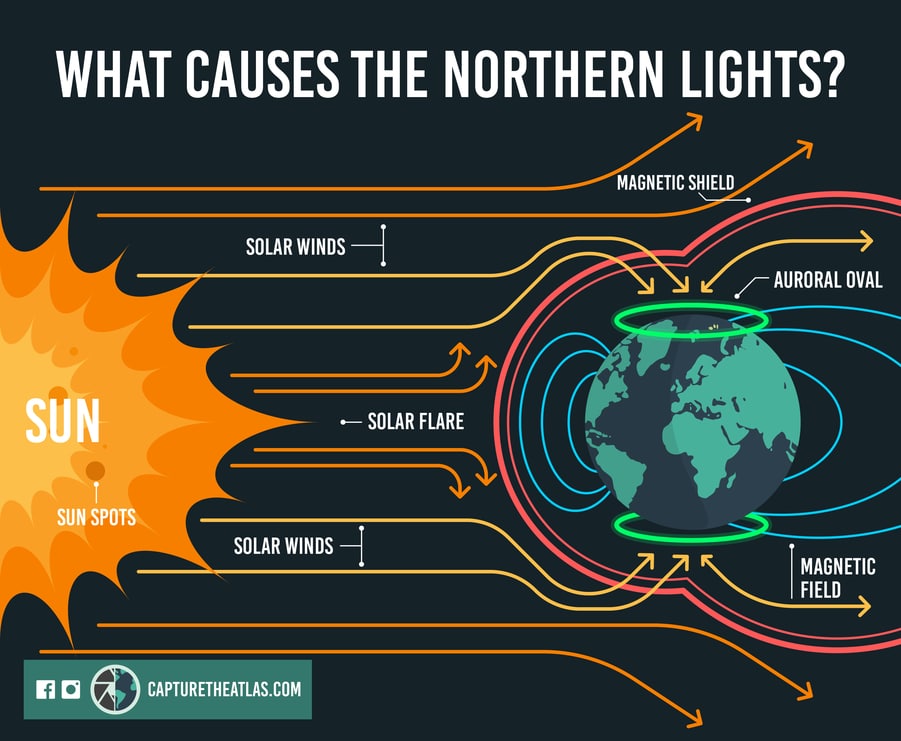
The process begins with the sun, which acts as a massive nuclear reactor. It constantly emits a “solar wind”—a stream of charged particles (electrons and protons). When these particles reach Earth, they interact with the magnetosphere, a protective “bubble” created by our planet’s internal magnetic field. Technology allows us to visualize this invisible shield. Using Magnetospheric Multiscale (MMS) mission satellites, scientists use high-resolution sensors to measure the rapid movement of particles and the “reconnection” of magnetic field lines, which is the primary catalyst for an auroral display.
The Role of Satellite Monitoring Systems
What the Northern Lights are caused by is essentially a transfer of energy. To monitor this, we rely on a fleet of satellites such as the Deep Space Climate Observatory (DSCOVR) and the Solar and Heliospheric Observatory (SOHO). These gadgets are positioned at the L1 Lagrange point, about a million miles from Earth. They act as early-warning systems, using spectrometers and coronagraphs to analyze solar flares and Coronal Mass Ejections (CMEs). The data they transmit provides the raw input for every aurora-tracking app and software tool used by enthusiasts and researchers today.
Predictive Modeling: Using AI to Forecast Geomagnetic Storms
The unpredictability of the aurora has historically made it difficult to witness. However, the rise of AI tools and machine learning has transformed aurora forecasting from a “best guess” scenario into a precise data science.
Machine Learning in Space Weather Forecasting
Modern software platforms now utilize machine learning algorithms to process terabytes of data from solar observatories. These AI models are trained to recognize patterns in solar activity that precede a geomagnetic storm. By analyzing variables such as plasma density, speed, and the orientation of the Interplanetary Magnetic Field (IMF), AI can predict the “Kp-index”—a scale used to characterize the magnitude of geomagnetic disturbances. These software tools allow researchers to anticipate where the auroral oval will expand, providing high-accuracy forecasts hours or even days in advance.
Real-Time Alerts and Global Monitoring Apps
The democratization of this technology has led to a surge in mobile applications and digital platforms. Apps like “Aurora Forecast” or “My Aurora Forecast” utilize APIs connected to NOAA (National Oceanic and Atmospheric Administration) data centers. These apps use geofencing and push notification technology to alert users when a geomagnetic storm is imminent. For tech enthusiasts, these tools represent a perfect marriage of big data and consumer-facing software, turning complex solar physics into actionable digital insights.
The Evolution of Low-Light Imaging and Optical Sensors

For decades, the Northern Lights were difficult to document accurately. Traditional film struggled with the low-light conditions and the dynamic movement of the curtains of light. The evolution of digital imaging technology has changed this narrative, allowing us to capture the aurora with unprecedented clarity.
Full-Frame Sensors and Computational Photography
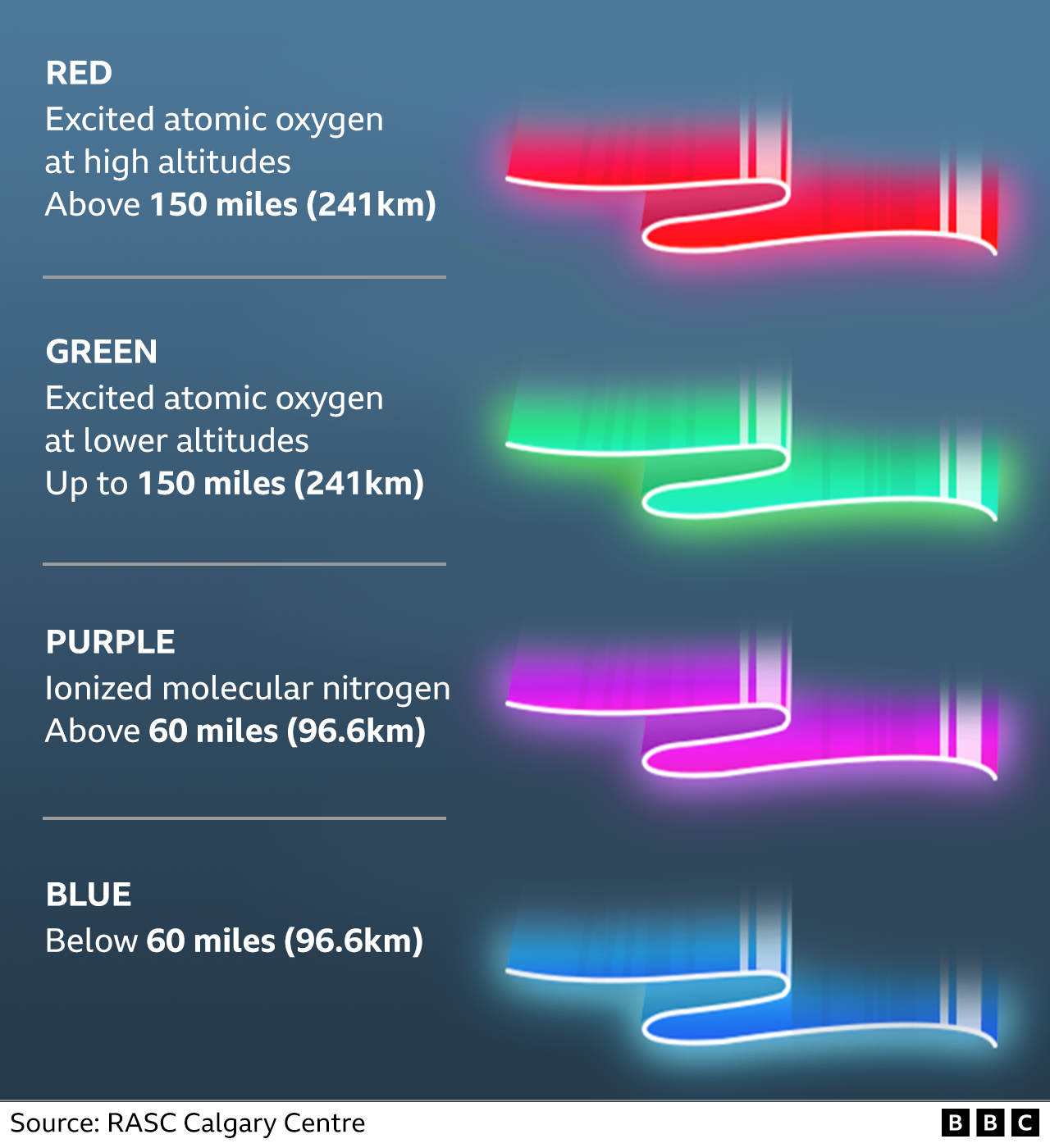
The ability to see what the Northern Lights are caused by at a molecular level is enhanced by the development of ultra-sensitive CMOS sensors. Modern mirrorless cameras from brands like Sony, Canon, and Nikon feature back-illuminated sensors with high ISO capabilities that minimize digital noise. Furthermore, computational photography—the same technology found in high-end smartphones—uses “stacking” algorithms to merge multiple exposures in real-time. This tech allows the camera to pull detail from the dark sky that is invisible to the human eye, revealing the specific gases being ionized: green for oxygen and purple or blue for nitrogen.
Specialized Filters and Drone Technology
In the realm of high-end gadgets, specialized narrow-band filters are used to isolate the specific wavelengths of light emitted by the aurora. This allows researchers to study the altitude of the light displays without interference from light pollution. Additionally, drone technology has revolutionized the perspective of auroral photography. High-altitude drones equipped with gimbal-stabilized, low-light cameras can fly above cloud cover, providing a clear digital view of the magnetospheric discharge. These technological advancements have turned the aurora from a fleeting experience into a high-definition digital asset.
Digital Security and Infrastructure Protection
While the Northern Lights are beautiful, the solar activity that causes them poses a significant threat to our technological society. Understanding what the Northern Lights are caused by is a critical component of modern digital security and infrastructure management.
Shielding Power Grids and Satellite Communications
The same geomagnetic storms that create the aurora induce currents in long-distance power lines and pipelines. In 1989, a massive solar storm collapsed the Hydro-Québec power grid in seconds. Today, utility companies use sophisticated digital monitoring software to detect “Geomagnetically Induced Currents” (GICs). These systems can automatically reroute power or trigger circuit breakers to prevent catastrophic hardware failure. Furthermore, our global reliance on GPS and satellite internet (like Starlink) requires constant monitoring. Solar particles can interfere with radio wave propagation, and digital security protocols must be in place to ensure that GPS-dependent systems—such as aviation and automated shipping—remain operational during peak solar activity.
Cybersecurity in Space Weather Research
As our forecasting tools become more reliant on global data networks, the cybersecurity of these systems is paramount. The data pipelines from solar satellites to Earth-based research centers are considered critical infrastructure. Protecting this data from manipulation is essential; a “false” solar storm warning could trigger unnecessary shutdowns of power grids, while a missed warning could lead to billions of dollars in hardware damage. Digital security trends now focus on the encryption and verification of space weather data, ensuring that the information we use to monitor the sun remains untampered and reliable.
The Future of Auroral Tech: Toward a Connected Magnetosphere
The trajectory of technology suggests that our relationship with the Northern Lights will only become more integrated. We are moving toward a future where “Space Weather” is monitored with the same intensity as our daily terrestrial weather.
Quantum Sensors and Next-Gen Satellites
Looking ahead, the next generation of gadgets will include quantum sensors capable of detecting minute fluctuations in the magnetic field with far greater precision than current technology allows. These sensors, combined with a “constellation” approach to satellite deployment (launching dozens of small “CubeSats” instead of one large satellite), will provide a 3D, real-time map of the Earth’s magnetosphere. This will allow us to see exactly how the solar wind enters our atmosphere in high resolution.
Virtual Reality and Digital Education
Finally, the intersection of tech and education is bringing the Northern Lights to the masses through Virtual Reality (VR) and Augmented Reality (AR). Using 360-degree high-definition cameras and spatial audio, developers are creating immersive experiences that simulate the experience of standing under an auroral storm. These apps use real-time data to synchronize the VR experience with actual solar events occurring in the Arctic.
In conclusion, the Northern Lights are a spectacular natural phenomenon, but our modern understanding of them is a triumph of technology. From the satellites that track solar winds to the AI that predicts their arrival, and the digital security systems that protect us from their intensity, the aurora is a focal point for technological innovation. As we continue to refine our tools and software, we move closer to a perfect digital synchronization with the rhythms of our sun, turning one of nature’s greatest mysteries into a masterclass in data science and engineering.
aViewFromTheCave is a participant in the Amazon Services LLC Associates Program, an affiliate advertising program designed to provide a means for sites to earn advertising fees by advertising and linking to Amazon.com. Amazon, the Amazon logo, AmazonSupply, and the AmazonSupply logo are trademarks of Amazon.com, Inc. or its affiliates. As an Amazon Associate we earn affiliate commissions from qualifying purchases.