
In the landscape of modern technology, we often view “code” as something written in Python, C++, or Java. We think of errors as “bugs” that cause a software application to crash or a website to fail to load. However, the most sophisticated code on the planet isn’t found on a Silicon Valley server; it is housed within the double helix of human DNA. In the realm of BioTech and Bioinformatics, a single-character typo in this biological software is known as a missense mutation.
As we advance into an era dominated by Artificial Intelligence (AI) and High-Performance Computing (HPC), understanding these genetic “glitches” has become a cornerstone of the technology sector. By treating biology as information technology, researchers and software engineers are developing tools to predict, identify, and eventually “patch” these mutations before they lead to systemic failure.

The Digital Architecture of Genetics: Understanding Missense Mutations in the Age of Big Data
To understand a missense mutation through a technological lens, one must first view the human genome as a massive database. Our DNA consists of roughly three billion base pairs—the “bits” of our biological operating system. These base pairs are organized into instructions called codons, which tell the cell’s hardware (the ribosome) which amino acids to assemble to build proteins.
From Biological Bits to Digital Data
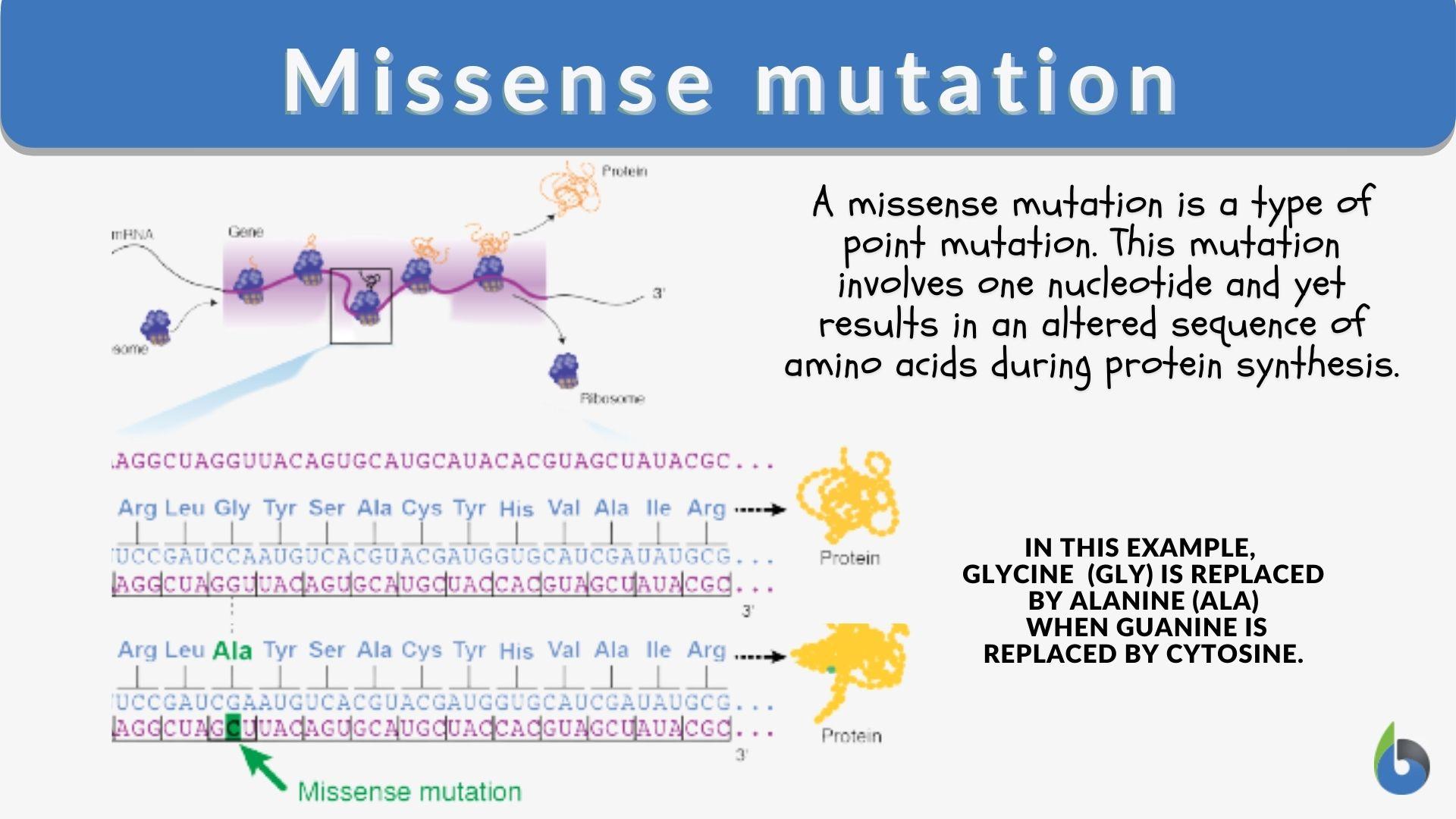
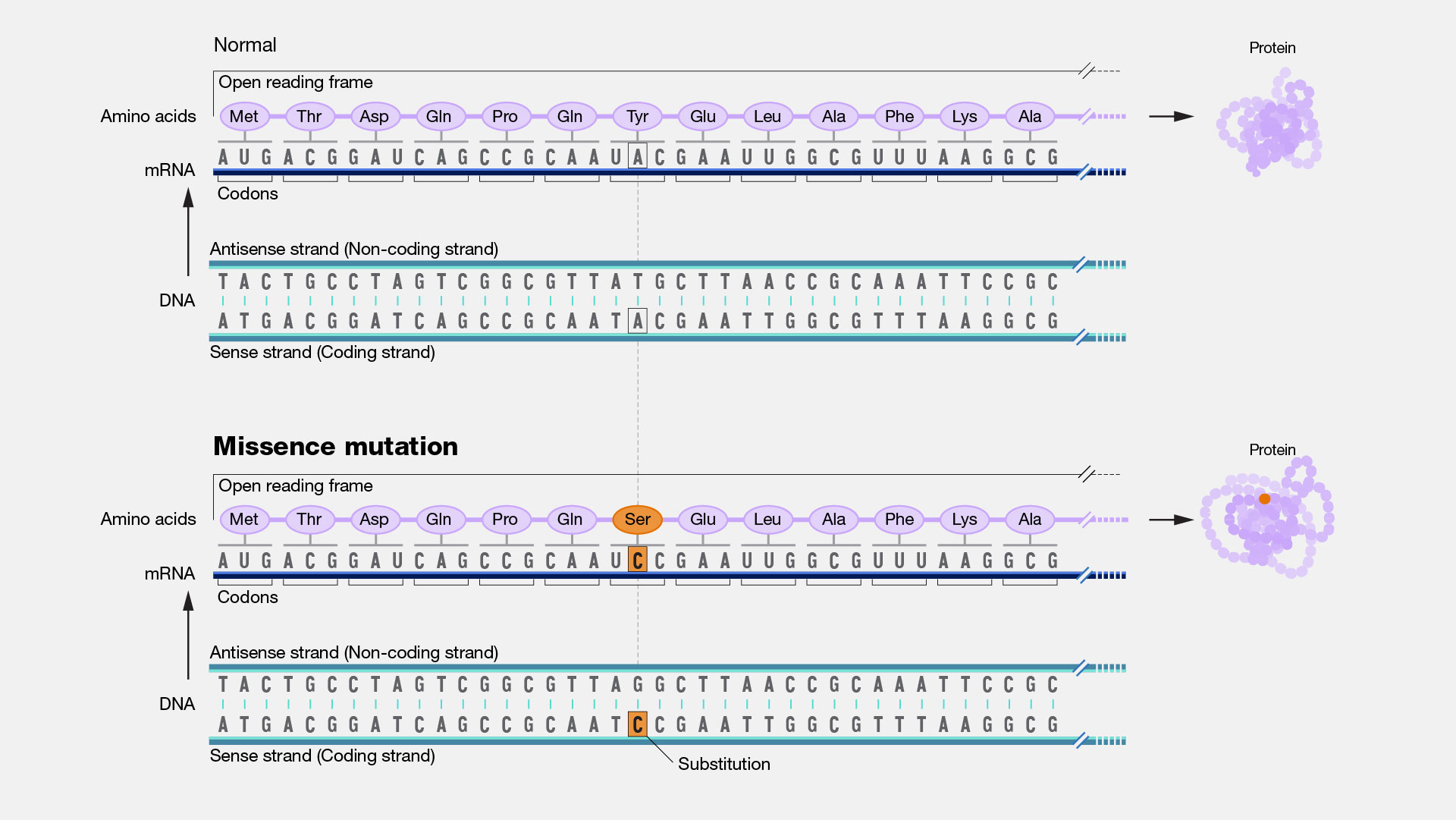
A missense mutation is a specific type of point mutation. In computing terms, imagine a line of code that reads IF (X == 1) GOTO START. A missense mutation is the equivalent of changing a single character so it reads IF (X == 2) GOTO START. The syntax is still correct—the program will run—but the result is different. In biological terms, one nucleotide is swapped for another, resulting in the substitution of one amino acid for a different one in a protein chain.
Because the resulting protein is still created but has a different chemical structure, it may function poorly, function differently, or become toxic to the cell. Mapping these changes requires immense computational power, as the “search space” for potential mutations is astronomical.
Why the “Single Character Error” Matters
In the software world, a single character error can be benign (a typo in a comment) or catastrophic (a misplaced semi-colon in a kernel). Similarly, missense mutations vary in impact. Some are “neutral,” meaning the new amino acid doesn’t significantly change the protein’s shape. Others are the root cause of diseases like Sickle Cell Anemia or certain types of cancer.
For the tech industry, the challenge lies in Variant Interpretation. With the advent of Next-Generation Sequencing (NGS), we can now read a human genome in hours rather than years. However, having the data is not the same as understanding it. The technological bottleneck has shifted from “reading the code” to “debugging the meaning.”
AI and Machine Learning: The New Frontier of Variant Interpretation
The sheer volume of potential missense mutations—running into the tens of millions—makes manual analysis by human scientists impossible. This is where Artificial Intelligence and Machine Learning (ML) have stepped in, transforming the field of genomics into a data-science discipline.
DeepMind’s AlphaMissense and the Power of Predictive Modeling
One of the most significant technological breakthroughs in recent years came from Google’s DeepMind. Following the success of AlphaFold (which predicts protein structures), the company released AlphaMissense. This AI tool is specifically designed to categorize missense mutations.
Using deep learning architectures, AlphaMissense was trained on the vast datasets of human and primate populations. It assigns a “pathogenicity score” to nearly every possible single-letter change in the human genome. By identifying which mutations are likely to cause disease and which are likely benign, this AI tool acts as a high-speed debugger for human DNA, providing a roadmap for clinicians that would have taken decades to build through traditional lab work.
Reducing the Noise in Genomic Sequencing
The primary technical challenge in genomic software is the “Signal-to-Noise” ratio. When a patient’s DNA is sequenced, thousands of variations are found. Most are unique “signatures” of that individual that do not cause harm.
Modern bioinformatics pipelines use sophisticated filtering algorithms to sift through this noise. Using Bayesian statistics and neural networks, these software suites compare a patient’s unique “code” against massive global repositories like ClinVar and gnomAD. The goal is to isolate the specific missense mutation responsible for a symptom, much like a developer uses a stack trace to find the exact line of code causing a memory leak.
Precision Medicine: Software-Driven Solutions for Genetic Debugging
Once a missense mutation is identified by AI, the focus shifts to intervention. This is the “Tutorial” phase of BioTech: how do we use technology to fix the error? The answer lies in the intersection of CRISPR technology and computational guide-design.
CRISPR and the Computational Guide
CRISPR-Cas9 is often described as “genetic scissors,” but the secret to its success is its “GPS”—the guide RNA (gRNA). Designing a gRNA that targets the exact site of a missense mutation without causing “off-target” effects (editing the wrong part of the code) is a massive computational task.
New software tools allow researchers to run millions of simulations to predict how a CRISPR sequence will interact with a specific genome. These digital “dry runs” save millions of dollars in laboratory costs and significantly reduce the risk of unintended genetic consequences. We are moving toward a “Find and Replace” functionality for human health, powered by cloud-based simulation engines.
Cloud Computing and Global Genomic Repositories
The infrastructure required for this work is immense. Analyzing missense mutations requires petabytes of storage and massive parallel processing. Consequently, the “Money” and “Tech” of genomics are moving to the cloud. Platforms like AWS (Amazon Web Services) HealthOmics and Google Cloud Life Sciences provide the specialized hardware—GPUs and TPAs—necessary to run these complex alignment and folding algorithms.
This centralization of data allows for global collaboration. If a developer in Tokyo identifies a specific missense mutation in a rare disease, the “patch” or insight can be shared instantly with a researcher in Berlin via these interconnected cloud repositories.
The Future of Bioinformatics: Towards a Zero-Error Genetic Future
As we look toward the next decade, the technology used to manage missense mutations will become even more integrated into our daily lives. We are moving from reactive medicine (fixing a mutation once it causes a problem) to proactive system maintenance.
Ethical Tech: The Governance of Genetic Modification
As our ability to identify and edit missense mutations grows, so does the need for robust “Digital Security” for our DNA. Genetic data is the most personal information an individual possesses. The tech industry is currently grappling with how to secure these genomic databases using blockchain and advanced encryption to ensure that an individual’s “source code” isn’t leaked or exploited.
Furthermore, the ethics of “debugging” humans involve complex algorithmic biases. If the AI models used to identify missense mutations are only trained on specific populations, they may be less accurate for others. Ensuring “Algorithmic Equity” is a critical frontier for BioTech developers.
Integration with Wearables and Real-Time Monitoring
In the near future, we may see the integration of genomic data with wearable technology. Imagine a smartwatch that doesn’t just track your heart rate, but monitors how your specific genetic profile (including your unique missense mutations) reacts to certain foods, stress levels, or medications.
This “Digital Twin” approach—where a software model of your biology runs in the cloud—would allow for real-time adjustments to your lifestyle based on your genetic vulnerabilities. The missense mutation, once a mysterious and frightening biological error, becomes simply another data point to be managed within a personalized health optimization suite.
Conclusion: The Ultimate Debugging Challenge
The study of missense mutations is no longer a niche field of biology; it is a flagship of the high-tech industry. By applying the principles of software engineering, data science, and artificial intelligence to the human genome, we are learning to decode the most complex operating system ever created.
While we are still in the early stages of this technological revolution, the path is clear. Through the power of AI, cloud computing, and advanced bioinformatics, we are moving closer to a world where a “typo” in our DNA no longer dictates our destiny. The “missense” is being translated, the “bugs” are being logged, and the “patches” are currently being written in the labs of the world’s most innovative tech companies.
aViewFromTheCave is a participant in the Amazon Services LLC Associates Program, an affiliate advertising program designed to provide a means for sites to earn advertising fees by advertising and linking to Amazon.com. Amazon, the Amazon logo, AmazonSupply, and the AmazonSupply logo are trademarks of Amazon.com, Inc. or its affiliates. As an Amazon Associate we earn affiliate commissions from qualifying purchases.