
Microwave waves, a fascinating and indispensable segment of the electromagnetic spectrum, have profoundly shaped the landscape of modern technology and daily life. Occupying a frequency band typically between 300 MHz and 300 GHz (with corresponding wavelengths from 1 meter to 1 millimeter), these waves possess unique properties that make them exceptionally versatile. From heating our food to connecting the global village and peering into the furthest reaches of space, microwave technology underpins countless innovations. This article delves into the diverse applications of microwave waves, exploring the scientific principles that enable their utility and highlighting their transformative impact across various sectors. As a cornerstone of the Tech world, understanding microwave technology is key to appreciating the intricate web of systems that define our digital age.

The Fundamental Science of Microwave Technology
At the heart of every microwave application lies a sophisticated understanding of their physical properties and interactions with matter. Unlike visible light or X-rays, microwaves occupy a sweet spot in the electromagnetic spectrum, allowing them to penetrate certain materials, reflect off others, and, critically, induce vibrations in polar molecules like water.
Understanding the Electromagnetic Spectrum
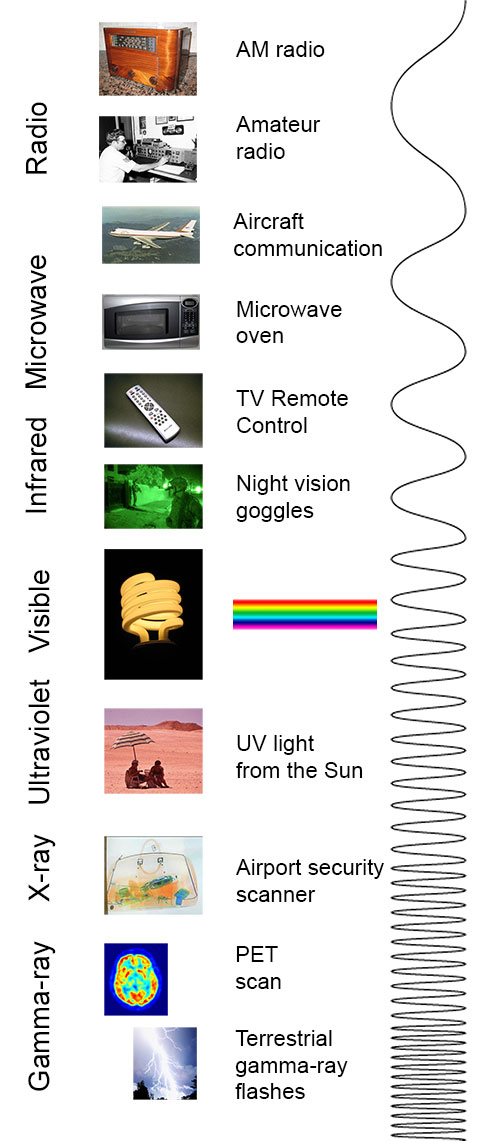
Microwave waves are nestled between radio waves (lower frequency, longer wavelength) and infrared radiation (higher frequency, shorter wavelength). This position grants them characteristics that are ideal for specific technological functions. Their wavelengths are long enough to pass through dust, fog, and rain with minimal attenuation, making them excellent for long-distance communication. Yet, they are short enough to be focused into narrow beams, a crucial feature for precision applications like radar and high-speed data transmission. The generation of these waves typically involves specialized electronic devices such as magnetrons (common in microwave ovens), klystrons, traveling-wave tubes (TWTs), and more recently, solid-state devices. Each generator is designed to produce microwaves at specific frequencies and power levels tailored to the intended application.
Key Properties and How They’re Harnessed
The utility of microwave waves stems directly from their unique interactions with various substances:
- Dielectric Heating: This is perhaps the most widely recognized property, exploited by microwave ovens. Water molecules, being polar, oscillate rapidly when exposed to a high-frequency alternating electric field, as provided by microwaves. This agitation generates heat through molecular friction, cooking food efficiently from within. The frequency of microwaves used in domestic ovens (typically 2.45 GHz) is specifically chosen because it strongly excites water molecules without being excessively absorbed by non-water components, allowing for even heating.
- Reflection and Absorption: Microwaves are largely reflected by metals, which is why metal containers are generally avoided in microwave ovens. Conversely, they can pass through non-metallic materials like glass, plastic, and ceramics relatively unhindered. This differential interaction is vital for radar systems, where microwaves are bounced off objects to determine their location, speed, and other characteristics. In telecommunications, this property allows for line-of-sight transmission and focused beaming.
- Penetration: Microwaves can penetrate non-conductive materials to varying degrees, which is critical for applications like remote sensing, material drying, and medical diagnostics. The depth of penetration depends on the microwave frequency and the material’s dielectric properties, offering a non-invasive way to probe beneath surfaces.
- Diffraction and Interference: Like all waves, microwaves exhibit diffraction and interference patterns, which are leveraged in antenna design to control beam shape and direction, ensuring efficient signal transmission and reception.
By understanding and manipulating these fundamental properties, engineers and scientists have unlocked an astounding array of technological applications that continue to evolve.
Revolutionizing Communication and Connectivity
Perhaps the most pervasive and impactful application of microwave technology is in the realm of communication. Microwaves have laid the foundation for virtually all modern wireless connectivity, enabling instantaneous global interaction.
Wireless Data Transmission
The backbone of our interconnected world, wireless data transmission, relies heavily on microwave frequencies.
- Wi-Fi and Bluetooth: The most common wireless networking standards, Wi-Fi and Bluetooth, operate predominantly in the 2.4 GHz and 5 GHz microwave bands. These frequencies allow for high data rates over short to medium distances, making them ideal for local area networks in homes, offices, and public spaces. The choice of specific frequencies is a balance between penetration capabilities (2.4 GHz penetrates walls better) and bandwidth (5 GHz offers higher speeds with less interference but shorter range).
- Mobile Phone Networks: Generations of cellular technology, from 2G to 5G, utilize microwave frequencies for transmitting voice and data. While earlier generations used lower frequencies, 5G technology, particularly its “mmWave” (millimeter wave) implementations, leverages higher microwave frequencies (e.g., 24-100 GHz). These higher frequencies offer immense bandwidth for ultra-fast data speeds and low latency, essential for applications like autonomous vehicles, virtual reality, and the Internet of Things (IoT). However, they also have shorter ranges and are more susceptible to obstruction, necessitating denser networks of small cells.
Satellite and Terrestrial Broadcasting
Microwaves are the indispensable medium for transmitting information across vast distances, both on Earth and into space.
- Satellite Communication: Satellites orbiting Earth use microwave links to relay signals for global television broadcasting, long-distance telephone calls, GPS navigation, and internet access in remote areas. The high frequencies allow for narrow, focused beams that minimize signal dispersion over thousands of kilometers, ensuring efficient and secure data transfer. Geostationary satellites, for instance, act as microwave relay stations, receiving signals from one point on Earth and transmitting them to another, enabling real-time global connectivity.
- Terrestrial Point-to-Point Links: Microwave radio relays are critical for transmitting large volumes of data between fixed locations, such as between cell towers, broadcasting stations, or data centers. These line-of-sight links are often used in areas where fiber optic cables are impractical or too expensive to deploy, providing high-capacity, reliable communication channels for backbone networks.
Radar Systems
Radar (Radio Detection and Ranging) is a technology that fundamentally relies on the reflection of microwave pulses to detect objects, measure their range, velocity, and other characteristics.
- Navigation and Air Traffic Control: Aviation relies heavily on radar for air traffic control, allowing controllers to track aircraft positions, prevent collisions, and guide planes safely to their destinations. Marine radar assists ships in navigation, especially in adverse weather conditions, by detecting other vessels, landmasses, and obstacles.
- Weather Forecasting: Doppler weather radar systems emit microwave pulses that bounce off precipitation (rain, snow, hail). By analyzing the reflected signals, meteorologists can determine the type, intensity, and movement of precipitation, vital for predicting severe weather events like thunderstorms and hurricanes.
- Automotive and Security: Modern vehicles increasingly incorporate radar for adaptive cruise control, blind-spot monitoring, and automatic emergency braking, enhancing safety. Security systems use radar to detect intruders over large areas, while law enforcement uses radar guns to measure vehicle speeds.
Industrial and Domestic Heating Applications
Beyond communication, the ability of microwaves to efficiently generate heat has revolutionized processes in homes, industries, and even medicine.
The Ubiquitous Microwave Oven

The most common domestic application, the microwave oven, epitomizes the efficiency of dielectric heating. It uses a magnetron to generate microwaves, which are then distributed within a metal cavity. These waves penetrate food, causing water and fat molecules to vibrate rapidly, generating internal heat. This method cooks food much faster than conventional ovens because heat is generated directly within the food rather than transferring from the outside in. Its speed, energy efficiency, and convenience have made it an indispensable kitchen appliance worldwide.
Industrial Heating and Drying
Microwaves offer significant advantages in industrial settings where precise and rapid heating or drying is required.
- Food Processing: Beyond domestic cooking, microwaves are used industrially for thawing frozen foods, tempering (partially thawing) ingredients, pasteurization, sterilization, and drying various food products like pasta, snacks, and grains. The speed and uniformity of microwave heating can improve product quality and extend shelf life.
- Material Processing: In many manufacturing processes, microwaves are employed for drying ceramics, textiles, wood, and paper. They offer faster drying times, reduced energy consumption, and more uniform moisture removal compared to traditional convection ovens. They are also used for curing polymers, vulcanizing rubber, and preheating materials before further processing.
- Chemical Reactions: Microwaves can accelerate certain chemical reactions by providing rapid and localized heating, leading to shorter reaction times, higher yields, and reduced waste in synthetic chemistry and materials science.
Medical and Therapeutic Uses
The heating properties of microwaves also find specialized applications in medicine.
- Diathermy: Microwave diathermy is a therapeutic technique used in physical therapy to provide deep tissue heating. The controlled application of microwave energy increases blood flow, promotes muscle relaxation, and reduces pain in conditions like arthritis, muscle spasms, and soft tissue injuries.
- Hyperthermia in Cancer Treatment: In certain cancer therapies, microwaves are used to generate localized heat (hyperthermia) in cancerous tumors. Raising the temperature of tumor cells makes them more susceptible to radiation therapy and chemotherapy, while often sparing healthy tissue. Microwave ablation, a more intense form of heating, can directly destroy tumors by cooking them.
Advanced Applications and Emerging Technologies
The versatility of microwave technology continues to inspire innovation, leading to advanced applications that push the boundaries of what’s possible.
Remote Sensing and Earth Observation
Satellites and airborne platforms equipped with microwave sensors are powerful tools for monitoring Earth’s environment.
- Climate Monitoring: Microwave radiometers can penetrate clouds to measure atmospheric temperature and humidity profiles, sea surface temperature, and ice sheet thickness, providing critical data for climate modeling and weather prediction.
- Environmental Monitoring: Synthetic Aperture Radar (SAR) systems use microwaves to create high-resolution images of Earth’s surface regardless of weather conditions or daylight. SAR is used for mapping deforestation, tracking oil spills, monitoring glacier movements, and assessing agricultural crop health. Its ability to penetrate vegetation and dry soil also aids in archaeological surveys.
- Soil Moisture and Hydrology: Microwave sensors can accurately measure soil moisture content, which is vital for agriculture, drought monitoring, and flood prediction. They are also used to monitor snowpack and ice cover, contributing to water resource management.
Advanced Material Processing
Beyond simple heating and drying, microwaves are being utilized in cutting-edge material science.
- Plasma Generation: Microwaves are highly efficient at generating plasma, which is used in semiconductor manufacturing for etching and deposition processes, surface modification, and waste treatment.
- Sintering and Composites: Microwave heating can be used to sinter ceramics and metals more efficiently, producing materials with improved properties. It also plays a role in the fabrication of advanced composite materials, offering faster curing times and better material integration.
- Waste Treatment: Research is exploring the use of high-power microwaves for the pyrolysis and gasification of various waste materials, offering a potentially more efficient and environmentally friendly method for waste-to-energy conversion.
Directed Energy and Future Prospects
Emerging research and development hint at even more revolutionary applications for microwave technology.
- Wireless Power Transmission: The concept of beaming power wirelessly using microwaves has long been a subject of scientific exploration. While currently limited, advancements could lead to charging electric vehicles on the go, powering remote sensors, or even transmitting solar energy from space-based collectors to Earth.
- Next-Generation Communication: Beyond 5G, future communication systems will likely push into even higher microwave and terahertz frequency bands, enabling petabit-per-second data rates, ultra-low latency, and highly secure communication for specialized applications.
- Defense Applications: Directed Energy Weapons (DEWs) that utilize high-power microwaves (HPM) are being developed for defense applications, capable of disrupting or damaging electronic systems, neutralizing drones, or providing non-lethal crowd control.
Safety, Regulation, and Ethical Considerations
While the benefits of microwave technology are undeniable, their widespread use necessitates adherence to safety standards and a clear understanding of their potential interactions with biological systems.
Standards and Guidelines
International and national regulatory bodies, such as the FCC in the U.S. and the ICNIRP globally, establish guidelines for safe exposure levels to microwave radiation. These standards dictate maximum permissible power levels for devices like cell phones, Wi-Fi routers, and microwave ovens, ensuring that public and occupational exposures remain well below thresholds known to cause harm. Manufacturers must comply with these regulations, and devices undergo rigorous testing before being released to the market.
Misconceptions vs. Scientific Reality
Despite the scientific consensus on the safety of properly functioning microwave devices, misconceptions sometimes persist. Microwave radiation is non-ionizing, meaning it does not have enough energy to remove electrons from atoms or molecules, unlike X-rays or gamma rays, and therefore cannot directly damage DNA or cause cancer in the way ionizing radiation can. The primary biological effect of microwave exposure at levels above regulatory limits is heating, which is the very principle exploited by microwave ovens. However, devices designed for communication operate at power levels far below those that could cause significant heating, making them safe for everyday use. Continuous research ensures these guidelines remain up-to-date with technological advancements and scientific understanding.
Conclusion
Microwave waves, often invisible and imperceptible, are the unseen architects of much of our modern world. From the simple act of reheating a meal to the complex networks that link continents, their applications are astonishingly diverse and continually expanding. As a critical component of the Tech landscape, microwave technology underpins our communication infrastructure, powers sophisticated radar systems, drives industrial processes, and offers innovative solutions in medicine and environmental monitoring. The ongoing exploration of their unique properties promises further breakthroughs, cementing their role as an indispensable force in shaping the technological future. Understanding what microwave waves are used for is not just an academic exercise; it’s a window into the core technologies that define and propel our interconnected, intelligent society forward.
aViewFromTheCave is a participant in the Amazon Services LLC Associates Program, an affiliate advertising program designed to provide a means for sites to earn advertising fees by advertising and linking to Amazon.com. Amazon, the Amazon logo, AmazonSupply, and the AmazonSupply logo are trademarks of Amazon.com, Inc. or its affiliates. As an Amazon Associate we earn affiliate commissions from qualifying purchases.